

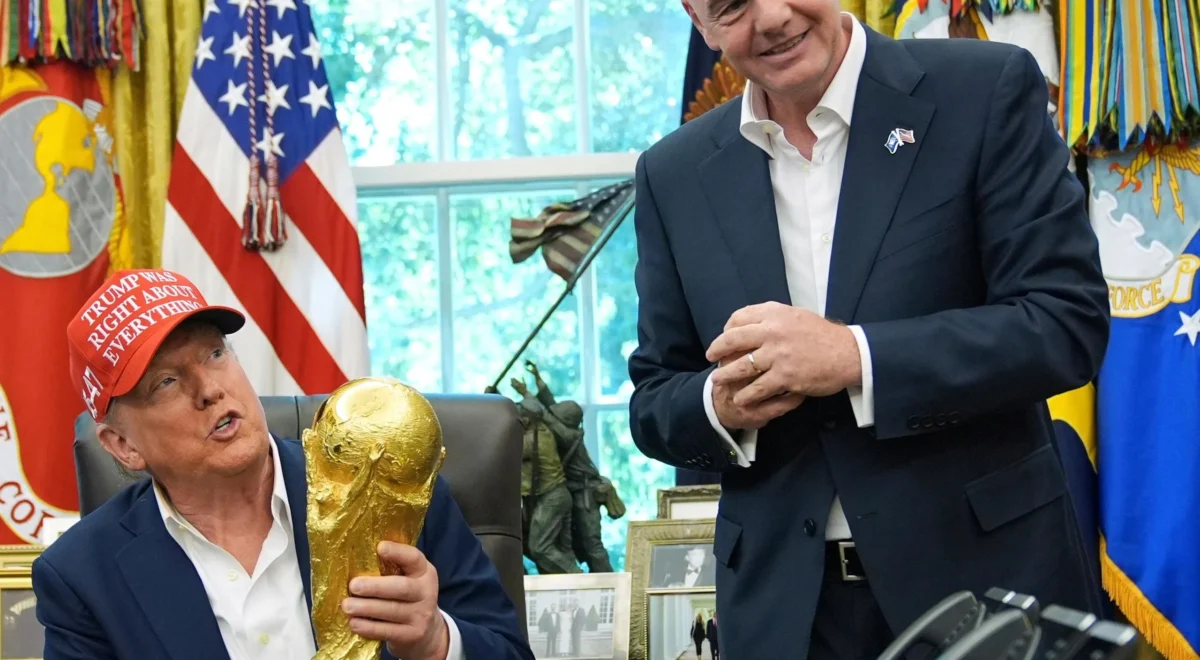
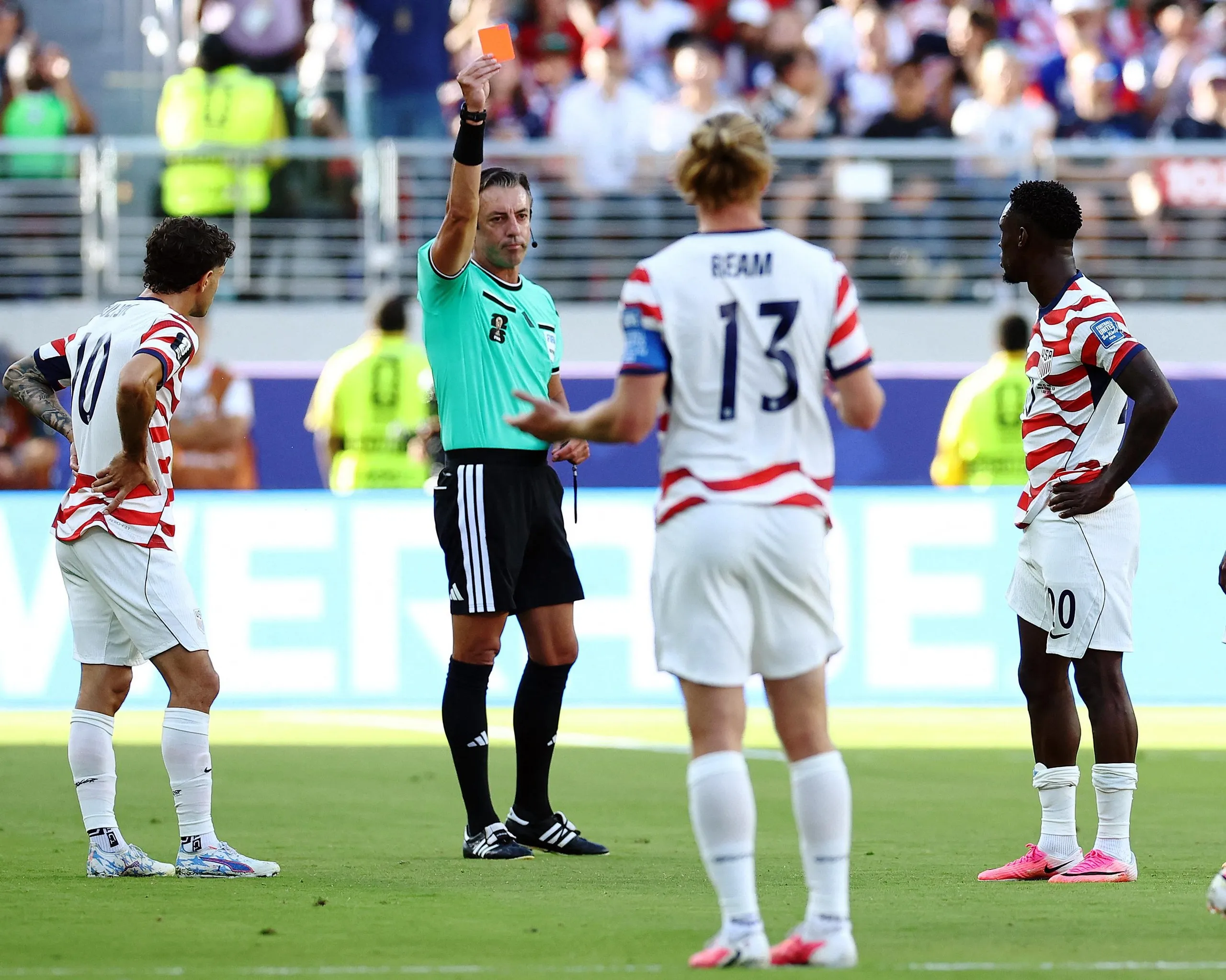
Gianni Infantino appears set to evade penalties following allegations that he violated political neutrality guidelines during discussions with Donald Trump about the Folarin Balogun incident.
This week, the International Olympic Committee (IOC) received a formal complaint from the human rights organization FairSquare, which concerns Infantino’s engagement with Trump. The former president disclosed that he had contacted the FIFA president regarding a review of Balogun’s suspension from the USA’s round of 16 match against Belgium. Subsequently, FIFA’s disciplinary committee suspended the ban for a year, marking an unprecedented decision.
Since joining the IOC in 2020, Infantino has been expected to maintain independence from political and commercial pressures. The IOC’s charter asserts that its members must not accept mandates or directives from external parties that could compromise their autonomy.
FairSquare argues that Infantino’s conversations with Trump constitute a breach of these guidelines. However, Infantino refutes this claim, and sources indicate that a formal investigation by the IOC is unlikely.
Insiders within the IOC express strong hesitance to interfere in the governance of an international federation, especially when internal appeal processes have not yet been explored.
Another insider noted that the dynamic between the IOC and FIFA has shifted considerably over the past 20 years. The IOC is now increasingly dependent on FIFA for commercial success and to engage younger audiences.
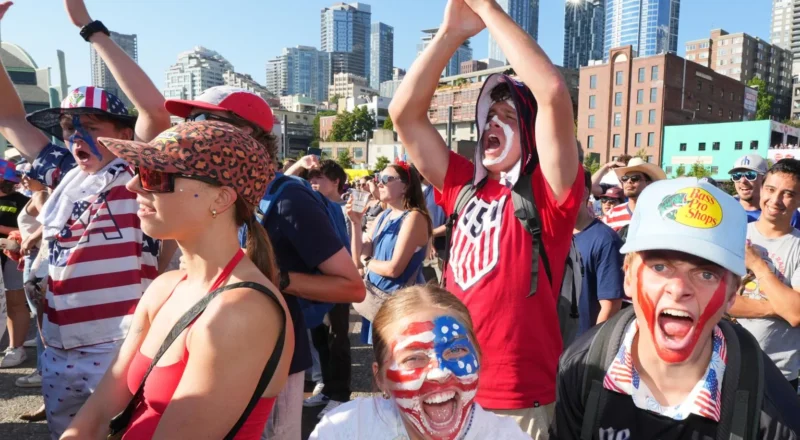
With the upcoming Summer Olympic Games scheduled for Los Angeles in 2028, the IOC is eager to leverage the football surge in the U.S., which has resulted in record ticket sales and revenue from the World Cup. This context makes any action regarding Balogun’s case seem even less probable.
Notably, the IOC has yet to hear from UEFA or the Royal Belgian Football Federation, both of which have criticized the decision to suspend Balogun’s ban.
The Belgian federation has stated it is considering all legal avenues, including a potential appeal to the Court of Arbitration for Sport. However, silence has followed their exit from the World Cup in the quarter-finals against Spain, with reports suggesting they might abandon the issue.
Pascale Van Damme, the president of the Belgian federation, also serves on the FIFA Council, the main decision-making body of FIFA.
Despite the controversy, Infantino seems to have maintained his support, with over 200 FIFA member associations sending letters of endorsement ahead of the presidential election next year.
UEFA has reportedly opted not to pursue the matter further, even after issuing a statement last week that strongly supported Belgium and accused FIFA of undermining the integrity of football and the World Cup.
Infantino acknowledged speaking with Trump about the situation. However, a statement attributed to him by FIFA last week emphasized that he regularly discusses various topics with multiple heads of state.
He further clarified that the decision to lift Balogun’s suspension stemmed from an independent ruling by FIFA’s disciplinary committee. “from governments, organisations, or other parties, any mandate or instructions liable to interfere with the freedom of their action and vote” he stated. “They operate autonomously, apply the Fifa disciplinary code, and decide cases based on the applicable regulations and the specific facts before them,”
According to a recent report, the decision to revoke Balogun’s ban was made solely by Mohammad al-Kamali, the chair of FIFA’s disciplinary committee from the United Arab Emirates. However, some sources within FIFA suggest he is being positioned as a scapegoat.
Such a unilateral action by al-Kamali would mark a significant deviation from the disciplinary committee’s standard protocols during a World Cup, which typically involve three-member panels making decisions through majority votes.
Panel members are drawn from the 18 members of FIFA’s disciplinary committee, with Thomas Hollerer, the general secretary of the Austrian Football Association, overseeing the panel from the quarter-finals.
Attempts to identify the panel members involved in the last 32, where Balogun was sent off during the USA’s 2-1 victory over Bosnia and Herzegovina, have been unsuccessful.
FIFA has not released a written explanation for the disciplinary committee’s ruling but stated last week that the decision was made after considering all specific circumstances surrounding the incident and the evidence available. They added that “Their independence is essential to the credibility and integrity of football, and this must always be respected.”