

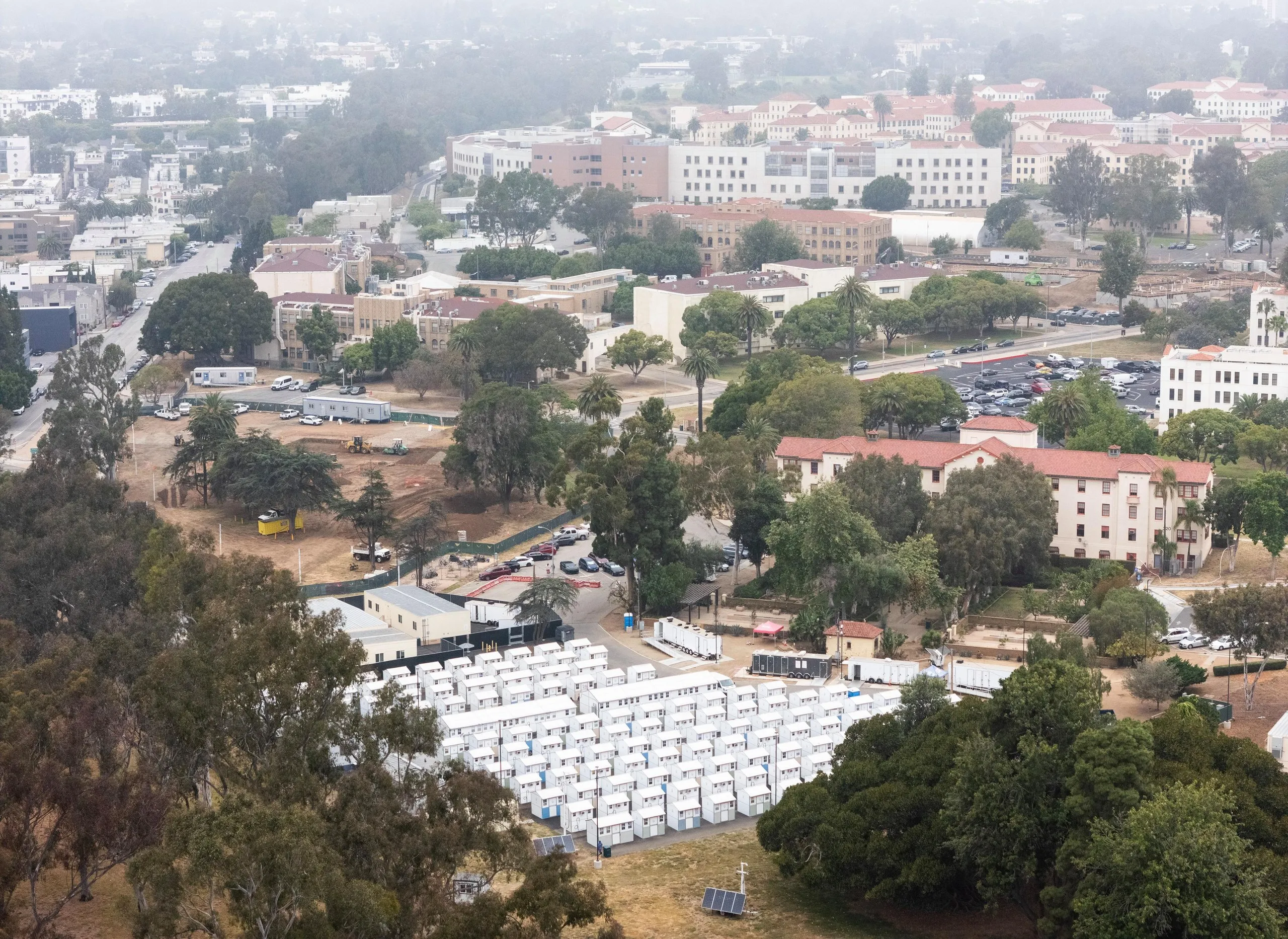
As the World Cup draws near, numerous homeless individuals are feeling the severe consequences of city initiatives designed to enhance urban aesthetics for visitors. One local resident voiced their discontent, stating, “A lot of our community has been pushed out by the World Cup. We’re not just dollar signs, we’re more than that. We’re people and we’re frustrated that they’ve chosen to treat us less than human.”
Another person shared a distressing account, saying, “They dropped me off there in the middle of the night. They call them Mormon centres or whatever, but it ain’t nothing but a warehouse of cops. It looked like a Fema camp. When I saw it, I left, I walked all the way back here. It’s because of the World Cup. They’re trying to make it look good for tourists. They don’t want the eyesores around.”
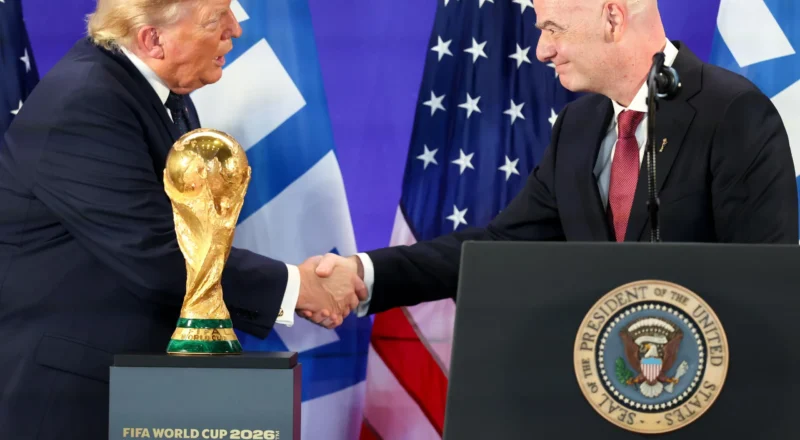
In another part of the world, just a week before the World Cup final, Gianni Infantino made his way from Miami to Qatar on a luxury private jet. He attended the funeral of the former Emir, Sheikh Hamad bin Khalifa Al Thani, and was captured in a dignified pose, embodying the essence of a global statesman.
On the same day, former President Donald Trump was at his golf resort in Virginia, which features an expansive clubhouse and an Olympic-sized swimming pool, a transformation achieved by the removal of 465 trees.
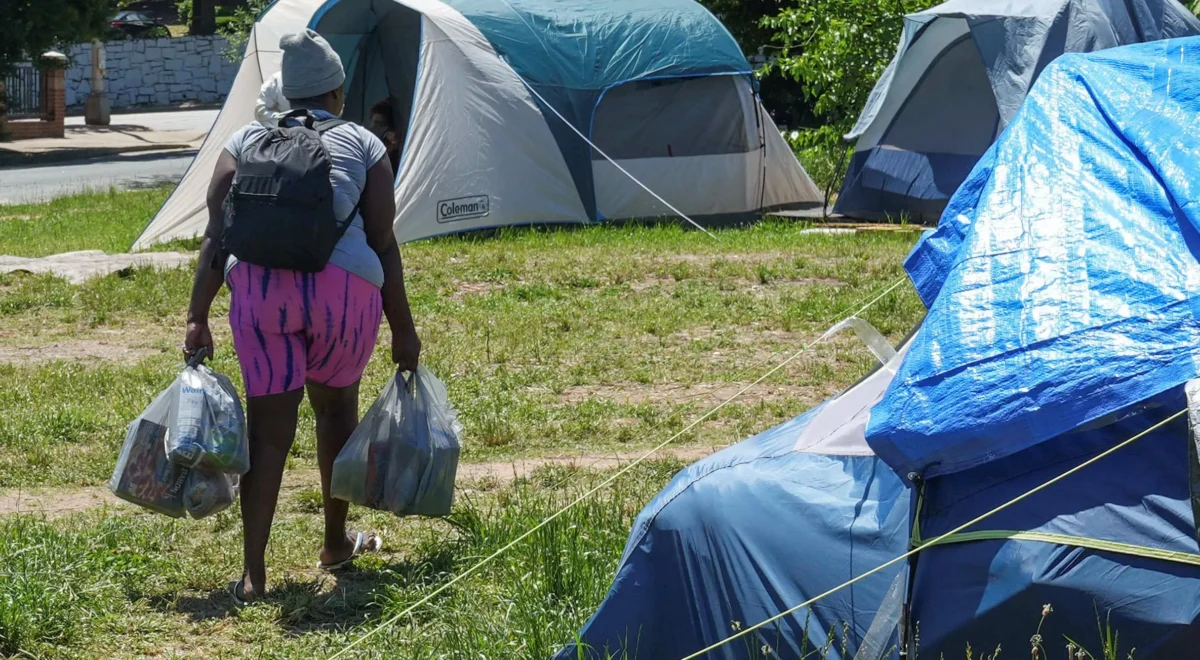
On that Sunday, reports surfaced regarding the dismantling of homeless encampments at Freedom Park, located less than a mile from one of Atlanta’s designated World Cup viewing sites. City workers entered abruptly, removing tents, personal documents, medications, and other belongings from residents.
A city representative claimed that Freedom Park was not designated as an official campsite, thereby circumventing formal protocols. This operation was termed as “We want to make sure those unsheltered individuals don’t come anywhere near downtown and throughout the city of Atlanta, not just during the World Cup but now,” Just before England’s semi-final match against Argentina, the park appeared nearly vacant, transformed into a pristine green space devoid of the belongings that once filled it.
City Policies and Homelessness
The expulsion of homeless individuals from urban centers has become a defining aspect of the World Cup in various U.S., Canadian, and Mexican cities. Atlanta Mayor Andre Dickens has openly discussed the rationale behind these measures, asserting, “You should not have to cross the street in downtown Atlanta to avoid a crazy person yelling at your family,”
This strategy aligns with the policies adopted during the Trump administration, as Vice President JD Vance commented, “I haven’t seen evidence of what has occurred, but we do know the people are gone. So where did they go? A lot of those people definitely wanted to be where they were within that vicinity. And I don’t know where they were taken. So they could have been displaced well away.” remarks that have faced criticism for being callous.
In preparation for the World Cup, Atlanta launched a program known as Downtown Rising, aimed at eradicating homeless encampments in the city center. This initiative, although backed by funding and noble objectives, claims to have provided housing for 500 individuals.
However, the circumstances at Freedom Park reveal the sometimes heavy-handed tactics employed by the city. In January of the previous year, Cornelius Taylor tragically lost his life when a bulldozer crushed him while he slept in his tent on Old Wheat Street, a historic black neighborhood. His fiancée later recounted the horrifying incident, prompting promises from city officials for improved protections and new protocols to safeguard the estimated 3,000 unhoused residents in Atlanta.
Uncertainty Surrounding Relocation
Questions linger about the effectiveness of these initiatives. At the Centre for Health and Rehabilitation in Fulton County, situated near the Freedom Park trail, staff members provide assistance to homeless individuals grappling with mental health and addiction issues. One worker observed a reduction in the number of people on the streets during the World Cup but expressed uncertainty regarding their current locations or the conditions of their relocation.
“They dropped me off there in the middle of the night. They call them Mormon centres or whatever, but it ain’t nothing but a warehouse of cops. It looked like a Fema (Federal Emergency Management Agency) camp. When I saw it, I left. I walked all the way back here. It’s because of the World Cup. They’re trying to make it look good for tourists. “They used to just drop you off in the middle of the street over there by Pryor Road, across from Gateway. Now they take you all the way up to Metropolitan on the far outskirts.”
Currently, there are no official rehousing facilities available in Atlanta during the World Cup. One homeless man, Sirius, who frequents the Crossroads Community Center near Atlanta’s FIFA hotels, recounted his experience of being relocated to a center on the city’s outskirts.
“We feel like a lot of our community has been pushed out. We’re not just dollar signs, we’re more than that. We’re people and we’re frustrated with the fact that they’ve chosen to treat us less than human in a lot of the areas because of making money. “Not saying that we don’t love soccer, we do love soccer, but it is traumatic. They went and got third-party park rangers, other organisations to try to push out people, our people. It doesn’t matter, black, white, even homeless. And we just want to get our voice heard.”
“This country is bred that way,”
Another homeless individual, Drayvon Clark, expressed his dissatisfaction regarding the World Cup’s effects on the local community. “We’re a war country. That’s what we do. All the people here are indoctrinated from their youth to be very aggressive, to be numb to it. It’s intentional. America is hard. Actual rights have been turned to paying privileges. “I’m going to be honest. Black people in Atlanta don’t play football. So when you invited the world here, you invited the world to participate in a sport that these people are not even included in. “The thing about this sport is it makes so much money, but we don’t. Are we going to unite the world? Are we going to fix the city? Until they level the playing ground and we can produce more soccer moms in my community, it’s going to be that way. It has nothing to do with us. We’re the only people that’s excluded from it.”
Clark continued, “They always bring a big event that everybody’s blinded by,”
The homelessness crisis continues to be a significant issue across the United States, with approximately 770,000 individuals lacking stable housing. Recent years have seen numerous laws enacted that criminalize sleeping in public areas, a trend that has intensified in cities hosting the World Cup.
Such measures are not unprecedented; major sporting events have frequently triggered similar responses. During the 1996 Atlanta Olympics, thousands were confined in facilities resembling detention centers. Paris bused homeless individuals out of the city in preparation for the 2024 Olympics. In light of the current World Cup, host cities have initiated various programs, some genuinely aimed at addressing homelessness through innovative housing solutions.
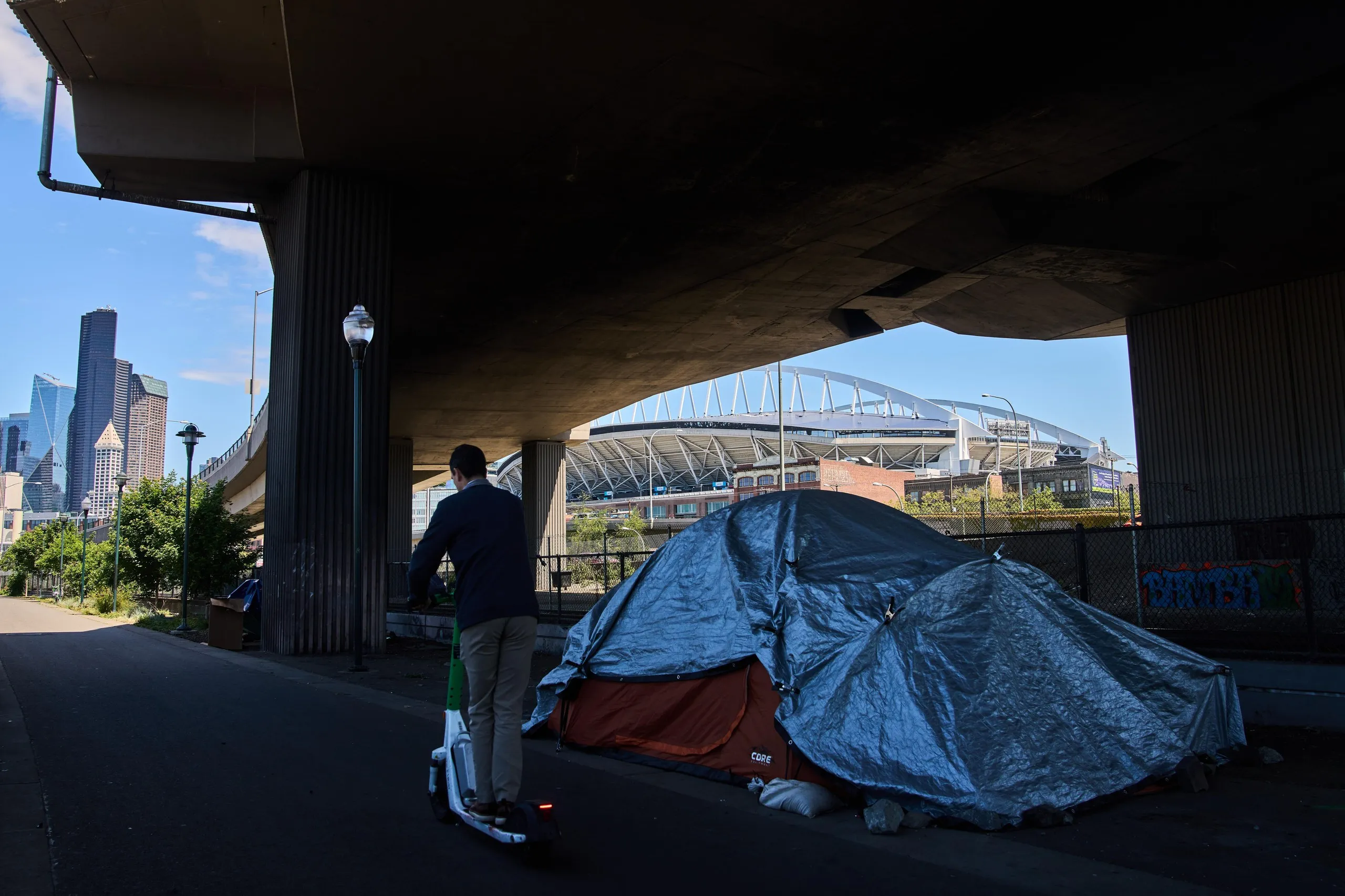
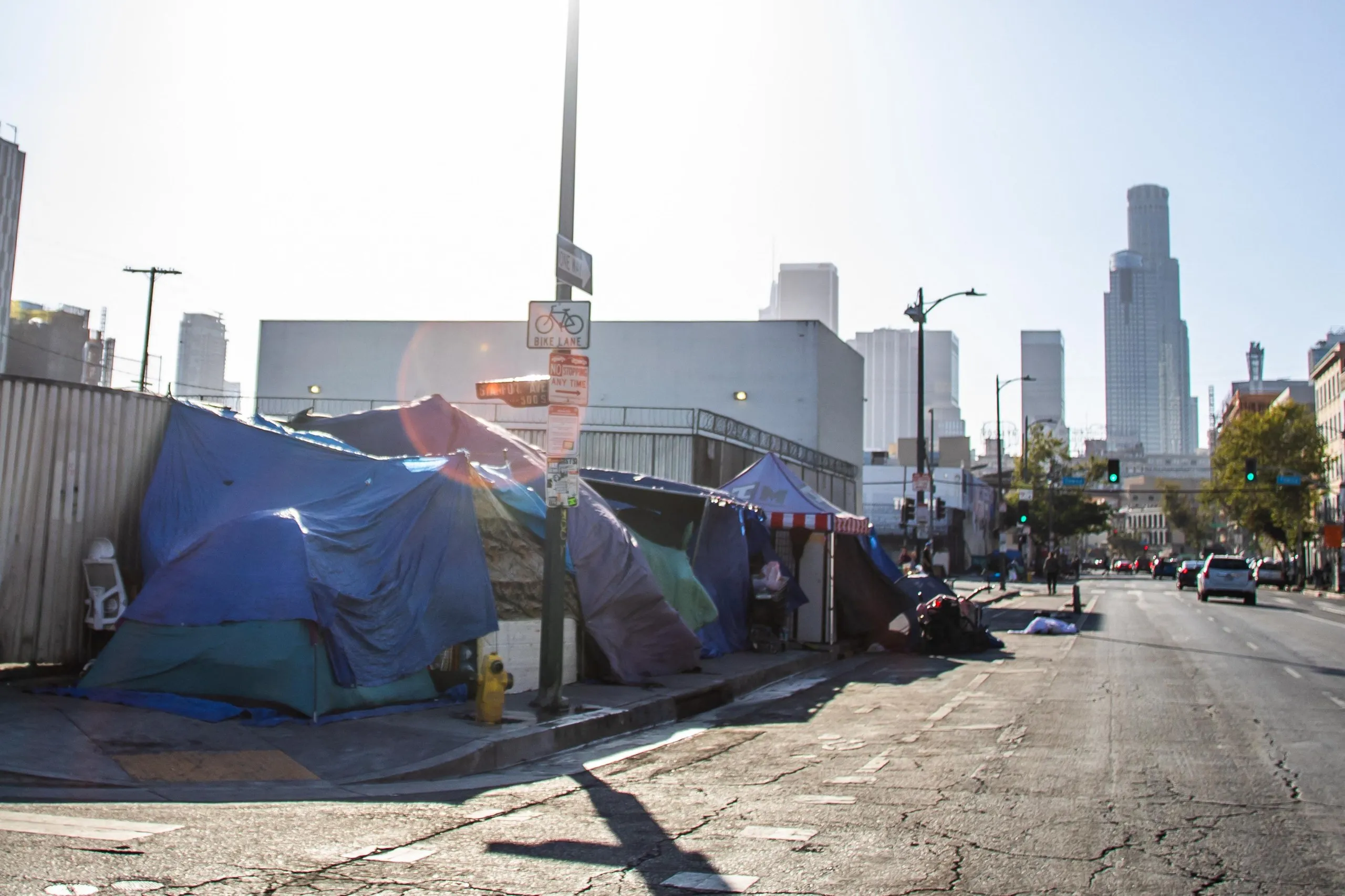
For instance, in Los Angeles, homeless individuals have been accommodated in motels, while in Dallas, an encampment of roughly 200 tents was dismantled. Seattle’s newly elected mayor pledged to create 500 new homes to aid in clearing homeless camps from the city center, but by the time of the World Cup, only 50 had been constructed.
Despite these attempts, the visibility of homeless individuals in host cities starkly highlights the deep-seated inequality in America, exposing the ease with which one can slip through the societal cracks.
On the eve of the World Cup final, a homeless encampment was even spotted at the entrance to a heavily publicized Fanatics event in Manhattan. In such instances, the stark realities of America can feel like an act of violence, revealing the fragility of its social safety net.
“You’ve seen Gladiator, it’s like the Games. That’s what it’s for. It’s a distraction. They treat us like trash and trampled over us. But that’s America for you, isn’t it? They’ve got to reckon with heaven and hell at the end of it. God bless America.” Sirius reflects. “We’re a war country. That’s what we do. All the people here are indoctrinated from their youth to be very aggressive, to be numb to it. It’s intentional. America is hard. Actual rights have been turned to paying privileges.”
Sirius also shared his thoughts on the exclusion of marginalized communities from the World Cup celebrations, stating, “I’m going to be honest. Black people in Atlanta don’t play football. So when you invited the world here, you invited the world to participate in a sport that these people are not even included in.”
He concluded with a commentary on financial disparities, saying, “The thing about this sport is it makes so much money, but we don’t. Are we going to unite the world? Are we going to fix the city? Until they level the playing ground and we can produce more soccer moms in my community, it’s going to be that way. It has nothing to do with us. We’re the only people that’s excluded from it.”
The stark contrast between FIFA’s rhetoric about football’s unifying capabilities and the reality of the World Cup as a meticulously orchestrated entertainment event raises ethical concerns. As Sirius succinctly puts it, “They always bring a big event that everybody’s blinded by. You’ve seen Gladiator, it’s like the Games. That’s what it’s for. It’s a distraction. They treat us like trash and trampling over us. But that’s America for you, isn’t it? They’ve got to reckon with heaven and hell at the end of it. God bless America.”
- World Cup 2026
- World Cup
- Homelessness
- US sports
- features