

The night before a pivotal moment in their careers, Spain’s 2010 World Cup champions gathered at the Da Vinci Hotel in Sandton, just north of Johannesburg. They savored hot chocolate and chocolate croissants while reminiscing. Fast forward 16 years, and the current squad is set to convene at the MC Montclair in New Jersey for a similar bonding experience, although this time, chocolate will be absent. Some traditions naturally evolve.
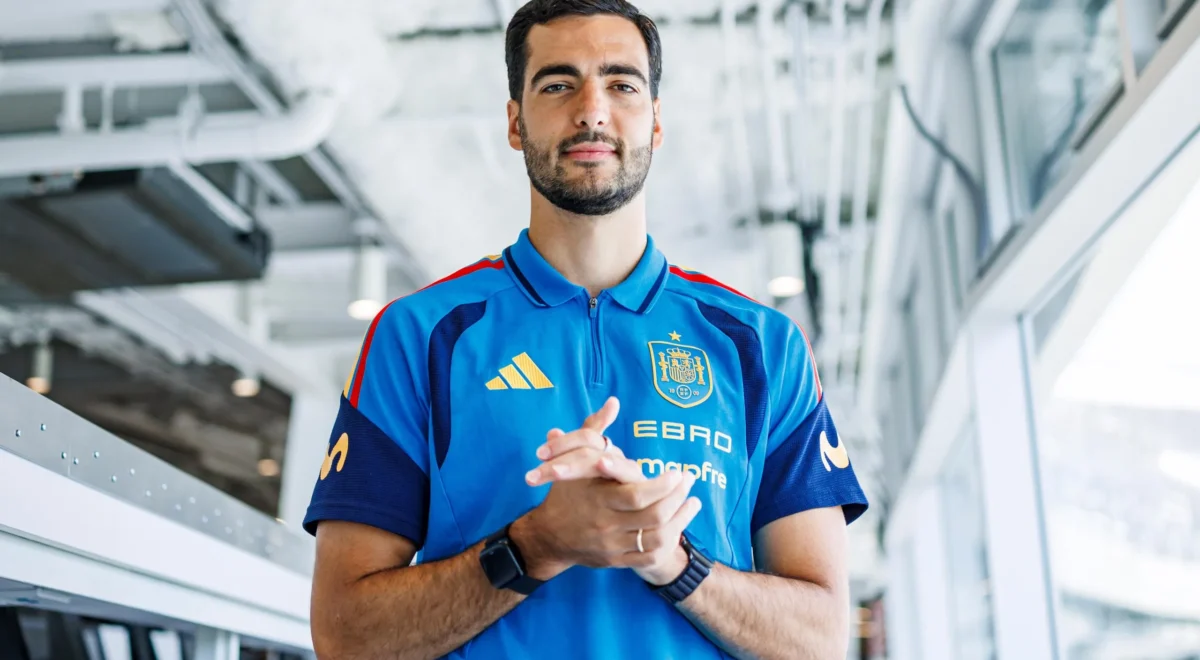
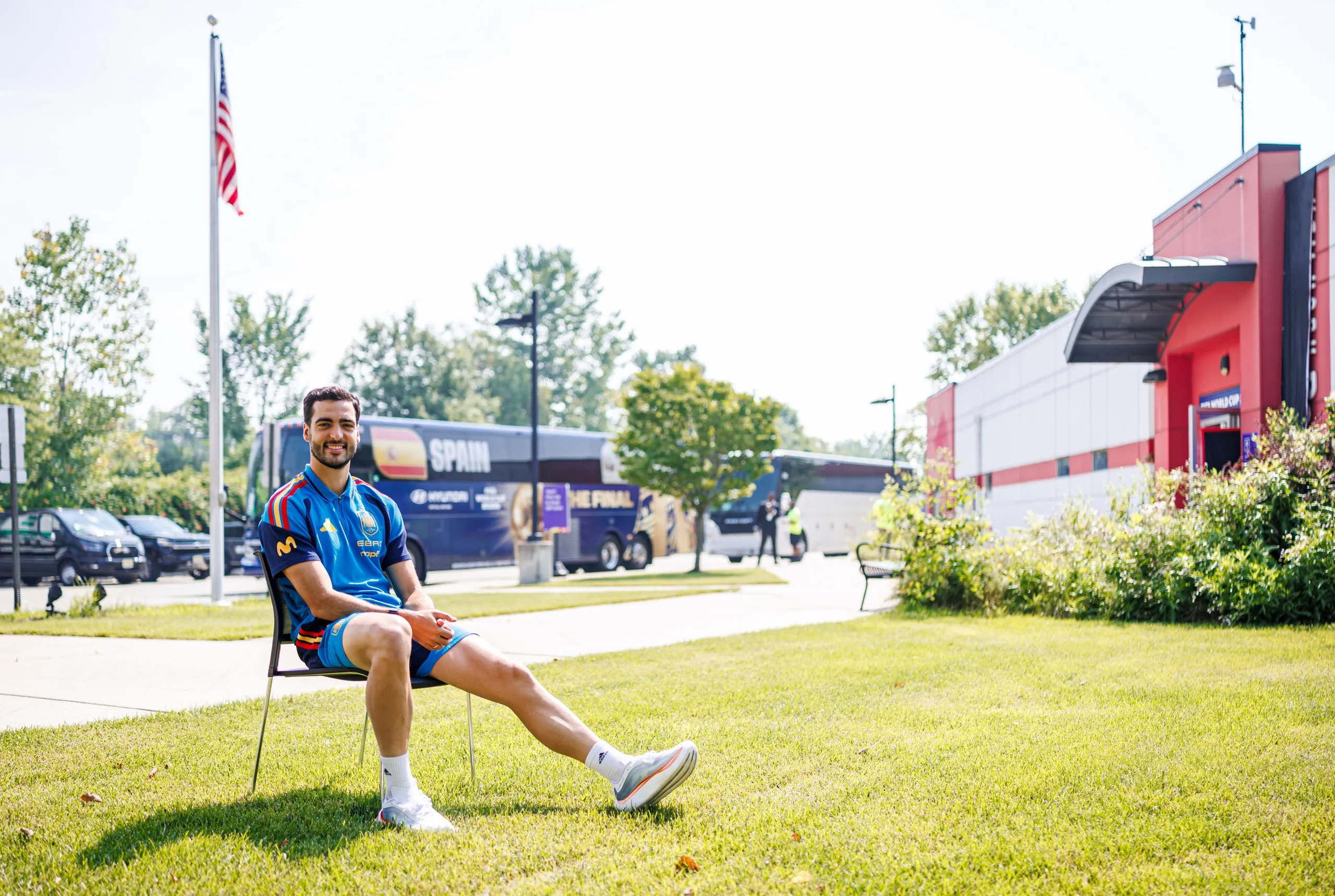
“I think the nutritionists killed that one for us!” Mikel Merino quipped as he disembarked from the bus, brimming with energy and ready for the final match, heading towards a tactics room at the Melanie Lane training facility. With preparations for Spain nearing completion, Merino remarked, “We used to do the Cola Cao and cakes in the under-19s and under-21s, copying the seniors, but not any more. Everyone has their own routine, but the main thing is to normalise it all: just another game, doing something we know how to do, that we’ve done since we were five years old and that we love. Treat it like something to be enjoyed, another day in our lives.”
What a remarkable day it could turn out to be. Merino described the occasion as “Just the other day we were talking about this; if you had given me the chance, I would have signed up for this: going through the bad moments to have a year like this is incredible. The experiences I’ve been through, that my family have.” He reflected, “I’m living every minute with an incredible joy,” His outstanding path includes winning a Premier League title, competing in a Champions League final, welcoming his first child, and now, making it to a World Cup final, all while recovering from an injury that had cast doubt on his participation. “Think where I was a few months ago and look where I am now. I appreciate this all the more.” he stated. “When they told me about my injury I didn’t think I would be at the World Cup,”
Spain’s head coach, Luis de la Fuente, assured Merino he would be patient with his recovery, but the stress fracture in his foot initially caused uncertainty. “Just being here is a victory for me,” the 30-year-old admitted. He underwent surgery at the end of January, which brought a sense of relief as it clarified his path forward. After spending two months on crutches, he committed himself to intense rehabilitation.
During that recovery period, there were days of solitude, occasionally with support from his wife, who, while pregnant, showed a strength he attributes to his recovery. He recognized that his own resilience exceeded his expectations. Despite only managing 28 minutes of play leading up to the World Cup, he cherished the time spent with his newborn son, Marco. “God willing we can win it.” he expressed. “Not even in my wildest dreams did I imagine this,”
Spain’s achievements thus far have greatly benefited from Merino’s contributions, particularly when called upon. Like Lautaro Martínez, his counterpart in the final, Merino has proven to be a vital player off the bench. “My mum won’t buy that one, not even with a World Cup,” he remarked. However, he had anticipated such moments; this is precisely what he trains for. He remains active rather than passive during games, continuously analyzing the action.
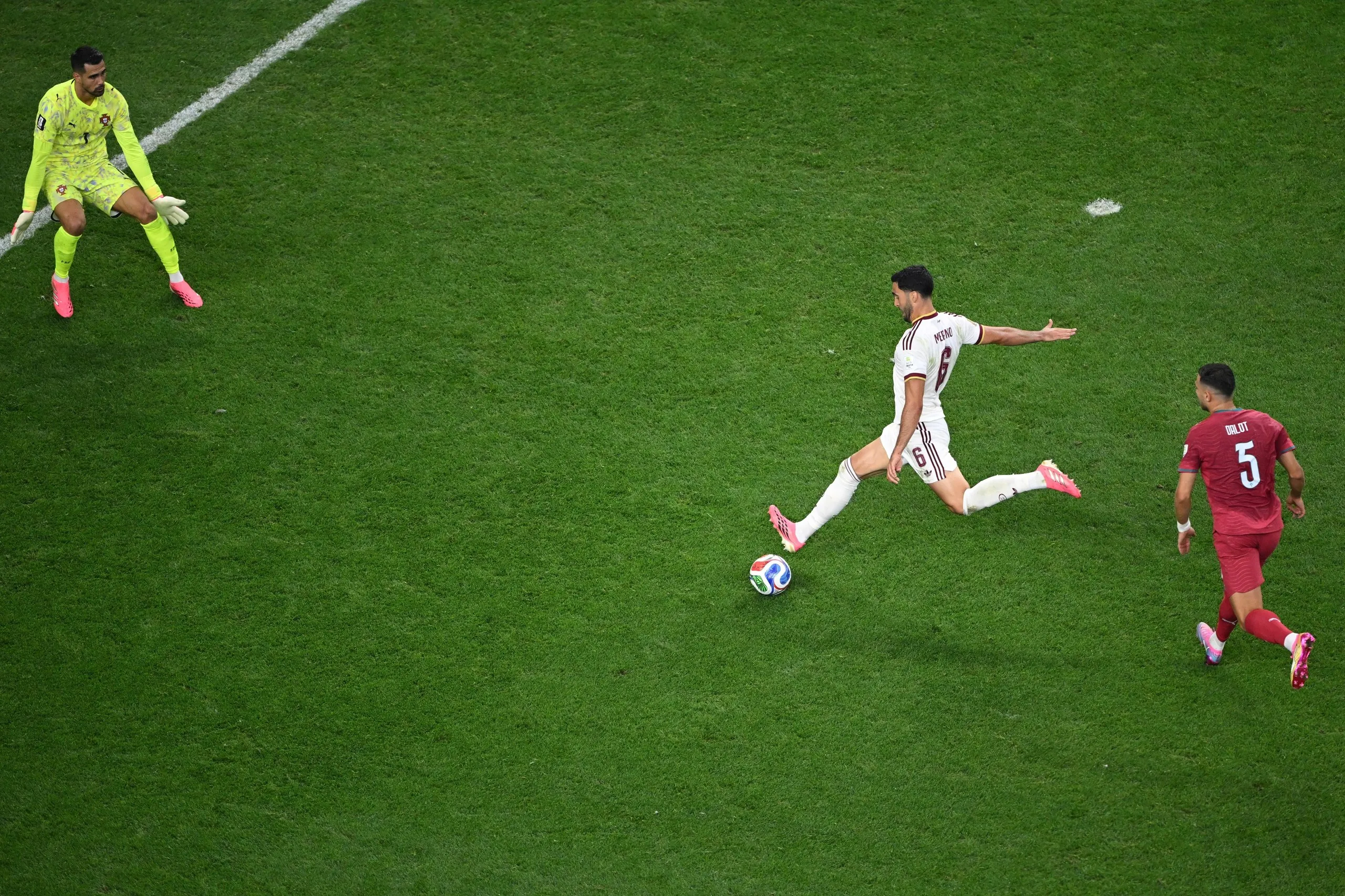
At Euro 2024, coming on as a substitute against Germany in Stuttgart, Merino scored in the 119th minute, leading Spain into the semi-finals. In a similar vein, he netted the crucial goal against Portugal in the quarter-finals, again in the dying moments of the match. Unfortunately, his wife and son were absent during that pivotal game in Dallas. However, just four days later in Los Angeles, when they were present, he scored the decisive goal against Belgium, having touched the ball only twice. His awareness in initiating the play was nearly as significant as the goal itself.
All three of his goals were celebrated in a similar fashion, reminiscent of a moment from his father’s past. Merino circled the corner flag just like his father, Ángel Miguel, did during a late goal for Osasuna in Stuttgart 33 years prior. He joked about winning the World Cup, claiming it would establish him as the superior player, but he added, “I’m proud to follow in my dad’s footsteps, to have learnt all I’ve learnt from him, and the respect will always be there … even if I have the medal! “Coming from the bench isn’t the ideal plan for any player, but when you join a national team that’s as strong as I and Lautaro have, you value every opportunity and try to help your team if you come on or if you don’t. You focus on the present, embrace the situation, and think of yourself as the guy who can do it. I have complete belief in myself, my ability: every time I come on to the pitch I think I can have impact. In the final, I hope anyone [Spanish] is the hero. The trophy belongs to all of you, not just the 11 on the pitch.”
“It’s important to have ego as a footballer. With all the criticism from outside, you need it. But you also need the humility. Players come to the national team because they’re important [at their clubs] and find a new reality. It is easy to talk about ‘family’ but when things don’t go well, when they’re difficult, is when you truly see that. It’s thanks to Luis and the squad he assembled, focused on being a good human first and then being a good footballer. That helps a lot when it comes to spending a lot of time together. We know each other very well, we know when to joke, when to be silent; that’s the strength of the group. That after 46, 47 days all together, we’re still …”
He further explained, “I wouldn’t say we were bursting to spend another two months together,”
He chuckled, clarifying, “Thank God, we’re coming to an end now, but, yes, we’re a very strong group. That’s why we’re here.” He laughed again, adding, “chatting about life, our kids, the future, holidays” While the absence of hot chocolate and croissants may be felt, the players still connect, with some gathering for PlayStation games while others engage in friendly competitions like Mario Kart or chess, often seeing Dani Olmo and Unai Simón battling on the bus to matches. Merino prefers a more traditional approach, enjoying lengthy conversations over meals, relishing the sobremesa—discussions about life, children, futures, and vacations.
“I think a couple they’re planning to go away together [after the World Cup],” he shared. “Which is … impressive … after all this time. I don’t expect to see anyone!”
This sense of togetherness is deeply rooted in respect and shared experiences. After the semi-final, De la Fuente mentioned a poignant moment of nostalgia with some players, reflecting on their journey: look at what we’ve achieved. Merino’s first title was the European Under-19s in 2015, 11 years ago, and he recalls playing in midfield alongside Rodri, with Simón on the bench. Ten of the current squad members have previously played under De la Fuente at the junior level.
“I was talking to the coach about that the other day because it was the anniversary of that tournament,” Merino recalled. “We were saying ‘how we’ve changed’ But the essence is the same: the essence of the coach, of the players that came through. That’s the strength of the group. There are more grey hairs, more wrinkles, more worries, but the humility and commitment remains. “Luis has had [many of] us at under-17, under-19, under-21. That’s so important. Not just for him, who knows each and every one of us and knows what we can give, which is a guarantee for a coach. But for the players too: you’ve experienced everything with him, good and bad, and you don’t have to give him anything new, you know? He knows what you can give: you don’t need to pull anything out of the hat. He takes you because he knows you as a person and a player. The group knows he has total faith in them and he knows the group will give our lives for him.”
“Often, it’s more a case of believing than something you actually see,”
This unwavering belief is why, after Spain’s loss in Scotland at the start of De la Fuente’s tenure—an event that could have marked a turning point—there remained hope. Since then, Spain has lost only once in 37 matches, that defeat occurring in a penalty shootout during the Nations League final. They have since secured a Nations League title, a European Championship, and now stand on the brink of World Cup glory.
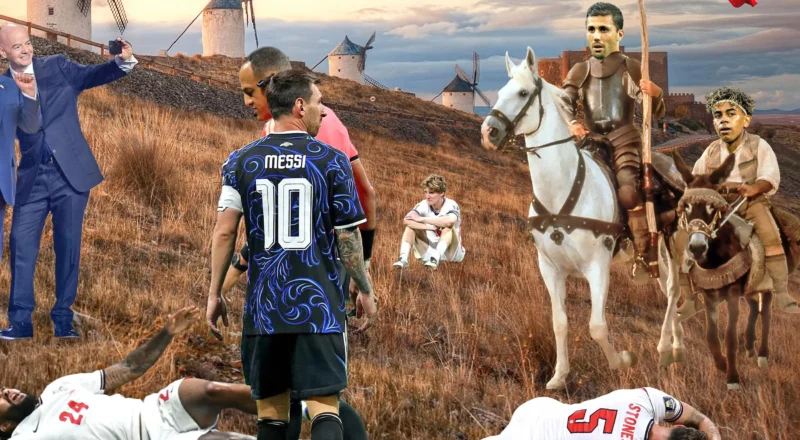
“We have a very good group, a generation of players whose level is high. We knew there was potential there, we could see things happening. Even that night in Scotland, when many people gave us up for dead or thought it wasn’t going to go well with this generation, we trusted in what we were doing, we knew the group was spectacular. And, look, it’s paid off: we were proven right.” Merino expressed. “The first time I saw it, I thought it was AI, that it wasn’t even real. It is funny how life works sometimes: it has these special situations that you think are scripted by someone but it is just the coincidence of life. It’s unbelievable that two of the best to have played the game – hopefully Lamine in the future will be one of those – share a picture like that. It’s old, from a couple of years ago now, so I think all the jokes have been done [in here]. But it’s incredible. “What can I say about Messi? Just see the way he’s playing, how good he is at 39. I don’t know if this will be his last game, his last final. But it’s an incredible challenge to play against him. It will be an intense game, which it has to be: it’s a World Cup final. There will be contact, intense duels, but that’s why you have a referee: to control that. We have to ensure the ball moves fast. The less time it spends with each of us, the less chance they have of making fouls.”
As Spain gears up to face Argentina, the anticipated matchup between Messi and Lamine is highly anticipated. Merino reflected on an iconic photograph that captures this moment. “I remember how it felt to watch that [2010] generation make history,” he remarked. “You think about that. You think about being a kid back then, watching players who were idols for me and my teammates. You think about how you dreamed of living that one day, how watching them motivated you. And then you think that you’re the ones representing your country now, you’re the ones this new generation of kids are watching, and it’s something magical.”
“What can I say about Messi? Just watch how he’s playing, how incredible he is at 39. I can’t say for sure if this will be his last game or final. But facing him is a tremendous challenge. It will undoubtedly be an intense match—it’s a World Cup final. There will be contact and fierce duels, but that’s why we have a referee: to manage that. We must ensure the ball moves quickly. The less time it stays with us, the fewer opportunities they have to commit fouls.”
And then, they will approach the game as if it were just another day, as Spain has always done. “I remember how it felt to watch that [2010] generation make history,” Merino reflected. “You think about that. You reflect on being a child back then, watching players who were my idols alongside my teammates. It’s magical to realize that we are now the ones representing our country, the ones that this new generation of children will look up to.”