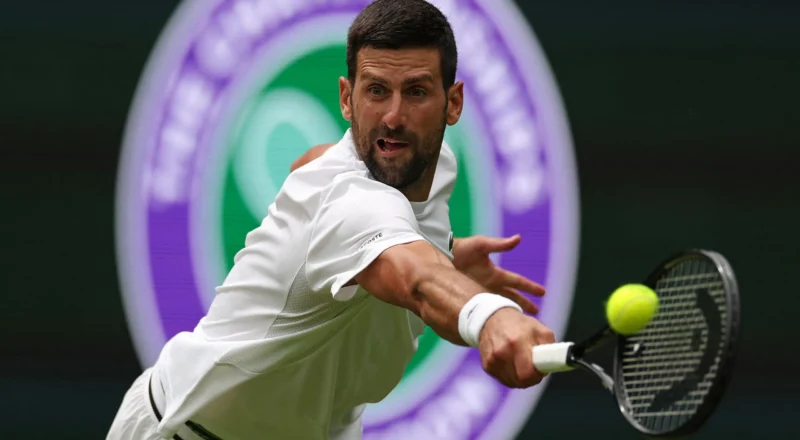


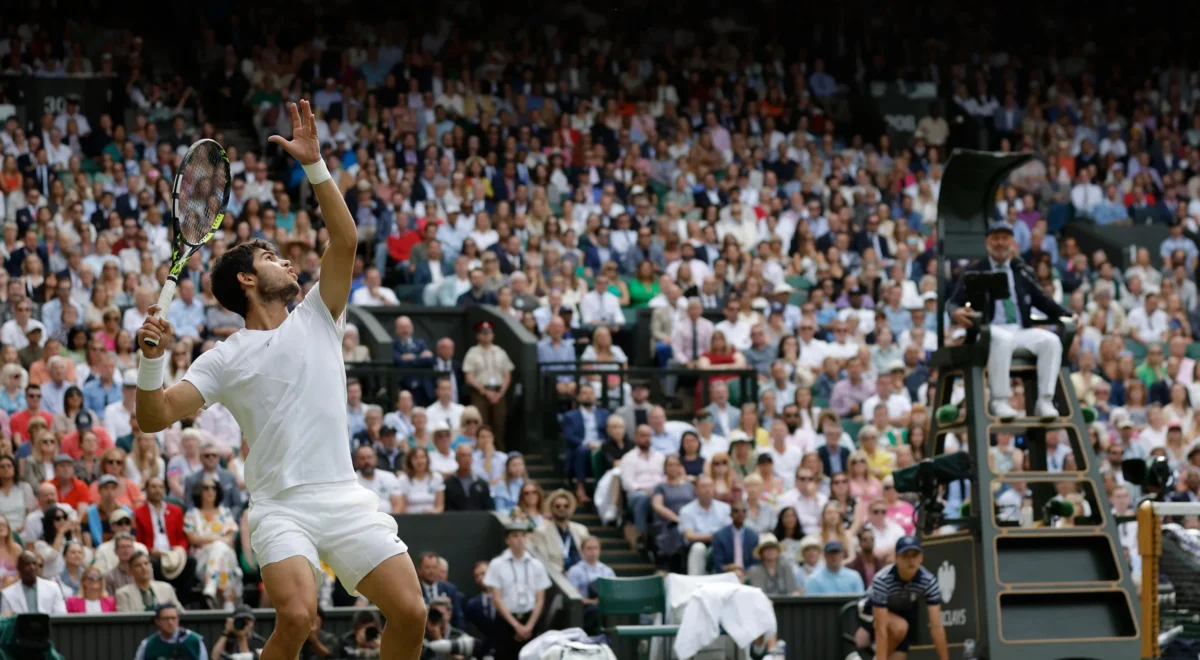
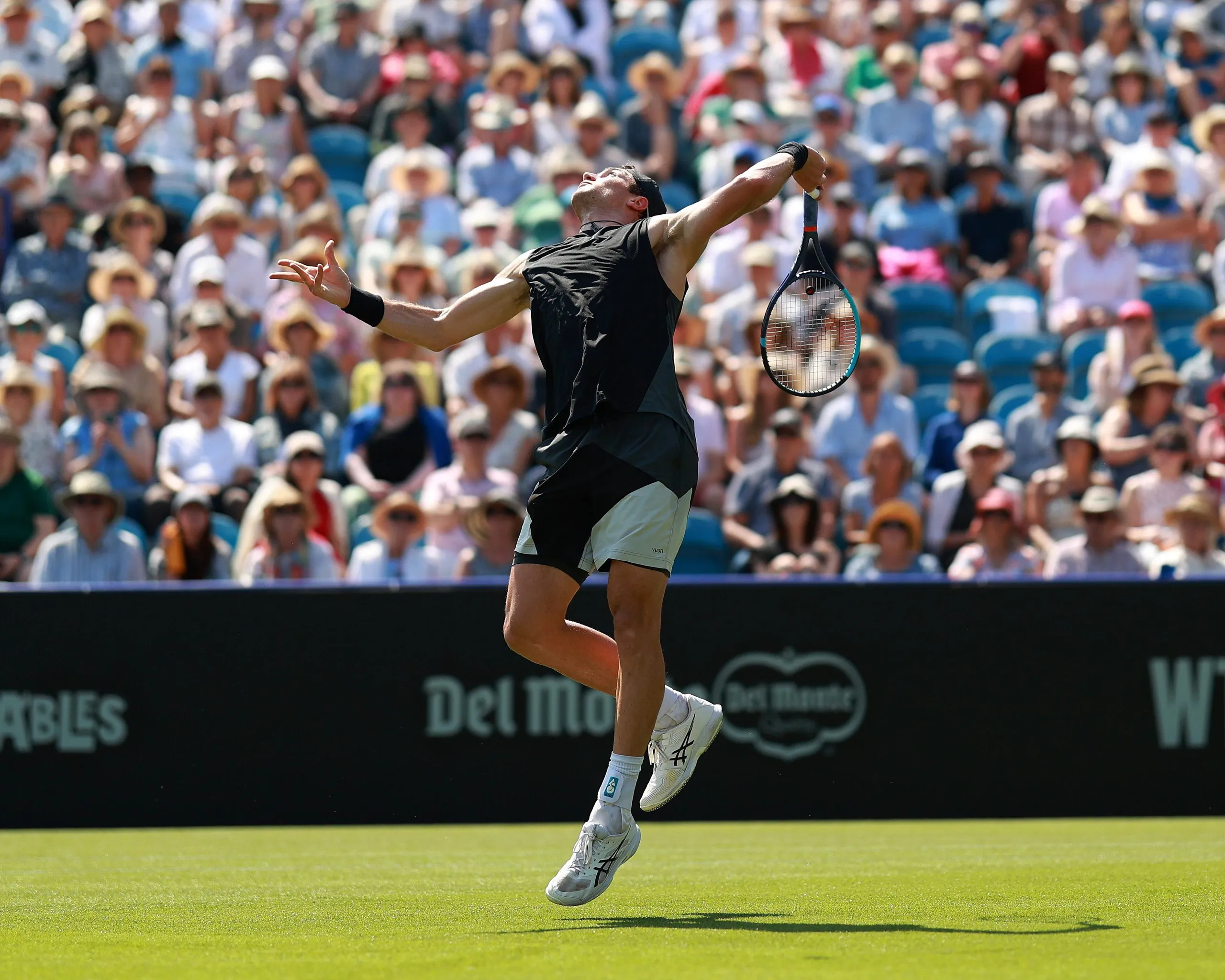
Elite tennis players often find themselves at ease discussing the intricate technical aspects of their sport, yet during last month’s French Open, a simple inquiry about the overhead smash resulted in little more than a bemused shake of the head from Novak Djokovic. “You’re talking to the wrong person,” he replied with a chuckle.
Djokovic, a 24-time Grand Slam champion, has built his illustrious career on a well-rounded game. While most competitors have identifiable weaknesses, he has nearly perfected every stroke.
However, the overhead smash remains an enigma for him. Despite its perception as one of the most straightforward shots in tennis, it has eluded Djokovic’s mastery.
The 39-year-old Serbian’s difficulties with the smash have led to significant losses throughout his career. Even with a comprehensive skill set, he possesses one of the least effective overheads on the tour.
Consequently, Djokovic responded to suggestions that his overhead has improved over time with laughter, fully aware of the commentary that follows each missed smash. “Thank you, but I don’t know if my coaches would agree with you, or myself,” he remarked.
“I have a ‘Djokosmash’ name for it right now by my fans, which is not that great. It hasn’t been really the shot that I was so confident in the last 10, 15 years of my career. Maybe early on, yes, but I don’t know. I’m not a big fan of the smash.”
In today’s baseline-dominated era, the smash remains a crucial shot, particularly on Wimbledon’s quick grass courts, which continue to reward players who approach the net. While spectators might view it as an easy shot, the reality is far more nuanced.
“It’s actually a strange shot, because sometimes you feel it very comfortably, you see the ball perfectly. And sometimes you struggle,”
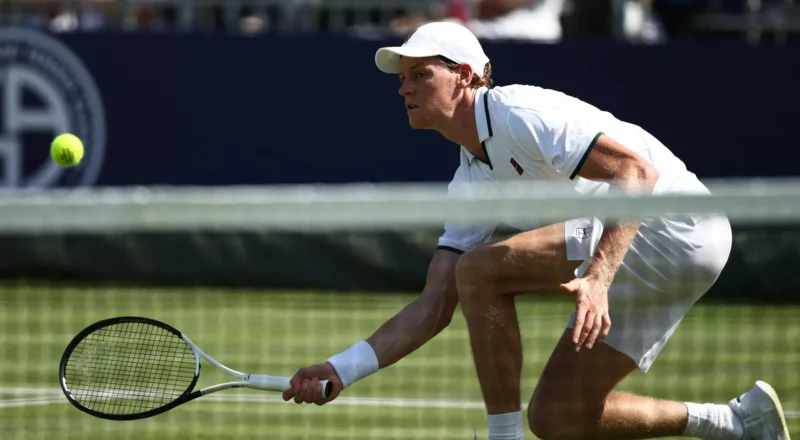
noted world No. 1 Jannik Sinner, who faced similar challenges during his early years.
Opinions on the smash vary greatly among players. Some expect to convert every overhead, while others consider it one of the most challenging strokes in tennis. Daniil Medvedev has pondered whether technique or natural ability plays a larger role in the shot’s execution. “I always wondered if it’s something how you were taught, when you were young, to do it or if it’s like a talent where you’re born with it because I do struggle sometimes with overheads,” he explained.
“There are a couple of guys on tour, on the practice court you give them some lobs and it doesn’t matter which position they’re in, they do it 10 out of 10 and I’m like: ‘How?’ With me, it goes up, down, right, left. I don’t understand where it’s going down so I do struggle sometimes.”
In his first match back after a lengthy injury layoff, Jack Draper experienced a significant mishap during his opening service game at Eastbourne, missing an overhead smash from right at the net. Although Draper typically approaches the shot with confidence, this error highlighted the necessity of maintaining focus.
Numerous factors contribute to the overhead’s complexity. Players contend with various elements while tracking high, slow balls, often disrupted by the sun’s glare or turbulent winds. The height and depth of an opponent’s lob further complicate the smash.
Draper regards Rafael Nadal as a prime example of how to navigate these challenges. “I think he has one of the best smashes ever that I’ve seen,” Draper stated. “And it’s because he gets so fast behind the ball to then go forward. That’s what Trots [Draper’s previous coach James Trotman] always taught me as well, that I have to get behind the ball to then push forward because there was a stage when I was younger where I’d just wait for it to get on top of me.”
In today’s game, players strike the ball with such force that hitting a slow-moving ball from the sky may appear to be a welcome opportunity from the stands.
Nevertheless, as Canadian player Leylah Fernandez—currently ranked No. 23—points out, the extra time to prepare can lead to overthinking the shot. “Every shot is hard. And a smash is probably one of the hardest ones because there’s also that two seconds where you’re thinking about it a lot, where the ball is high. ‘OK, I’m in control. Let me hit the crap out of the ball.’ But you’ve got to time it right and have the full belief that you’re gonna get it, right?”
Others have opted to avoid smashing altogether, favoring drive volleys to handle high balls, a technique that has become more prevalent.
Diana Shnaider, a semi-finalist at the French Open, recalls how she shunned smashes during her early training. “I didn’t hit any overheads until I was 14. And then I had a coach, I was hitting so many overheads with him, like almost 50 every practice. And then I started hitting my first overheads in the matches. I was so proud of myself,” she shared.
Despite the frustrations, many players maintain that they should convert on smashes every time they line up for one. Former world No. 1 Karolina Pliskova stated, “I should make nine out of 10. I think there is a possibility, that there are some harder or easier smashes, but the ones which are closer to the net, I think you should always make it. But if it’s a little bit deeper, there can be sun or wind, it can be tricky.”
Flavio Cobolli, also a French Open runner-up this month, concurred. “Ten out of 10, maybe it’s not easy,” he said, then smiled. “But nine out of 10, I can do it. Yeah.”