

“Through fandom,”
In Kulkandi, Bangladesh, childhood memories for Shahidul Partha revolve around World Cup matches becoming grand communal gatherings, with up to 80 locals filling his family’s yard. They huddled around a small 14-inch black-and-white television, one of the few available in the area, powered by batteries. As they sipped milk tea and nibbled on biscuits, the crowd erupted in celebration whenever Brazil or Argentina found the net.
“It was a very nice moment and it was like they were playing with the players,” recalls Partha, now 35, living in Hatfield, Pennsylvania, where he serves as a software engineer and township commissioner.
“When it is a goal, everyone is screaming loudly,” he adds. “Everyone is excited, people are shouting, like: ‘Go, go, make it go.’ Sometimes they give directions: ‘Go this side, go this side.’”
Even from afar, Partha’s allegiance to Brazil remains strong, as it brings back poignant memories of his homeland.
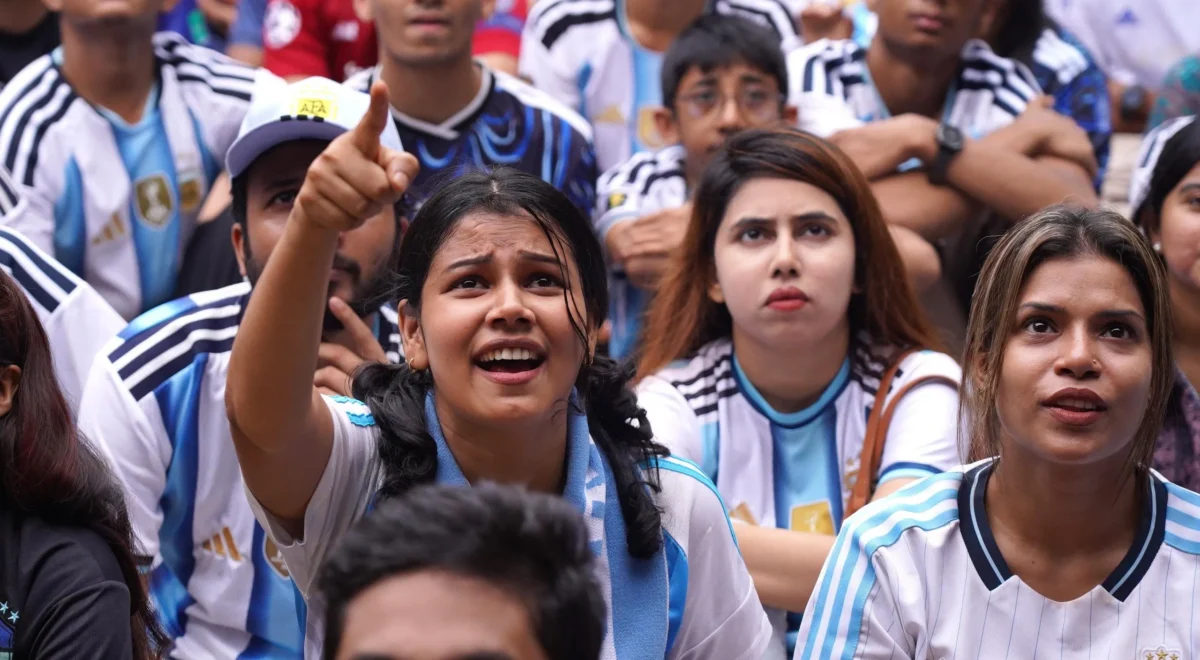
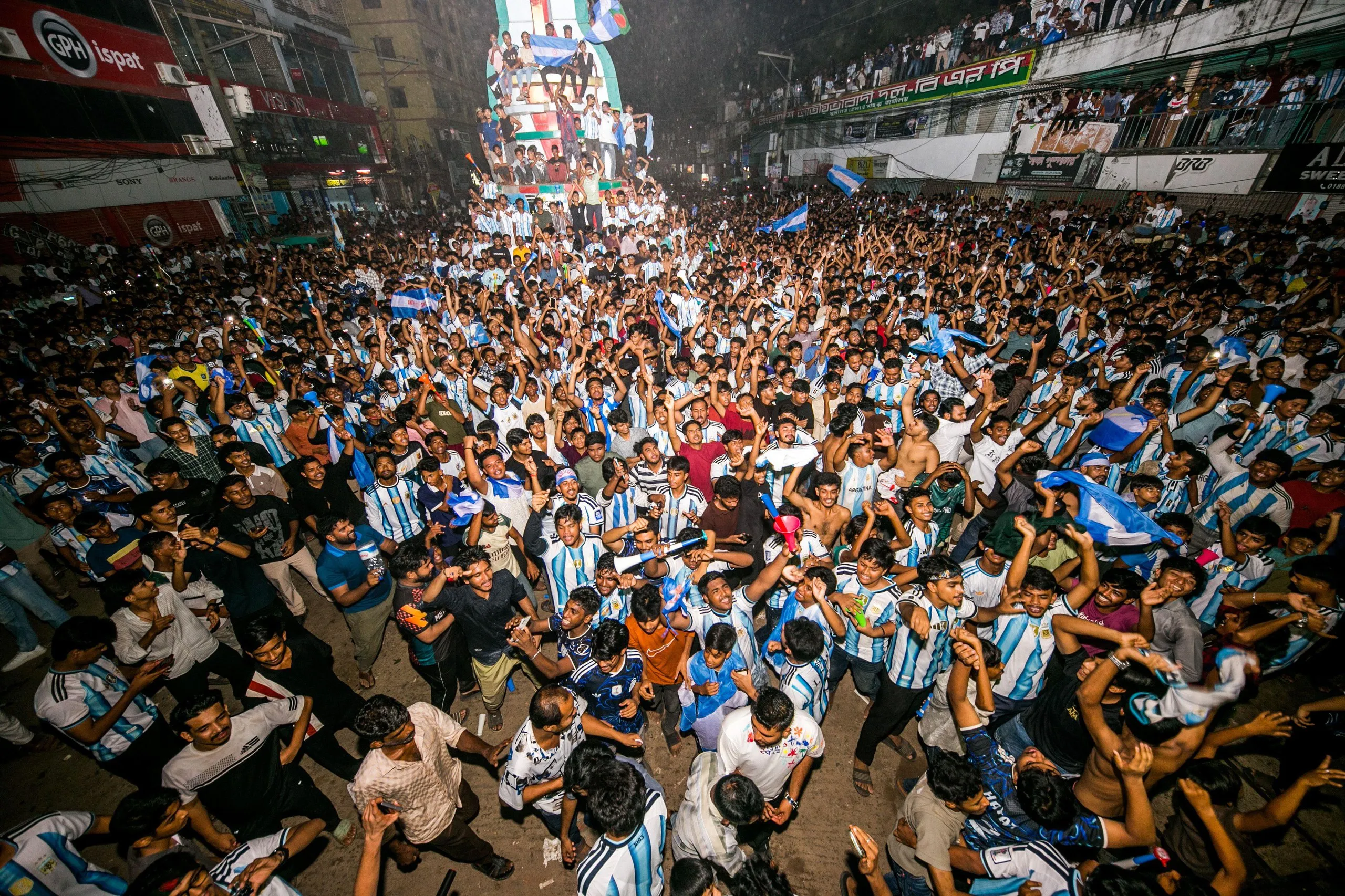
Despite the fact that Bangladesh’s national soccer team has never reached the World Cup, the citizens’ passion for the sport remains fervent. With a population exceeding 170 million, the nation has cultivated a longstanding admiration for Argentina and Brazil. This enthusiasm is reflected in data; nearly 20% of traffic to the Guardian’s live blog for Argentina’s match against Algeria on June 16 came from Bangladesh. In Brahmanbaria, a devoted supporter of Brazil painted his home in the team’s iconic green and yellow, adorning it with murals of star players. Bangladeshi Americans express that their support for these South American teams helps them connect with their cultural heritage and serves as a reminder of their home country’s struggle for independence.
Historical Context and Fandom Growth
After Bangladesh gained independence from West Pakistan in 1971, the country’s broadcasting capabilities began to improve. Support for Brazil took root during the 1970s, during Pelé’s emergence as a global icon. Bangladeshis, as citizens of a nascent nation, found resonance in the challenges faced by the previously colonized Brazilians and Pelé’s rise from poverty to stardom. Mehedi Farhana, a 48-year-old associate pharmacist in Hatfield, recalls how her third-grade history book from the 1980s detailed Pelé’s early struggles and eventual success.
“We are in that time, a third-world country. We are trading minimum resources, but we want to prove to the world that we can do it,”
shares Farhana. A lifelong Brazil enthusiast, she remembers waking up at unusual hours to catch World Cup matches during her youth in Bangladesh. She and her peers from the 1970s and 1980s could relate to the economic difficulties faced by Brazilians. “They are the same like that, they’re poor, they don’t have great resources,” she explains. “but still they can prove they can do it.”
The 1986 World Cup marked a pivotal moment in Bangladesh, coinciding with a surge in television ownership. For many Bangladeshis, this was their first opportunity to watch the tournament live, thanks to broadcasts from the state-owned Bangladesh Television (BTV). The enthusiasm surrounding Argentina and Brazil during this tournament solidified a cultural obsession that has endured across generations.
Argentina’s victory over England in the quarter-finals of the 1986 tournament was particularly significant, as England had colonized the region now known as Bangladesh for almost two centuries. This match featured Diego Maradona’s iconic goal, often dubbed the “These big stars are coming up, and they’re defeating the nations who occupied before,” a moment that continues to resonate with Bangladeshis.
“In a match of soccer, that is something that definitely played a role in people’s hearts.”
comments Onyx Chowdhury, a 40-year-old Bangladeshi American living in Long Island, New York. “The older generation, they will bring up Pelé, because the 70s was Pelé’s era, and then Maradona was in the 80s. And now, obviously, my generation has the [Lionel] Messi era, so it’s just been moving further down and down.”
Chowdhury notes a generational divide among supporters of Argentina and Brazil within the Bangladeshi community. His immediate family ardently backs Argentina, while his older relatives tend to favor Brazil.
“We were fighting against the autocracy of military government. At that time that was the only entertainment that came in. We gathered together and the police were looking [for us], and we were watching football,”
Soccer as a Means of Escape
The 1986 World Cup unfolded during a time of political unrest in Bangladesh, which faced martial law throughout the 1970s and 1980s. Ibrahim Chowdhury, a journalist and activist with four decades of experience, was navigating the oppressive regime post-university. Soccer provided a vital escape from the grim realities of life under military rule.
“All the political movement before this froze for the whole World Cup … it was a very memorable moment.”
Chowdhury recollects. He remembers a friend keeping watch outside while they enjoyed the matches. “I had a fascination to cover it as a journalist … but I couldn’t get a chance,” he adds.
Now 65, Chowdhury resides in North Brunswick, New Jersey, and is poised to fulfill a lifelong dream by attending the World Cup in person. He has secured a volunteer position to assist fans and guide them during the matches at this summer’s tournament.
“So this opportunity in the United States, Canada or Mexico came up, I applied for both the journalist pass and for the volunteerism, and I got [the volunteer pass].”
Chowdhury explains. “It’s like an emotion to Bangladeshi people,”
Community Support and Legacy
In Paterson, New Jersey, which is home to one of the largest Bangladeshi-American populations outside New York City, a local soccer team primarily supports Argentina. Since its establishment in 2018, the Bangladeshi American Sports League has attracted hundreds of males aged 14 to 35.
“They don’t see Brazil or Argentina as a different team. If you speak with them, it’s more like it’s ‘us’. Even though none of us … have been to any of those countries, the emotion is always there.”
comments the league’s secretary, Monsur Latif, regarding the two South American teams. “It’s the style of their game,”
Latif, a 34-year-old engineer and dedicated Argentina supporter, cherishes the memories of watching matches with his brothers as a child. “My son’s getting forced into it too,” he expresses. “there’s some sort of connection to where you’re originally from.”
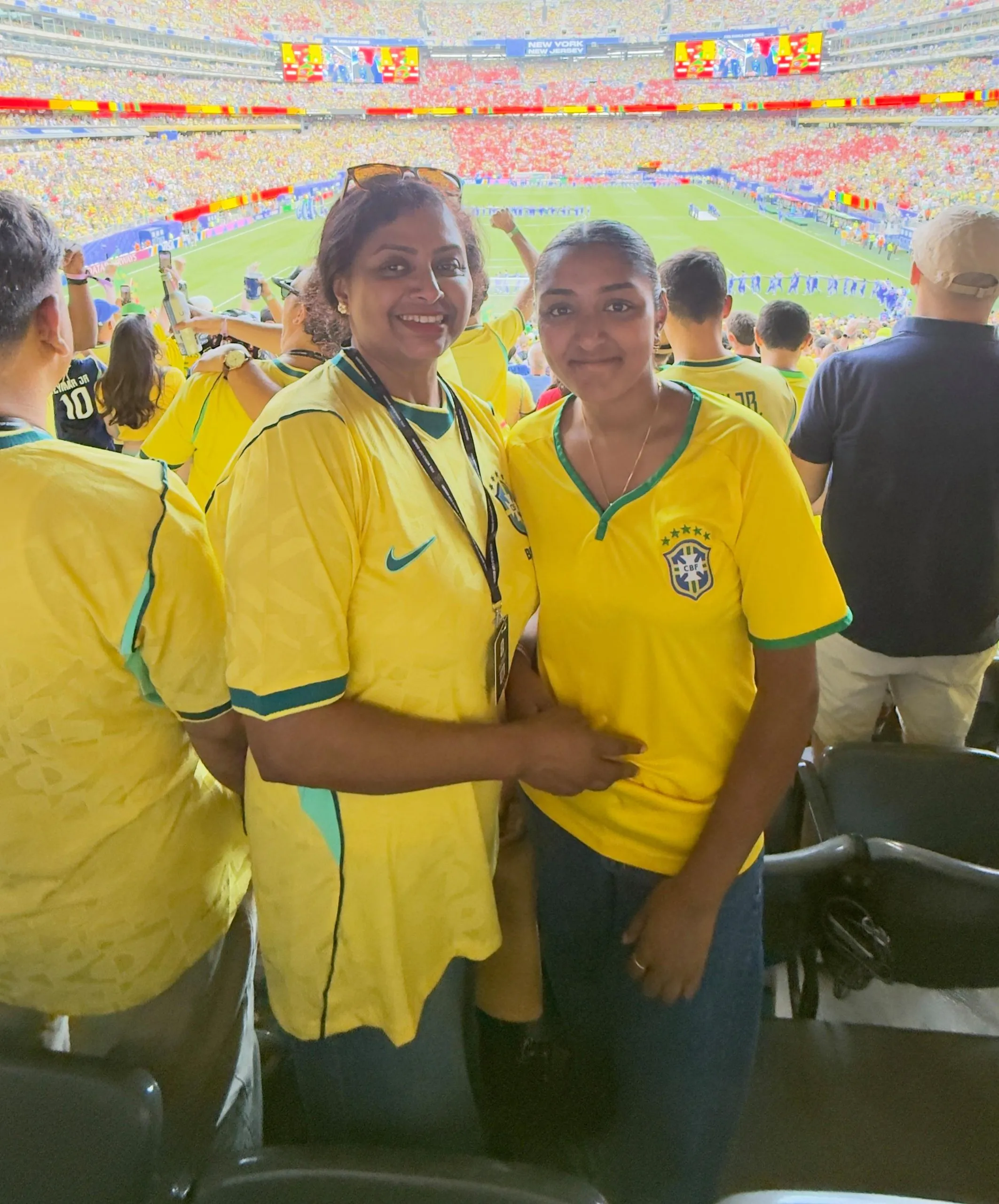
Throughout the month, the Bangladeshi American community has organized watch parties for both Brazil and Argentina matches. Despite his support for Argentina, Latif found himself cheering for Brazil during a gathering on June 19 when they faced Haiti.
Although born after the 1986 World Cup, Latif and Chowdhury grew up hearing about Maradona’s legendary plays, akin to family tales. Now, Chowdhury is passing this fervor on to his young son.
“My son’s getting forced into it too,”
he shares, adorning his one-year-old in an Argentina jersey to capture memories of the budding fan.
Chowdhury concludes, “there’s some sort of connection to where you’re originally from.”
- World Cup
- World Cup 2026
- Brazil
- Bangladesh
- Argentina
- South and central Asia