

In the summer of 2011, as Marcelo Bielsa joined Athletic Bilbao, Luis de la Fuente was departing. Bielsa represented a new era, while De la Fuente, a former left-back with distinctive curly hair, transitioned from an eight-year career with the first team and time coaching Athletic’s under-19 and B teams to joining Deportivo Alavés in the third tier. Eleven matches later, he returned to Athletic.
After being dismissed from his first senior coaching position, which also turned out to be his last, De la Fuente anticipated another opportunity would arise. However, as time went by without a call, he began to doubt. It wasn’t until a year and a half later that the Spanish federation reached out, offering him a role coaching the under-19s. During the uncertain months, he returned to Athletic’s Lezama training ground, eager to learn from the environment.
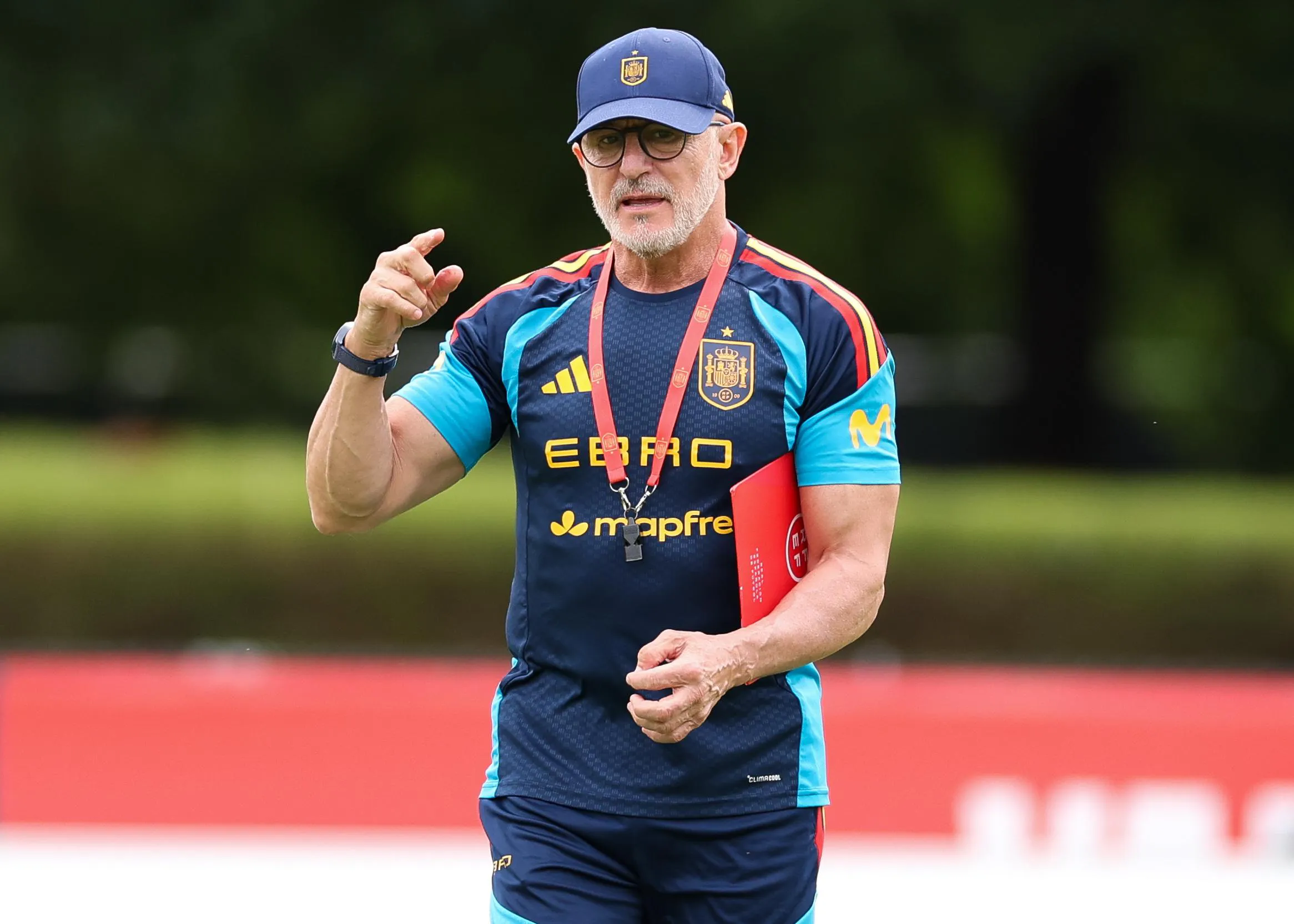
“I’m a big admirer of Marcelo Bielsa,” De la Fuente remarked on Thursday. “He made Athletic play wonderfully. When I was on the dole for 18 months, I spent five, six months [of those] watching all his training sessions. I learned so much from him and he was very innovative. I was fortunate enough to be part of talks with him and it is an honour to play against him for the first time.”
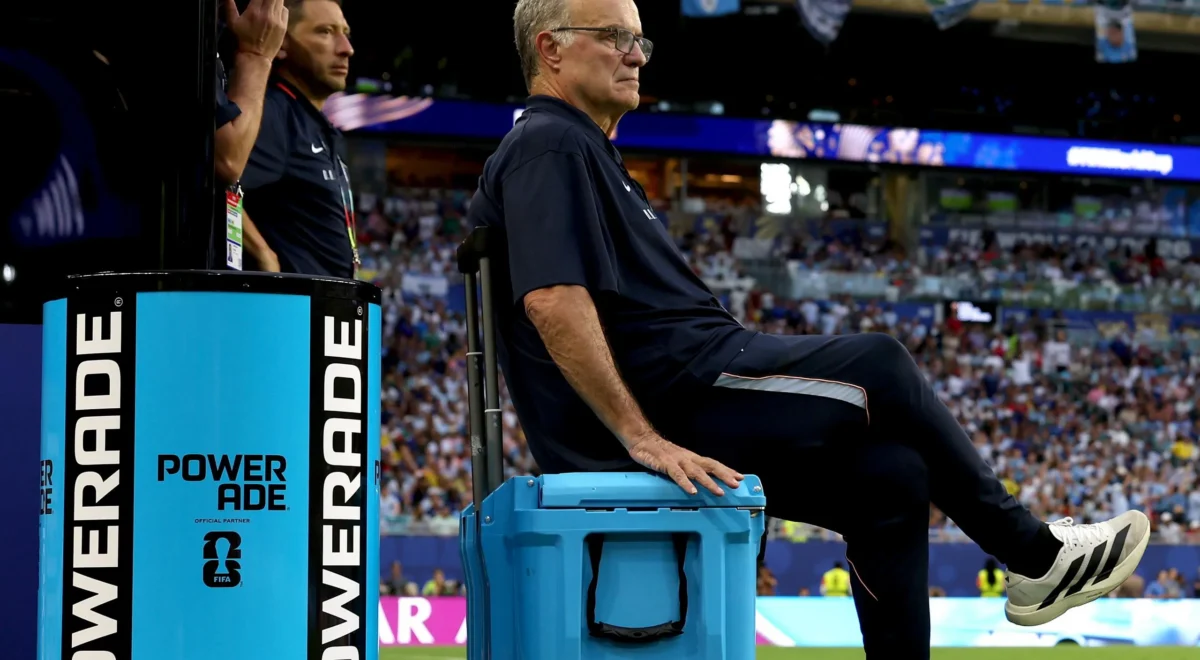
Looking back 15 years and 5,750 miles away, De la Fuente reflected on that time. After the Spain coach exited the room beneath the main stand in Guadalajara, Bielsa entered. “We had some contact, and I might have passed on some of my ideas,” the Uruguay coach stated, his head lowered and voice subdued. “The football he’s achieved with Spain is exquisite. Of course they don’t represent my style: the reality is that his football is much more beautiful than what I’ve managed with my team.”
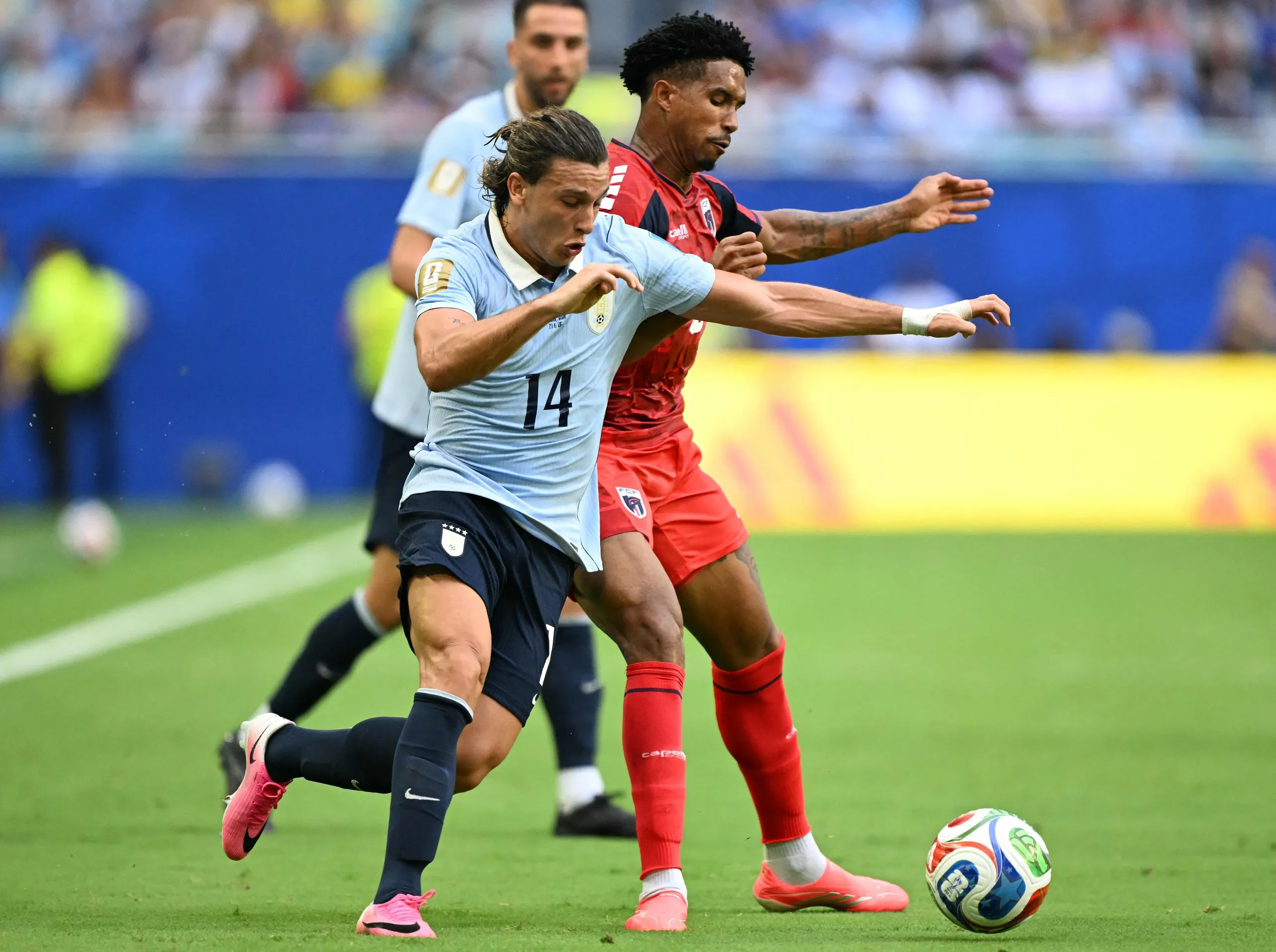
Bielsa’s impact on the sport is profound, and while his achievements are significant, the current situations of both coaches are telling. On Friday, Bielsa and De la Fuente will meet in their final Group H match. Spain, the European champions and unbeaten in 33 matches, sit atop the group, having secured qualification, while Uruguay faces potential elimination without a World Cup victory. Following a 2-2 draw with Cape Verde, the newspaper El Observador described their situation as “A branch of hell, the collapse of a false hope, an empire of the fleeting,” To advance, they likely must defeat Spain.
“We don’t feel inferior to anyone,” midfielder Agustín Canobbio asserted. “Uruguay has always been strong when it believes in itself and that has to be our starting point.” However, this is a challenging mindset to maintain. Many players have “no positive expectations at all” Bielsa acknowledged. The struggles extend beyond just the recent matches where they might have deserved better results, victims of almost comical mistakes, or the six games without a win. The issues run deeper.
Upon his arrival at the press room in Guadalajara, Bielsa first adjusted the microphone and greeted everyone, which felt like a positive start. Following the 2024 Copa América, Luis Suárez departed from the national team, revealing that players had requested a meeting to ask Bielsa to at least acknowledge them with a greeting. Suárez painted a grim picture of the internal atmosphere, describing it as cold and dysfunctional, where the coach rarely communicated with his players, who, along with the staff, felt unwelcome.
“What the national team is going through hurts,” Suárez expressed. He recounted how he attempted to comfort Darwin Núñez after the striker broke down in tears at halftime, only for Bielsa to advise against it. Suárez questioned why Matias Vecino left the national team at 30, to which the answer was that he could no longer tolerate the situation. He also defended Canobbio for confronting the coach, stating: “He’d held back long enough.”
Interestingly, Bielsa seemed to agree with this perspective. Amid the distractions surrounding his unavailability for the World Cup photo, he managed to pose in his own distinct manner. After Uruguay’s 5-1 defeat to the US in November, he labeled himself as “Those who have a relationship with me come out of it worse. There are toxic people who only see errors, who demand, who correct, who are never satisfied with anything, who only like to talk about work, who go to eat and take a newspaper with them because they don’t want to integrate with the rest. But do you know what that behaviour is based on? Fear. One doesn’t enjoy winning; he fears losing much more.” admitting: “Something mad happened: we had Luis Suárez, Diego Forlan and Edison Cavani at the same time,”
Uruguay’s lack of victories has persisted. Although the internal crisis has been somewhat addressed, they still have not tasted victory. The challenges extend beyond group dynamics; there is an ongoing discussion about the disparity between expectations and reality. Uruguay may be suffering from a legacy of overachievement, an identity and narrative of defying odds that dates back to their first two World Cup titles in 1930 and 1950, as well as earlier Olympic golds in 1924 and 1928, and their semi-final run in 2010.
“Playing well against Spain is not enough; you have to compete for every ball with Uruguay’s mentality,” former goalkeeper Gustavo Munúa recently said about the 2010 team. Uruguay has not won a World Cup match without Suárez since 1990. Yet, despite this, the federation president expects a quarter-final appearance from the team. They need to secure a result against Spain, led by De la Fuente, who might realistically end Bielsa’s international coaching career.
While Bielsa spoke of “We can’t just stand and watch. This group has pride, hunger and belief. When you wear the Uruguay shirt, there are no excuses. The most important thing is for Uruguay to be Uruguay again.” that fostered his belief, even when others do not, he emphasized the need to control possession against Spain. Meanwhile, Uruguay aims to assert their traditional approach. “Playing well against Spain isn’t sufficient; you must compete for every ball with Uruguay’s mentality,” Canobbio stated. “We cannot simply stand by and observe. This group embodies pride, hunger, and conviction. Wearing the Uruguay shirt means there are no excuses. The priority is for Uruguay to reclaim its identity.”
- Uruguay
- Marcelo Bielsa
- World Cup 2026
- World Cup
- features