


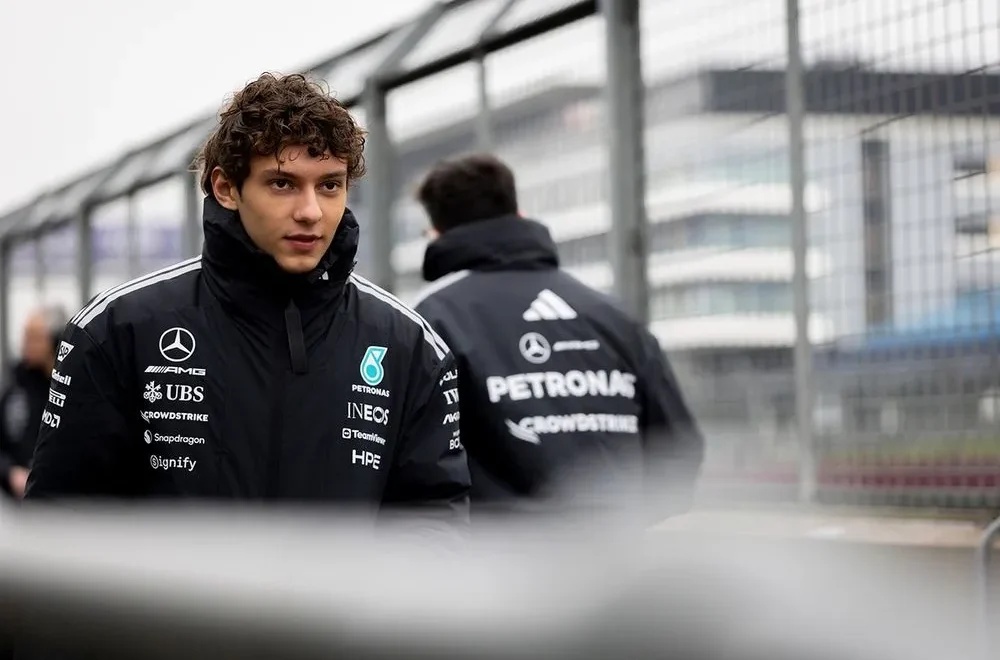
Andrea Kimi Antonelli expresses his belief that the upcoming 2026 regulatory shift in Formula 1 will significantly favor less experienced drivers due to the necessity for adaptation.
This season, F1 will introduce substantial modifications, including a chassis that is 32kg lighter and exhibits reduced downforce, alongside an engine that increasingly relies on electric power. This comes after a four-year period dominated by ground effect vehicles.
The conversation surrounding these changes has focused on how drivers will need to alter their driving techniques, as active aerodynamics and energy management become more crucial. Some pundits argue that the 2026 vehicles contradict the foundational principles drivers learned during their karting days.
However, younger competitors, particularly those who entered F1 recently, stand to gain from this transformation, as they are already accustomed to the frequent changes in vehicle dynamics and do not rely on a singular racing style.
Antonelli exemplifies this, having rapidly ascended to F1 without participating in more than one season of any junior series prior to making his debut with Mercedes at just 18 years old.
“For all the rookies that joined F1 last year, coming into this year with a new car is kind of good, because obviously we’ve been used to drive a different car every year,”
the Italian teenager remarked. “We’ve been required to adapt quickly to new cars, so having a fresh model this season is beneficial. It essentially serves as a reset for everyone. Especially for us, who are accustomed to new cars annually, this familiarity may enable us to grasp the vehicle’s dynamics faster than others.”
Antonelli argues that this situation creates a more level playing field, as all drivers must start anew, a contrast to the previous season when he felt he was at a disadvantage compared to more seasoned racers.
“This is a massive rule change and it kind of resets everything because everyone has to relearn the car,”
he added. “From that perspective, it’s advantageous because last year was the final season under the old regulations, and many drivers were already well-acquainted with their cars, having developed them over time.”
“In contrast, this year is entirely different. Thus, for those who can quickly and effectively comprehend the new driving challenges, there lies a significant opportunity to excel.”
Nonetheless, Antonelli does not underestimate the capabilities of seasoned drivers, acknowledging that inexperience can still lead to mistakes, as he learned during his debut season.
While he occasionally showcased his talent with three podium finishes and a sprint pole in Miami, he also struggled with avoidable accidents during practice sessions and the pressures typically faced by a highly-touted rookie, as seen during his home race in Imola.
“The other drivers are not to be underestimated; they are quite capable,”
the 19-year-old stated. “I believe they will adapt quickly as well. Experience remains a crucial factor. How one approaches each race weekend plays a significant role. Although I gained valuable insights during my first year in F1, I recognize that I still have much to learn.”
“While my approach this year may differ in some aspects, there will still be a noticeable gap in experience. Yet, when it comes to handling the new car, I feel that we are all on equal footing now. This presents a substantial opportunity for all of us.”