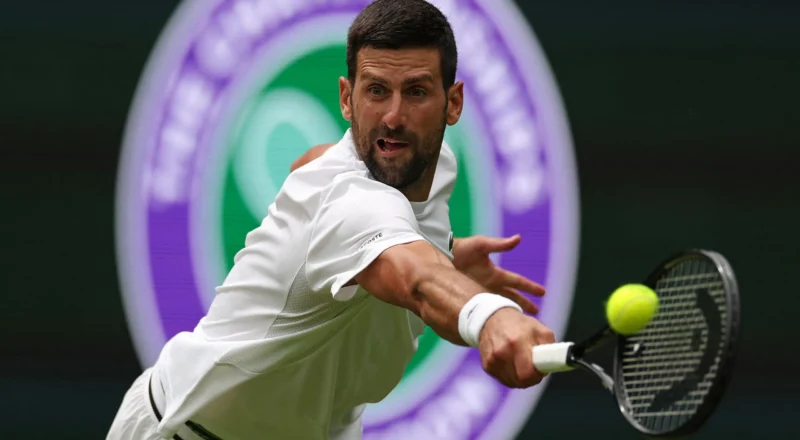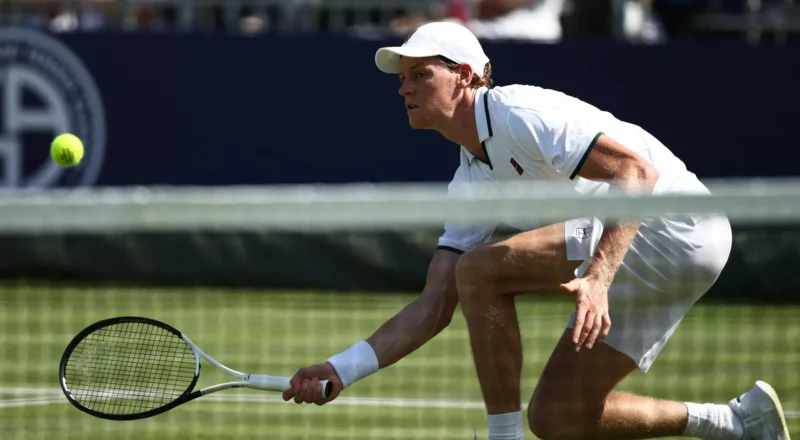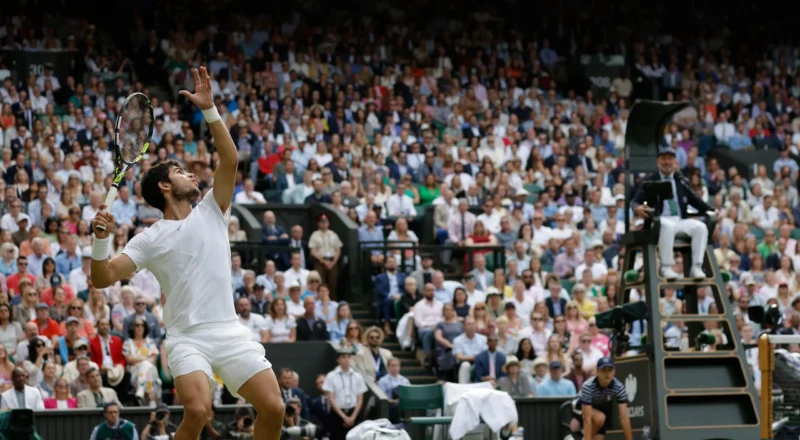


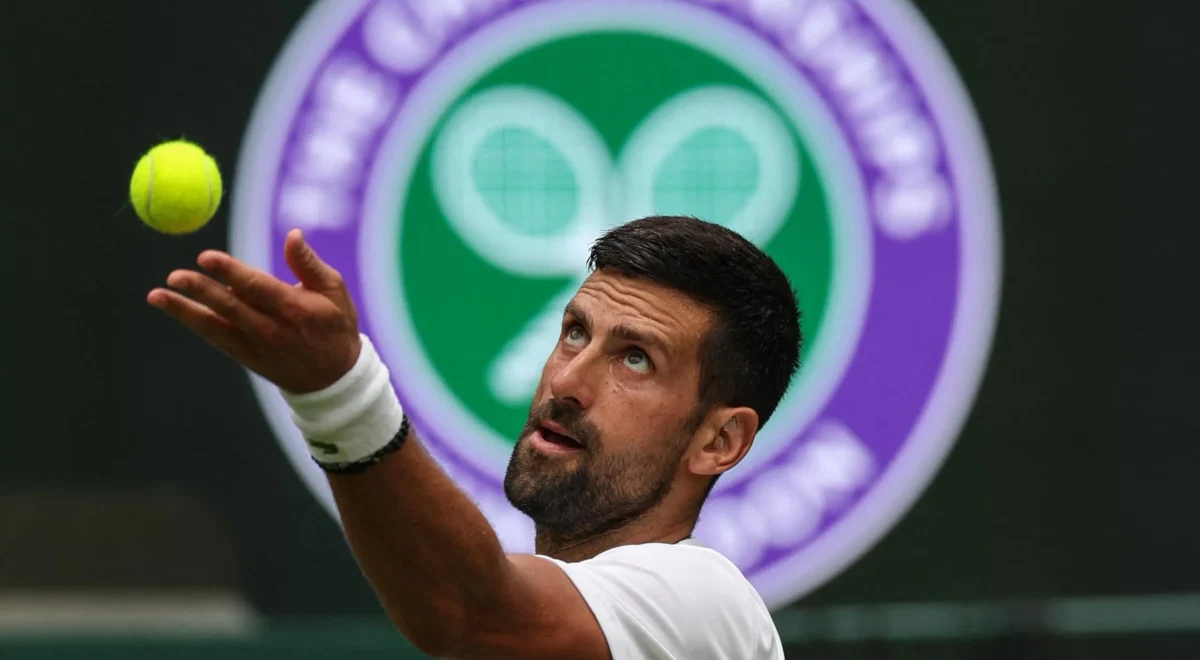
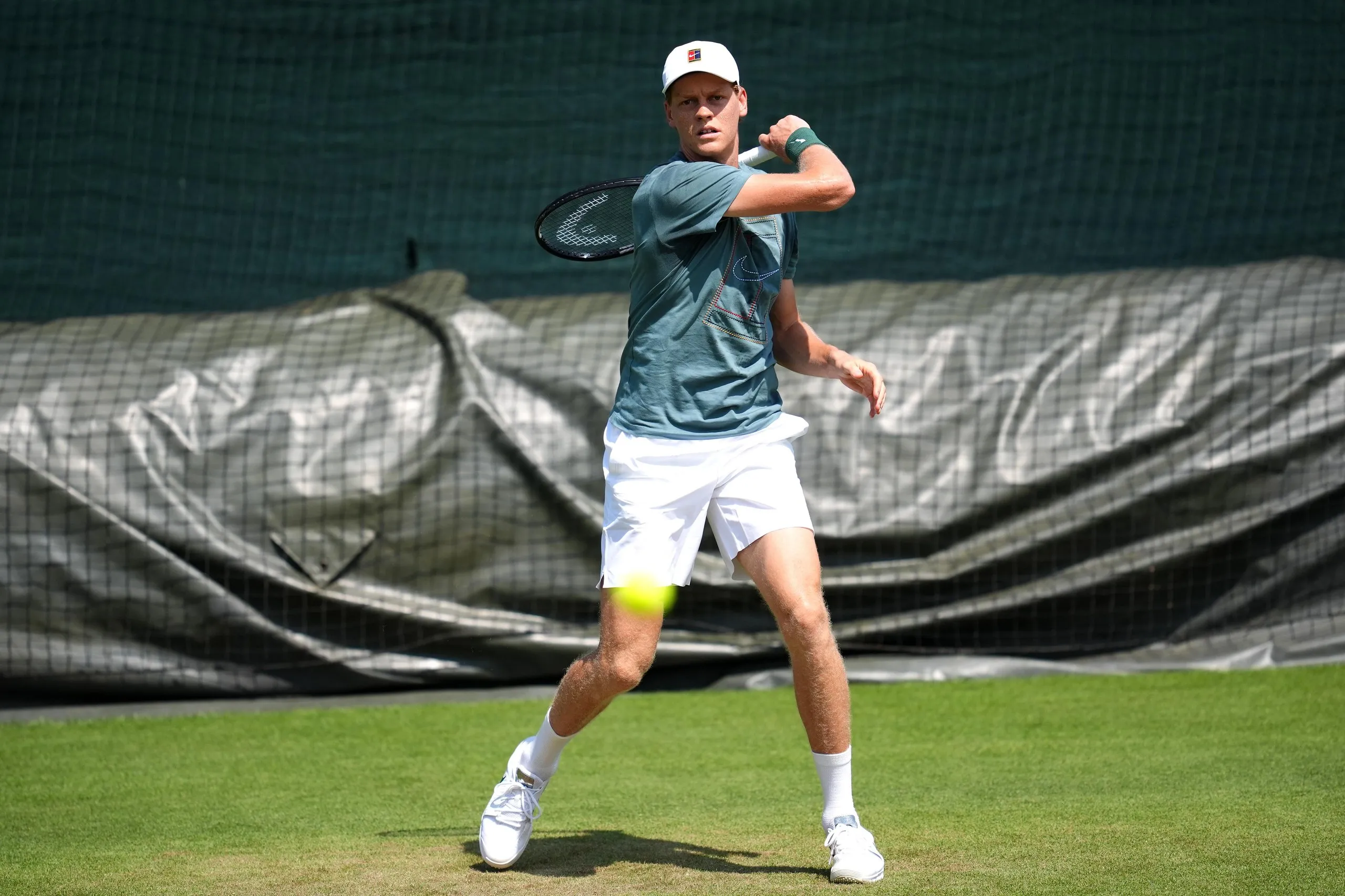
On Monday, Novak Djokovic commenced his preparations at the All England Club for yet another Wimbledon, marking the 21st time in his illustrious career that he has stepped onto these iconic grass courts. The 39-year-old engaged in movement drills and practice matches at Aorangi Park, honing his skills alongside local hitting partners and fellow champions. His training included a reunion with his longtime friend Marin Cilic, followed by a practice session on No 1 Court with world No 1, Jannik Sinner, as they both aimed to improve their game.
Djokovic, seeded seventh, is once again chasing the ambitious goal of becoming the oldest grand slam singles champion in history by claiming an unprecedented 25th grand slam title at Wimbledon. As he approaches 40, the opportunity to achieve this feat diminishes with each passing tournament, yet Djokovic has consistently demonstrated that with favorable circumstances over two weeks, he can seize the moment.
The current season has highlighted the challenges Djokovic faces at this stage of his career. His performance at the Australian Open, where he triumphed over Sinner in a thrilling five-set semi-final, will be remembered as one of his finest achievements. However, he ultimately fell short against Carlos Alcaraz in the final, lacking the stamina needed for victory.
Since the Australian Open, Djokovic’s five-month stretch has underlined the difficulties of maintaining top-level performance. Between February and May, he struggled with injuries, managing only one match where he was eliminated in the fourth round at Indian Wells by Jack Draper. As Roland Garros approached, he attempted to compete in Rome but suffered an early defeat against world No 79, Dino Prizmic. His lack of preparation was evident during the French Open, where he led by two sets in the third round against João Fonseca but ultimately succumbed to the physical demands of a taxing five-set match.
At his age, ensuring his body can withstand the rigors of grand slam tournaments is Djokovic’s paramount challenge, and it is becoming increasingly complicated. His successful run in Australia can be partly attributed to fortunate circumstances, including Lorenzo Musetti’s retirement during their match and a walkover granted by Jakub Mensik, which allowed him to conserve energy.
If there is a venue where Djokovic might secure another slam, it is Wimbledon, a tournament he has won seven times. The grass courts favor shorter points, enabling Djokovic to leverage his precise serve, take control at the net, and adopt a more aggressive style of play. This less physically demanding approach suits him well at this stage of his career.
For Sinner, this tournament presents an intriguing opportunity. Following a dominant clay-court season, where he became only the second player after Rafael Nadal to sweep the Masters 1000 tournaments in Monte Carlo, Madrid, and Rome, his early exit at the French Open was particularly painful. Losing to Juan Manuel Cerúndolo after leading by two sets and 5-1 in the third was a tough blow. Sinner emphasized that the loss was not due to heat, but he has since spent time undergoing tests to understand his physical challenges.
Every athlete faces significant defeats, and even the top players often experience more losses than victories. Much of professional tennis revolves around resilience, learning from setbacks, and bouncing back. A year after defeating Alcaraz to claim his first Wimbledon title, Sinner aims to carry this mindset into his title defense.
If Sinner struggles to recover, the chaos seen at Roland Garros could ensue again. The absence of two-time Wimbledon champion Alcaraz due to a wrist injury leaves a notable gap in men’s tennis. While Alcaraz’s skill and charisma are sorely missed, his absence opens up opportunities for other competitors. Djokovic, however, was unable to capitalize on his favorable draw in Paris due to his physical condition, and he now finds himself in Sinner’s half of the Wimbledon draw, setting the stage for a potential semi-final clash.
In addition to Djokovic and Sinner, Matteo Berrettini is the only other player in the bottom half to have reached a Wimbledon final. Unlike on clay, numerous skilled grass-court players are eager to seize their moment in men’s tennis. The likes of Taylor Fritz, Ben Shelton, Alex de Minaur, Flavio Cobolli, Mensik, and Arthur Fils, assuming he is fit, will all begin the tournament with high aspirations. Given the unpredictable nature of the French Open, anything is possible.