

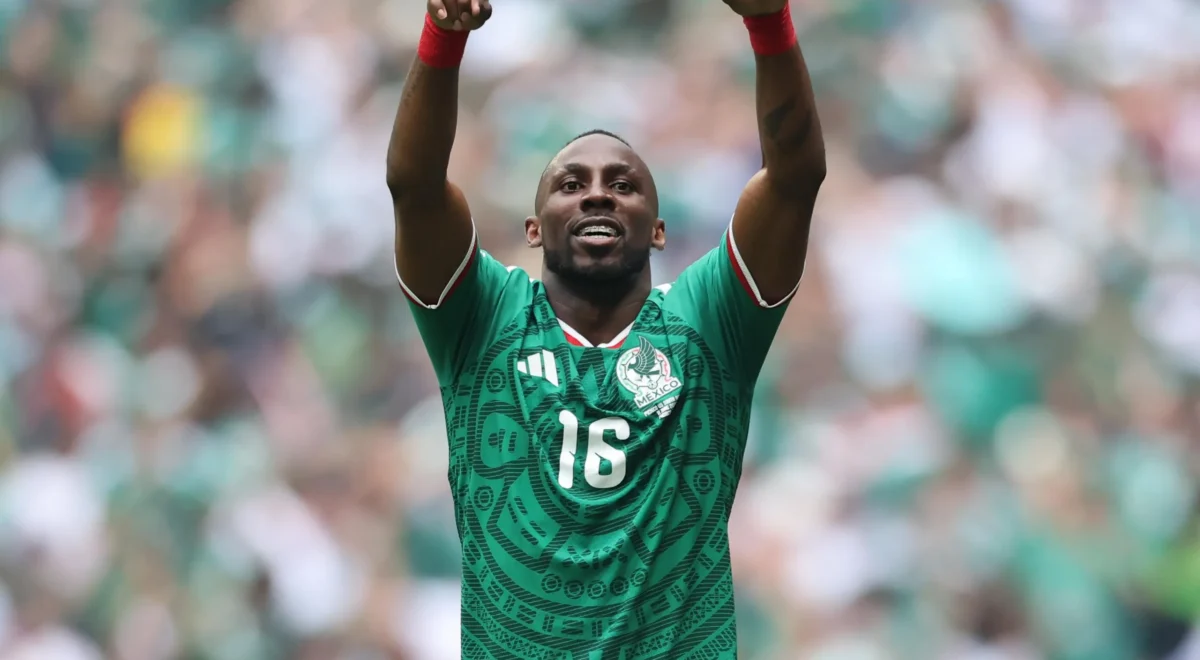

On a March evening in 2024, Club América triumphed in El Clásico Nacional, thanks in part to a goal from their standout player, Julián Quiñones. As he celebrated near the sidelines, a racial slur, ¡Puto negro!, erupted from the stands, targeting Quiñones, who is Black.
Shortly afterwards, monkey sounds echoed through the stadium, a scene all too familiar to fans of Mexican soccer. Footage captured the incident, commentators dissected it the following day, and officials expressed their outrage, launching investigations. For a brief moment, the Mexican soccer community experienced its ritual of shock.
However, the season pressed on. There were more matches, transfer rumors, and officiating disputes. By June, Quiñones had relocated to Al-Qadsiah in Saudi Arabia, where he quickly secured the title of the league’s top scorer. The incident faded into the background noise of soccer’s ongoing narratives, or so it appeared.
Fast forward less than two years, and another Mexican stadium was in the spotlight, but this time for a different reason: celebration.
On June 11, Quiñones netted Mexico’s inaugural goal in the 2026 World Cup, marking the beginning of a tournament hosted on home turf for the first time in forty years. Thousands of fans rose in unison, television commentators erupted with cheers, and social media was flooded with images of the striker enveloped in the Mexican flag. The very culture that had once insulted him now embraced him as a national icon.
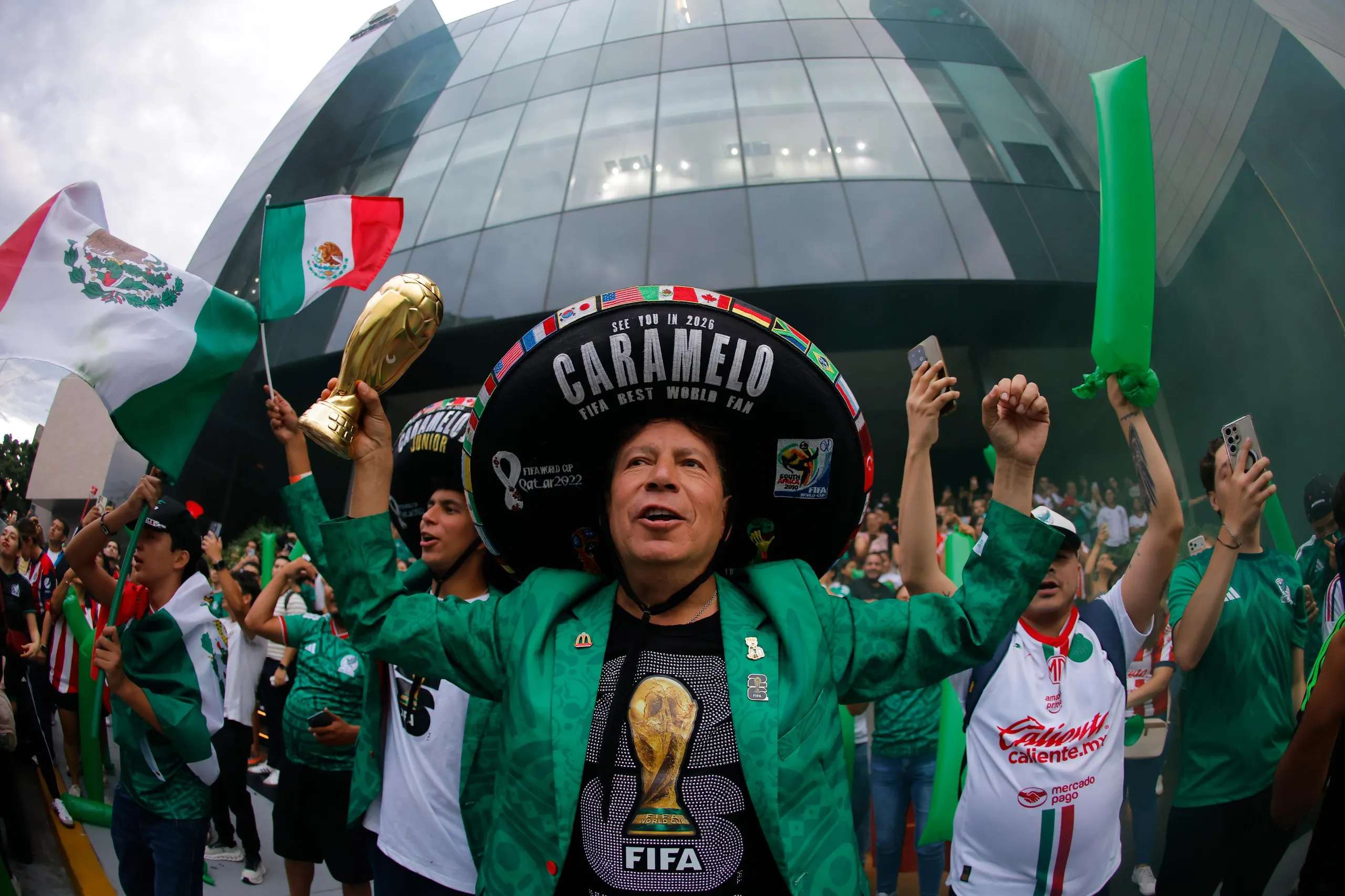
Recently, Quiñones returned to the same Guadalajara stadium where the racist chant had echoed in 2024. Before Mexico’s second group-stage match against South Korea on Thursday, fans donned team jerseys and oversized sombreros, gathering outside the national team hotel. As Quiñones appeared, they chanted in unison: ¡Quiñones, hermano, ya eres Mexicano! “Quiñones, brother, now you are Mexican.”
This was a warm reception for the national player, yet it remained somewhat tentative. The chant is typically reserved for foreign players who have developed a connection with Mexico, rather than for those who possess Mexican citizenship like Quiñones.
These contrasting moments, closely spaced yet emotionally distinct, encapsulate the complexities of contemporary Mexico’s struggle with its national identity.
Karma Frierson, an expert in Black studies at the University of Rochester who has examined Black culture in Mexico, noted that the reaction to Quiñones’s goal, particularly given his race, was surprising to many. “This surprise speaks to the expectations people still have about what a Mexican person looks like. So, you have this dissonance,” she explained. “You know that the player, by virtue of wearing the jersey is of that nationality, but you never imagined that person would look a certain way.”
Quiñones, now 29, was born in Colombia, arrived in Mexico in 2015, and built his career in Liga MX. He became a naturalized Mexican citizen in 2023 and received his first call-up to the national team that same year. His selection for the World Cup team raises a pressing question that Mexico has long evaded: who is entitled to be considered Mexican?
This question is intertwined with the future of the national soccer program, which increasingly draws talent from beyond Mexico’s borders.
For much of the 20th century, the national team primarily featured players developed domestically. Today, however, the talent pool extends across a transnational landscape shaped by migration and familial connections.
It appears that the most critical recruiting area for the Mexican soccer federation may no longer be a region within Mexico, but rather California or Texas. A new wave of Mexican-American players, including more Black athletes, is emerging north of the border. Among the most promising young talents are Antonio Leone and Da’vian Kimbrough, both born in California to Mexican mothers and African American fathers, who have represented Mexico’s youth teams.
Recent stars have also come from further south. Notably, Giovani and Jonathan dos Santos have played for the national team; their father was the Afro-Brazilian footballer Zizinho, while their mother is Mexican. Additionally, Melvin Brown, whose paternal grandfather was Jamaican, represented Mexico during the 2002 World Cup.
None of these athletes conform to the traditional image often associated with Mexican nationality.
“Historically, Mexican society doesn’t talk about race,” Frierson remarked. “The promise of mestizaje was that there is no race because we are all one race.”
The idea of mestizaje—suggesting that Mexico arose from the blending of Indigenous and European peoples—became a foundational myth of the modern Mexican state. Following the Mexican Revolution, it offered a compelling narrative for a divided nation. Instead of highlighting differences, it focused on unity. Rather than recognizing multiple peoples, it envisioned a singular identity.
Similar interpretations arose throughout Latin America, presenting a stark contrast to the racial dynamics in the United States. While the U.S. openly confronted segregation and racial classifications, many Latin American nations embraced the belief that mixing had effectively erased such distinctions.
The allure of this narrative was strong, yet the reality has proven to be more intricate.
Discrimination and racism against Black individuals in Mexico remain prevalent but are frequently overlooked. During the 2010 World Cup in South Africa, Mexico’s primary broadcaster Televisa featured characters in blackface and afro wigs, equipped with animal skins and spears. In 2018, during a Liga MX broadcast on major network TV Azteca, reporter Carlos Guerrero appeared in blackface. Although the networks faced backlash, many dismissed these incidents as mere jokes.
Black players in Liga MX, such as Colombian striker Darwin Quintero and Panamanian defender Felipe Baloy, have reported experiencing racist jeers from rival teams. In 2021, Ecuadorian defender Félix Torres left the field in tears after alleging racist insults from Germán Berterame, a player then with Atlético de San Luis. Despite the Mexican Football Federation’s investigation into these claims, officials concluded they could not be substantiated, and no disciplinary measures were imposed.
Quiñones himself largely brushed off the 2024 racist incident in Guadalajara. In an Instagram post at the time, he condemned online harassment directed at his daughters, stating, “you can say whatever you want to me, but don’t mess with my daughters” and expressed his resilience, noting he was “mentally strong enough to handle any kind of insult, especially when it’s about my skin color, which is the most frequent type of message I receive”
Having a Black player excel during a home World Cup may facilitate a much-needed conversation about race within Mexican culture, according to Frierson.
Moreover, Mexican players who move to the U.S. to compete in Major League Soccer are returning home with new viewpoints. Jonathan dos Santos, during a 2020 interview while with LA Galaxy, expressed his comfort in the U.S., stating that he did not encounter racist taunts.
“It’s truly sad to hear the insults, the racism. I’ll never understand it,” he remarked. (He also mentioned experiencing racism while playing in Spain for Barcelona and Villarreal.) “I think many countries have to learn from the United States regarding the respect shown to athletes.”
Opening a dialogue about race within the realm of national sport could lead to a broader examination of Mexico’s history, which includes African roots. During the colonial era, hundreds of thousands of enslaved Africans were transported to New Spain, and their descendants established communities throughout the region, particularly in Veracruz and along the Costa Chica of Guerrero and Oaxaca. They played a critical role in shaping Mexican society from its inception. Figures like Vicente Guerrero and José María Morelos, both heroes of Mexican independence with Afro-Mexican heritage, are often overlooked in discussions about their legacy.
“Blackness is incorporated into the very fabric of the nation,” Frierson stated.
From this viewpoint, Mexican soccer is not merely becoming more diverse; the visibility of race in Mexico is also increasing.
Soccer can often serve as a reflection of national identity. A national team embodies not just a country but also an idea of what that country represents. The World Cup is among the few remaining platforms where nations can display themselves publicly. Each lineup announcement, anthem, and goal ignites a discourse—sometimes deliberate, often subconscious—about belonging.
Mexico is evolving. Digital nomads from Europe and the U.S. are establishing businesses in Mexico City, introducing trendy coffee shops and stores reminiscent of those in other global cities. Individuals from Haiti, Cuba, and South America are settling in unprecedented numbers, some deterred from migrating to the U.S. Additionally, Mexicans who have lived in the U.S. for years are now returning home with their American families, either by choice or through deportation. The Mexican national team is beginning to reflect some of this diversity: its World Cup roster includes players born in Spain, Alaska, Argentina, and Quiñones, who hails from Colombia.
Quiñones challenges conventional expectations of what a Mexican should look like. While diversity has always been a part of Mexican society, soccer uniquely highlights this reality.
When a player scores, the crowd erupts. Cameras seek out a face. For a fleeting moment, a nation reflects on its identity—not necessarily as it envisioned itself, but as it has always been.