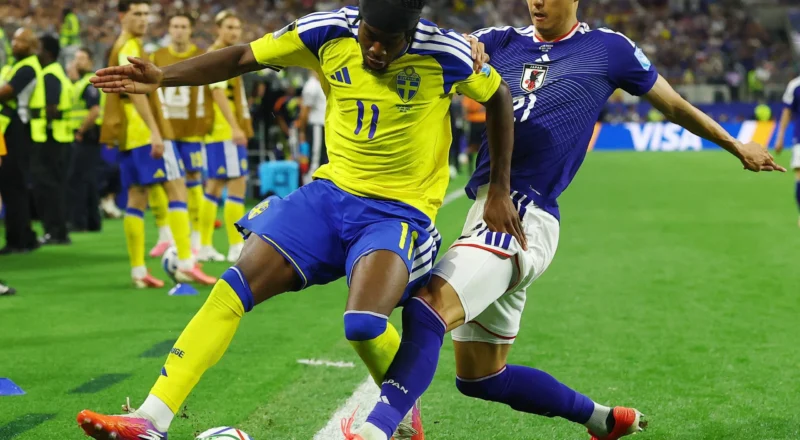


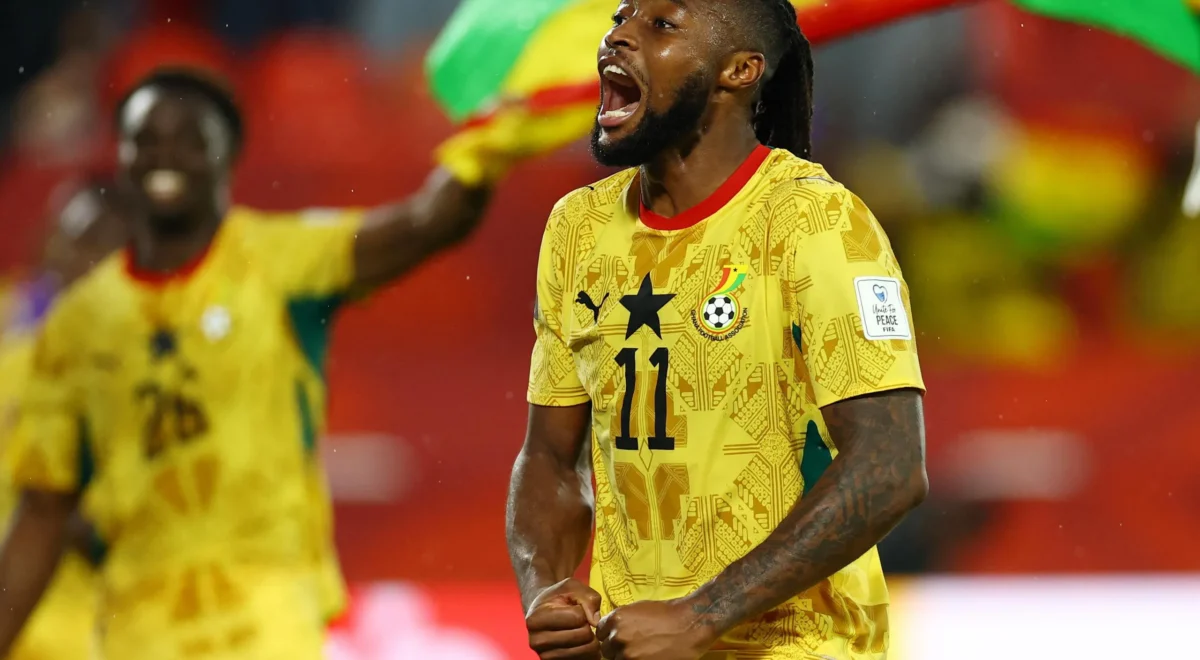
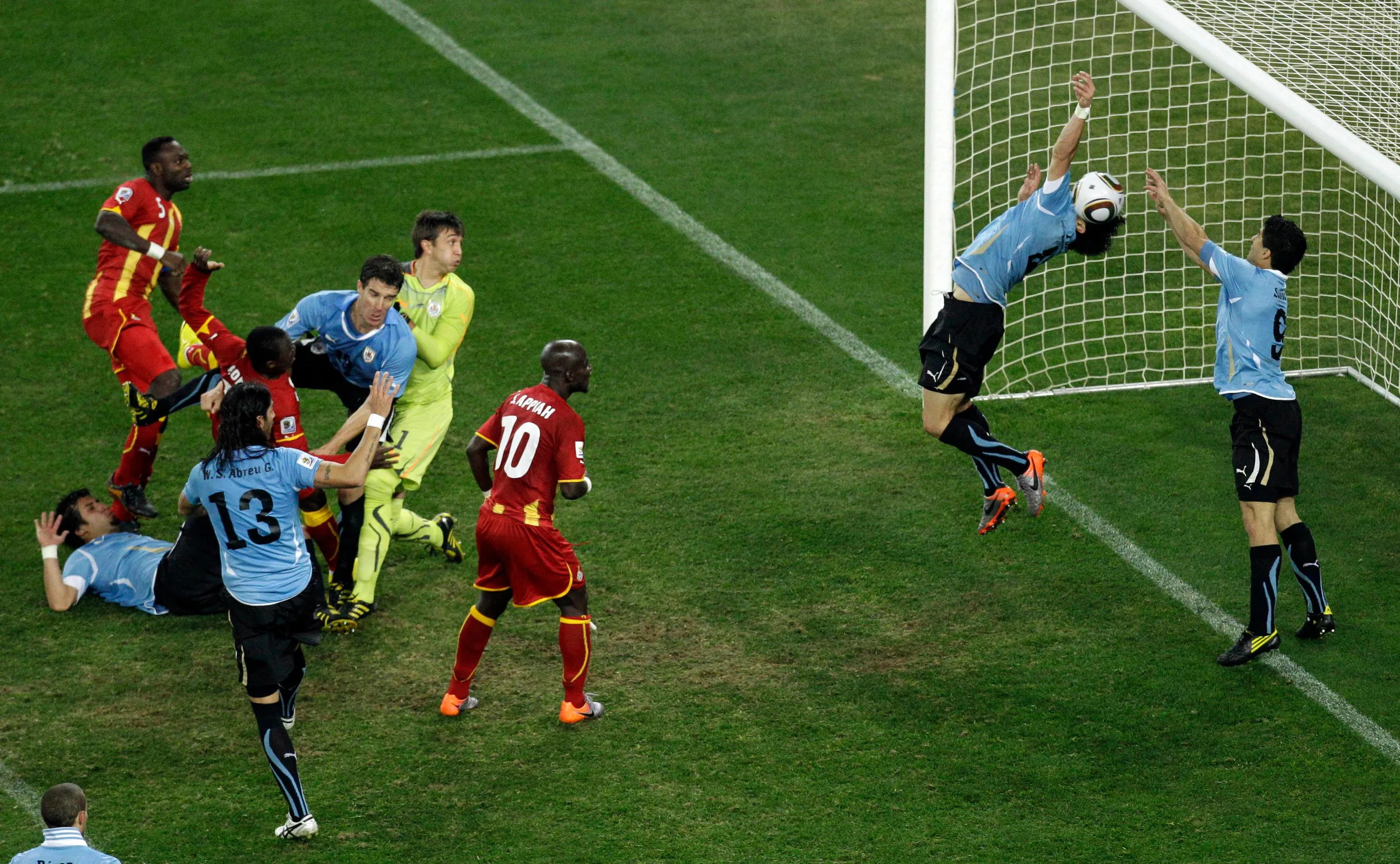
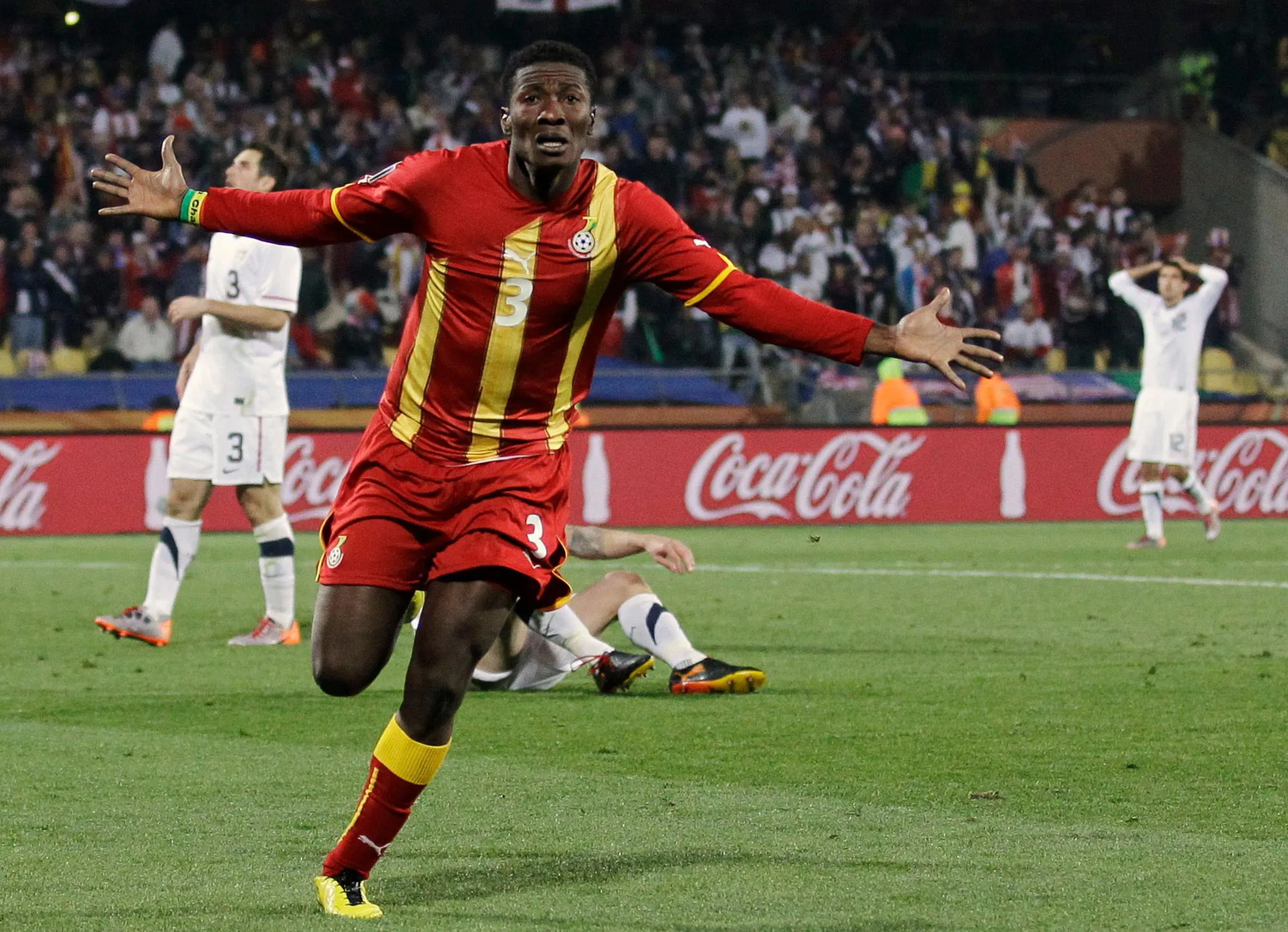
Antoine Semenyo was just a child of 10 when Ghana nearly made history by being the first African team to reach the World Cup semi-finals, thanks to a controversial Luis Suárez handball. The Manchester City forward recalls the intensity of that night, watching with family in Bexleyheath, south-east London.
“I remember being at my uncle’s house, and we were screaming after the handball, thinking we were going through,” he shared in a recent interview. “Watching Ghana play in the World Cup was so special. Mum, Dad, uncles, aunties, cousins all turn up to one house, and we would watch all the games together, celebrating and screaming. Ghana came in [for me] when I was 19 or 20, so I was never going to turn it down.”
While Asamoah Gyan and his teammates made a significant impact on young Semenyo, the aftermath of the Black Stars’ remarkable quarter-final run in 2010 has been disappointing. Following a lackluster performance in Brazil, where they placed last in their group, Ghana’s fortunes did not improve in Qatar four years later, despite a victory over South Korea. The team’s failure to qualify for the African Nations Cup finals last year, the first time since 2004, was seen as a national embarrassment, somewhat alleviated by their qualification for a fifth World Cup.
Gyan, whose missed penalty in the shootout against Uruguay was fateful 16 years ago, saw his record as the youngest Ghanaian to score in a World Cup eclipsed by 20-year-old Caleb Yirenkyi during the 1-0 victory against Panama in Toronto. The 40-year-old former Sunderland striker, affectionately known as Baby Jet, contributed to the team’s success by leading a traditional pre-match jama session filled with singing and dancing at the hotel. His post-match celebration with winger Abdul Fatawu went viral, reigniting hopes of mirroring the class of 2010, who had similarly defeated Serbia by a 1-0 scoreline in their opening match in South Africa, courtesy of a late penalty from Gyan.
“The momentum we got from the first game was really important,” Jonathan Mensah, the central defender who played in the 2010 tournament, stated. “To get a point in our second game was crucial because that helped us qualify for the next stage. Now we need another good game against a good English side.”
At just 19, Mensah was included by Ghana’s Serbian manager, Milovan Rajevac, after being part of the Under-20 World Cup-winning team in Egypt the previous year, where they triumphed over Brazil on penalties. Several players from that squad, including André Ayew, Kwadwo Asamoah, and Dominic Adiyiah, who infamously had a goal-bound header blocked by Suárez, became pivotal in capturing the continent’s heart.
After their early exit, the team was affectionately dubbed BaGhana BaGhana, receiving a warm welcome from supporters in Johannesburg at a special event attended by thousands.
The 2026 squad, led by Carlos Queiroz, who became the fifth coach in five years just a month before the tournament, unfortunately, lacks a similar depth of emerging talent.
“We have some talented players now but it’s nothing compared to 2010 because we had a little bit of everything in that squad,” Mensah remarked, reflecting on his career playing in leagues across Italy, Spain, and Russia before joining MLS.
“We had the likes of Kevin-Prince Boateng, Kwadwo and Gyan – who was arguably the hottest we’ve ever seen him. In 2010, he was in his prime and he was killing every game he played in. This squad is fairly young yet still talented. So you just need to allow them to grow into what they could possibly be and not put too much pressure on them. I think Ghana can cause England some issues but they will need to roll up their sleeves and fight because we know how hard it will be.”
Efforts to convince Nottingham Forest’s Callum Hudson-Odoi to represent Ghana were unsuccessful, while Crystal Palace’s Eddie Nketiah also drew interest but ultimately missed out due to injury. Queiroz’s squad includes eight players born outside Ghana, a stark contrast to only two – Boateng and Quincy Owusu-Abeyie – in 2010. Semenyo has recently emerged as a key player in the absence of Tottenham’s Mohammed Kudus, who has been sidelined with a serious muscle injury since January. Having scored only three goals in 35 caps, Semenyo is keen to leave his mark on the global stage, inspired by his childhood memories.
“Whenever I see a video of 2010, it brings back so many memories,” Mensah shared, recalling his suspension during the Uruguay match after receiving two yellow cards earlier in the tournament. “We would have loved to get to the semi-finals and then go for the ultimate prize. But it was a great experience and we learned so much from that. Hopefully these guys will not just emulate what we did by getting to the quarter-finals but also emulate the fighting spirit that we had.”