

The 2026 Formula 1 season has not commenced as favorably for Aston Martin as they had envisioned. Following a disappointing performance during the Barcelona shakedown, the team aimed to recover the lost mileage and crucial time in Spain caused by car assembly issues. However, the initial day of testing in Sakhir was fraught with difficulties, forcing the Silverstone-based outfit to abandon a substantial portion of the session due to complications with the Honda power unit.
During the lunch break, Japanese engineers made efforts to rectify the identified anomalies in the data, hoping to resume their data-gathering efforts without incurring additional delays. Nevertheless, a thorough assessment of the situation in the afternoon led to the decision to replace the power unit, resulting in the AMR26 being confined to the garage for an extended period.
This hindrance inevitably hampered on-track progress, with Lance Stroll completing only 36 laps—significantly fewer than many rival teams that managed more consistent runs. Beyond just the lap count, there are noteworthy aspects at Aston Martin, particularly regarding their work program, which closely resembles the strategy observed in Barcelona.
Cooling Modifications and Aerodynamic Considerations
In Bahrain, Aston Martin continued with a “limited” running program, with Stroll not exceeding 300 km/h on the main straight. Although maintaining a capped speed allows for more consistent data collection, it also minimizes stress on the power unit, which remained below 11,000 rpm for a considerable duration—unlike other teams that pushed their engines much harder.
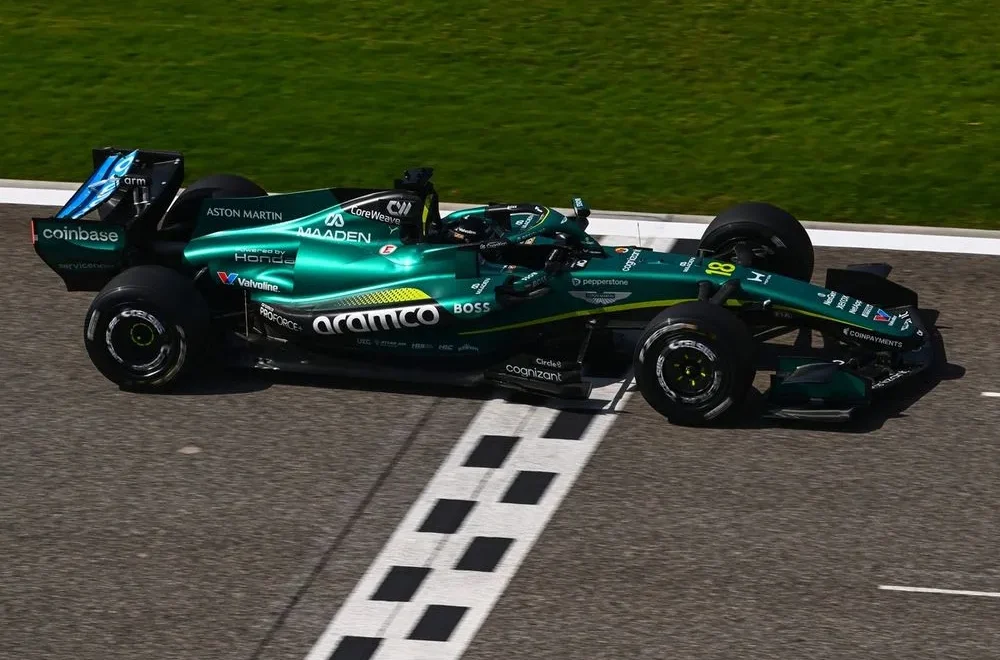
Changes to the AMR26’s cooling system were also noticeable, with additional vents introduced following the identification of engine issues. While it is evident that the Japanese power unit is currently lagging behind schedule, the AMR26 features highly aggressive bodywork designs. Thus, it is crucial for the Honda engine to have adequate airflow beneath the engine cover.
The sidepods, designed with minimalism in mind, have restricted airflow from the triangular airbox compared to those of competitors, and the bodywork along the engine cover is shaped to be as tapered as possible. This design has resulted in a pronounced bulge, more prominent than that of rival vehicles, which serves as an outlet for hot air.
Strategic Adjustments and Performance Goals
On the first day, Aston Martin further opened vents in that area, adding several gills to facilitate heat dissipation, even at the expense of aerodynamic efficiency. However, this is not the sole approach undertaken to address hot air evacuation. Due to aerodynamic considerations, the rear exit is less accommodating compared to other single-seaters, prompting Aston Martin to explore various solutions, including revisiting concepts previously utilized by Red Bull.
For instance, at the lower section near the rear of the sidepods, an opening on the sides of the tail mirrors the design seen on the RB20. After resolving the initial issues, Fernando Alonso returned to the track, focusing on accumulating mileage and gathering data—more than Aston Martin had accomplished in earlier days.
During the morning session of the second day of the Bahrain test, the Spanish driver completed 55 laps around the Sakhir circuit, achieving a fastest time of 1m38.960s—approximately four seconds behind Charles Leclerc’s pace. However, his lap total was comparable, falling just nine laps short of the benchmark established by McLaren.