

Everyone knows an Alexi Lalas type. He’s the loudmouth whose rants often lack substance, the life of parties that no one truly enjoys, and the larger-than-life personality who frequently misjudges social cues. He embodies corporate America’s idea of a fun colleague, the kind who can’t shake off a hangover yet still manages to be the first at the hotel breakfast buffet, hair damp and shirt untucked. If this were the extent of Lalas’s influence, society could blissfully ignore him. However, Lalas has transcended to become American soccer’s most prominent media figure, and he is omnipresent during this World Cup.
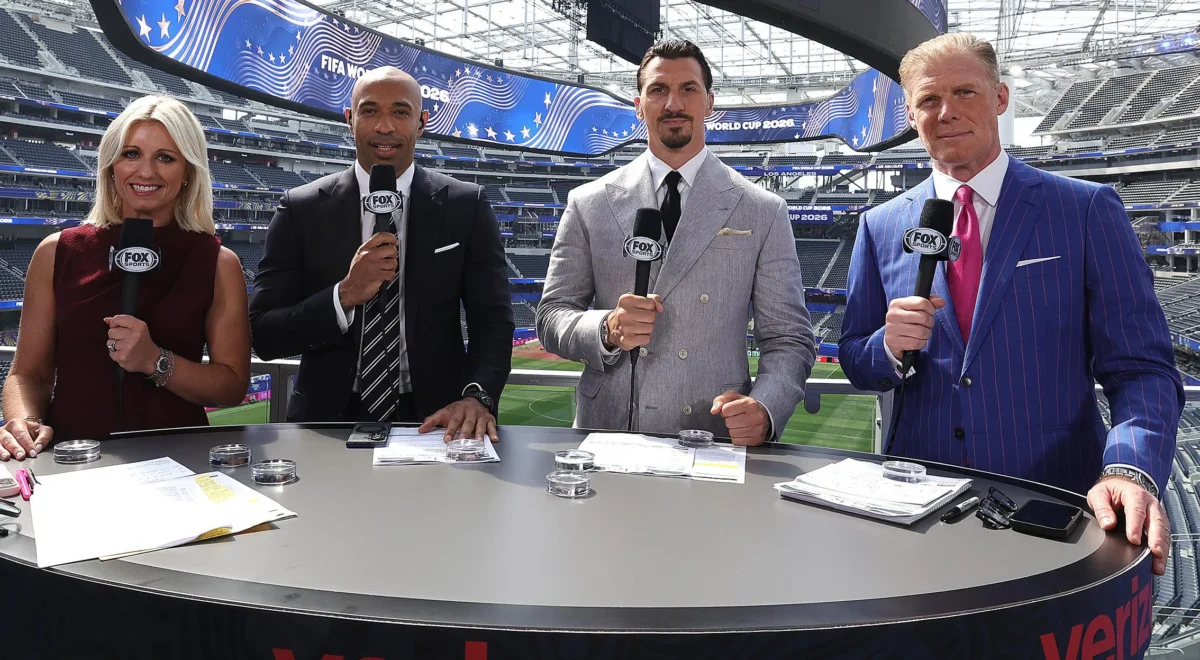
As Lalas’s familiar face appeared on Fox at the tournament’s onset, many viewers likely experienced a sinking feeling akin to the infamous Grand Theft Auto meme: “Ah shit, here we go again.” His constant presence at every World Cup resembles a prolonged conflict that no one desires, yet everyone endures, turning into a tedious exercise in damage control. But there was a flicker of optimism this year: Fox has recruited European stars Thierry Henry and Zlatan Ibrahimović, aiming to challenge Lalas and inject some excitement into the coverage. Under Rebecca Lowe’s direction, this revamped panel has promised a more sophisticated take on the tournament compared to the brashness that characterized previous broadcasts.
Zlatan, however, has underwhelmed, resembling a lethargic pundit who offers little. In contrast, Henry has shone brightly, a testament to those who follow his insightful commentary throughout the Champions League on CBS. He has already begun to masterfully unsettle Lalas, the representative of far-right views on the panel. Although matches like Brazil vs. Morocco and France vs. Senegal had their highlights, none have delivered the gripping drama found in the ongoing clash between Henry and Lalas. This showdown is arguably the most compelling narrative of the World Cup.
Henry’s recent viral moment, where he toyed with Lalas during a studio segment—using one foot to pass the ball before yanking it away with the other—was nothing short of humiliating. Lalas, with 96 caps for the United States, was left stumbling in a moment of sheer embarrassment. Their on-screen interactions have resembled a slow-motion dismantling, and the good news is that their rivalry has weeks yet to unfold.
Unlike the tedious agreeability and exhausting verbosity typical of American sports commentary, Henry presents a refreshingly unimpressed demeanor, characterized by raised eyebrows, frozen reactions, and subtle gestures. He’s not merely a collection of practiced mannerisms; his intellect and humor shine through. When his suave presence graces the screen, viewers can expect insightful observations, references to tactical history, and memorable expressions. Lalas, conversely, embodies the less refined approach, marked by irritating contrarianism, incessant nationalism, and an unwavering belief in America’s soccer future.
While Lalas had a respectable playing career, he is undeniably overshadowed by Henry, often hailed as the greatest player in Premier League history. This disparity in their on-field accomplishments has grown increasingly apparent as the tournament progresses, with Lalas retreating into silence whenever Henry shares his extensive football experience. In discussions where Henry reminisces about playing alongside Messi or swapping jerseys with Ronaldo Nazário, Lalas’s contributions about his own playing days—a late substitute appearance in a friendly against Scotland—seem trivial. Did Lalas have a noteworthy playing career? Not really. Does he engage in the research necessary to compensate for his lack of status when conversing with legends like Henry and Zlatan? Absolutely not. And is he charming, entertaining, or magnetic on-screen? Not particularly.
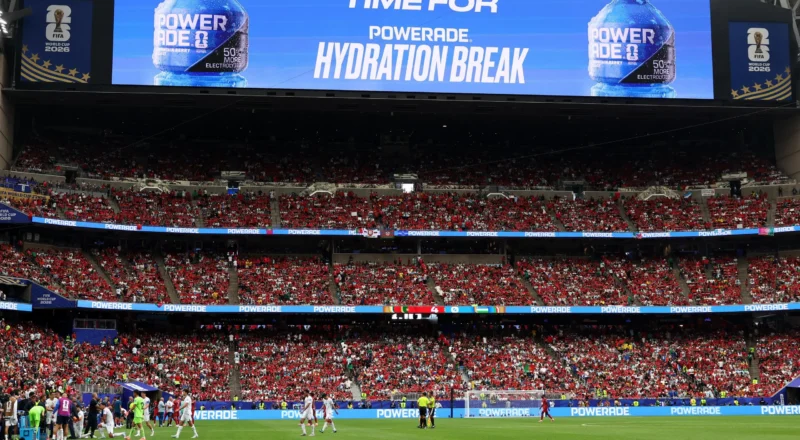
If Clint Dempsey epitomizes soccer’s American dream—rising from a trailer park to become possibly the greatest USMNT player—Lalas represents the American nightmare: the man who burst into the national spotlight in 1994 but has since become a punchline. Once a musician charming the Olsen twins, he now finds himself defending commercials during hydration breaks and engaging with obscure Twitter accounts to express his pride in calling the sport “offers something different” instead of “We need Christian Pulisic to step up!” (for the record: WHO CARES?).
Henry, in stark contrast, brings a unique flair to his commentary, characterized by his distinct accent and emphatic delivery. He understands that impactful communication doesn’t always require volume. While Lalas’s statements often lack substance, they are delivered with unnecessary bombast, proclaiming, “Sarr! Over the bar! Hit it far!” Perhaps there was once a time when Lalas presented a more thoughtful face for American soccer, but that era has long passed. While Lalas proclaims the obvious—“America wants to celebrate America and this team is giving America a reason to celebrate America, and man oh man Rob Stone, ain’t that America?”—Henry embodies a composed international perspective, and this contrast is where their rivalry truly lies.
As the tournament progresses, it sometimes seems that Lalas’s fellow panelists are forced to feign interest in him, a sentiment palpable in their strained nods and obligatory laughter at his signature bits. Lalas has provided the full spectrum of his antics thus far, while his colleagues strive to appear entertained and enlightened by his presence.
During the halftime recap of France vs. Senegal, Lalas mispronounced the word ‘lackadaisical’ as “lacksadaiscal,” unintentionally underscoring the very essence of his critique when he referred to the French team. He highlighted a missed opportunity for Senegal, exclaiming, “Sarr! Over the bar! Hit it far!” eliciting polite smiles from Lowe and Ibrahimović. Meanwhile, Henry laughed and shook his head, mimicking the sentiment of a proud parent congratulating a child for a simple rhyme. The beauty of Henry’s performance in this television mismatch is that his French bravado allows him to express his disdain for Lalas while maintaining a veneer of deniability. Is Henry being unkind, or is he merely being French?
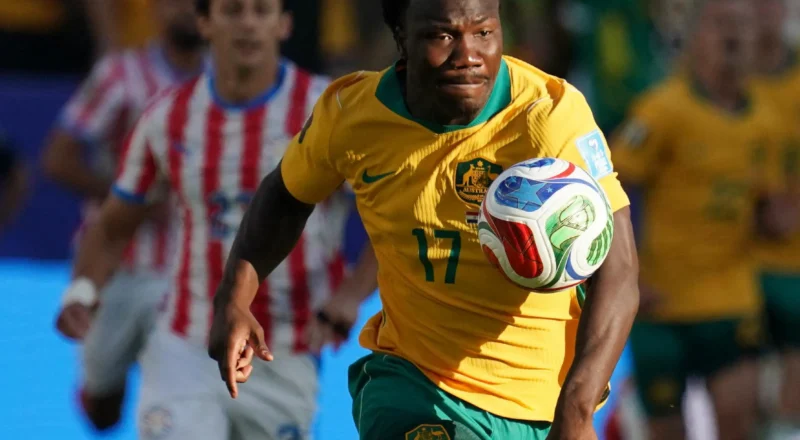
Ibrahimović has shown his own disdain for Lalas, yet he lacks Henry’s finesse and variety in showcasing Lalas’s shortcomings. The French icon eagerly embraces learning and researching players and teams he may not know much about, while Lalas seems to believe that being American is enough. Ahead of the USA vs. Australia match on Friday, Henry delivered a sharp defense of counterattacking football and an insightful analysis of the Socceroos’ midfielders, Connor Metcalfe and Paul Okon-Engstler—players most Americans had likely never heard of until recently.
Meanwhile, in Seattle, backed by a throng of American fans, Lalas referred to Socceroos defender Alessandro Circati as “Cicada.” Following that blunder, he reverted to his usual theatrics, declaring, “America wants to celebrate America and this team is giving America a reason to celebrate America, and man oh man Rob Stone, ain’t that America?”
Lalas’s brand of hyperbolic commentary is standard for sports television but feels out of place in soccer, which demands a certain analytical humility due to its global nature. It contrasts sharply with the sport’s cultural dynamics in the U.S., where soccer is embraced by immigrants, urban liberals, and those sidelined by mainstream American sports. The dissonance between soccer’s reality in America and the red-blooded Americana of Fox’s World Cup coverage is epitomized by Lalas. While USMNT players thoughtfully discuss the significance of Juneteenth, Lalas—a vocal Trump supporter—distracts us with promotional videos for the Department of Homeland Security. (Without a doubt, he would have relished the DHS’s tongue-in-cheek tweet celebrating the U.S.’s defensive efforts against Australia as a form of xenophobia.) For Fox to present such a divisive and unlikable figure as Lalas as the face of American soccer is akin to hiring John Wayne Gacy for a children’s party.
Yet, in a twist of fate, Fox has inadvertently provided viewers with a glimpse of what soccer coverage could be like without Lalas’s overwhelming presence.
If American soccer culture—including its television representation—evolves in a positive direction, the sport may eventually move beyond Lalas. In the future, his style of commentary may be seen as a relic of a bygone era, akin to a form of footballing minstrelism. Perhaps the embarrassment associated with Lalas will be so profound that he will be erased from the tournament’s archival footage, like a purged figure in Stalinist history, leaving behind only a brief silence with Carli Lloyd’s voice saying, “right on.” We can hope.
For now, we are treated to the spectacle of a footballing aristocrat gracing the set each day, effortlessly outclassing Fox’s resident clown.