


Shipp explained.
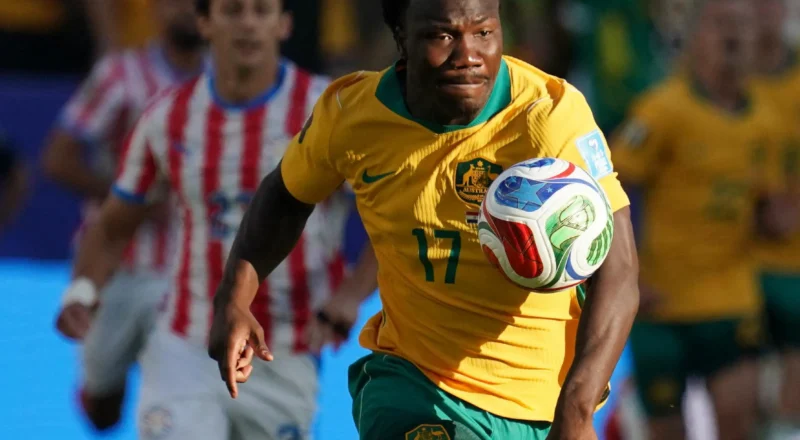
The upcoming World Cup encounter between the Socceroos and Paraguay signifies a pivotal moment for Australian football, as the team aims to qualify for the knockout stages for just the third time in history. For SBS, the significance of this match is even more profound.
This game represents the culmination of 11 consecutive men’s World Cup tournaments and a commitment that dates back to Mexico 1986. The expected audience is poised to approach or even surpass the network’s record for any Socceroos match or World Cup event.
“It’s very likely that this match will have the largest audience ever for an SBS broadcast from the World Cup, which is a credit not only to our current broadcast team but to the giants whose shoulders they stand on,”
said Ken Shipp, SBS’s director of sport. The seasoned executive has participated in nine World Cup tournaments, overseeing the transition from traditional early-morning coverage to an expansive 2026 presentation that includes free-to-air television, SBS On Demand streaming—with new features like restarting a stream mid-match—highlights, mini-matches, and social media content.
“Our football broadcast pioneers Les Murray and Johnny Warren firmly believed that we could get here and will be smiling down on us,”
“I hope this match stops the nation – there’s every chance it will, given the favourable timing, the unprecedented media coverage we’re seeing and the excitement around this young Australian team. If it does, then that will be the result of 40 years of dedicated work at SBS.”
SBS recorded an average audience of 3.4 million for the World Cup qualifier against Uruguay in 2005, a match that saw John Aloisi score the penalty that sent the Socceroos to Germany for the 2006 tournament. In the last-16 match against Italy during that same tournament, just over 3 million viewers tuned in. However, comparing ratings over the decades remains challenging due to changes in television ratings methodologies.
The Matildas set a modern benchmark for Australian television audiences when 7.13 million viewers watched their 2023 Women’s World Cup semi-final against England on Channel Seven, bolstered by a prime-time kickoff and heightened national interest in the tournament.
The Socceroos’ recent victory over Turkey attracted slightly more than 3 million viewers. In contrast, the match against the USA, aired at the less favorable time of 5 am on the east coast, garnered nearly 2.2 million viewers.
With a 12 pm kickoff on Friday, industry analysts will be closely watching their inboxes for audience figures expected around lunchtime on Saturday.
Jon Marquard, a broadcast consultant and founder of Janez Media, noted that there is already significant interest leading into the tournament, largely due to “probably the best team that we’ve had going into the tournament since the “Golden Generation of 2006” and the favorable time zone. The win against Turkey provided an additional boost.
“So those things all helped, for me the big one though was winning that first game,”
he remarked. “We’ve gone with a really varied lineup of football experts – by age, gender and culture – because we wanted our broadcast team to represent and reflect modern Australia, and the football world,”
The SBS World Cup broadcasts have transformed since the days when Murray and Warren hosted, with the network now entrusting hosting duties to emerging presenters Niav Owens and Claudio Fabiano. They are supported by a diverse group of experts, including former Australian players Harry Kewell, Lydia Williams, Tommy Oar, and Andrew Redmayne, along with ex-Ghana international Kevin-Prince Boateng.
“That was amazing for our team,”
Engagement metrics reveal that time spent by users watching World Cup content on SBS’s social media platforms has already doubled the organization’s pre-tournament goals. SBS has also experimented with live streaming the first 10 minutes of specific matches on TikTok, directing viewers to other platforms, as they navigate the delicate balance of attracting younger audiences without undermining traditional coverage.
Even amid these changes and competition from other broadcasters—such as Paramount and Network 10, which hold rights to the 2027 Women’s World Cup—SBS has maintained its appeal among football enthusiasts.
Shipp stated. “To feel that the fans really appreciate and respect what SBS has done to popularise football in Australia over 40 years.”
- World Cup 2026
- Australia national football team – Socceroos
- Australian media
- SBS
- World Cup
- Australia sport
- features