

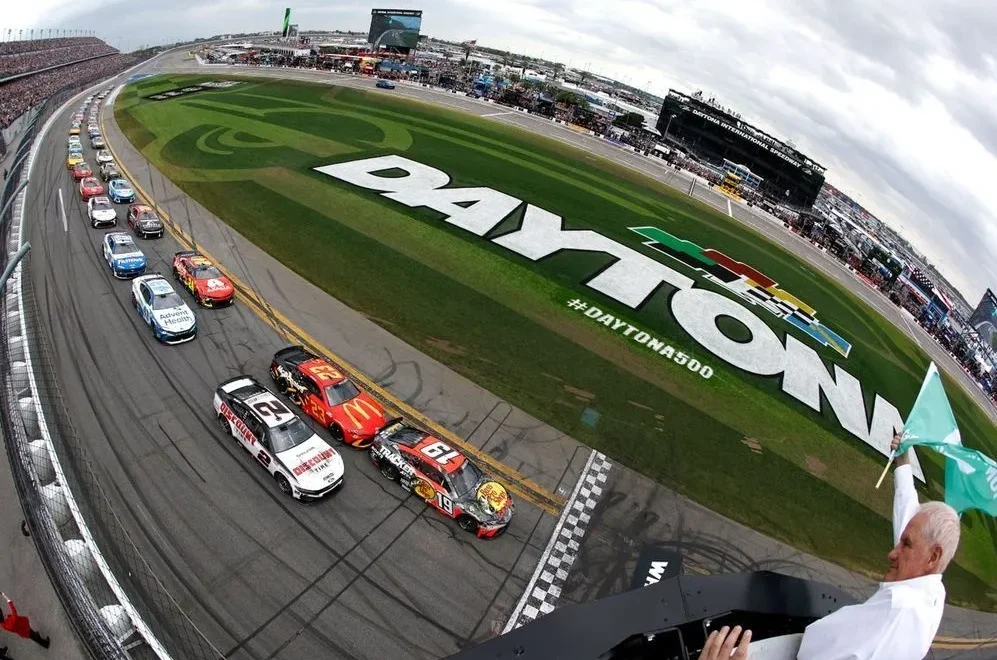
As the Daytona 500 approaches this coming Sunday, all drivers will quickly shift into fuel-saving mode, a tactic that tends to irritate segments of the fanbase annually.
The primary reason competitors operate at reduced throttle during significant portions of this iconic race is to minimize fuel consumption, which in turn allows for fewer stops at the pit. Given the current competitive package of these vehicles, overtaking at full speed on the track has become increasingly challenging.
This situation leads teams to adopt a strategy focused on conserving fuel, enabling them to gain advantageous track positions as they exit the pits before stage breaks and the race’s conclusion.
However, many fans are urging NASCAR to explore various modifications, from enlarging fuel tanks to altering stage breaks. While no changes were implemented over the offseason, Elton Sawyer, the Senior Vice President of Competition, acknowledges that the organization is mindful of these discussions.
“The short answer is that we’ve talked about it,” Sawyer remarked during a recent NASCAR R&D session with the media. “John (Patalak) and I often monitor the race from the tower, tuning into the broadcast and scanners. When we observe the cars racing five or six wide, the fans are energized, unaware of their speed…”
He continued, “It’s a dilemma; John has frequently posed the question, ‘What are we trying to fix?’ Changes can be made, but it’s essential to consider what those changes will actually resolve. We often reflect on this question, and while Scott Miller runs various models to theorize potential stage changes, we must determine the core issue we aim to address.”
According to Sawyer, the prevailing consensus is that any adjustments would not alter the fundamental necessity for teams to pit eventually. Regardless of modifications made, the need for pit stops will continue to motivate teams to conserve fuel, allowing them to limit their time spent in the pits.
It’s important to note that Sawyer’s comments do not dismiss fan concerns. He highlighted the significant shift to the Chase for the Championship format as evidence of NASCAR’s receptiveness to input.
“I would categorize the championship format changes, the Chase, as a high priority that we have successfully addressed,” he said. “While fuel efficiency remains on our agenda, it’s crucial to assess broader narratives in racing.”
He also drew parallels to other major racing events, stating, “In races like the Indy 500, competitors immediately enter fuel conservation mode as soon as the green flag waves. This suggests that we need to critically examine whether changes are necessary, and if so, what exactly we are trying to achieve.”