

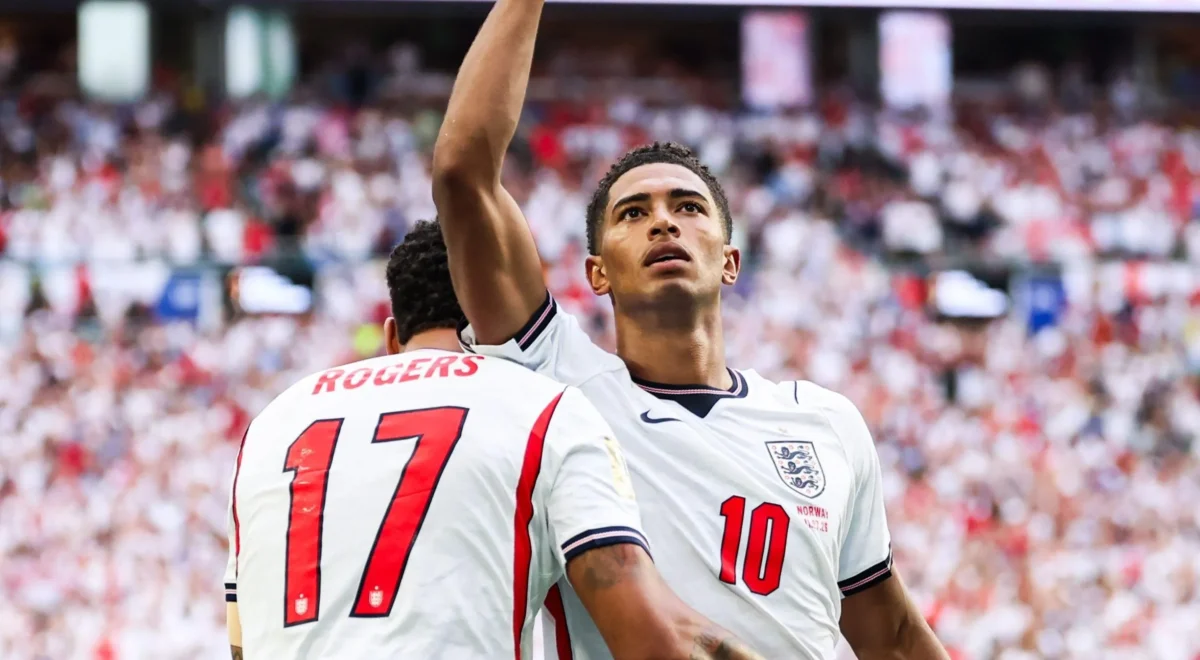
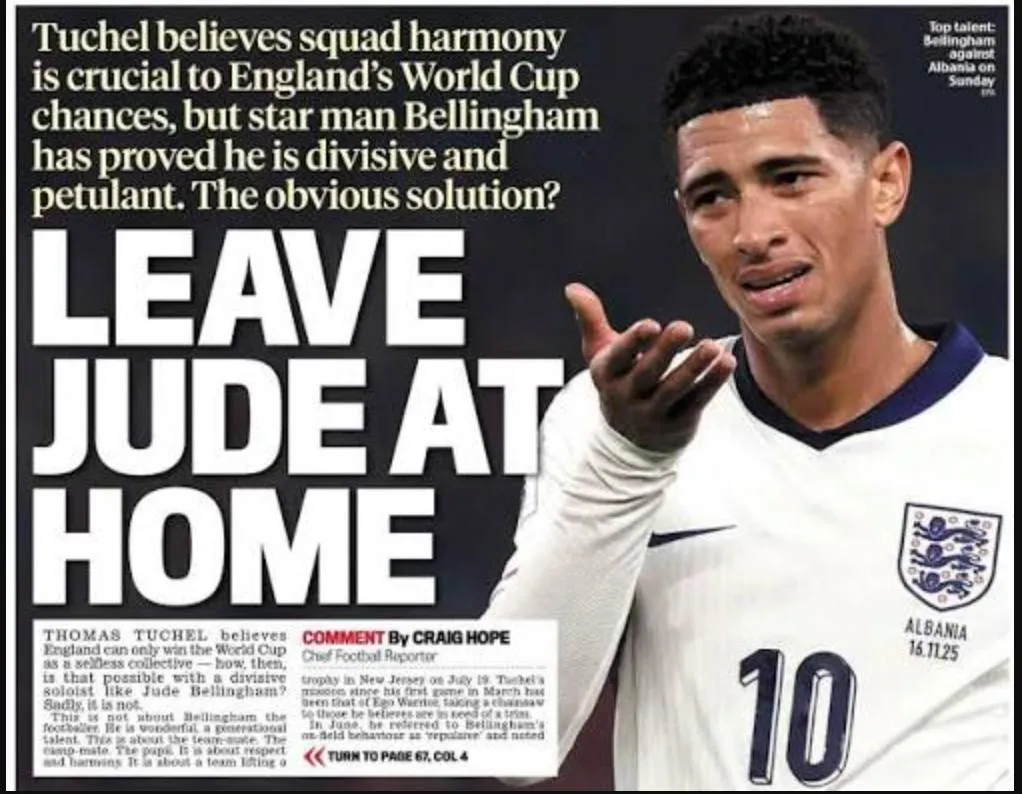
Months prior to the World Cup, the familiar negativity surrounding Jude Bellingham intensified, echoing the doubts that had trailed him since he first appeared on the international scene. Various writers, pundits, and former players began to question whether one of England’s brightest talents could disrupt the squad’s unity. The most notable expression of this sentiment was a November 2025 Daily Mail article featuring the notorious headline: ‘Leave Jude at home.’
In response to the mounting criticism aimed at Bellingham, Ian Wright felt the need to step in and defend him during an episode of Stick to Football. His candid remarks quickly gained traction across social media platforms, resonating with many, particularly for their poignant connection to the historical scrutiny of Black men’s conduct. ‘Someone like Jude, for some reason, frightens these people,’ Wright remarked, adding, ‘It’s something you’re taught as a Black man … to keep your head down and be, for want of a better word, a humble fucking slave.’
Several perceived missteps have positioned Bellingham in conflict with the traditional English football hierarchy. His first notable action was witnessing Birmingham City retire his shirt number before he turned 18. The second was his choice to join Borussia Dortmund instead of England’s elite clubs. Real Madrid subsequently invested an initial €103 million (£88 million) in him, entrusting him with the iconic No 5 shirt, previously worn by Zinedine Zidane. Throughout his journey, Bellingham has exuded a remarkable confidence that has eluded many English footballers abroad. However, his achievements in Madrid have seldom been celebrated as a point of national pride; rather, they are often perceived as a challenge to the Premier League’s dominance, suggesting he now belongs to a broader global narrative.
While these factors contribute to the animosity towards Bellingham, Wright’s perspective on the roots of this perception is particularly compelling. The cultural nuances of Bellingham’s demeanor resonate with many Black Britons but are often viewed as provocative elsewhere. As a child, my aunt would always advise me to walk tall, projecting a self-image that society might otherwise deny. As an adult, I recognized this advice echoed her own experiences arriving from the Caribbean into a community that communicated her lack of belonging.
It remains unclear if Bellingham received similar guidance; perhaps we are witnessing the unwavering self-assurance of one of the world’s top footballers. Given the prevalence of this cultural legacy among Black families, it is entirely plausible that he did.
English football has a long-standing tradition of reflecting on its past to derive meaning, often fixating on its rare victories and numerous near-misses. It frequently revisits players with whom it feels a connection, such as Bryan Robson, David Beckham, and Paul Gascoigne. Among these, Gascoigne remains particularly iconic. Jack Grealish was momentarily positioned as his heir, while Phil Foden dyed his hair to mimic Gascoigne’s peroxide look ahead of Euro 2020, intentionally linking himself to that legacy.
Bellingham challenges the boundaries of this process of recognition.
England has historically integrated remarkable Black athletes into its national team. Yet, whether through outright social exclusion—illustrated by Paul Gilroy’s observations regarding John Barnes’s marginalization—or the preference for Alan Shearer over Andrew Cole, the national team has yet to embrace a Black player as its most significant figure. Nevertheless, with his outstanding individual performances in recent tournaments, Bellingham has become both tactically essential and the emotional heart of the national squad.
The spontaneous rendition of ‘Hey Jude’ during England’s victories serves as a testament to this shift: a Black player whose identity does not hinder immediate English recognition.
Each generation of Black individuals born in England is molded by their environment while simultaneously reshaping that environment. While it might be overly optimistic to suggest that one footballer can bridge the often contentious divide between Black identity and English identity, Bellingham clearly perceives no conflict between the two. His greatest contribution may be in demonstrating to future generations that they need not see a contradiction either.
- Calum Jacobs is the author of A New Formation: How Black Footballers Shaped the Modern Game and the founder of CARICOM magazine.
- Do you have an opinion on the issues raised in this article? If you would like to submit a response of up to 300 words by email to be considered for publication in our letters section, please click here.