

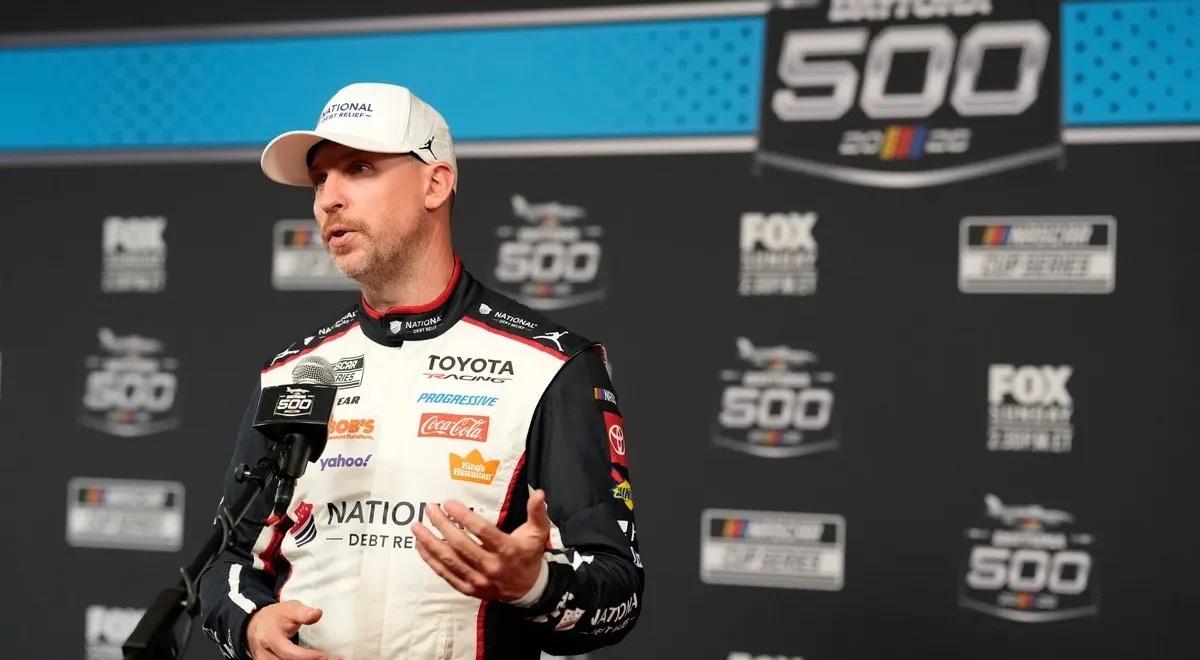
Following the conclusion of the antitrust trial involving 23XI Racing and Front Row Motorsports against NASCAR, Denny Hamlin is now focusing on the long-term expansion of the sport. The trial resulted in a favorable settlement for Hamlin and his partner, the iconic Michael Jordan, as well as for Bob Jenkins, who operates his own team.
The agreement not only granted permanent charters to all teams competing at NASCAR’s top level but also improved their financial stability. Hamlin noted that many of his fellow team owners have expressed their appreciation for the effort.
“Yes, I’ve heard from most of the team owners in some way,” Hamlin remarked. “We really took a stand for all the race teams, and I believe it wouldn’t have lasted this long if we were just trying to benefit ourselves.”
Despite this success, Hamlin recognizes that the work is just beginning. NASCAR has experienced a 14% decline in broadcast ratings compared to the previous year. While this decrease was anticipated due to the shift of several races to streaming platforms and fewer broadcasts on traditional television, there remains significant potential for growth within the industry.
Hamlin emphasized the necessity for ‘a substantial investment’ from either NASCAR itself or external private equity investors. He stated, “We need someone to come in and invest billions into extensive promotions and upgrades across the board.” He believes that while initial losses may occur, the long-term benefits would be substantial.
Hamlin pointed to the successful strategies employed by Liberty Media in revitalizing Formula 1 as a model for NASCAR. “They poured a lot of money into the sport, and it took off. That’s the approach we need,” he asserted.
He commended NASCAR’s marketing efforts for 2026, highlighting the shift towards a more gritty tone and the launch of the ‘Hell Yeah’ initiative. “I’m pleased with the direction NASCAR is heading, especially regarding their social media and digital content. However, a major investment is essential to reignite the growth phase we all aspire to achieve,” he added.
While the current charter system permits private equity investment in teams, NASCAR has also made significant improvements to its facilities over the last decade, including updates to iconic tracks like Daytona and Talladega. Hamlin believes that the introduction of permanent charters is beneficial for teams in the long run, although year-to-year revenue changes have been minimal.
“It has given us a stable foundation for future negotiations, preventing us from being pressured into unfavorable agreements,” Hamlin explained. “This stability allows private equity firms to view race teams as viable long-term investments due to their growth potential.”
Hamlin predicts that it will take a decade or more to return to a growth trajectory, akin to the 10-15 years it took to emerge from the last downturn at the start of the century. “It will require a collective effort to dig out of this hole,” he acknowledged. “This situation didn’t arise overnight; it has been a gradual decline over the last decade, influenced by decisions made years ago.”
He concluded by asserting that there remains a passionate audience for car racing in the U.S., as evidenced by viewership statistics across various racing series. “The challenge lies in rekindling their excitement for NASCAR, which will undoubtedly require time and effort,” he stated.