

NASCAR, often associated with summer racing, is now extending its expertise to assist Team USA in their quest for Olympic glory at the Winter Games. The motorsport organization’s research and development division is creating virtual representations of Olympic athletes alongside full-scale 3D models. This initiative enables them to conduct wind tunnel and computational fluid dynamics (CFD) tests aimed at optimizing the athletes’ performance.
This collaboration between NASCAR and the U.S. Olympic & Paralympic Committee (USOPC) originated from an introduction facilitated by TotalSim, an engineering firm engaged with NASCAR on various CFD projects. Dr. Eric Jacuzzi, NASCAR’s Vice President of Vehicle Performance, explained that TotalSim proposed a tour for Olympic athletes at the NASCAR R&D facility located in North Carolina. During this visit, Dr. Jacuzzi encountered a familiar face from the Olympic committee.
The acquaintance was Mike Levine, who works in the Performance Pathways and Innovation department at the USOPC. This connection prompted him to ask Dr. Jacuzzi if NASCAR would be interested in assessing Olympic athletes and their equipment for potential enhancements. After some preliminary discussions, Dr. Jacuzzi visited the USA Luge training center in September and quickly recognized the potential for NASCAR’s contributions to athlete performance.
Upon returning to NASCAR, Dr. Jacuzzi presented the project to John Probst, the Executive Vice President, who not only approved the initiative but also sought additional resources from NASCAR’s suppliers to aid in performance enhancement. They also included Chief Brand Officer Tim Clark to explore commercial opportunities, ultimately leading to a sponsorship and branding agreement between NASCAR and USA Luge, in addition to their technical collaboration.
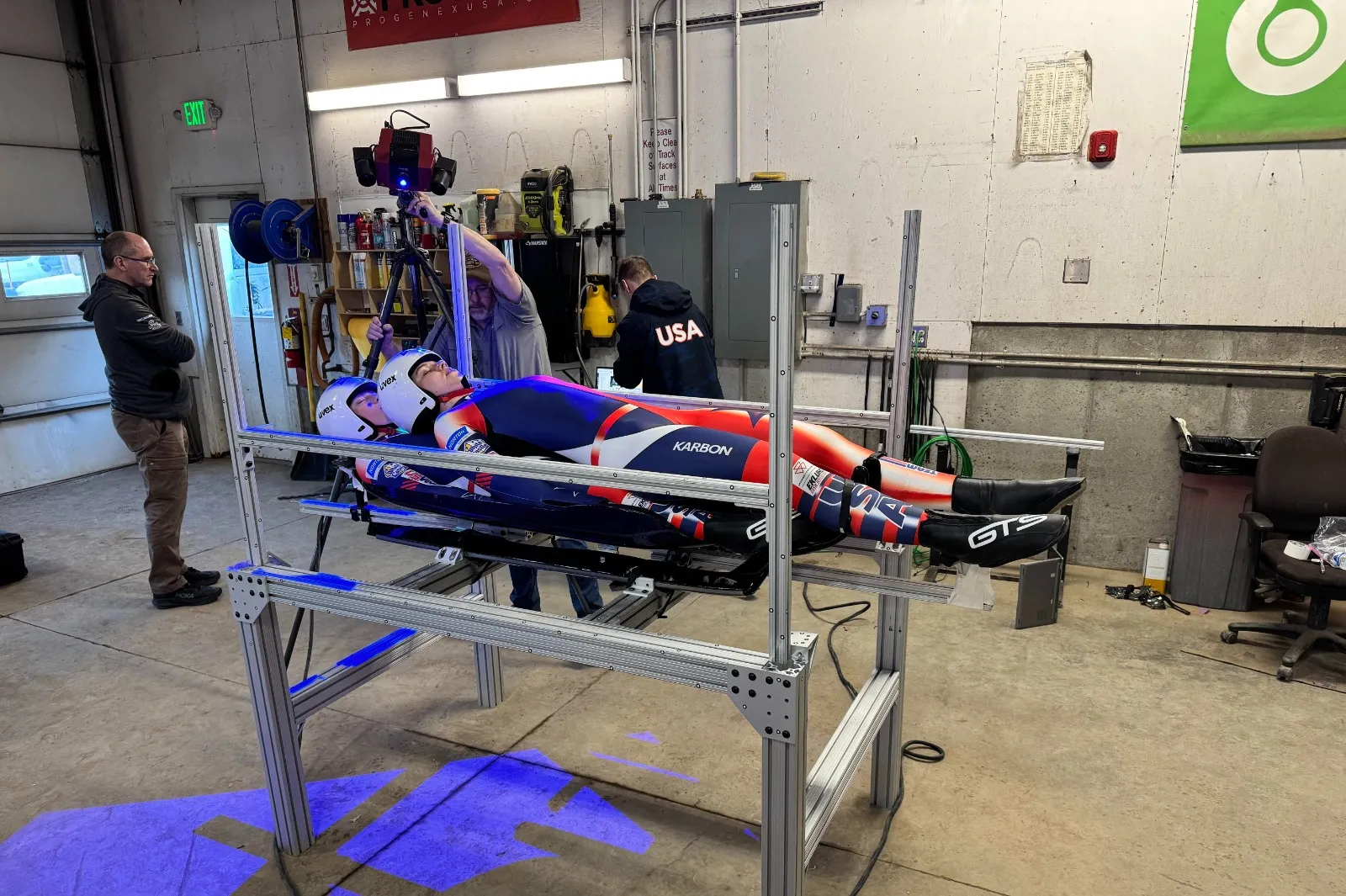
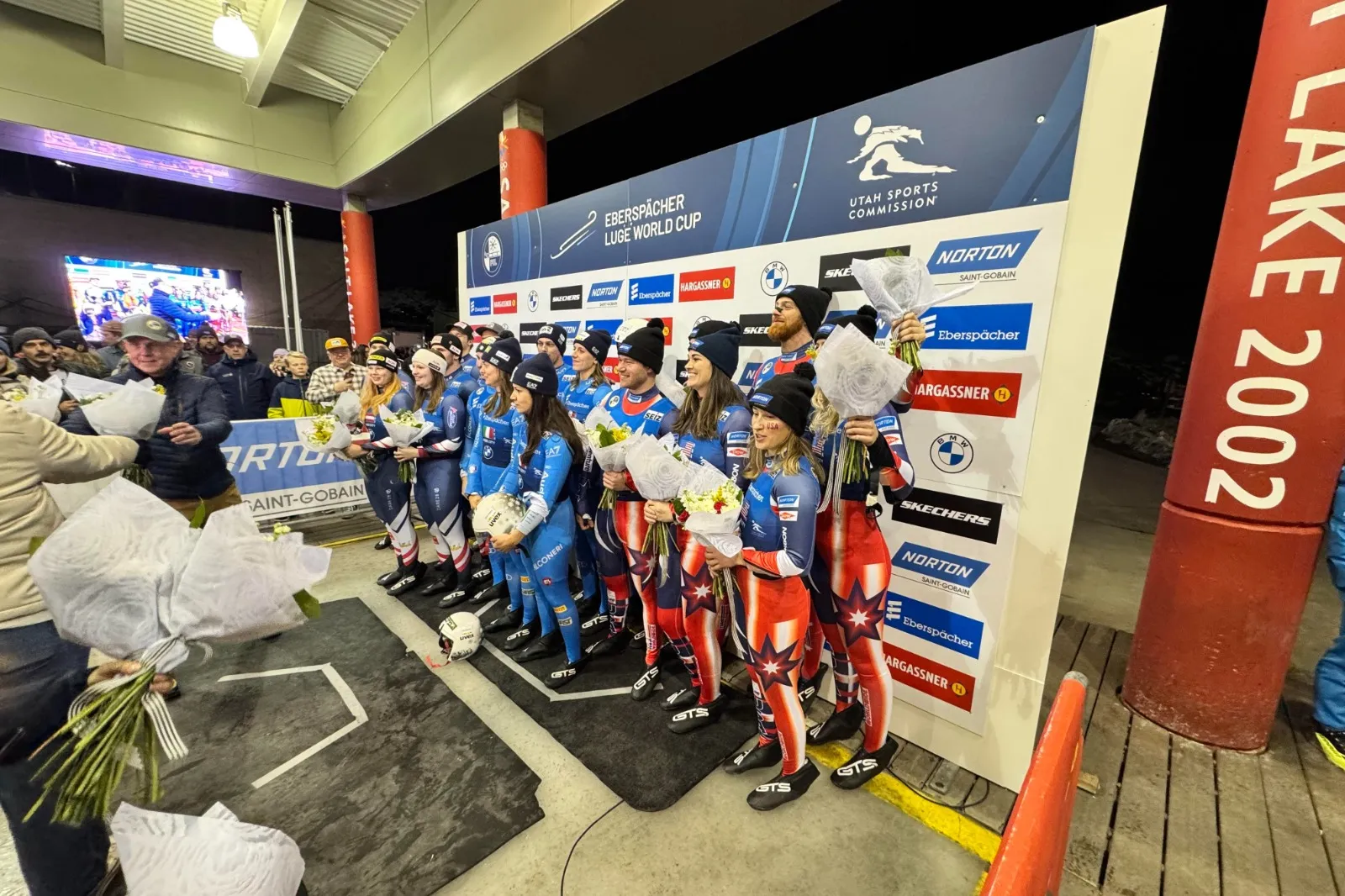
The partnership developed rapidly, as Dr. Jacuzzi attended a Luge World Cup event in Park City, Utah, in December. There, he initiated the technical analysis phase by establishing a setup for 3D scanning the athletes and their sleds. These scans are currently being transformed into models suitable for CFD analysis and will eventually be 3D printed, enabling further testing in the WindShear rolling road wind tunnel.
NASCAR promptly reached out to their network of technical partners, including Kevin Rau from Digital Reality Scanning, to assist with the scanning process. Rau, who typically collaborates with NASCAR during body submissions from OEMs, was enthusiastic about this project and volunteered a week of his time in Park City to scan the athletes and their equipment. NASCAR’s R&D team constructed a rig that facilitated efficient scanning without the need for additional markers on the athletes or sleds.
The 3D scans will be transformed into models for analysis, aided by TotalSim, which has experience collaborating with Honda to enhance the performance of the USA Bobsled/Skeleton teams. Honda engineers have previously tested with athletes at the Honda Automotive Laboratories of Ohio (HALO) wind tunnel. The NASCAR team believes they can implement best practices learned from TotalSim’s work with Honda in creating CFD models before proceeding to wind tunnel tests.
As part of their commitment, TotalSim is contributing time and resources to kickstart the NASCAR project by setting up initial models for the R&D team, enabling a more streamlined process for testing iterations.
Upon completing the CFD analysis, NASCAR intends to 3D print models of both the women’s singles athlete and sled, as well as the men’s doubles athletes and sled, to initiate their evaluations. Dr. Jacuzzi expressed enthusiasm about the regulations for certain categories, noting that the men’s doubles sled presents numerous opportunities for innovation.
The recently unveiled 3D printing lab at NASCAR’s R&D facility will play a crucial role in creating these models. Utilizing their Stratasys F900 and Fortus 450mc printers, they will produce modular 3D prints of athletes and sleds. This approach allows different versions of designs to be tested in the wind tunnel, enabling adjustments to various shapes and positions during aerodynamic assessments.
Partnership Objectives
The initial phase of the analysis will focus on refining sled shapes to minimize drag, with NASCAR aiming to conduct wind tunnel tests with their first model by this summer. Early discussions revealed that many current sled designs rely on traditional knowledge rather than data-driven analysis. Dr. Jacuzzi identifies immediate opportunities for enhancement by applying NASCAR’s insights from the racetrack, such as lowering sled heights to decrease drag.
NASCAR’s aerodynamics team members, including Chris Popiela and Tracy Halpin, are already collaborating with Dr. Jacuzzi on this initiative, and he anticipates rapid team expansion as many are eager to engage in this unique project. He views this collaboration as beneficial to NASCAR, as it provides a fresh perspective that could inspire innovative aerodynamic solutions for race cars.
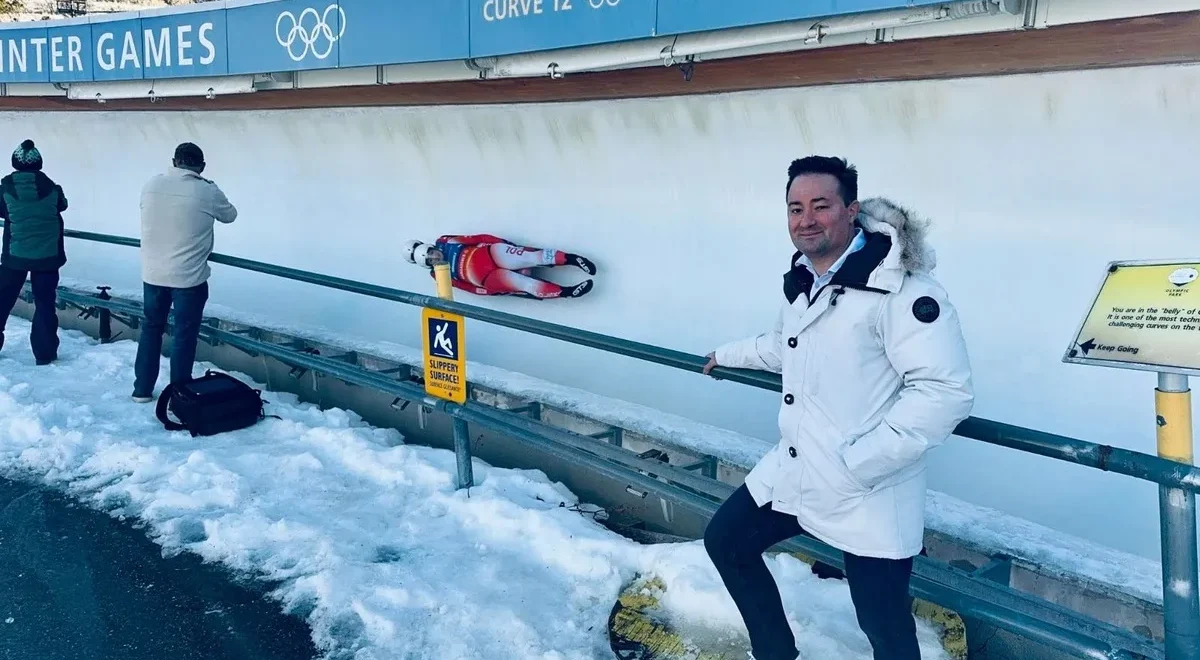
Dr. Jacuzzi envisions this as a long-term partnership, with the ultimate aim of developing a competitive edge for USA Luge at the 2034 Winter Olympics in Utah. Although that event is still years away, NASCAR is committed to setting incremental goals and refining designs annually, starting with the upcoming 2026 Luge World Cup. In a proactive move, Dr. Jacuzzi is traveling to Cortina d’Ampezzo, Italy, this week for the 2026 Winter Olympics, where he will observe the USA Luge team and gather insights for future analyses.