

Spend any time watching American television, and you’ll soon observe that commercials can generally be categorized into three distinct types.
The first category consists of ads for various processed food items, each one designed to look like an appealing chunk of glossy, salt-laden mystery meat. Each ad presents its product with a barrage of colors, sounds, and packaging that attempt to elevate it to the status of actual food. Here’s the latest delicious offering: the Flame Sauced Philly Cheese Taco Wing Waffle Dog Deep Dish MegaDeath Burger Grenade. You won’t regret trying it. Or maybe you will. Who knows?
The second category involves healthcare commercials featuring cheerful yet mildly troubled individuals engaging in activities like throwing a frisbee or playing chess. Meanwhile, a soothing voiceover discusses the life-changing benefits of a product called Omni-Pill.
However, since Omni-Pill is essentially a potent drug, the second half of the commercial must include a laundry list of potential side effects that often includes suicidal thoughts, depression, and genital warts. All of this is presented in a warm tone over upbeat visuals, creating a bizarrely glossy advertisement for issues like depression and the genital warts lifestyle.
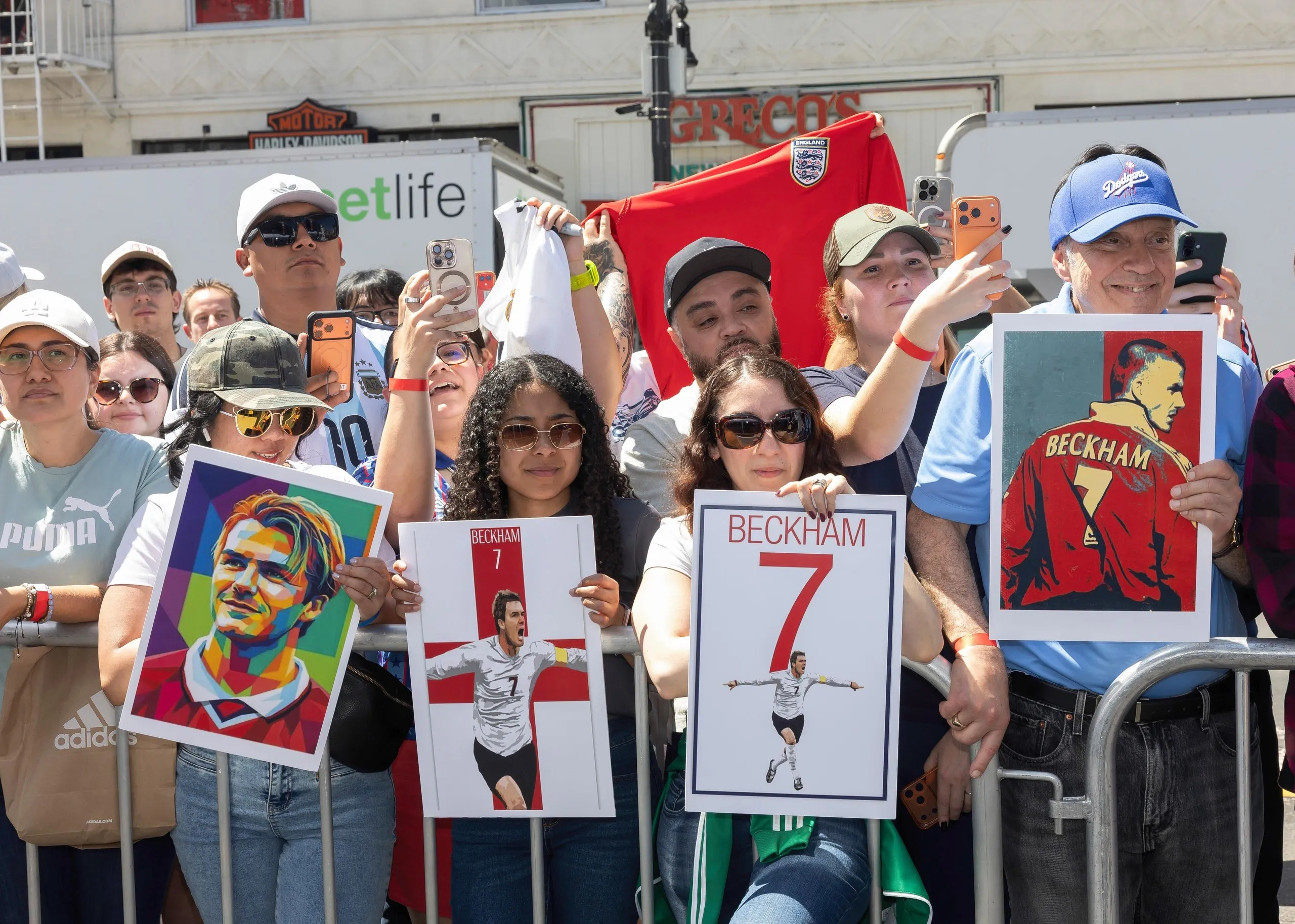
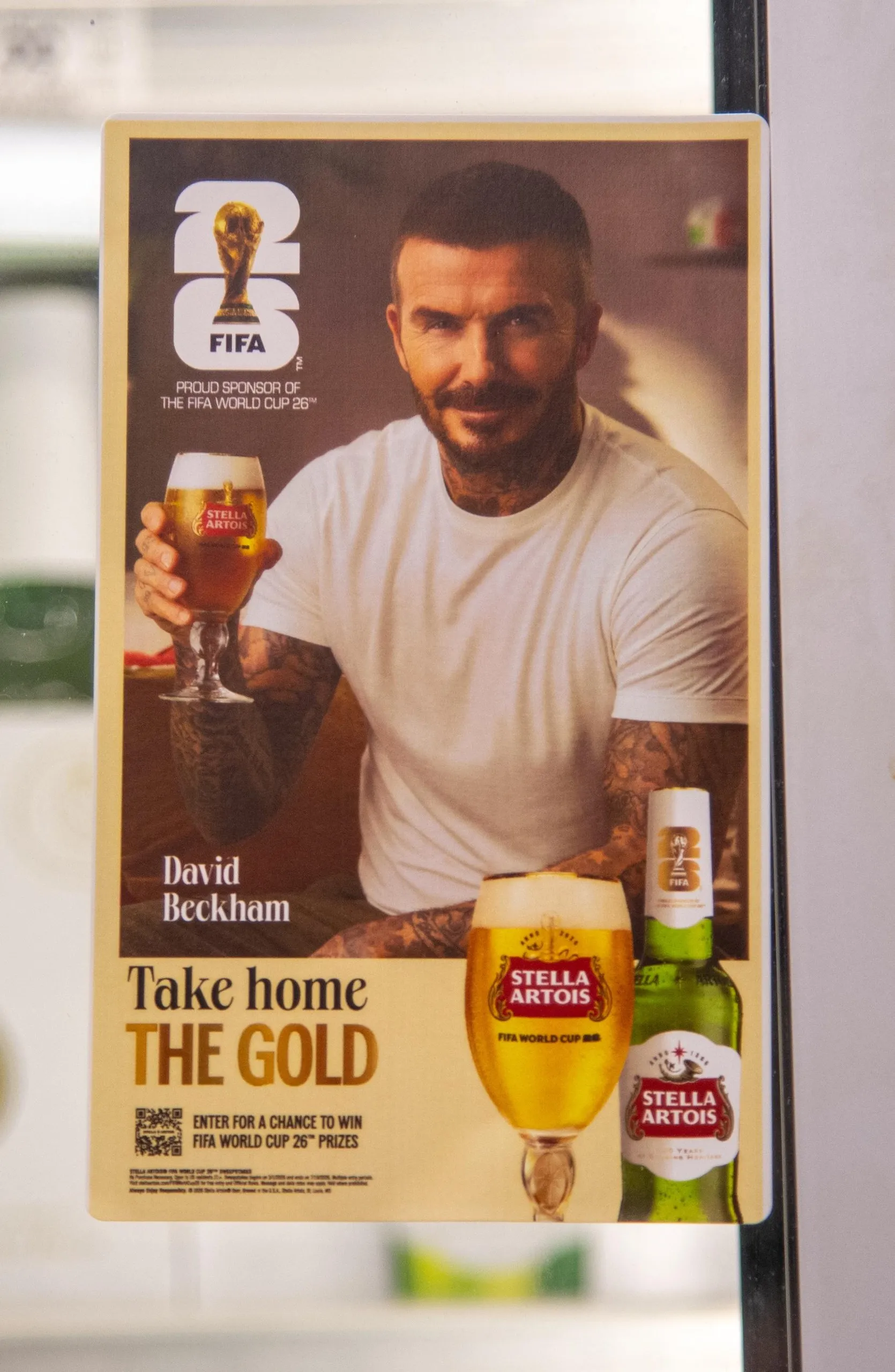
The third category is exclusively devoted to David Beckham. All things Beckham. The Beckham brand in all its captivating glory.
An Australian television program has humorously pointed out that Beckham seems to be the hardest working man in America, tirelessly promoting every aspect of his daily existence—from morning coffee and breakfast pancakes to shopping trips and quick showers (he’s 52, which means some things are visible). He features in various scenarios: having lunch, downing a beer, contemplating his watch, and speeding off, presumably to a bar where he quickly downs whiskey, before transforming into some sort of divine figure before finally collapsing onto a lavish mattress (where, thankfully, you won’t see his backside).
As Andy Warhol famously said, making money is an art. Now, as this highly commercial World Cup nears its conclusion, Beckham’s own ongoing masterpiece appears nearly finished.
Is the UK fully aware of the extent of Beckham’s fame in America, not just as a household name but as a figure of immense influence? Already a billionaire, he is projected to earn up to $25 million during this World Cup—more than any other individual—while playing no active role in the tournament. Just the hydration breaks, where he drinks beer and encourages viewers to return to school, are a continuous source of revenue.
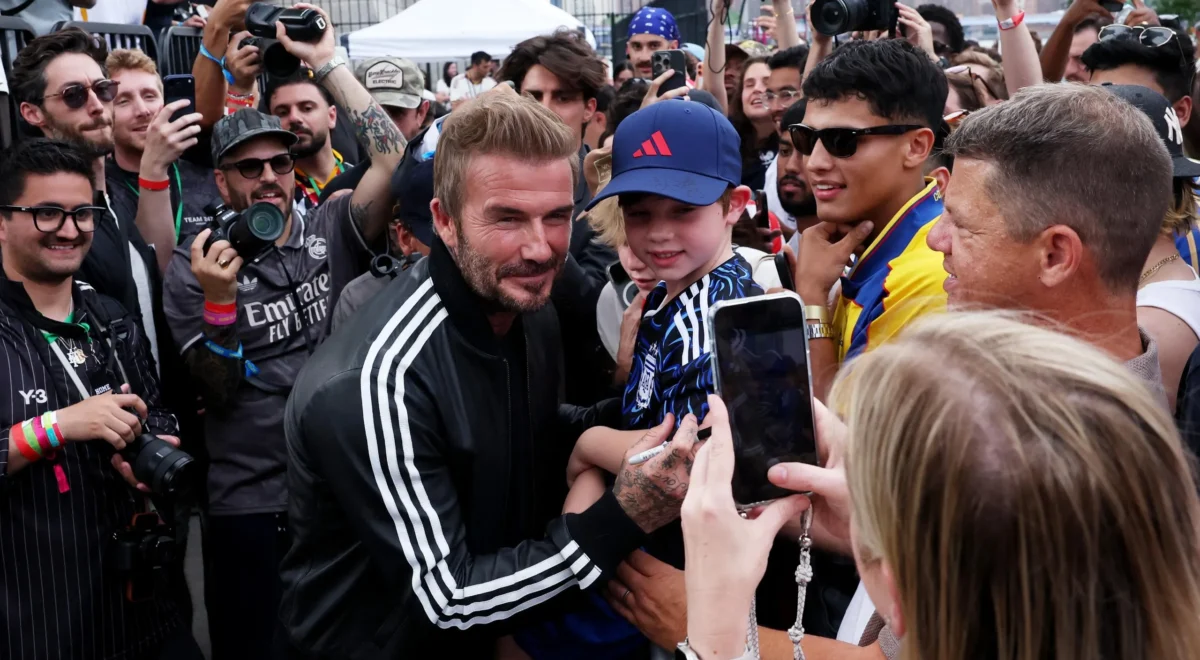
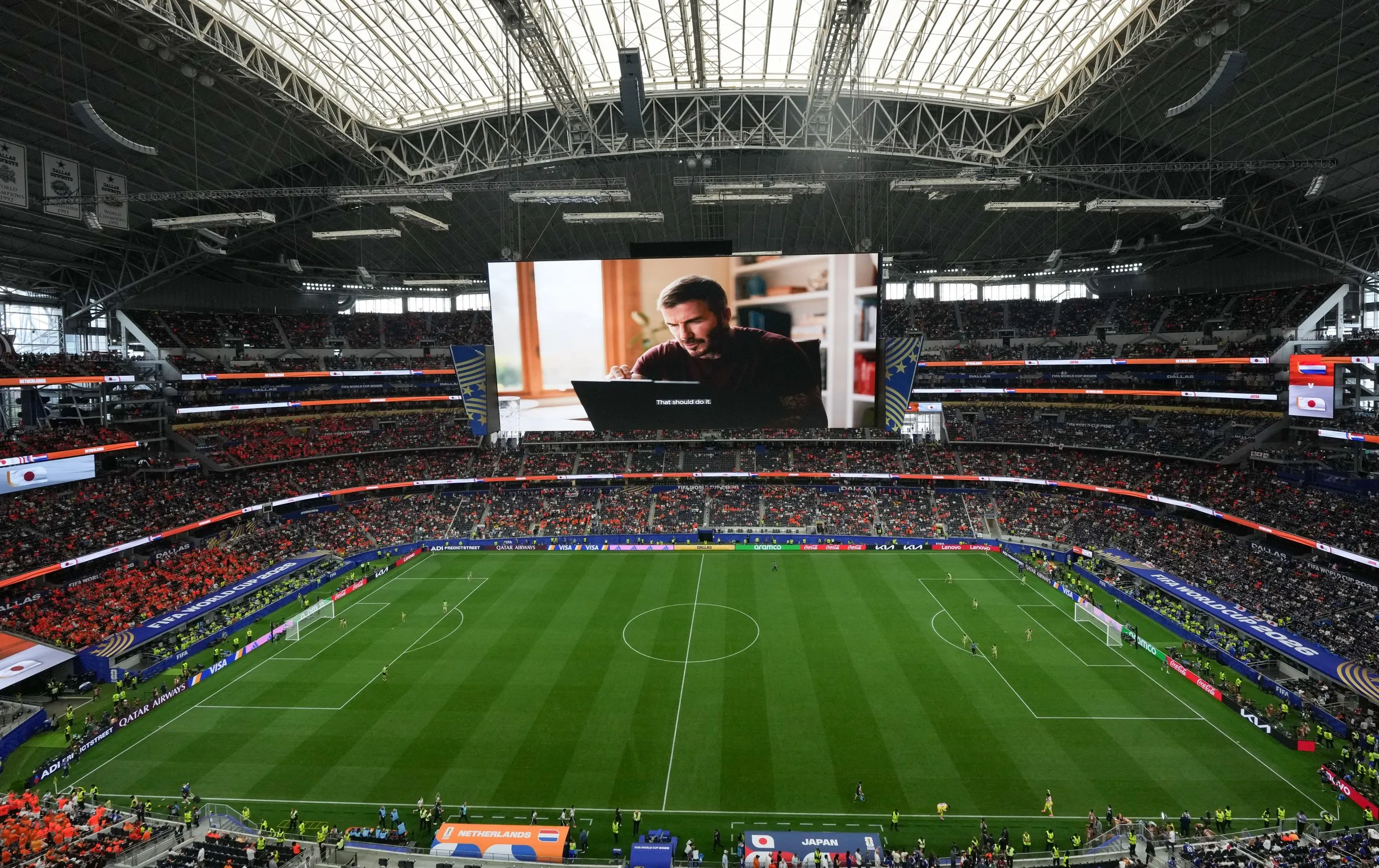
As the tournament transitions to Beckham’s Miami stronghold with England facing Norway there on Saturday, it becomes evident how he has embedded himself within the world’s largest leisure economy. At times during matches, Beckham seems to exist on three different levels: on the big screen as part of the entertainment, in TV commercials munching snacks or shopping for a sander, and finally, in real life, where he appears almost too animated, reminiscent of a pizza driving a car.
This saturation feels overwhelming—Total Beckham. There’s even a narrative suggesting we might be approaching a tipping point. A recent Forbes article expressed concerns about Beckham’s potential overexposure. Could it be that he has become too famous? Are we facing a market crash, empty Beckham bonds, or the downfall of entire industries?
This scenario seems unlikely. Two factors are at play here. First, the US appears to have an insatiable appetite for such celebrity. Second, Beckham himself possesses a remarkable drive to succeed, to become a living embodiment of a brand. As Warhol once expressed, “He’s rough, but he’s also soft.”
How did this phenomenon come to be? And will it ever cease? One of the most astounding aspects of Beckham’s journey is that he has achieved this level of fame after the twilight of his football career.
Beckham was undeniably a talented footballer, one who is often underrated in retrospect. His dedication and skill are sometimes overshadowed by his celebrity. Few are aware of his extraordinary free-kick against Greece or his pinpoint corner kicks.
In this regard, Beckham stands apart from other Brits who have made it big in America. He has done so primarily by doing very little. Unlike the Beatles who popularized rock and roll, or JK Rowling who penned bestselling novels, Beckham excels at being famous. There is an undeniable demand for this persona.
You might try to break it down. Three main factors stand out. The first is Beckham’s own distinctive personal brand, his uncanny ability to be remarkable. At first glance, he is simply a handsome man with tattoos wearing an expensive shirt. Yet there’s an elusive charm in his smile, reminiscent of classic Hollywood. He could just as easily be a charismatic handyman.
But go ahead, give it a shot. The Beckham persona is intricately curated—strikingly simple yet filled with subtle energy. It exudes a calm demeanor yet contains a surprising intensity. Furthermore, there’s a certain innocence to him that allows others to project their own qualities onto him. As one Miami hairdresser put it, “He’s rough, but he’s also soft.”
At times, Beckham exhibits a vaguely Latin flair and channels elements of black culture. He is also known as “Sir,” a title he wears well. Despite the diverse influences, America still seeks validation, a sense of self-worth from coast to coast. A handsome figure who offers affirmation must feel comforting in these times.
In stark contrast to the constant noise and chaos of American public life, Beckham represents calmness. He speaks little but offers approval. He embodies the archetype of America’s dad, the idealized father figure. In many of his portrayals, he is depicted as quietly motivational, with an encouraging, relatable vibe. “Look, I’m just like you. I’m the mega-handsome billionaire version of you.”
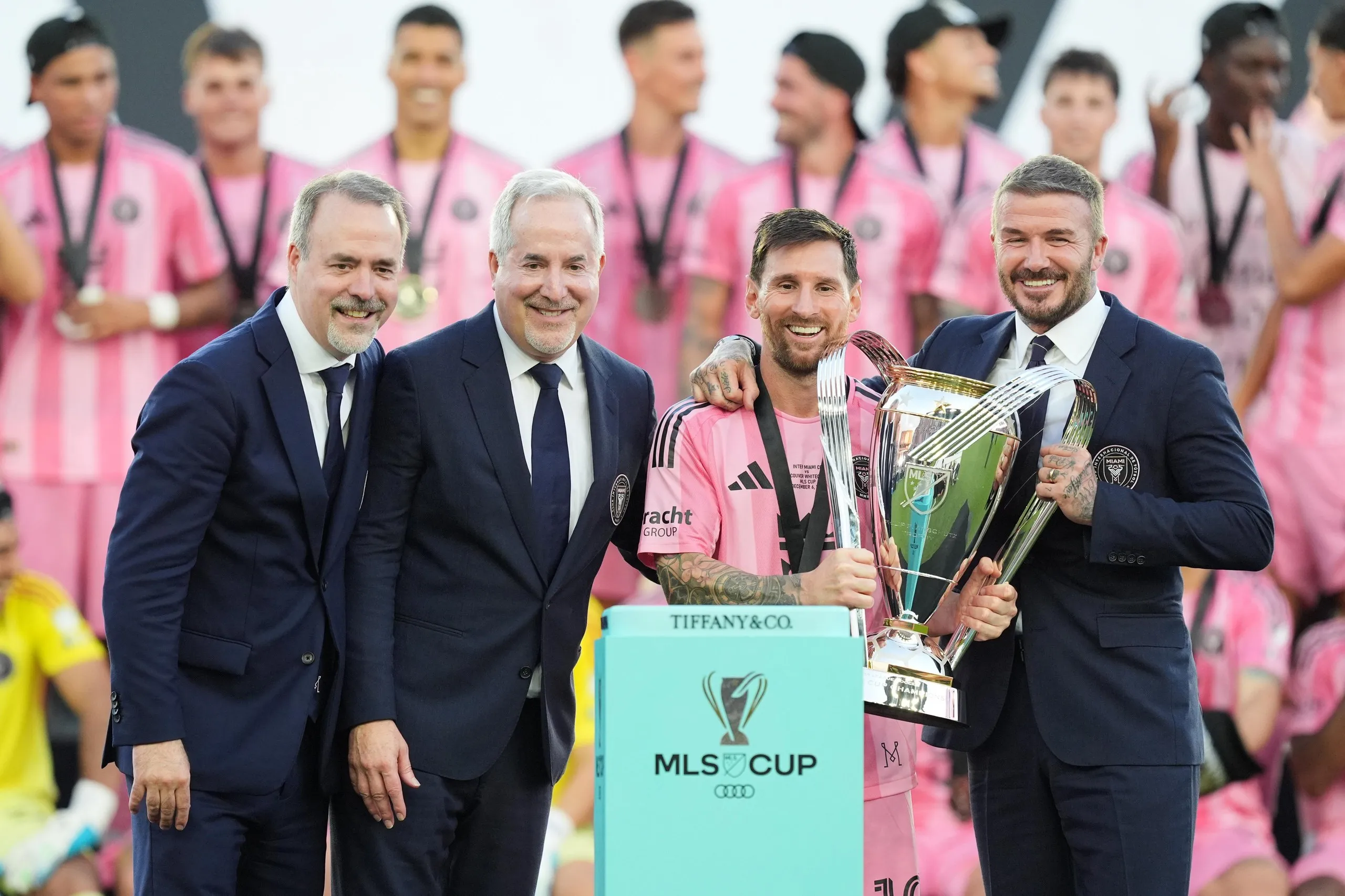
While soft power and subtle influences are significant, Beckham’s acquisition of the Inter Miami franchise represents hard power and financial clout. His success is largely attributed to his billionaire partners, the Cuban-American brothers Jorge and José Mas Santos.
The exact details of Beckham’s ownership stake remain undisclosed. However, he is undeniably the public face of the franchise, while the Mas family serves as the driving force behind it, deeply rooted in Miami’s Cuban-American community. The most compelling figure among them was their late father, Jorge Mas Sr., who fought alongside the US during the Bay of Pigs, later becoming embroiled in various plots against Fidel Castro.
Mas built wealth through communications and construction and was known for his connections to political figures, even challenging a former Miami mayor to a duel. He famously drove a bombproof Mercedes with a gun in the glove compartment.
Mas also bequeathed his influence to his sons. Navigating Miami’s complex landscape requires connections, and Mastech Industries holds vital relationships. On a recent rest day during the World Cup, the company’s offices near the airport were almost deserted, save for a few individuals in Inter Miami lanyards. The heat was stifling; everything felt hot. Power is often dispensed in air-conditioned, mirrored rooms. Meanwhile, a new stadium, the Freedom Park Arena, is under construction nearby, solidifying the Mas-Beckham dominance and providing yet another source of income, power, and prestige.
By harnessing the energy and geopolitical dynamics of the Cuban-American community, Beckham has skillfully navigated his path. He aligned himself with influential individuals who recognized his potential. The Inter Miami franchise is now valued at nearly $1.5 billion (£1.1 billion), and Beckham has become synonymous with soccer in the United States. His family is celebrated and revered, akin to royalty, in the public eye.
One more crucial factor has emerged: Lionel Messi, who joined Inter Miami in 2023 and is contracted until 2028. Messi’s presence has dramatically boosted both the commercial viability and overall appeal of the franchise.
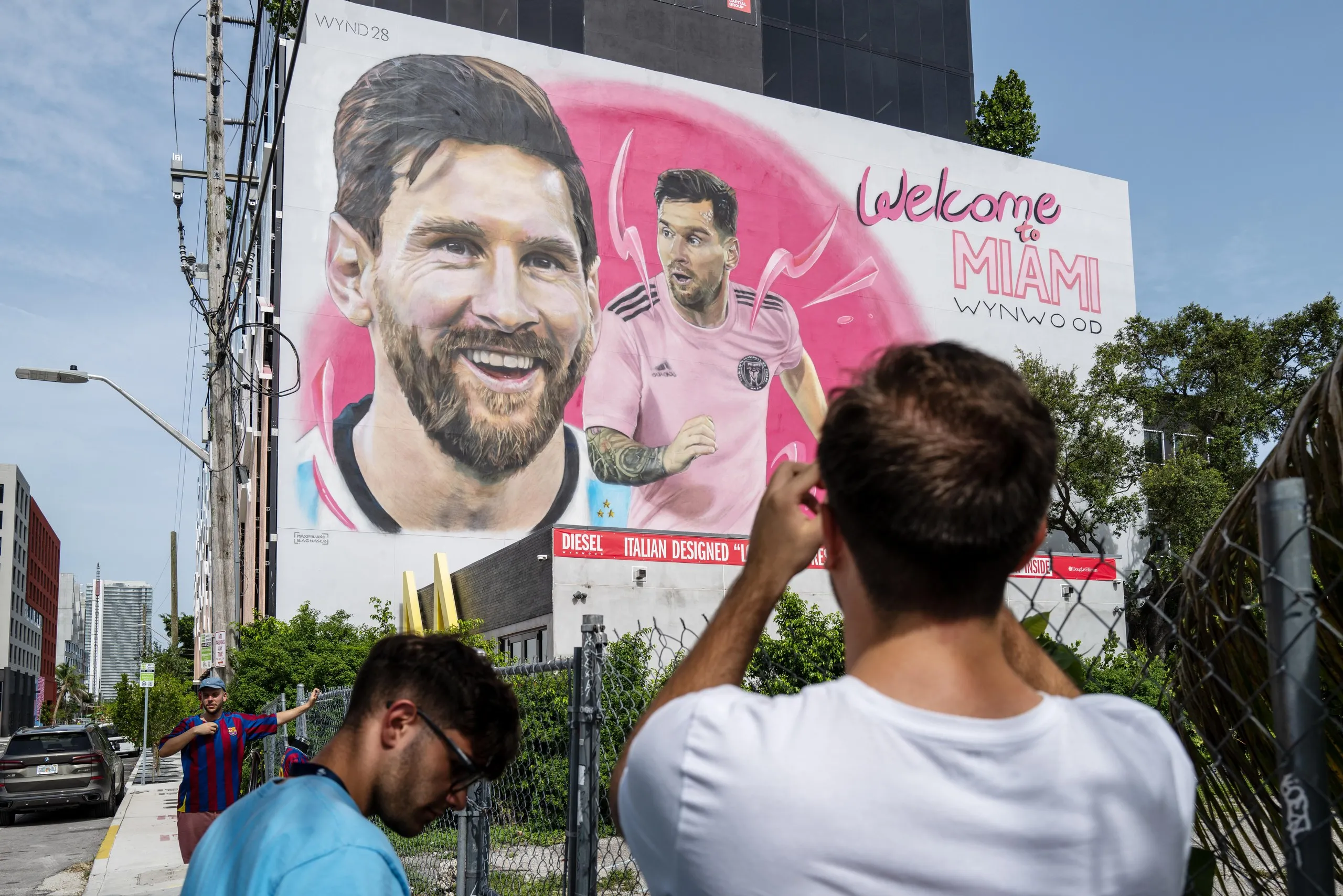
In Wynwood, Miami, a massive mural of Messi has become a must-see destination for fans, illustrating Beckham’s ability to connect with diverse demographics in a city rich with Central and South American influences. The Inter Miami jersey has become the fourth best-selling shirt globally, a remarkable achievement.
Interestingly, Beckham even contributed to that Messi mural, painting a small section from a cherry picker. Messi’s arrival has intertwined with Beckham’s ascent, further enhancing his influence as the World Cup progresses. Beckham has diligently cultivated this brand for 30 years, a journey that began even during his playing days.
There will likely never be another English footballer quite like Beckham. Not only did he pave the way, but he also occupies a unique space in the sports world, possessing an astonishing level of influence within a public persona that is endlessly consumable.