

Throughout my life, identifying as Indian, Muslim, Australian, and passionate about sports has never seemed contradictory—until now.
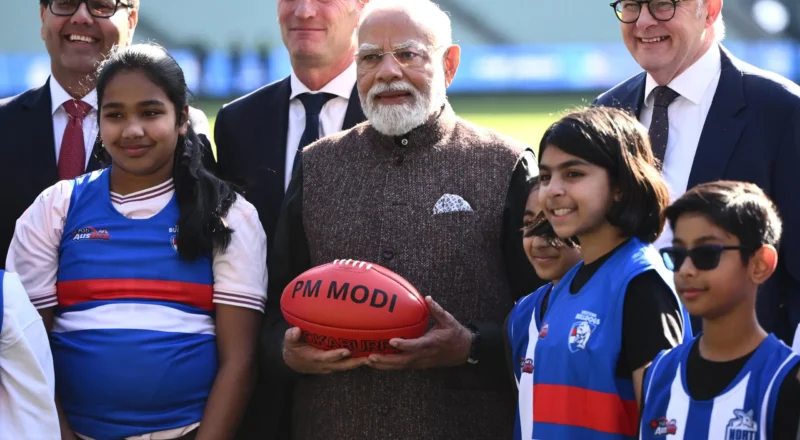
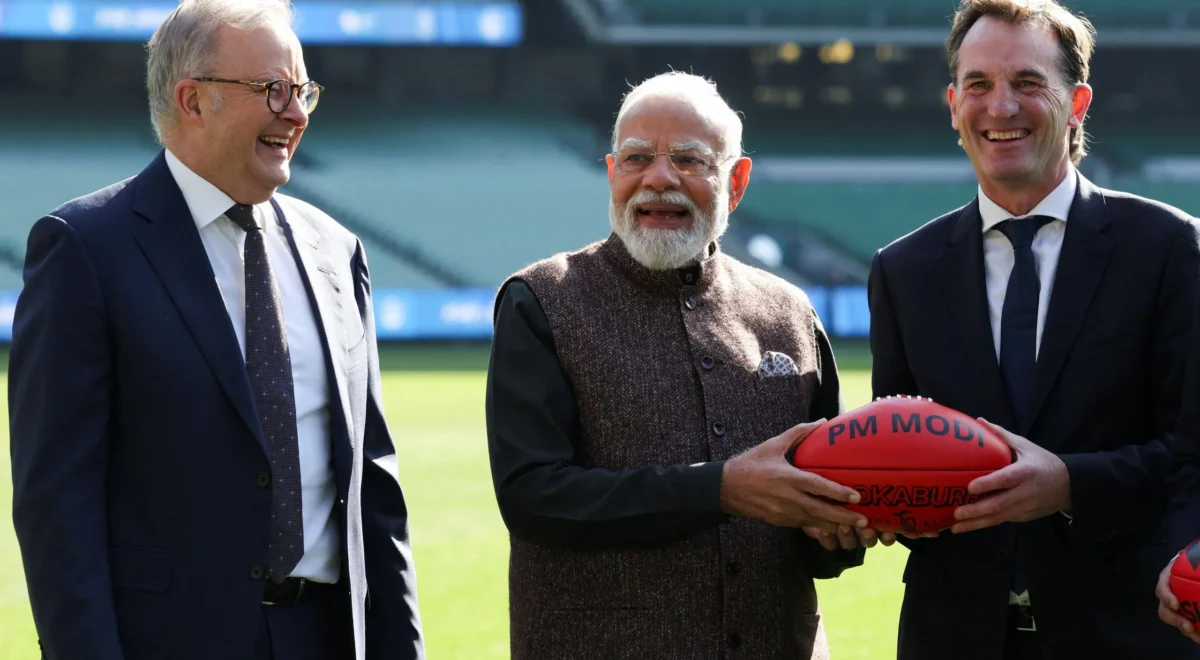
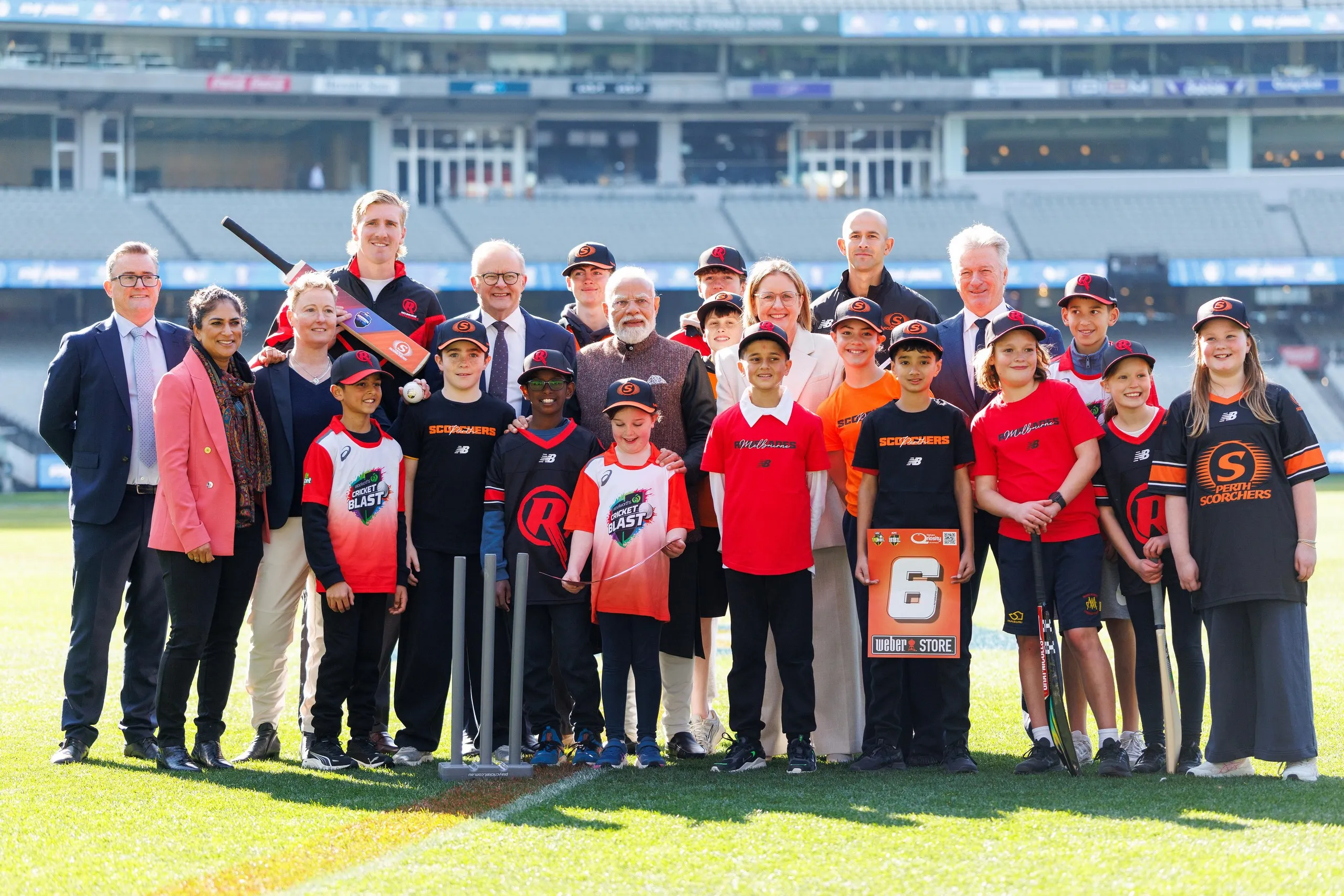
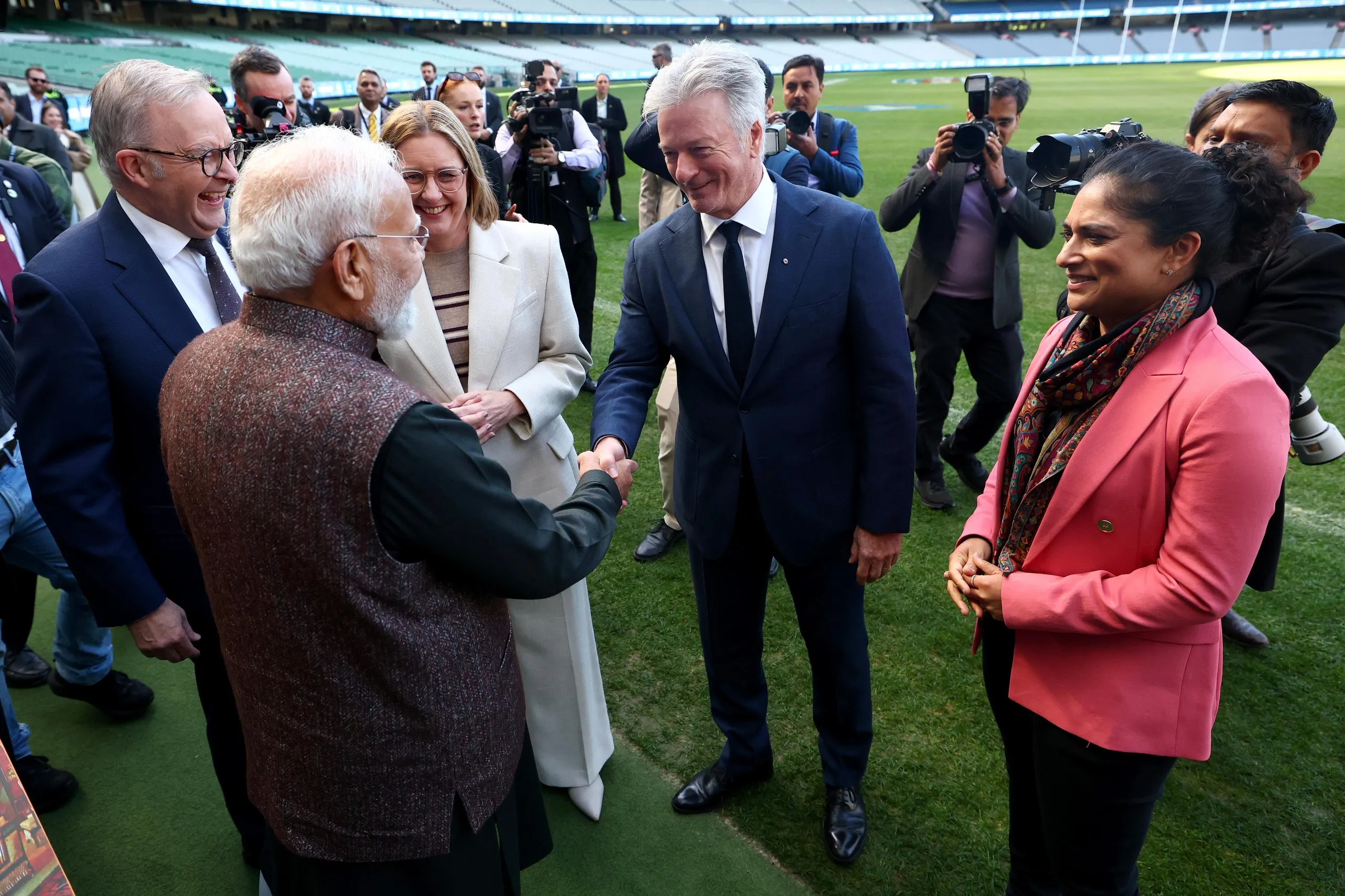
Last week, witnessing AFL chief executive Andrew Dillon and cricket icon Steve Waugh sharing smiles with Indian Prime Minister Narendra Modi was not merely a diplomatic moment for me. It was a poignant reminder of two beloved institutions celebrating a leader whose name evokes profound distress for many individuals like myself.
This experience was heart-wrenching, prompting me to question whether these organizations desire my identity in theory but not in practice. Some family members expressed concern about my decision to speak out, fearing repercussions from openly criticizing the Modi administration. Sadly, this is not a hypothetical scenario; it is our lived reality.
During Modi’s visit, Cricket Australia seized the opportunity to announce the inaugural Big Bash League match in India, coinciding with a broader trade and cultural delegation. Similarly, the AFL showcased its aspirations to expand its presence in India. Both organizations recognize the importance of India and its diaspora for their future growth.
While Modi serves as the democratically elected head of the world’s largest democracy and a crucial strategic partner for Australia, this fact does not resonate with everyone.
For numerous Indian Sikhs, Muslims, and Christians, Modi’s name symbolizes a decade marked by increasing trepidation. Organizations like Amnesty International and Human Rights Watch have consistently criticized his Hindu nationalist government for its discrimination against religious minorities, crackdowns on dissent, suppression of journalists and civil society, and threats to democratic freedoms. Additionally, Australia has faced allegations regarding Indian governmental interference within its own borders.
This duality is precisely what makes this sporting moment significant. It is not about sports shunning governmental engagement; international relations are intricate, and sports have always intertwined with politics. However, what concerned me was whether anyone considered how this relationship impacts Indian Muslims, Christians, and Sikhs who also reside in Australia.
Sports are adept at conveying symbolism; the company one keeps sends a powerful message. Both Cricket Australia and the AFL have established multicultural initiatives targeting India and its Australian community. Nevertheless, embracing the Modi government may imply that only the majority’s Indian voices are deemed worthy of engagement. For minority groups, this is not merely a political abstraction; it embodies the experience of being disregarded—first as a minority in India and once more in Australia.
When organizations celebrate diversity yet fail to heed the concerns of those most affected by their decisions, it does not go unnoticed. Trust diminishes, and individuals begin to question their sense of belonging—wondering if they are valued only when their perspectives align with convenience. Living in such uncertainty is a painful experience.
These organizations frequently ponder why attracting and retaining diverse talent is challenging, why national teams do not mirror modern Australia, and why diaspora communities feel disconnected from Australian sports despite ongoing efforts to foster connections. The answer partly lies in moments like these: one cannot build a sense of belonging through strategy while simultaneously undermining it through decisions.
My belief in Australian sports as a powerful vehicle for fostering belonging remains steadfast. Having previously led diversity, equity, and inclusion initiatives at Cricket Australia, I am still involved as part of its Indian ambassador group and serve as a matchday host. Furthermore, I am a member of the AFL’s equity, inclusion, and safety committee after over 15 years of working within Australian football, including as one of the league’s original multicultural ambassadors.
I remain committed because I recognize the potential of Australian sports. At its pinnacle, it is one of the few institutions capable of cultivating genuine belonging—perhaps the closest we have to a unified national identity. However, as images from the so-called “We know this affects you differently and we care.” flooded our Cricket Australia Indian ambassador group chat and my social media feeds, I was acutely aware of the absence of voices that reflect different experiences of Modi’s India.
This situation is not about believing I should have had a veto or that a single conversation could alter outcomes. Nevertheless, if these organizations genuinely sought alternative perspectives, they could have simply reached out. Consultation conveys a message: it signals an awareness of differing impacts and a willingness to care. This is the essence of belonging. When institutions assert our inclusion, do they truly encompass all aspects of our identity, or only the uncomplicated parts?
Over the years, I have assisted organizations in grasping that belonging transcends mere slogans. It is a practice that is tested in moments when values clash with commercial interests, political realities, or institutional convenience—when one chooses to confront the most challenging perspectives.
The recurring contradiction I face is that these organizations have long celebrated my identity, inviting me to influence their thinking, take the stage, and publicly embody their values. However, identity cannot be selectively engaged. My expertise cannot be divorced from my lived experiences. Do not expect me to represent your values if you do not wish to embrace my entirety.
The visit from Modi has brought this reality into sharp relief. The overarching question remains: do the sporting institutions we cherish genuinely embody the inclusion they urge us to believe in? Belonging cannot be merely displayed; it must be felt by individuals. Last week, many of us did not experience that feeling.
- AFL
- Cricket Australia
- Narendra Modi
- Australian rules football
- Cricket
- Australia sport
- Sport politics
- comment