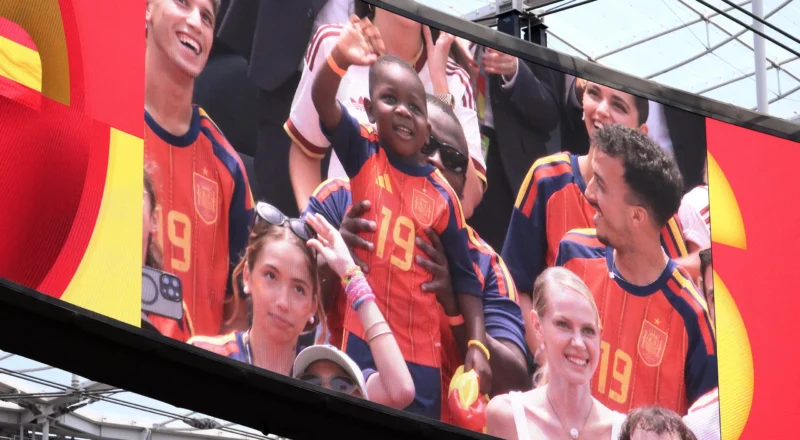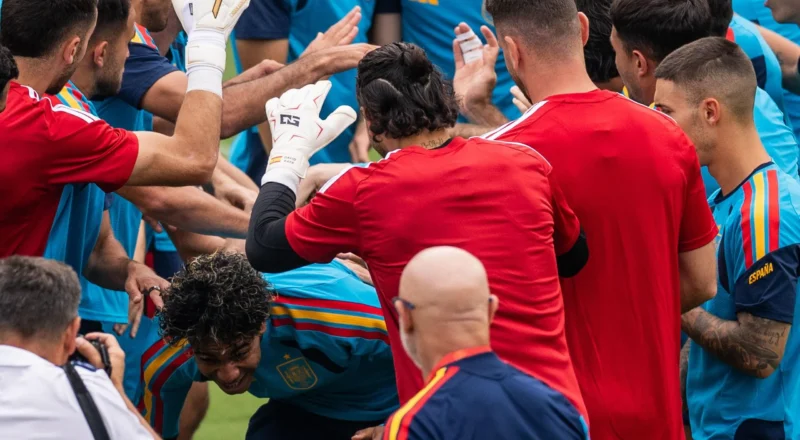


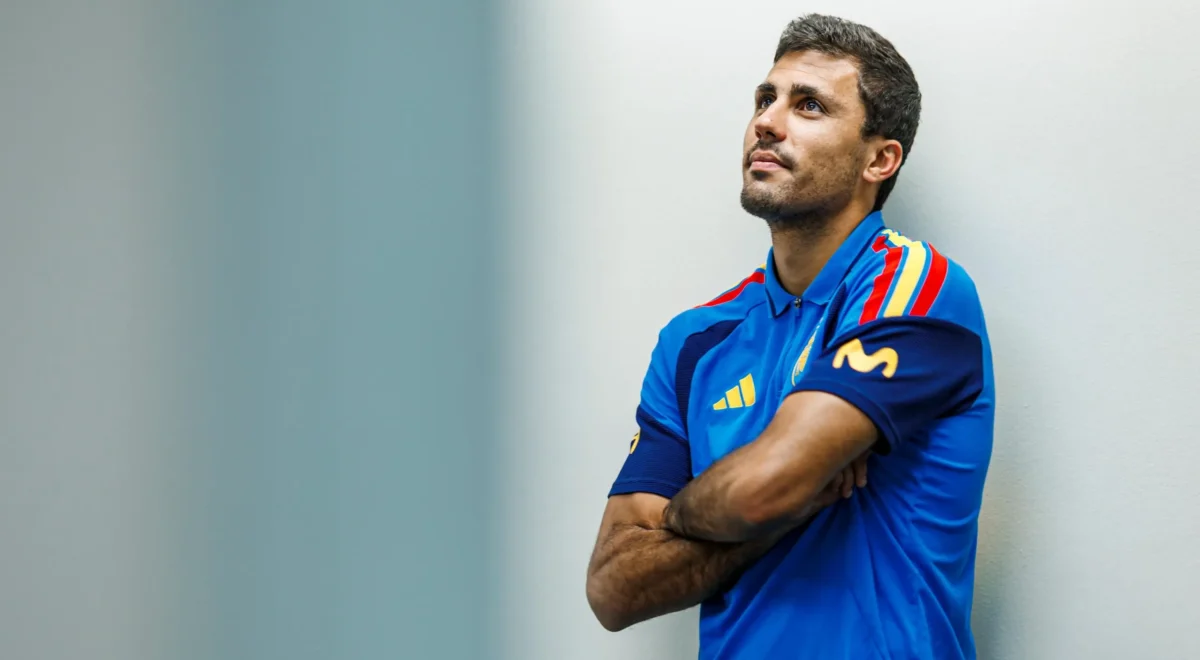
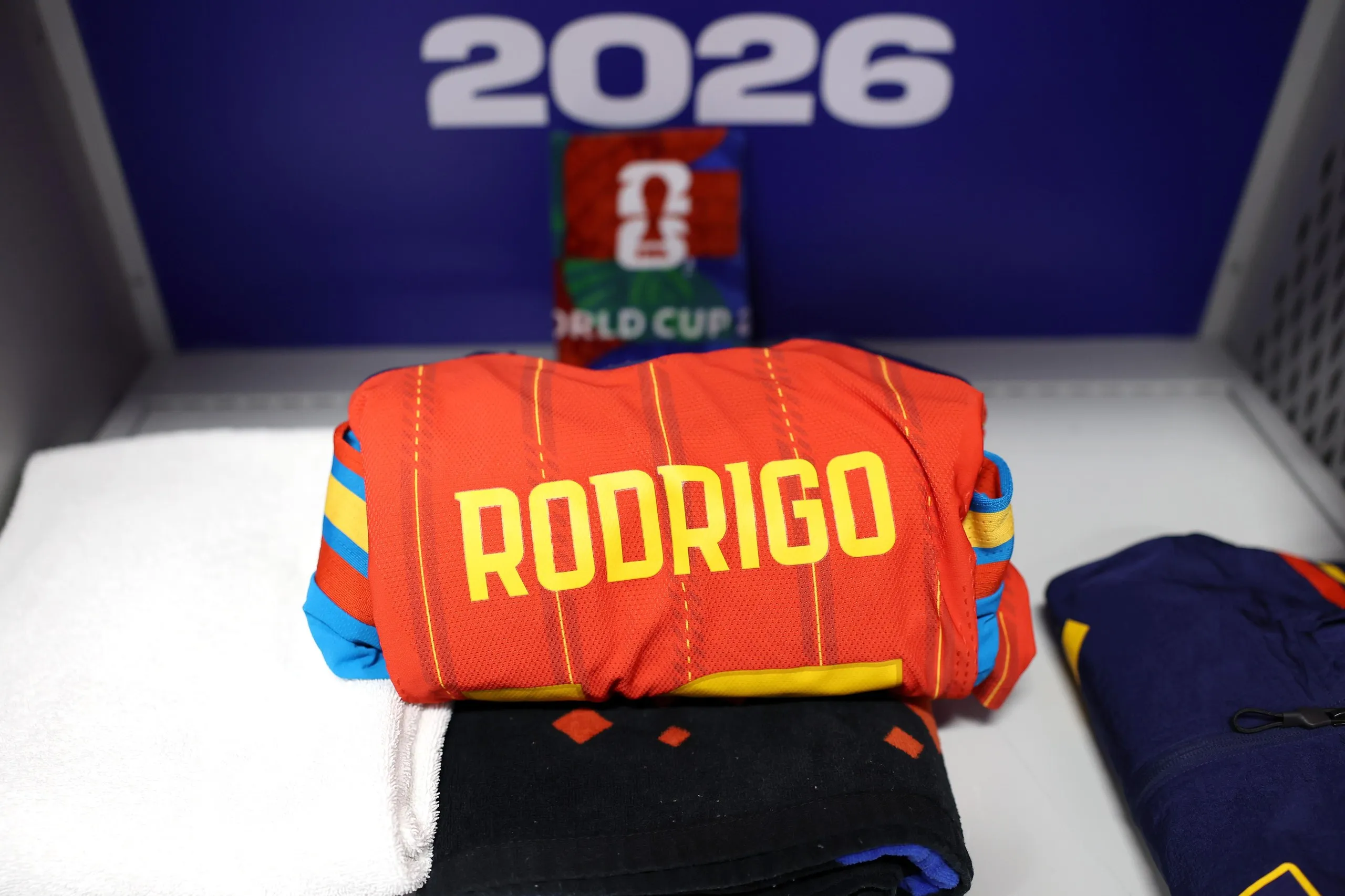
“Some as a fan, teams we can’t face; others I analyse. But it’s not like I’m there with pen and paper,” says Rodri Hernández. This statement comes after the World Cup’s 100th match, during a press conference at the Cotton Bowl. Spain’s captain, surrounded by historical posters, is reflecting on the journey so far. Despite the extensive travel amounting to 9,000 miles across cities from Atlanta to Los Angeles, he believes he has managed to observe most of the tournament’s action. “But, yeah, I probably am the worst.” he admits with a chuckle, conceding, “England v Argentina will be very, very close, two very different styles of football, but I would rather focus on ours,”
Rodri embodies a unique blend of talent and intellect, a Ballon d’Or winner who also graduated from Castellón University. At 14, he experienced the thrill of Spain’s last World Cup victory while at a camp in Connecticut. Now, 16 years later, he aspires to replicate that success. Described as a de facto coach on the field, Rodri’s analytical approach showcases his leadership qualities. When he speaks, his teammates listen, often out of necessity.
After a century of matches, Rodri has drawn several conclusions. He notes the pace of the game, the quality of the pitches, and the impressive stadiums. He emphasizes that the four semi-finalist teams are indeed the strongest in the tournament. “France are one of the best teams here, in great form, but so are Spain. We can beat them, we’ve seen that at the Euros and in the Nations League.” he states. “Luis hasn’t changed at all,”
Both previous victories against France occurred in semi-finals, adding to Spain’s confidence. Last summer, Spain triumphed against France 5-4 in the Nations League, although the match was misleadingly close, with Spain leading 5-1 before the end. The previous year, they secured a 2-1 victory at Euro 2024. Rodri recalls his first title with Spain, the 2015 Under-19 Euros, where he also faced France in the semi-finals. “That’s where he began to build everything we see now.” he reflects on their coach, Luis de la Fuente. “I feel good and I’m happy about the team’s growth, which is so important at tournaments,”
Now 30, Rodri acknowledges the challenges he has faced over the past season and tournament. Unlike the Euros, where Spain dominated from the outset, this journey has required patience. He expresses confidence that the team is finding its form at the right moment. “We’ve got the feel of things as we went, and now we’re in a good moment. I see a team that’s as competitive as [they were] at the Euros. The form people were in [when we arrived] is different, the physical condition. That’s why I kept saying it would be a long tournament, that we would have to ‘chew’ on it, become a good version of ourselves. We can see that now. If we can continue this progression, we can reach our level but what I would underline is how competitive this team is. “France have great attacking qualities, but I’d also highlight their defensive strength. They defend well in a low block, they’re very physical, very aggressive. We’ll have to take the game to where we want it. It’s rare for any game to finish 5-4 like last year and we can’t allow that to fool us, to think this will be something it won’t. If only it could be like that! But I don’t think it will be. We’ll see a stronger team, harder to score against. World Cups are different. And I don’t know that an open game, a back-and-forth like that, suits us. We’ll have to control more. This is a big challenge against one of the teams playing the best and we’re looking forward to it.” he shares. “At 19, I would be in halls at university,”
Rodri emphasizes the importance of maintaining competitive spirit, comparing current team dynamics to their Euros performance. He highlights the need for strategic control in their upcoming match against France. “There would be the occasional little party that I couldn’t possibly tell you about.” he outlines. “Mine was a totally different ‘film’ to the one that Lamine is living,”
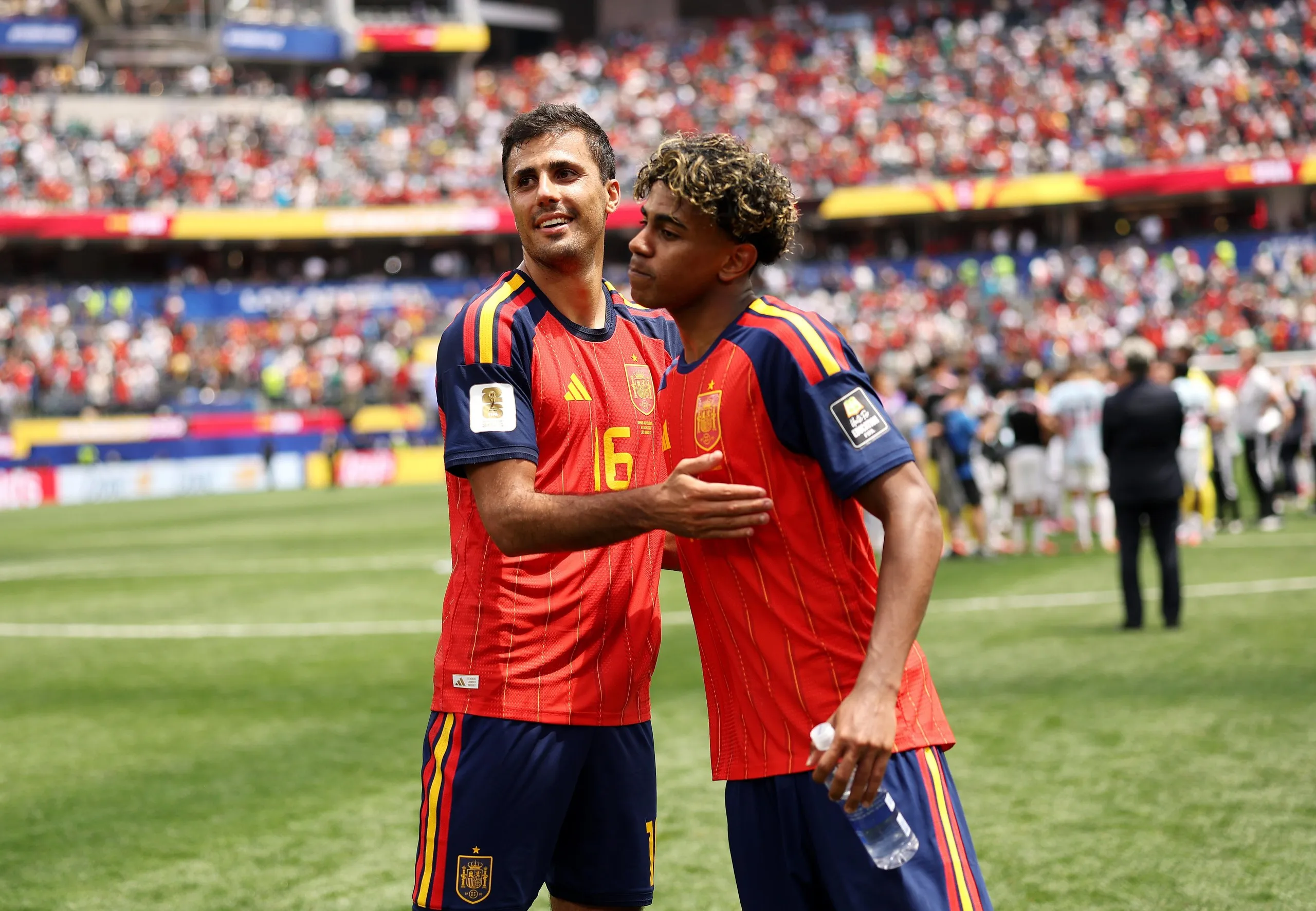
One standout player from recent matches is Lamine Yamal, who made a significant impact at 16, scoring a remarkable goal in the semi-final that led Spain to European glory. Now approaching his 19th birthday, he has yet to replicate that level of performance in this tournament. “It’s life, it’s football,” Rodri jokes, reflecting on the pressures Yamal faces. “Lamine showed so much maturity at the Euros. He’s two years older now, and you’ve seen what he’s capable of, so maybe it doesn’t impress you so much. But at his age, two years on, I was just starting out. I hadn’t even played professionally yet. He’s a kid, he’s shown such maturity, but he still has things he can improve: in understanding the moments of the game, say. Which is normal because of his age. We all know the level he has. “The manager said it best. The way to help Lamine is keep him calm. He needs to calm that anxiety, that urge, he sometimes has to show what he can do. He’s so important for us, with and without the ball. He’s an intelligent boy. But he’s 19 and there are times when you have to calm him in games. He has so much football inside that he wants to bring out; it’s about finding the right moment. Against France, we hope he can be important.”
Rodri contrasts their experiences, noting that at Yamal’s age, he was just starting his career. “No, no, not at all, far from it,” he remarks, acknowledging the challenges of exposure and expectation. He commends Yamal’s maturity, despite acknowledging that he still has room for growth. “He always listens, he’s always prepared to improve, mature. He’s very self-critical, so demanding of himself. Wingers can sometimes get into that dynamic where it feels like referees aren’t blowing fouls on you and you tend to stop. I insist that he carries on. Don’t stop. He’s a boy who listens, who always wants to learn. He’s a role model.” Rodri states, particularly regarding game awareness.
“I’m not going to lie; it’s hard,” Rodri explains. “The figure of captain is important: leadership is vital on the pitch but especially off it,”
Rodri’s insights extend beyond Yamal; he has taken on a broader leadership role within the team. With previous leaders like Dani Carvajal and Álvaro Morata no longer present, Rodri embraces the responsibility of captaincy. “On the pitch, my role is practically the same: I’ve always tried to lead from my position. Off the pitch it’s the captain who lays out a path for the group. At times of doubt, it is down to him to bring calm to the group. I’ve tried to absorb what the dressing room leaders did, those different roles. We miss Carva and Álvaro but I’m trying to communicate what I learnt from them. “You try to be close to those players who aren’t playing. It’s a personal thing. We’ve all been through it, we know it’s part of football. You can’t say too much but you support them, keep them involved. Think how you would like to be treated and do the same. Important players don’t always have to start. The other day, Fabián starts and is spectacular, scoring. Then Pedri comes on and gives the team what it needed: that finesse, that stability. Mikel is an example.” he explains. “The highest thing you can aspire to,”
He emphasizes the significance of unity among players, particularly those who have not seen much playing time. “That’s the challenge, and it’s only been done once in history.” he says, advocating for support and involvement of all team members.
As they prepare for the World Cup’s final stages, Rodri reflects on the culmination of his career thus far: Champions League, European championship, and Ballon d’Or. “The highest thing you can aspire to,” he states, referring to the possibility of becoming a World Cup-winning captain. “That’s the challenge, and it’s only been done once in history.”
- World Cup 2026
- Spain
- France
- World Cup
- interviews