

NASCAR’s top competition officials have revealed that a combination of factors led to the allowance for teams to refuel without facing penalties during the Cookout Clash at Bowman Gray Stadium, which was marred by sleet and numerous cautions.
This move sparked frustration among several crew chiefs, particularly those who had opted to fill their tanks prior to the race or who sacrificed their track positions to refuel, alongside those who found themselves running out of fuel, prompting NASCAR’s intervention.
Notable drivers such as Kyle Larson and Chase Elliott both faced fuel shortages, while Kyle Busch and Tyler Reddick managed to top off their tanks just before the decision was made.
Adding to the complexity of the race was the uncertainty about tire changes as teams navigated a wet track that was slowly drying, yet race control never officially declared it dry enough to switch from the Goodyear wet weather tires.
Reasons for the Refueling Decision
Brad Moran, the managing director of the NASCAR Cup Series, provided insights into the rationale behind allowing refueling without penalties on Lap 165 during a media roundtable discussing research and development.
He noted that this was the inaugural race utilizing the 750 horsepower package, resulting in imprecise fuel mileage estimates. Additionally, the absence of a proper pit road at Bowman Gray complicated standard procedures.
Moran speculated that the issues faced by Larson and Elliott might have stemmed from mechanical failures rather than fuel shortages, and he acknowledged that caution laps were not being counted.
“It’s the first time we’ve run that engine in an actual race with the higher horsepower,” Moran explained. “We believe our data is accurate, but we’ll continue to review it.”
He raised a pertinent question regarding whether teams were required to start with full tanks, indicating that while full tanks were recommended, they add extra weight to the vehicle.
Moran elaborated that with the unusually high number of cautions, it was not feasible to allow fueling at any time due to safety concerns, given the lack of fire protection at fueling stations.
Concerns Over Fuel Shortages
Reports indicated that several drivers were running out of fuel, starting with Larson, raising questions about potential pickup issues. Therefore, NASCAR opted to allow teams to refuel.
“If we didn’t allow them to refuel and more cars ended up running out, it would create additional complications for the race and diminish its quality,” Moran stated. “With 35 green flag laps remaining and many cautions not counting, we believed it was essential to ensure the race concluded smoothly.”
He commented that the situation with non-counting cautions was not beneficial for the event on that night.
The McDowell Incident
Another prominent topic of discussion arose from the opening lap of the Cookout Clash Last Chance Race, where race officials determined that Michael McDowell jumped the start, overtaking pole sitter Josh Berry.
As a consequence, McDowell was relegated to the back of the field and was ultimately unable to secure a transfer position, resulting in his elimination from the main event. At the time, McDowell expressed that he was aggressive but felt that Berry had caught him off-guard.
This incident was addressed by NASCAR’s Senior Vice President of Competition, Elton Sawyer.
“Once they enter the zone, we monitor Berry closely to ensure compliance. McDowell’s situation was quite clear as he launched before we hit the control zone,” Sawyer explained. “He acknowledged being aggressive, and we reviewed his radio communications where he emphasized the need to be assertive.”
Visual Highlights from Bowman Gray
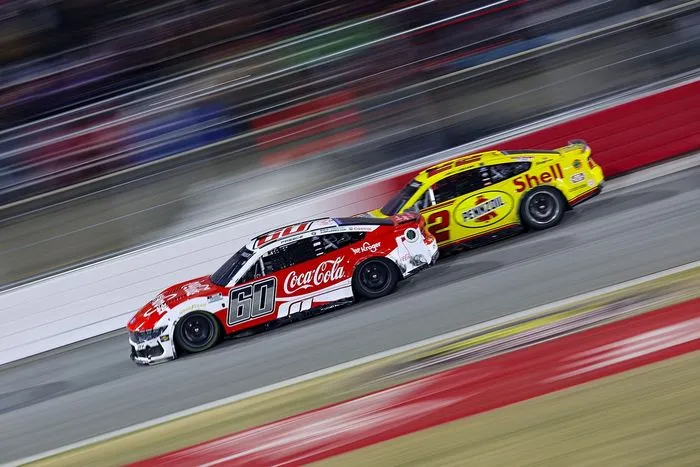
Images capturing the action and atmosphere from Bowman Gray on Wednesday illustrate the intensity of the event.
Photos from the race showcase various moments that highlight the challenges and excitement faced by the teams and drivers throughout the event.
As the race unfolded, each image tells a story of competition under challenging conditions.