

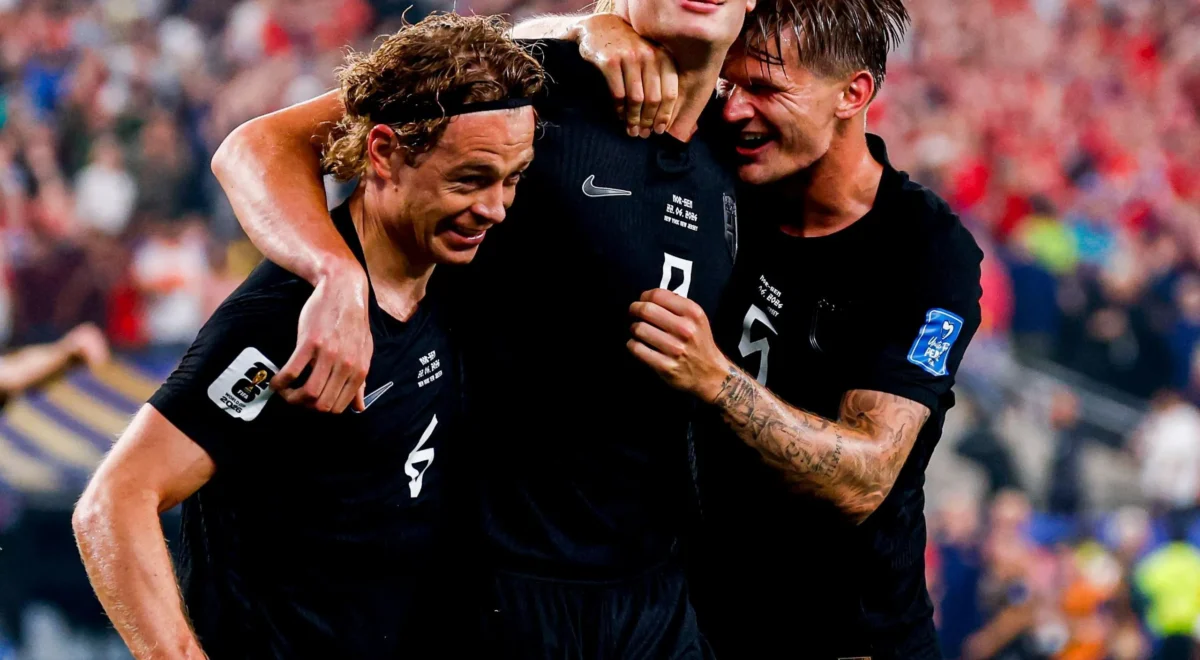
As the final whistle blew in New Jersey, Norway’s players fell onto the rain-soaked grass, exuberantly embracing one another in a heartfelt celebration. They then gathered closely in front of their supporters, resembling school children in a cramped assembly hall.
To the side, Martin Ødegaard started to play a drum provided for the occasion while the team and fans joined together in a spirited Viking-style cheer, a routine they have showcased throughout the tournament.
This joyful scene, which has likely circulated widely on social media, marked Norway’s 3-2 triumph over Senegal and their qualification for the knockout stage for the first time since the 1998 World Cup.
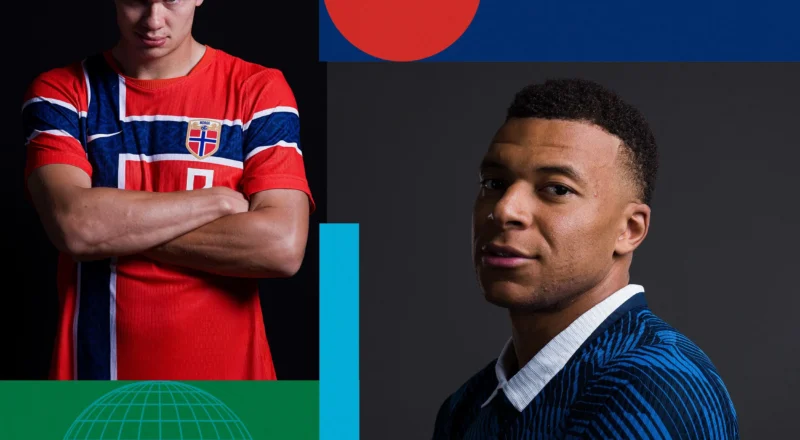
Norway entered this World Cup not as mere dark horses but as a formidable team with depth, often overshadowed by the presence of Erling Haaland, a player whose remarkable talent has been undeniable. His performance has been pivotal, underscoring his status as a phenomenon in the Norwegian squad.
Norway initially struggled but quickly regained momentum, netting three goals in a 15-minute span around halftime. While Haaland was instrumental, scoring two of those goals, he has now tallied four goals in this tournament, bringing his overall total to 59 goals in 52 international appearances, including 16 in his last eight matches. Such statistics seem almost unreal, highlighting the unique impact he has.
With this victory, Norway shares the top position in Group I with France, each having six points. Conversely, Senegal and Iraq remain scoreless, showcasing the flaws in the tournament format. After two defeats and six goals conceded, Senegal faces the harsh reality of elimination, with little hope of advancing to the next round.
Kalidou Koulibaly had a particularly challenging match, contributing to all three of Norway’s goals through a series of glaring mistakes.
The match itself felt as if it were played on the deck of a massive ship amidst a storm, with the dark clouds hovering ominously over the New Jersey stadium, creating an atmosphere filled with tension.
New Jersey experienced continuous rain all day, enveloping the stadium in a thick grey mist and bringing a stark chill after the previous warm days.
The stadium, which will host the final next month, is a large, somewhat awkward structure that resembles an abandoned alien spacecraft. Inside, it has a Colosseum-like ambiance, with three tiers of roofless stands and imposing black speakers overhead, resembling giant bats at rest.
Norway donned black jerseys while Senegal wore white, and Norway took control from the outset, winning several corners and positioning their taller players strategically. Defending against Norway’s corners is no easy task, as demonstrated when Kristoffer Ajer narrowly missed scoring from a close range header.
Senegal attempted to press forward, particularly on the right side, but lacked precision. Nicolas Jackson showed energy and movement but often found himself offside.
Julian Ryerson was forced to exit the game early due to a muscular injury, with Marcus Holmgren Pedersen stepping in and immediately making an impact by delivering a pass to Ødegaard, who sent a shot over the bar.
The initial stages of the match were marked by disjointed play until Norway produced a brilliant moment in the 36th minute. Antonio Nusa sent a well-placed cross to Haaland, who cleverly nodded it back to Ødegaard, whose volleyed attempt was expertly saved by Mendy.
As halftime approached, Norway capitalized on two significant errors from Senegal, leading to the opening goal. Koulibaly gave the ball away to Pedersen, who made a strong run and struck a shot that Mendy should have saved.
Haaland nearly added another goal in stoppage time when Mendy mishandled the ball, but his shot hit the post. His scoring prowess was evident, particularly against a struggling defense.
Norway scored their second goal just three minutes into the second half, showcasing a moment of brilliance that epitomizes their attacking style. Ødegaard carried the ball forward, skillfully delaying before threading a perfect pass between two defenders for Haaland, who made a brilliant finish into the far top corner.
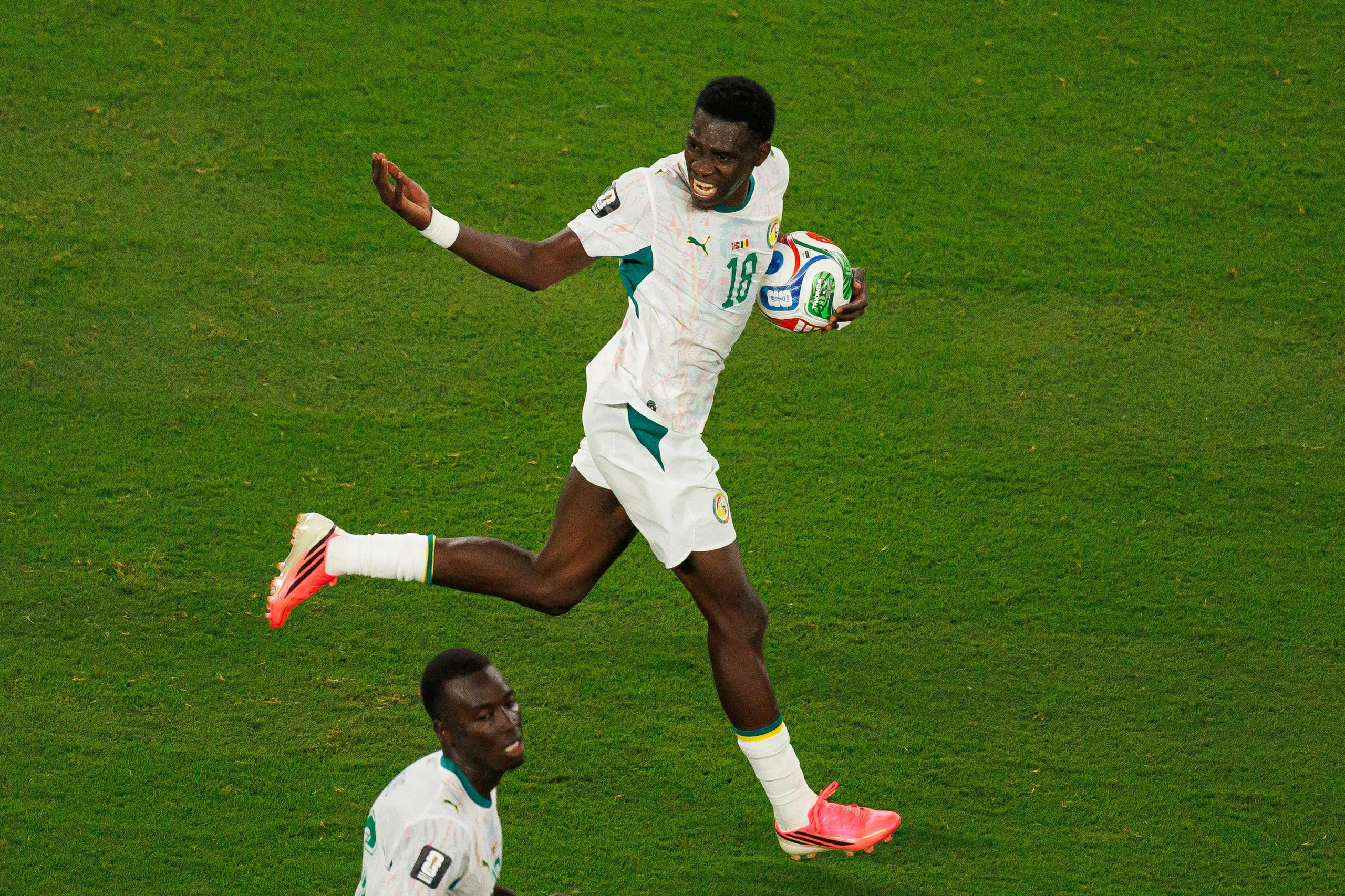
Senegal responded, narrowing the deficit in the 53rd minute through a quick passing sequence. Sadio Mané set up Ismaïla Sarr, who managed to evade a defender and score past Ørjan Håskjold Nyland.
However, Haaland quickly restored Norway’s two-goal lead in the 58th minute, capitalizing on another error from Koulibaly, who failed to clear the ball. Patrick Berg assisted, and Haaland executed a well-placed volley just under the crossbar.
Senegal made a late effort and scored again through Sarr, but their performance lacked the confidence that had been expected before the tournament. A few weeks ago, Senegal’s coach, Pape Thiaw, expressed his belief in their potential to win the World Cup, stating he would resign if he lost faith. For now, he remains in charge, as a win against Iraq could still allow Senegal to advance.
Thiaw also remarked that he views Norway as the best European side currently, and their performance at times indeed reflected that, combining solidity with creativity and speed in attack. Norway enjoys strong support and possesses a hunger for goals, particularly from Haaland. They may not be the favorites, but they are certainly contenders in this unusually open World Cup.
- World Cup 2026
- Senegal football team
- Norway
- World Cup
- Erling Haaland
- match reports