

Engaging with football around the globe offers fans a journey into unique locales, each serving as a testament to deep cultural ties. The United States boasts its own iconic venues as well.
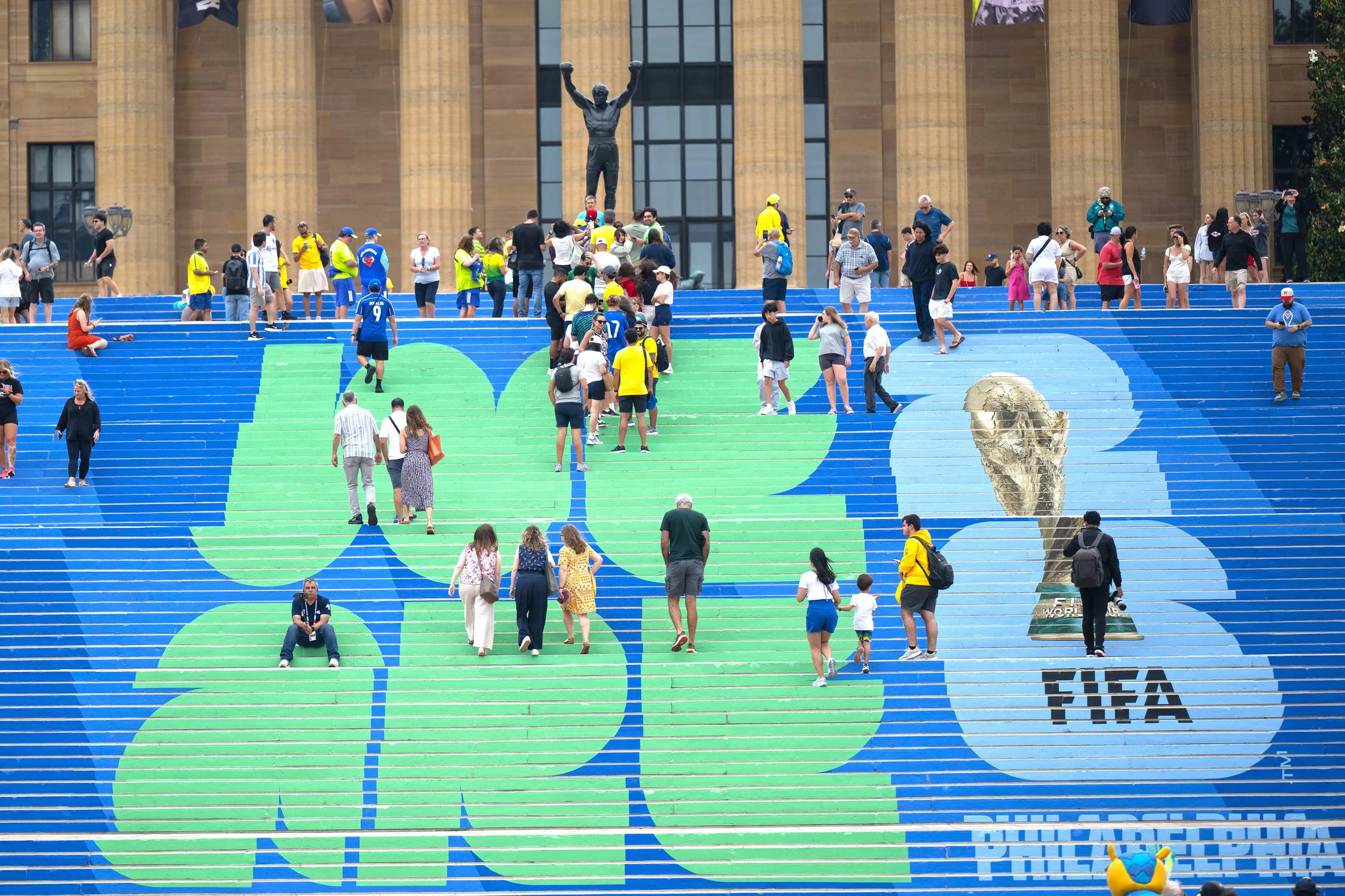
On Thursday morning in Philadelphia, a line of enthusiastic fans snaked its way down the sunlit steps toward a plaza at the bottom. Dressed in vibrant colors, they advanced toward the famous statue at the summit, arms raised in homage. At the front of the line, a man adjusted his Ronaldinho jersey, raised his arms triumphantly for a photo, and exclaimed: “Adrian! I did it.”
This statue of Rocky Balboa has become the most frequented public site in a city steeped in American history, drawing fans from Brazil and Haiti who are in town for their Group C match, eager to experience a slice of Americana.
The statue symbolizes triumph with its raised fists silhouetted against the skyline, representing America’s first city as if cradled in its hands. I propose a theory about the connection between the US and tangible, hand-sized objects. Many of the nation’s iconic creations—from hamburgers to baseball mitts—are designed to be grasped, promoting a sense of accessibility and shared experience.
These creations imply that the vastness and complexity of America can be distilled into something manageable, something you can hold. All Coca-Cola products are uniform and enjoyable. The vision of the American dream is open to all; you only need a pair of hands.
However, this notion is misleading. The United States remains a deeply divided society, rooted in slavery, characterized by centralized power, stark inequalities, and a troubling legacy of economic imperialism. It’s more than just about doughnuts. But therein lies the essence of dreams: they can be misleading yet hold fragments of truth.
This theory posits that the decline of American culture began when the country lost its connection to these hand-sized ideals. Instead, the US has increasingly bombarded its citizens with oversized food items—massive burgers that spill over, enormous snack bags, and gigantic soda containers—which further alienate both itself and the global community, empowering a select group of tech elites and pushing our shared lives into a disconnected digital realm.
The decline of the US will not manifest in revolts or military coups. Instead, it may choke on an M&M the size of a basketball while a cloud-based AI president tosses a virtual football on the White House lawn. Before you dismiss this as anti-American rhetoric, consider: you might not possess your own hands anymore.
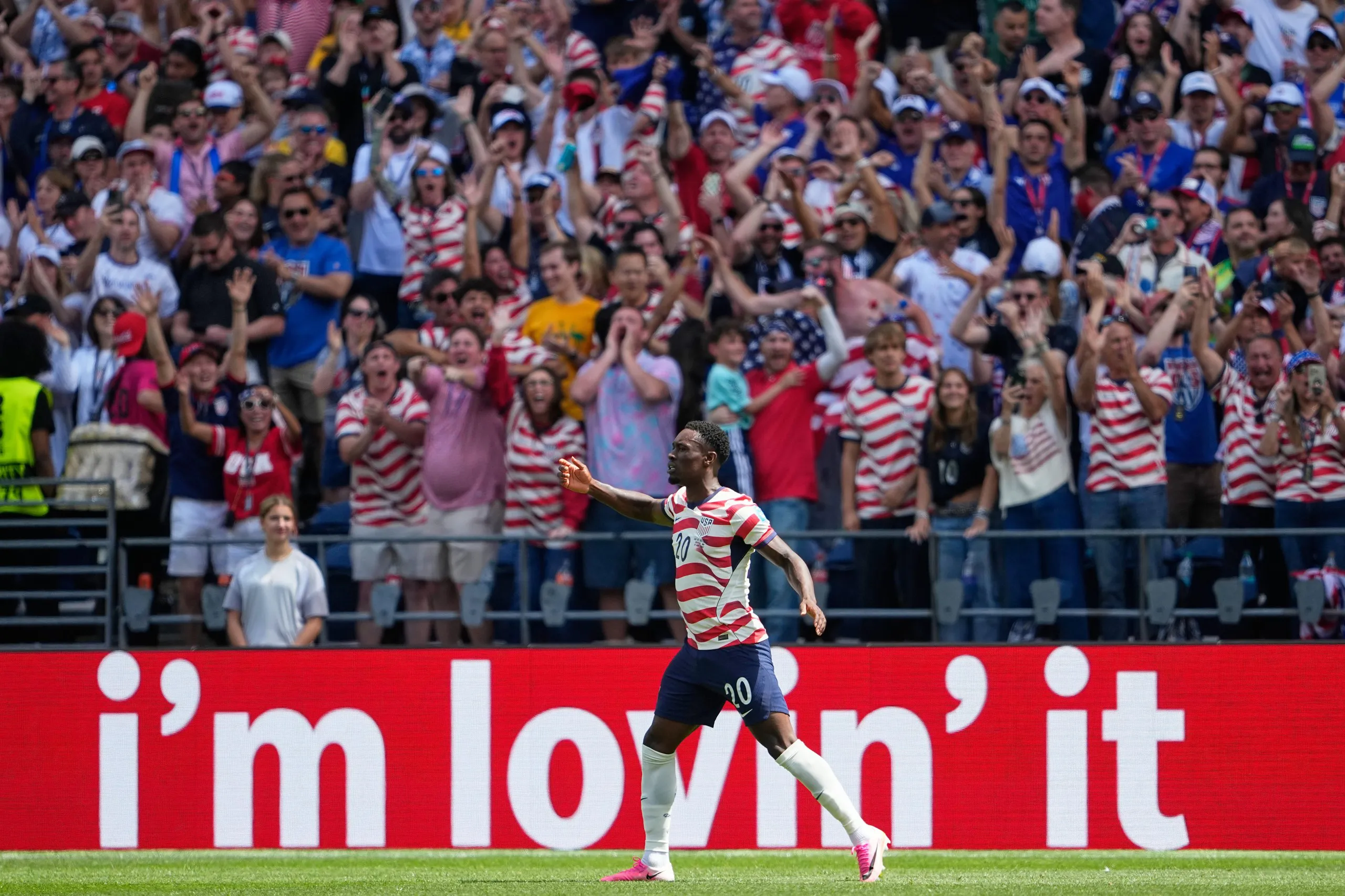
What relevance does this have to the World Cup being co-hosted by Mexico, Canada, and the US, now eleven days into an event proclaimed as humanity’s grandest spectacle? At this juncture, it’s customary to evaluate the footballing elements—attendance numbers, goals scored, and logistical considerations for the host nation.
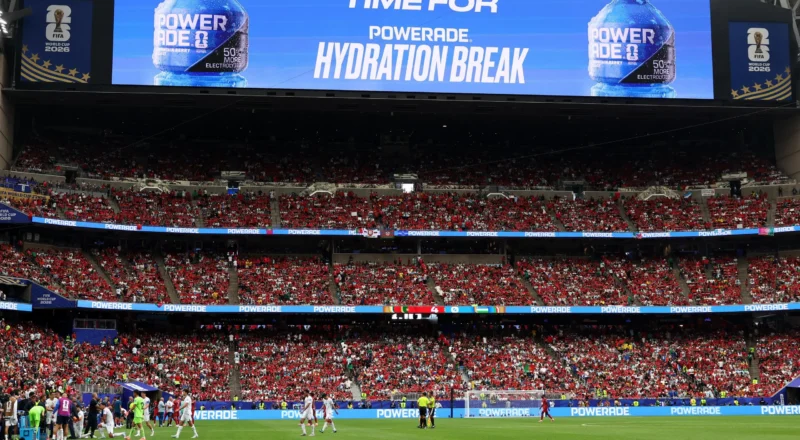
It’s easy to compile a list of grievances. Negative aspects include the distasteful mid-game advertisements, the exaggerated antics of the FIFA president, and the adulation of irrelevant celebrities. On the positive side, the American cities and stadiums create a warm and functional atmosphere, while the matches have been enjoyable and entertaining.
Nonetheless, this World Cup transcends such evaluations. Similar to the previous tournament in Qatar, it will achieve success on its own terms, which include generating $14 billion through 300 hours of televised content, shifting focus away from Europe’s saturation, and bolstering FIFA President Gianni Infantino’s financial reserves ahead of his anticipated reelection.
Ultimately, this World Cup has always been about the US and the broader implications of how one should perceive this nation—still a dominant cultural and economic force yet increasingly insular, reshaping the world’s beloved pastime in its image.
The ongoing tournament has unveiled an intriguing and unexpected insight. Traveling across the country in the opening weeks—from California to Texas and New York—reveals a deceptively simple narrative. Perhaps the World Cup will indeed showcase the best aspects of the United States rather than its worst.
And the prevailing sentiment is that few genuinely buy into the typical sports platitudes about unity and connection. The 2012 London Olympics failed to transform the nation. The opening ceremony featuring Paul McCartney dancing atop a giant cheese wheel didn’t foster a newfound sense of confidence and inclusivity in Britain. The legacy, if any, seems to be a rise in collective depression and anger.
But this World Cup might turn out differently. Not only does the sport itself embody ideals of connection and togetherness, but it also addresses the unique alienation the US feels from the global community.
What stands out is the evident disdain many around the world have for the US, viewing it as a source of fear and negativity.
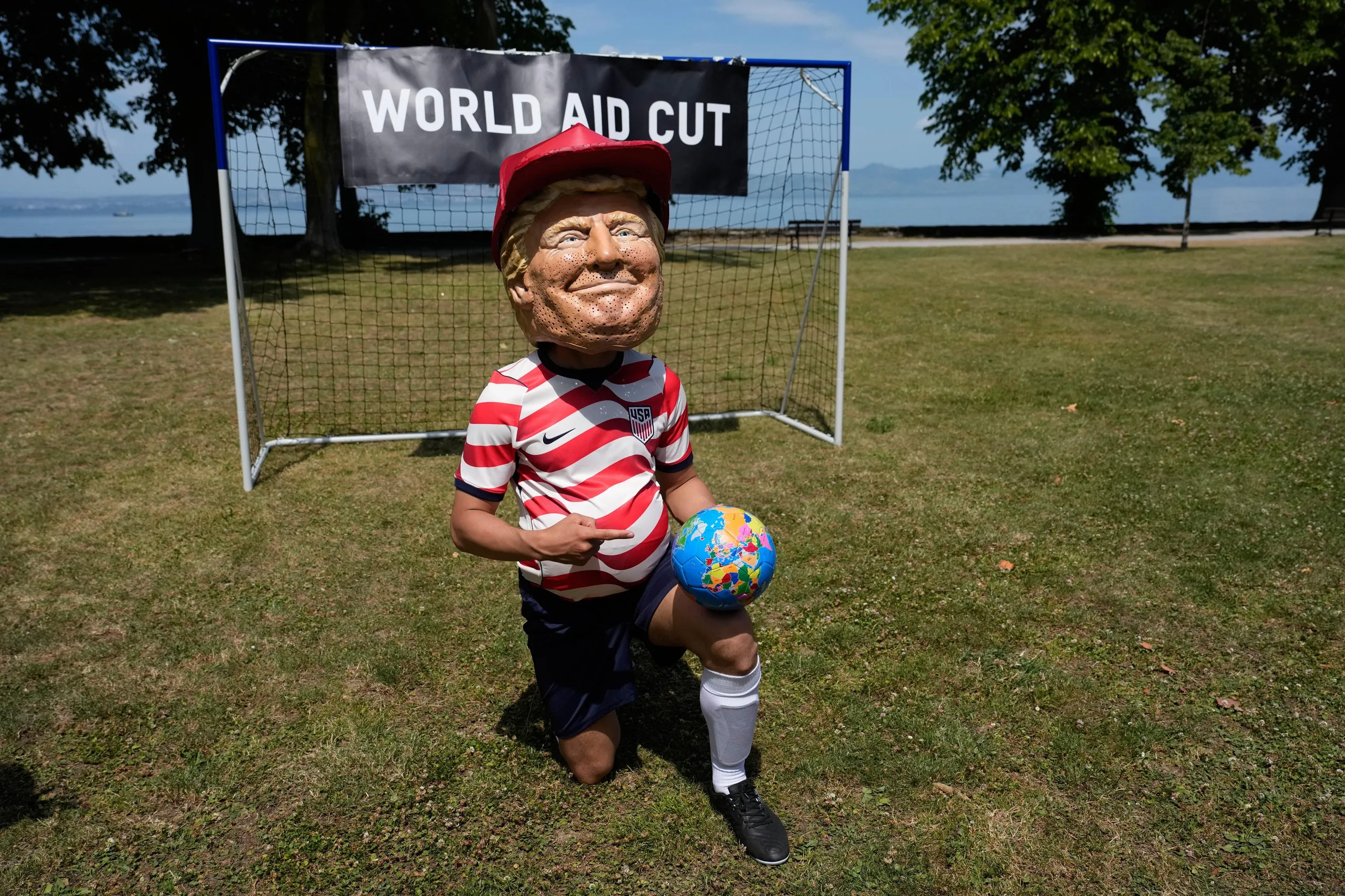
There are well-founded reasons for this sentiment. The US entered this World Cup amidst controversy, having recently killed the leader of the second-ranked team in Group G and supporting destructive actions in Palestine. The previous administration toyed with economic collapse, while the immigration authority persecuted its own people. The World Cup itself, priced beyond reach, reflects a form of economic violence.
Yet, viewing the US as a monolithic entity is oversimplified, fitting into a binary worldview that dictates the existence of either devils or angels. This perspective overlooks the richness and diversity of a nation shaped by countless cultures and communities, compromised by the actions of a few far-right politicians.
If America is perceived as a singular entity by many, it reflects our current experience of information: flattened and reduced to mere noise. The World Cup marks the first major global event immersed in this online realm, experienced through screens filled with images and shouted opinions.
This is how information flows today, mirroring how Donald Trump ascended to power with his simplistic messages resonating above the chaos. America may feel like a constant expression of violence within its daily life, a cacophony of talent, greed, desire, and cruelty, where control is elusive. However, the US is not defined solely by Trump; 77 million voted for him, while 272 million did not. A nation of 350 million, enriched by over 100 diverse immigrant cultures, cannot be reduced to a single narrative.
The US embodies the world in a metaphorical grain of sand, rich with beauty, energy, flaws, and vices. To harbor hatred for it is perplexing. If one dislikes America, what alternatives do they embrace? This is the essence of humanity.
Like everyone else, Americans face oppression within their nation, subjected to unelected tech overlords and a divisive regime. This is a society that has been poisoning its populace for decades, through violence, division, unhealthy food, drugs, and mental strain.
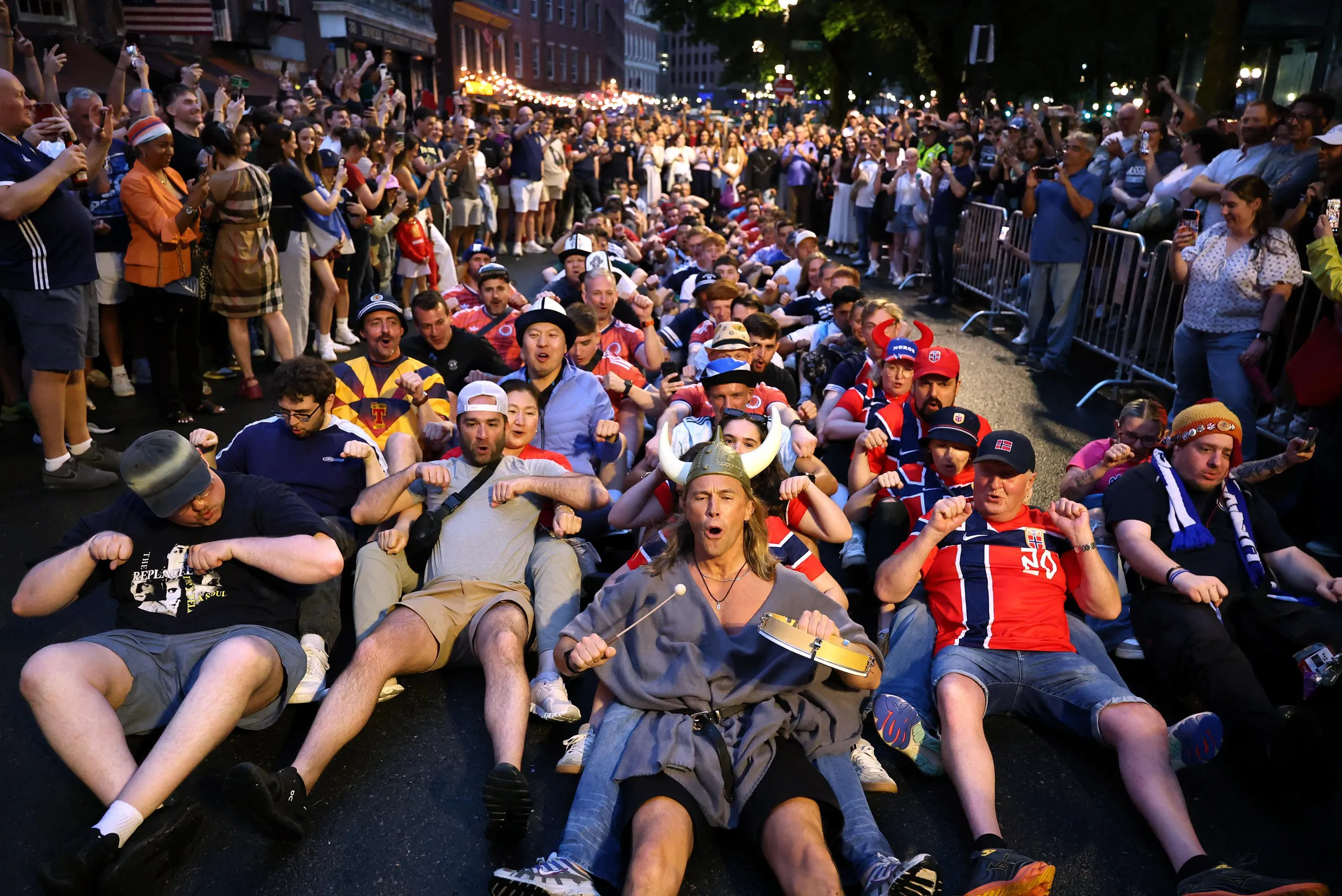
For all its shortcomings, the gathering of fans under the banner of FIFA’s deeply flawed World Cup serves as a reminder of essential truths. Engaging with others in physical spaces constitutes a form of revolutionary dissent, a refusal to succumb to the loss of intimacy.
Reports indicate that the reception at this World Cup has been overwhelmingly positive, with many attendees eager to discuss how others perceive their country, seeking to apologize, clarify, and express frustration with Trump’s isolationist policies.
It’s possible that the foundational principles of sport can illuminate other truths. Many teams exemplify the opposite of division and isolation. The diaspora teams from Curaçao and Cape Verde, for instance, illustrate the notion of nationhood, showcasing their histories, interactions with the world, and the joy and turmoil of shared experiences.
Does this hold any tangible significance? That remains uncertain. However, Egypt and Iran are set to compete in Seattle at the end of June, coinciding with the city’s Pride celebration—two nations with laws that criminalize diverse sexualities, yet they will be forced to coexist in this context. This is the beauty of sport, compelling individuals to confront one another in real life and recognize that they are not mere symbols or adversaries.
Football may not unify the world, but it could reflect valuable truths. This event still embodies the ideal of what the US aspires to be: a place grounded in humanity, an idea that can be grasped in one hand. Moreover, to harbor hatred for this nation, like any other, is to fall into the trap set by those eager to exploit such sentiments.