

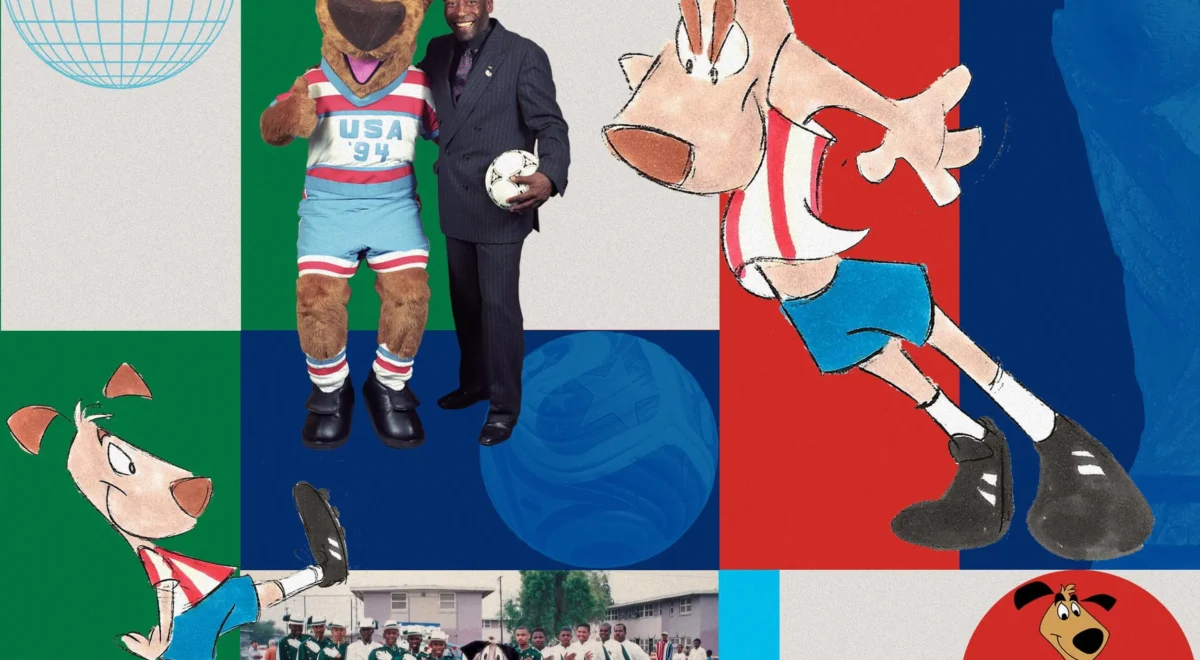
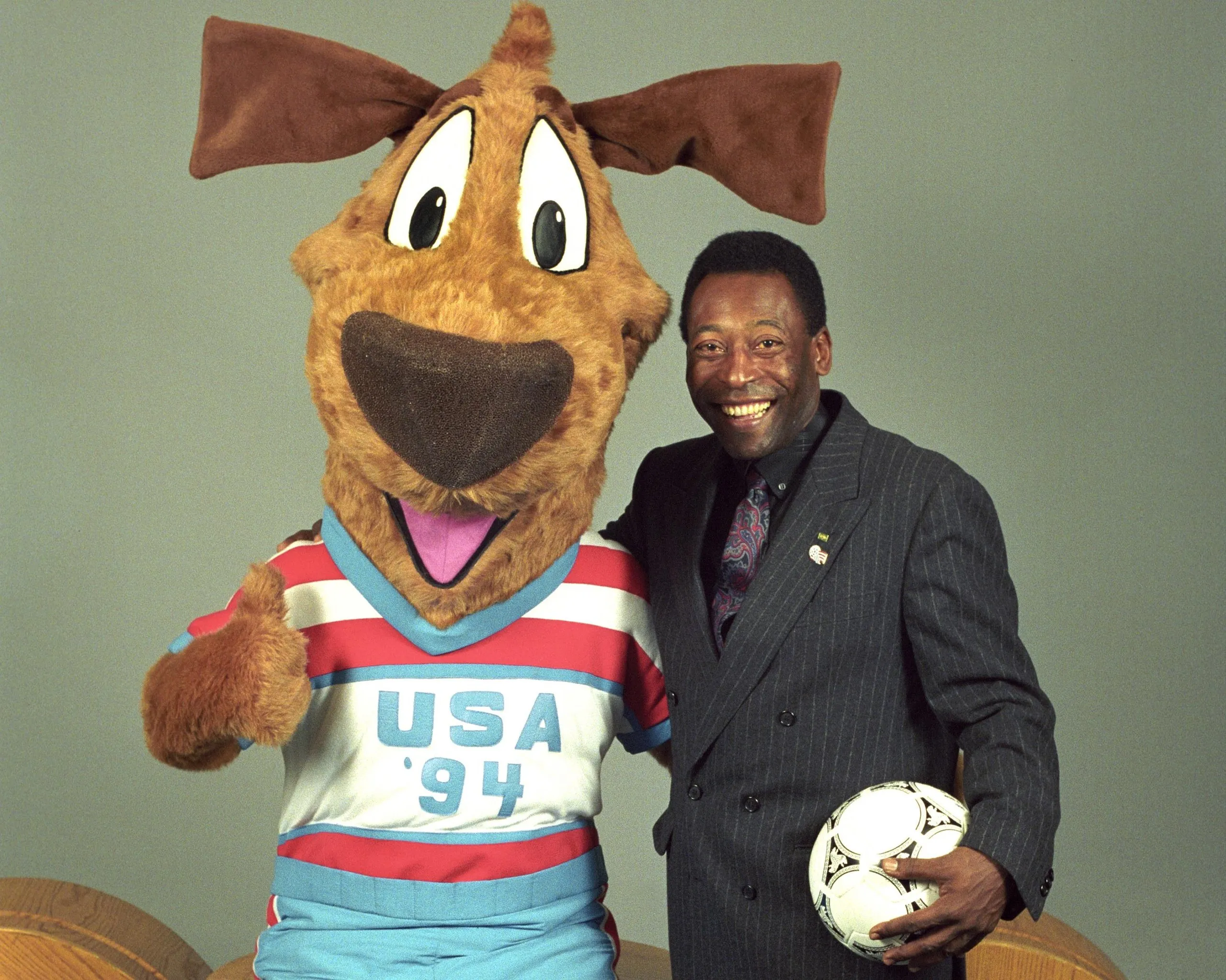
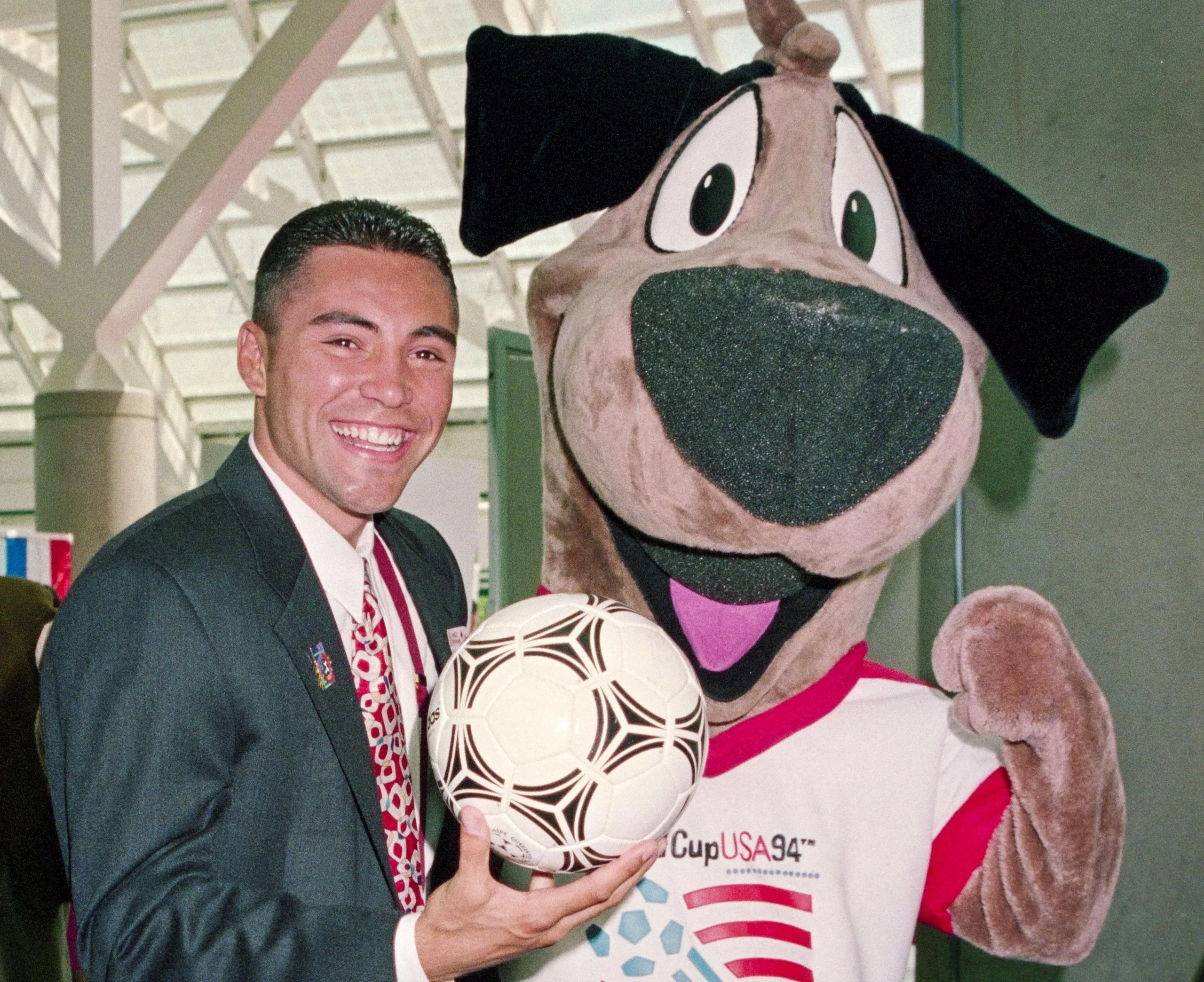
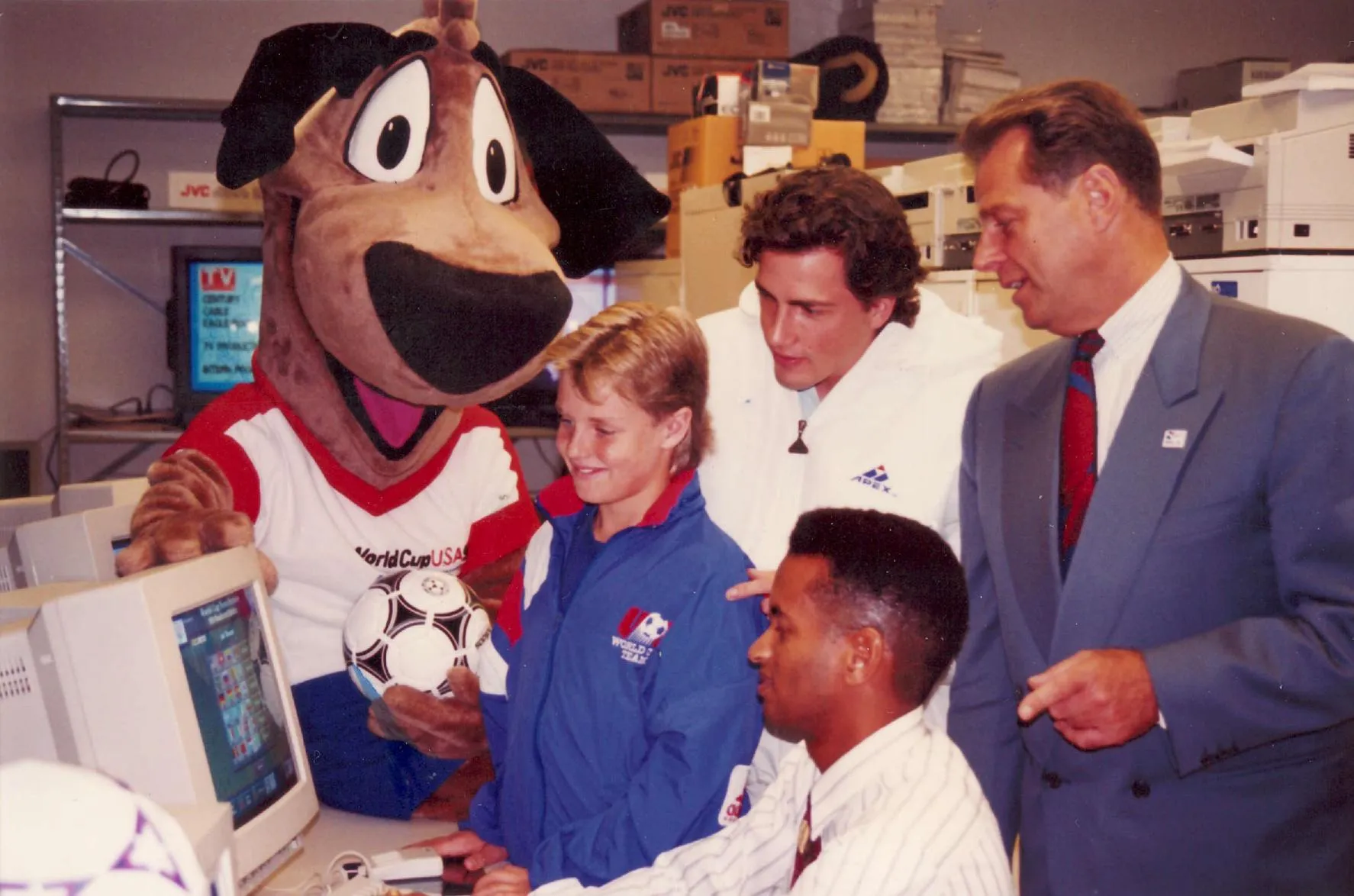
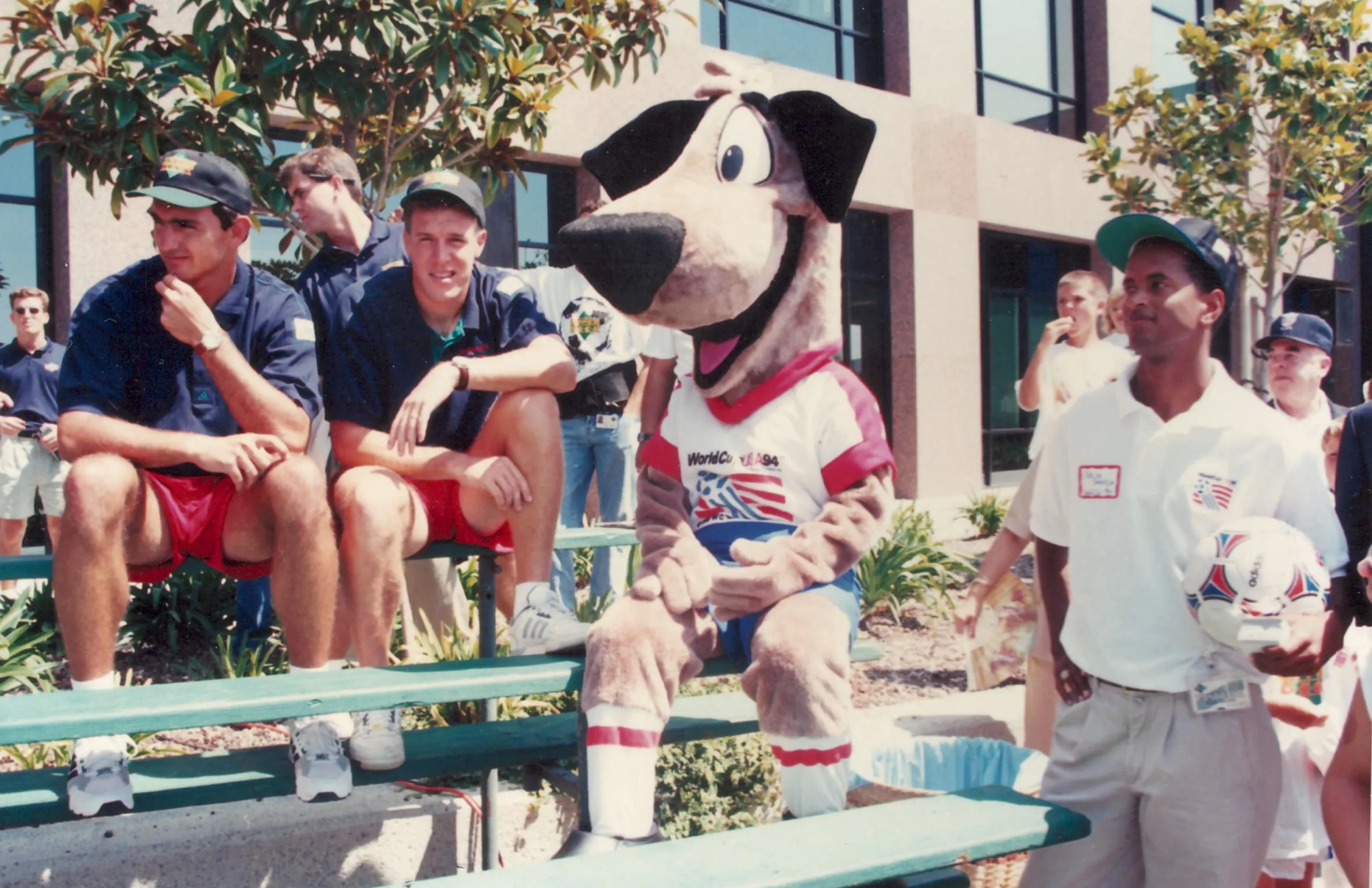
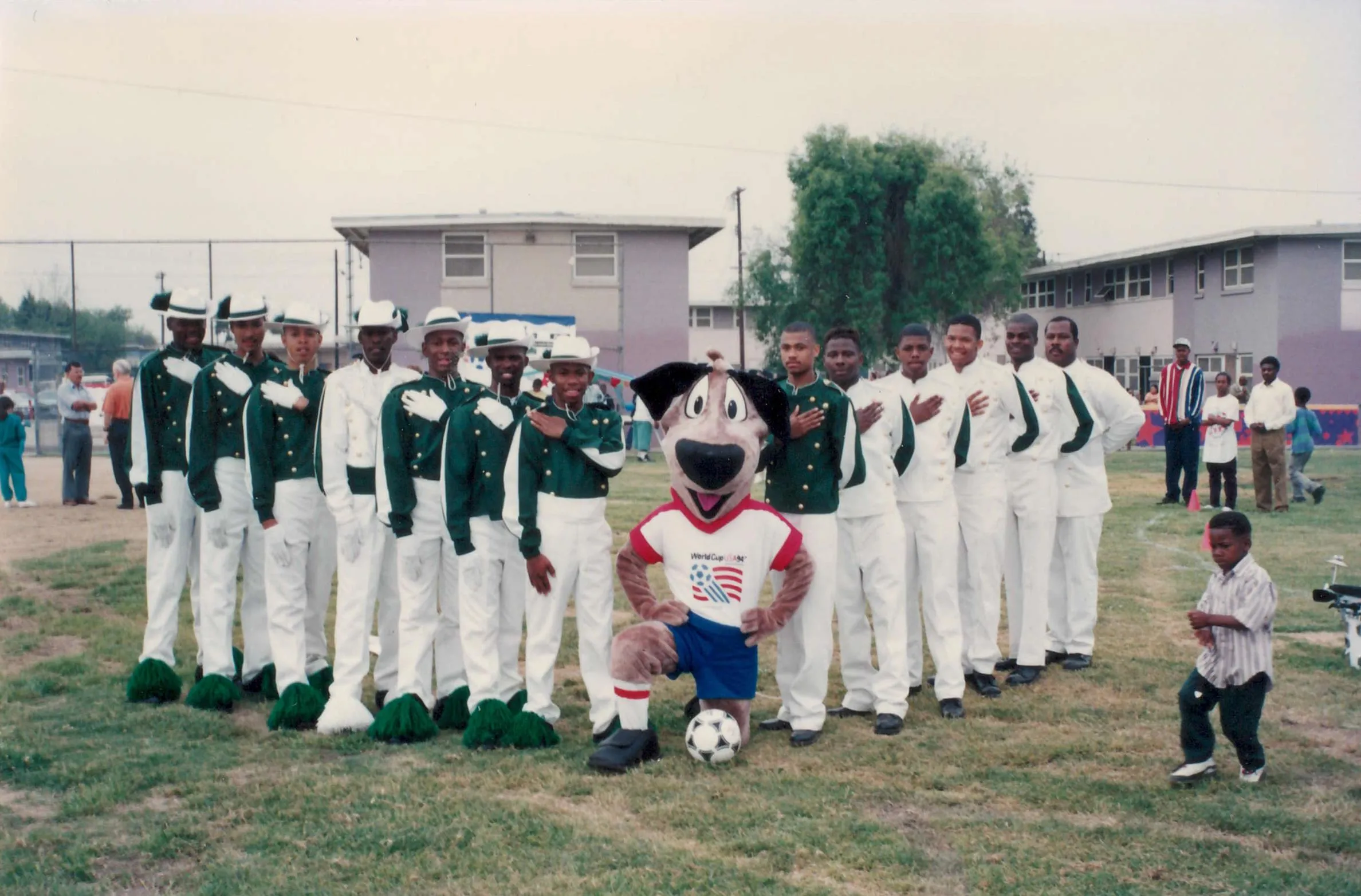
In a dimly lit warehouse in Hillsborough, North Carolina, a preserved head lies encased in plastic, a remnant of an American soccer icon. Thirty-two years ago, Striker the dog became more prominent than any player during the 1994 World Cup, appearing on billboards, Coke cans, key chains, caps, and countless other products. Children carried Striker dolls, while adults enjoyed pinball machines and video games themed around the beloved mascot, posing for photos alongside him in stadiums.
As Striker’s foam and felt remains rest in the archives of the US Soccer Hall of Fame, this year’s World Cup features its own set of mascots: Maple the Moose from Canada, Clutch the Bald Eagle from America, and Zayu the Jaguar from Mexico. These recent mascots exist in a peculiar realm, blending realism with cartoonish fantasy, unlike the straightforward charm of Striker.
While today’s mascots may feel like AI-generated creations, Striker stands out due to the simplicity of his design; US Soccer’s choice to feature a cartoon dog has made him one of the most memorable mascots in World Cup history.
John Over and Joey Banaszkiewicz, two talented artists from Warner Brothers during the mid-90s, played a pivotal role in shaping American animation at the time. They contributed to beloved shows like Animaniacs and Tiny Toon Adventures, crafting characters that resonated with a generation of viewers. Their early work, however, wasn’t always suitable for children—Over’s first episode of Animaniacs was pulled after a storyline involving intoxicated characters.
The culture at Warner Brothers during that era resembled a creative playground. “I feel like some people got there right out of prison,” Banaszkiewicz recalls, having joined the studio after graduating from Cal Arts. Over arrived after working with John Kricfalusi, known for the iconic Ren and Stimpy Show.
“The currency there was ‘how hard could we make each other laugh,’” Over explains. “We were just a bunch of 20-year-olds that were let loose. People were just doing foul drawings of each other and seeing how far you could milk a joke or an embarrassing situation. But it was fantastic, because that’s really how you get your creativity built up.” This environment fostered creativity, allowing animators to explore outrageous ideas.
In the summer of 1992, with no projects to work on, animators filled their days with long lunch breaks and rounds of miniature golf. However, Warner Brothers executives suggested layoffs or furloughs, prompting Spielberg to intervene and insist that the staff be given new tasks.
During this time, the 1994 World Cup organizing committee was seeking a mascot. Alan Rothenberg, president of the US Soccer Federation, arranged a meeting with Jean MacCurdy, president of Warner Brothers Animation.
The Birth of World Cup Mascots
Three decades earlier, Reginald Hoye and Richard Culley from a marketing agency in London faced a similar challenge with the upcoming 1966 World Cup. They were tasked with creating a mascot, a novel concept at the time.
Before 1966, World Cups lacked the commercial flair they exhibit today, with minimal advertisements or merchandise available. The idea of a mascot was virtually unheard of.
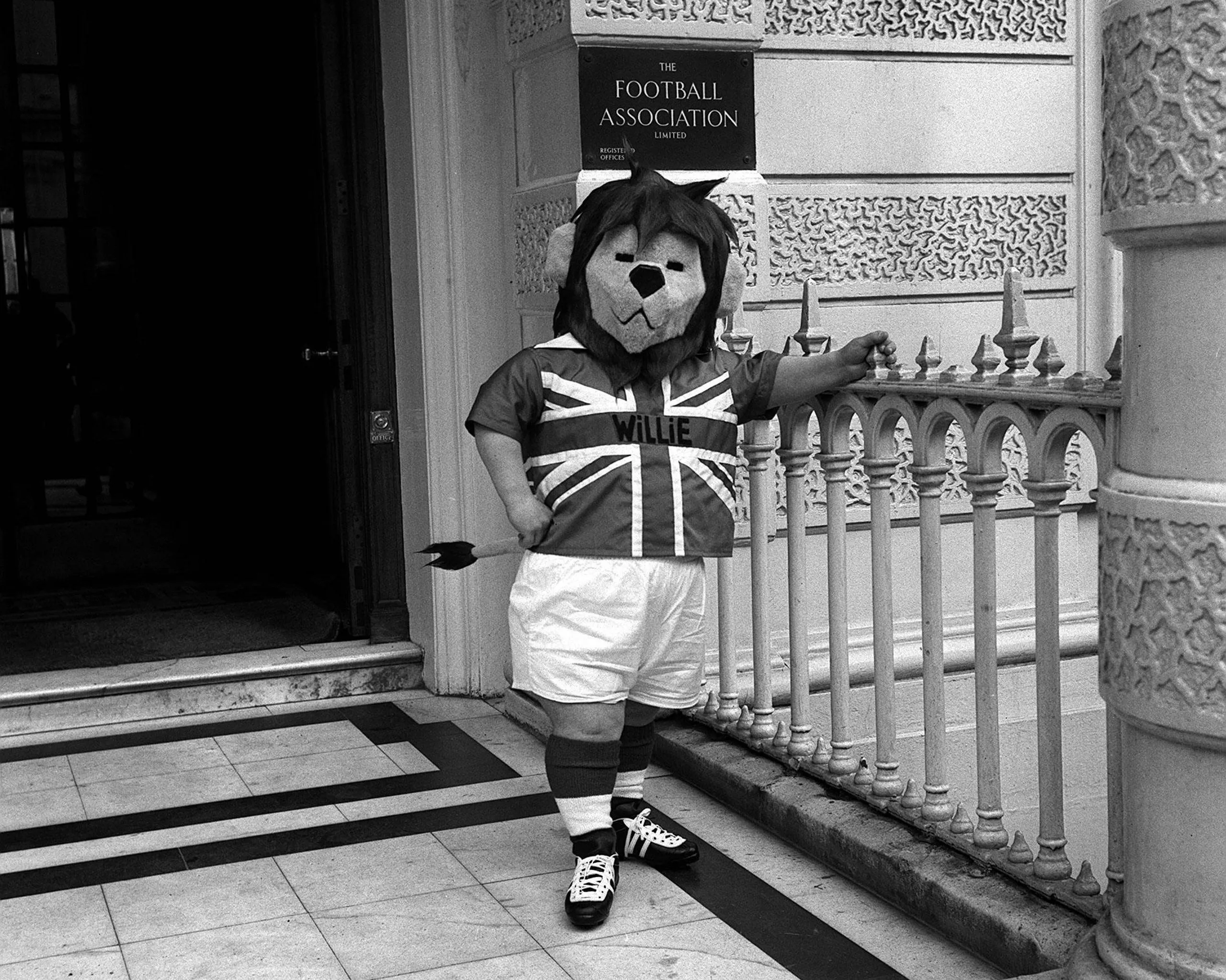
Within minutes, Culley and Hoye devised World Cup Willie, the first mascot of its kind. Willie, adorned with the Union Jack, embodied England’s cultural shift, aligning with the era of The Beatles, The Rolling Stones, and James Bond. Willie was an immediate hit, paving the way for future mascots.
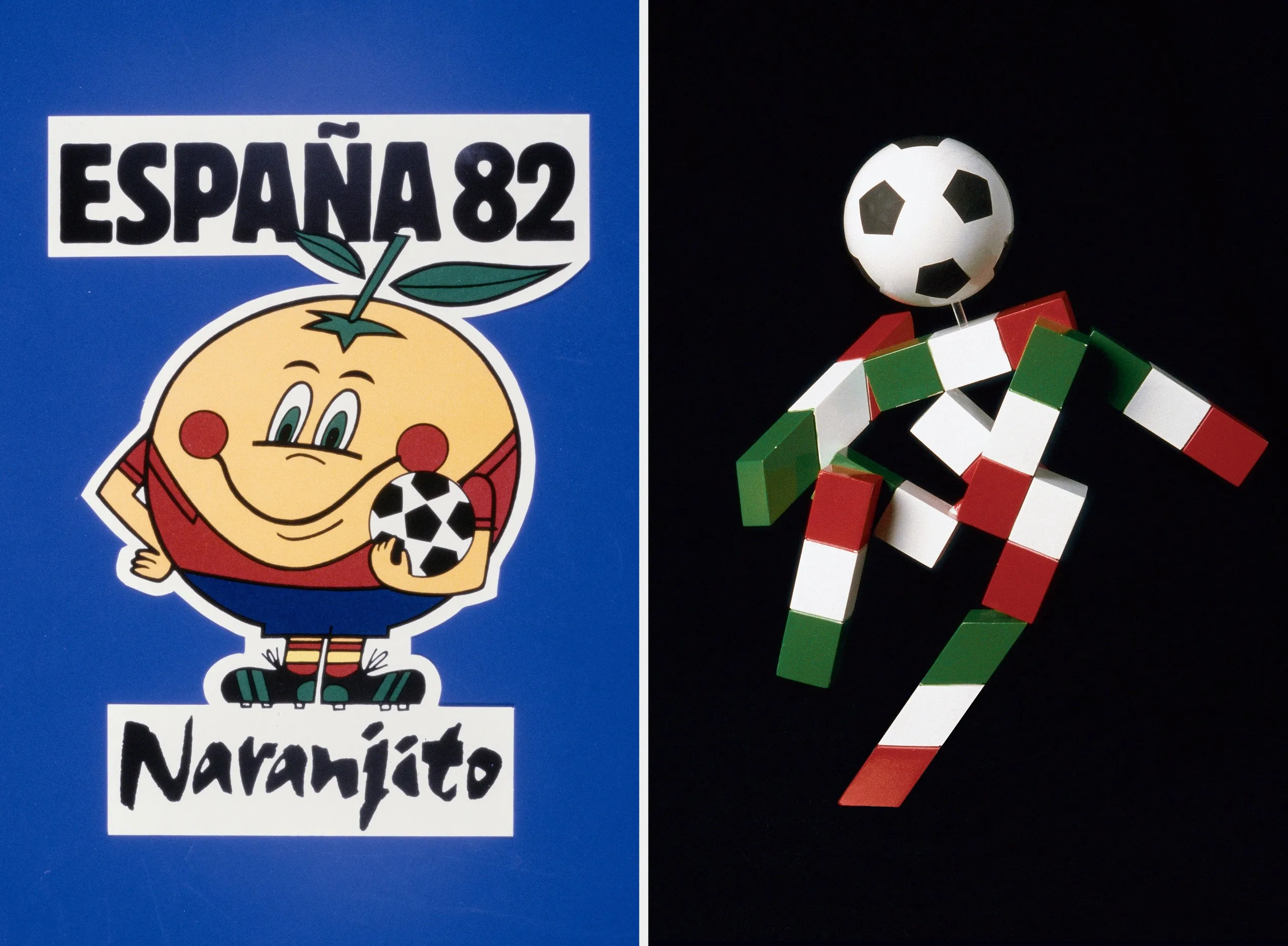
In 1970, the first human mascot, Juanito, a young boy wearing a sombrero, appeared, followed by more inventive mascots like Naranjito, an anthropomorphic orange in 1982, and Pique, a mustachioed jalapeño in 1986.
However, the 1990 World Cup in Italy brought a wave of bizarre designs; a competition yielded over 50,000 entries, ranging from dogs to eggplants. The eventual winner, Lucio Boscardin, proposed a stick figure made from the word “playing several rounds of miniature golf across the street” and a soccer ball, resulting in the abstract mascot Ciao.
Realizing Ciao’s cubist design was impractical for costuming, organizers opted for sculptures instead. In contrast, the designers of Striker aimed to avoid similar pitfalls, although their initial concepts were equally unsettling.
“There were a bunch of people trying to do a soccer ball thing,” Over recalls, noting that one early idea was humorously named Soccerey Bally, a humanoid soccer ball with limbs. The creative team at Warner Brothers began exploring a variety of animal and humanoid designs.
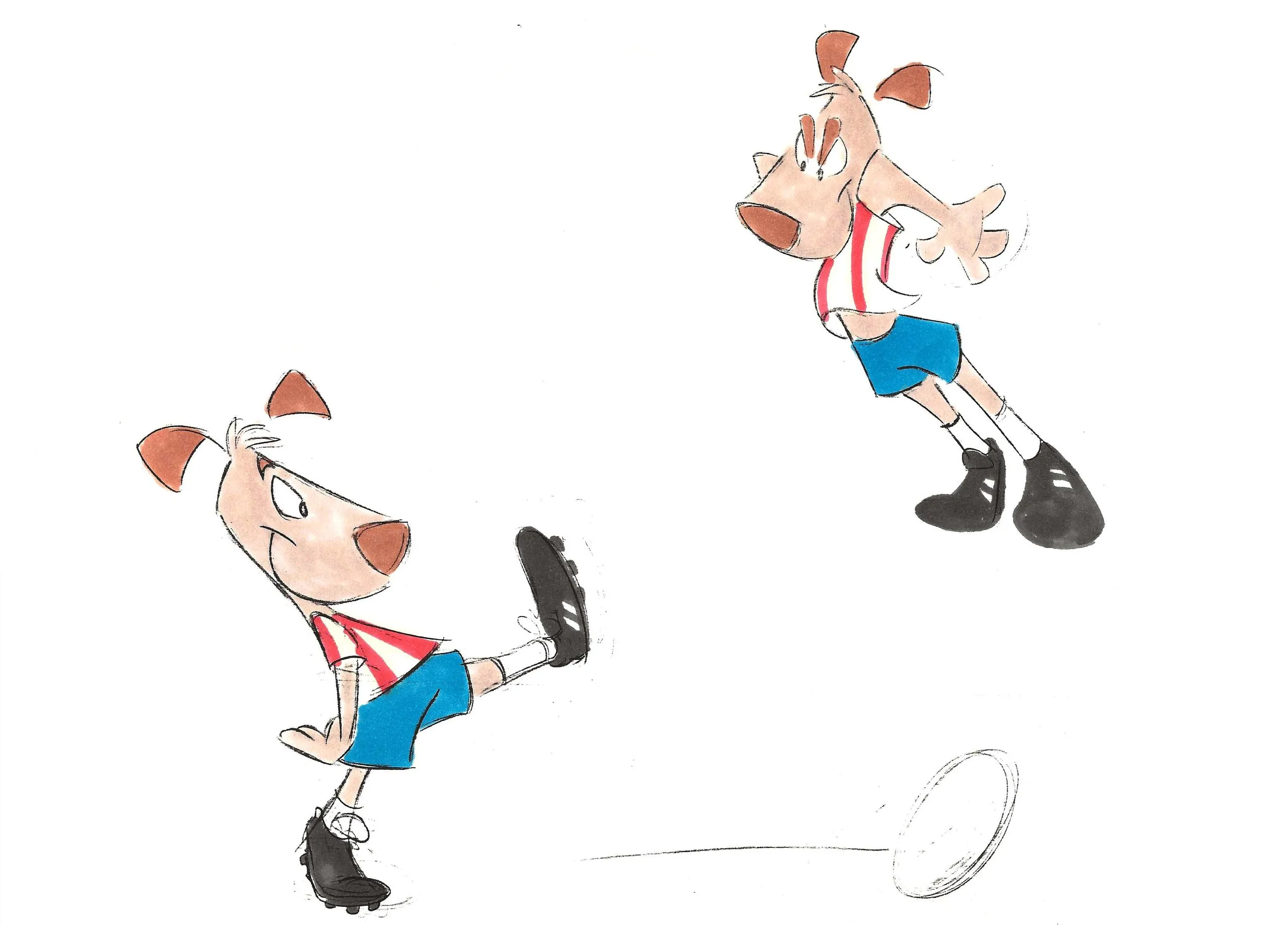
“People didn’t know what to call it really. I think Joey’s version was called Soccerey Bally or something like that. It was like a humanoid soccer ball with arms and legs. Joey’s storyboards are always funny and outrageous, so he had like soccer players taking the thing out to romantic candlelit dinners, and there’s just balls sitting everywhere. The player is in bed with a ball, he’s having sex with a ball, he’s everywhere with a ball.” Over mentions. “In the end we just ended up looking at a lot of the old World Cup mascots,” They decided to lean into the underdog concept, leading to the creation of Striker, the “A lot of them were just awful. One was just a giant orange? And a lot of them had historical significance or whatever. Soccer was sort of not super popular here, so we thought let’s do this ‘underdog’ kind of idea. That’s when we started doing versions of, you know, ‘soccer dog’.”
What followed was a challenging design process, fraught with obstacles. Over laughs as he recounts, “We ran into problems with these dorks at [US Soccer],”
Banaszkiewicz adds, “They’d look at your drawings. As an animator you’re always exaggerating things. Somebody kicks a ball and you have the leg go way up. They would say – well, ‘a child could never kick a ball that hard.’ Like, it’s a freaking soccer dog, dude. It is a cartoon dog!”
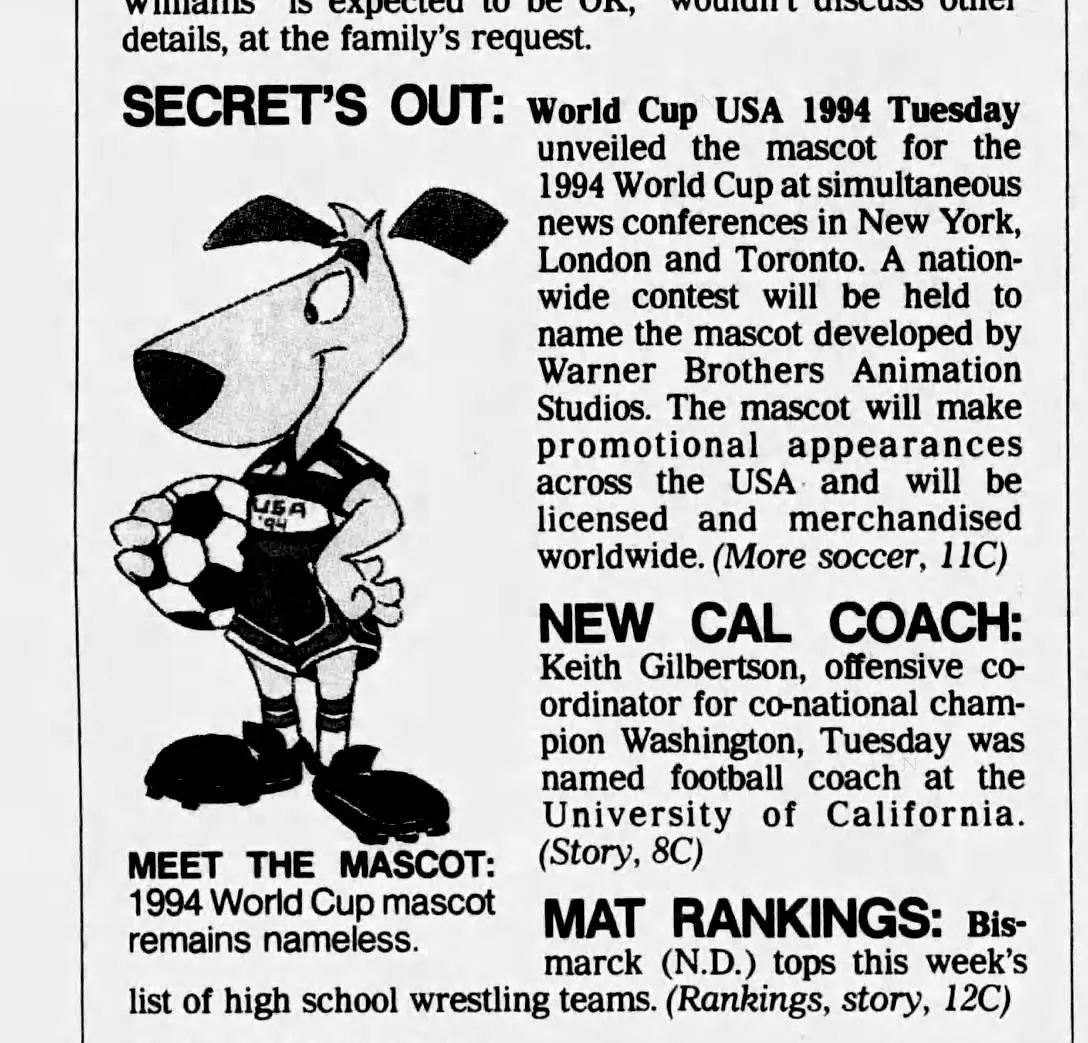
Initially referred to as Soccer Dog at Warner Brothers and World Cup Pup at US Soccer, the organizing committee decided to engage the public in naming the mascot. They took out ads in local and national newspapers, urging fans to vote via a 1-900 number or mail-in ballot, narrowing down the options to four names: Striker, Sweeper, Champ, and Sidekick.
Approximately 25,000 votes were cast during the six-week campaign, with Striker emerging as the clear favorite. The organizing committee ordered a dozen Striker costumes from a local costume shop, making some adjustments to his appearance to better fit the soccer theme.
To give Striker a backstory, the organizing committee enlisted talented writers, resulting in a charming narrative. Striker was said to be the offspring of Mr. and Mrs. Mutt, graduating from obedience school. His favorite song? Elvis Presley’s “It ended up being sort of a design by committee thing,” Although initially suggested as gender-neutral, Striker was consistently referred to with male pronouns.
“And in the world of animation, that’s always death. Pretty soon it’s ‘I don’t like these fingers’ or ‘I think his ears are too sharp’ or ‘can you give him a bigger smile?’ Pretty soon you don’t even recognize him any more.” Rothenberg stated at the time. “He best represents sports and this country,” The tournament organizers projected earnings of over a billion dollars from Striker-branded merchandise.
Striker’s boots, a substantial size 24 wide, required someone to fill them. That role fell to Carlos Parada, who had a dream of attending the World Cup in Mexico as a teenager. He managed to score free tickets to nearly every match and witnessed Diego Maradona’s legendary performances.
When the World Cup organizing committee relocated from Chicago to Los Angeles, Parada knew he had to be part of it. He volunteered, eventually securing a full-time position where he became close with Rothenberg. Part of his duties included caring for two icons: the World Cup trophy and Striker himself.
“And, being crass and commercial, we want to sell as much merchandise as possible.” Klonowski explained. “When the [organizing committee] moved from Chicago to Los Angeles before the World Cup,” Striker communicated through mime and had a personal escort to assist him.
Parada also produced a training film for those wearing the costume, filled with surreal elements as he guided volunteers through the process.
Striker made his debut in October 1993 at Mann’s Chinese Theatre in Hollywood, imprinting his paws in the cement, a tradition for stars. He became a familiar sight at pre-tournament friendlies and promotional events, plastered on billboards, television ads, and merchandise.
However, Striker was notably absent from the opening ceremony. US Soccer had initially envisioned him alongside celebrities like Oprah Winfrey and Bill Clinton, but he was excluded after a fallout between Disney and Opryland USA, with one employee stating, “I knew I had to get involved. You know. To get free tickets.”
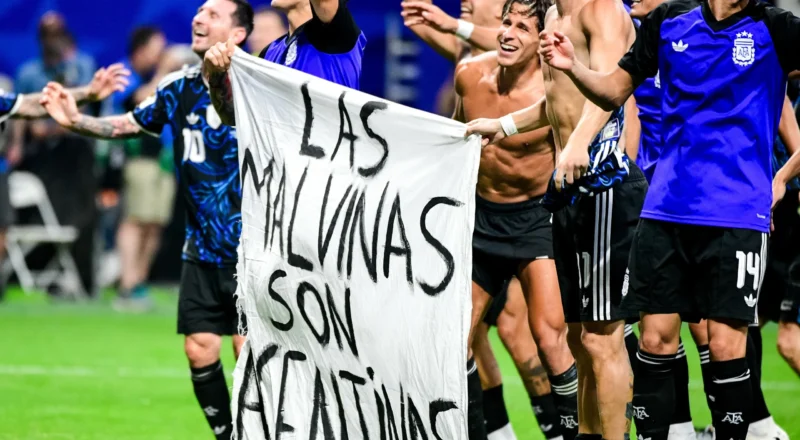
Despite this, many players appreciated Striker, including Mexico’s goalkeeper Jorge Campos, who insisted on standing next to him before matches. The Argentina team also took a liking to Striker, celebrating with him after their victories during the tournament.
Striker captivated both children and adults, particularly because he could actually play soccer. “to get a jump on the east coast folks,” Parada shared. “and one for the trophy, right next to me.”
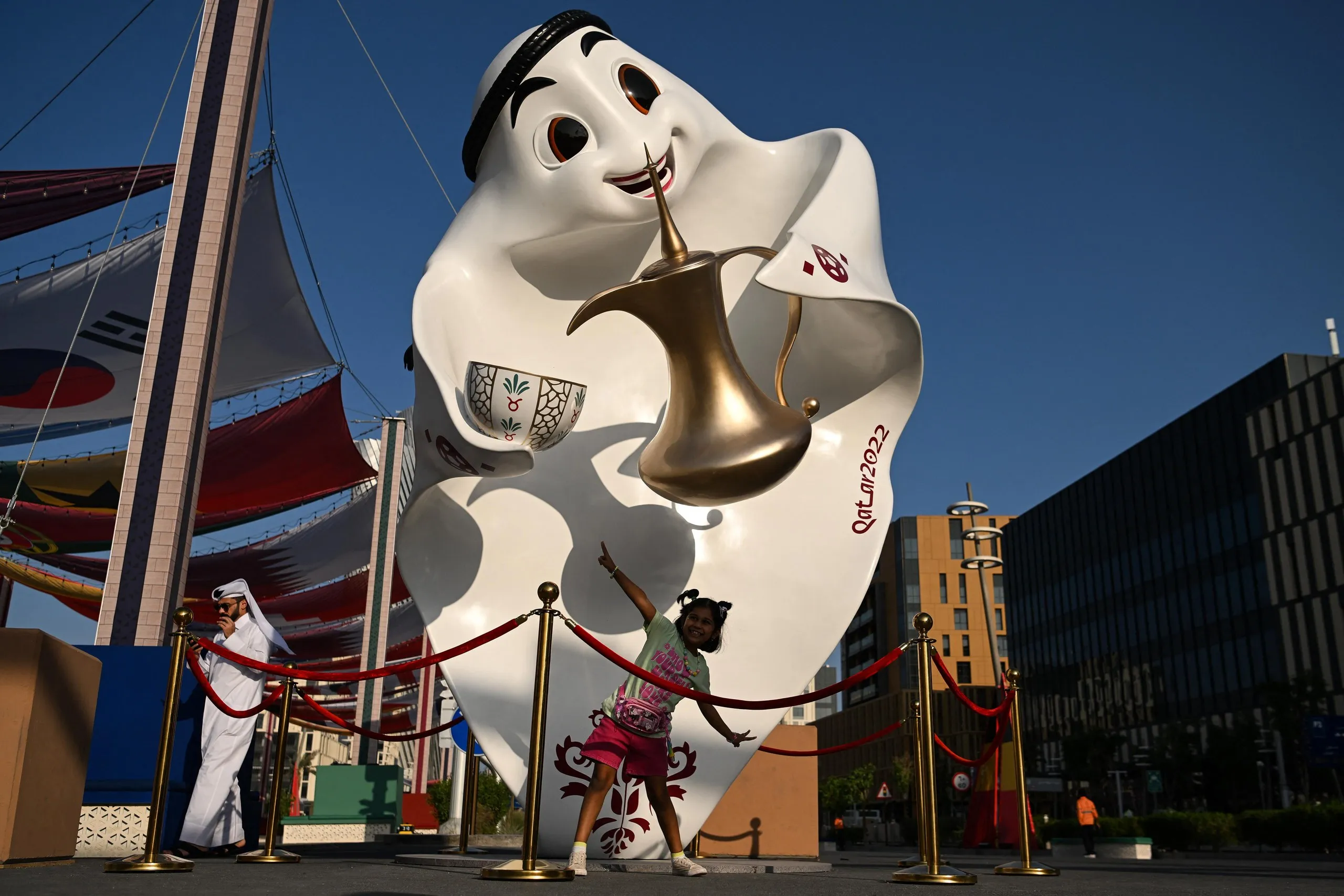
After the World Cup concluded, merchandise was packed away or discarded, and Striker faded into obscurity. Other mascots followed in Striker’s footsteps, including Footix (France 98) and Goleo VI (Germany 06). By the time of the 2022 World Cup in Qatar, mascots had evolved to include whimsical designs like La’eeb.
As the World Cup has grown increasingly commercialized, Striker has become a nostalgic symbol of a simpler era, when the focus was on the game rather than merchandise sales.
Despite Striker’s impact, Rothenberg admitted he had little recollection of the mascot’s development. Neither did MacCurdy or Klonowski, and Over and Banaszkiewicz were surprised to learn of Striker’s lasting influence on a generation of American soccer fans. Banaszkiewicz candidly expressed, “He is not allowed to remove any part of his costume in public; for instance, he can’t remove his head. That takes away the aura for the kids who see him. He – the character, actually – is neither male nor female. The character never acknowledges that there is a person inside. The character communicates through mime movements, or through a personal escort, who always accompanies the character.”
Over appreciated the brief fame of Striker, recalling his co-creation’s presence on a plane and at various events. Yet, when he and Banaszkiewicz reminisced during a recent call, memories came flooding back.
Neither artist feels a strong attachment to Striker, viewing him more as a commercial creation than a personal achievement. “is not here because we think he’s stupid.” Over reflected. “I learned pretty quickly that if you got a kid who played soccer in the costume and put him in Sambas, you could have pretty good control of his feet,”
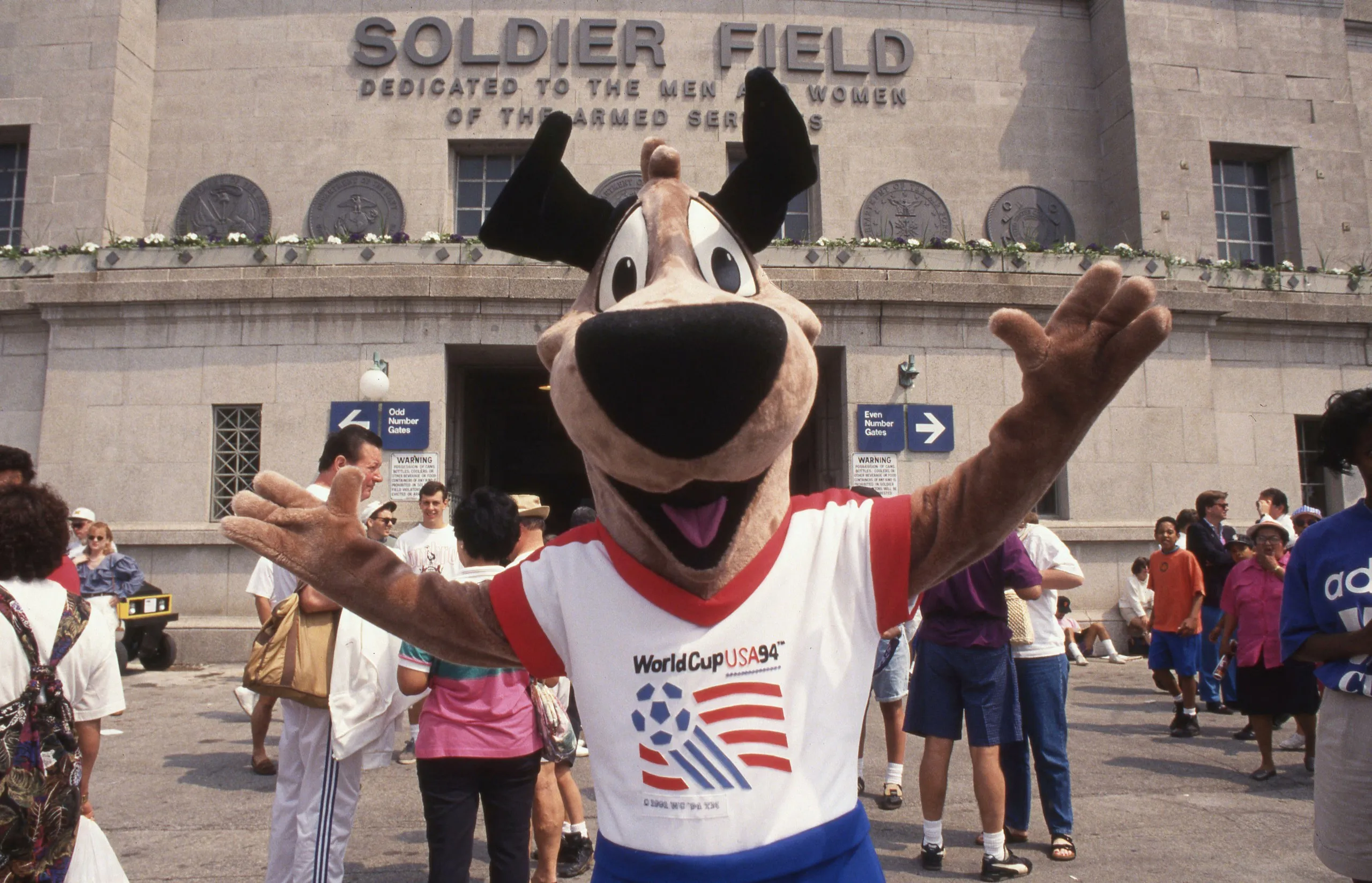
Nevertheless, for countless American kids, Striker represented a magical summer that ignited their passion for soccer—an unforgettable legacy for a cartoon dog.
Not bad for a mascot.
- World Cup 2026
- World Cup
- US sports
- features