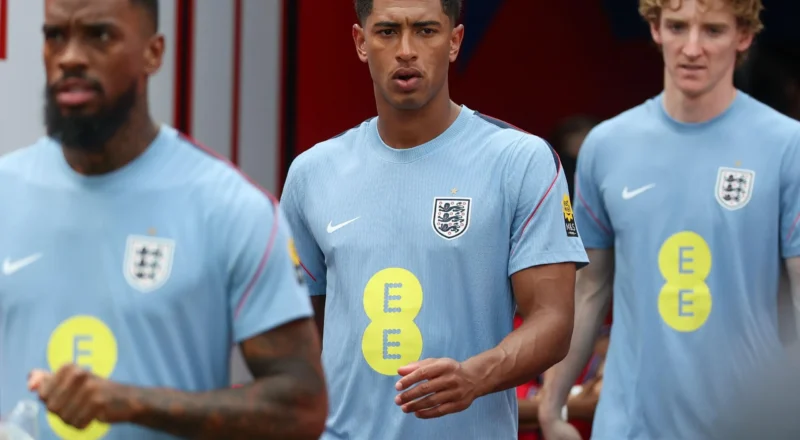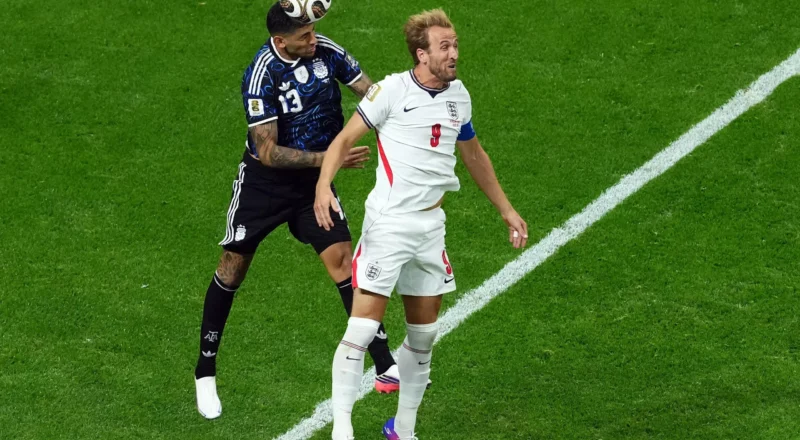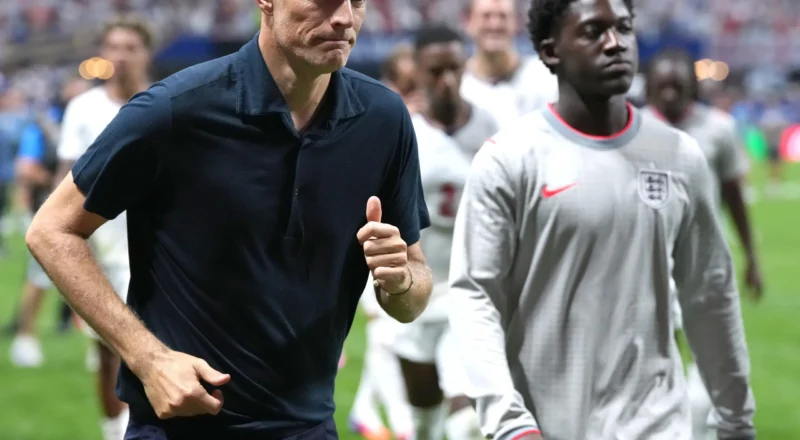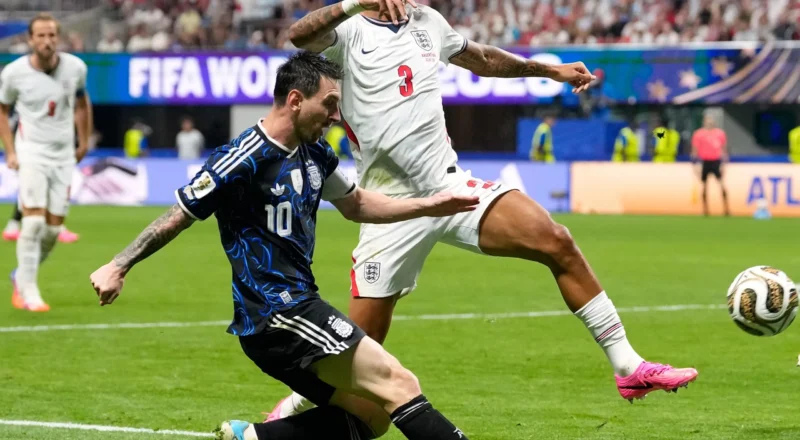


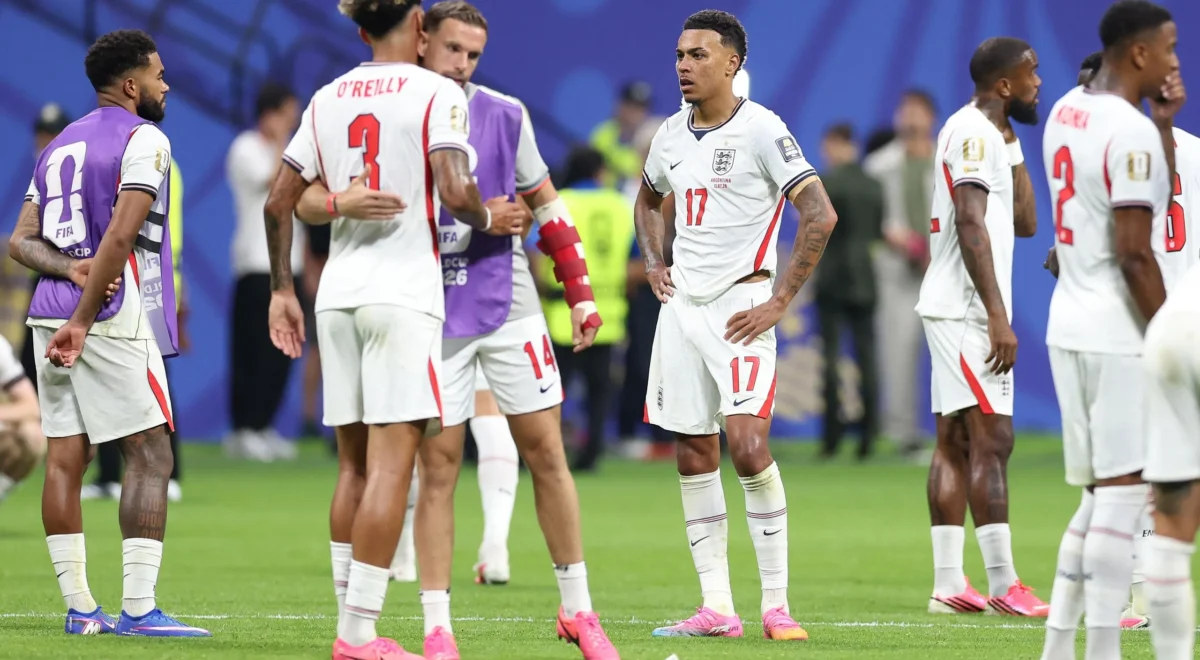
Future coaching courses may well use England’s dismal display against Argentina as a cautionary tale on how to squander a one-goal lead. The statistical evidence from the match supports this assertion.
Following the match, a slew of troubling statistics emerged. Among the most alarming was a revelation from OptaJoe, which noted that England held a mere 12% possession during the 30 minutes following Anthony Gordon’s goal until Argentina equalized. They emphasized, “That is the lowest by a team to be winning for at least 10 minutes in a World Cup match in the last 60 years,”
The situation appeared to be manageable before the hydration break, as Thomas Tuchel’s squad demonstrated some control. A well-placed pass from Harry Kane initiated a shot in the 66th minute, and the captain quickly had another chance when England regained possession in the attacking third. Although Emiliano Martínez’s goal was not particularly threatened, this phase indicated that Argentina could be held back.
However, the dynamic shifted dramatically when Ezri Konsa replaced Gordon, leading England to switch to a 5-4-1 formation. This tactical change stripped the team of its speed on counter-attacks. Although substituting Kane would have been a bold move, his lack of impact became evident as England attempted to defend their lead with a low block.
Statistics Highlight England’s Downfall
As Tuchel prepares for the third-place playoff this weekend instead of the final, he might reflect on England’s goal difference during the tournament, which stood at +6 over 6.3 matches, averaging +0.82 per 90 minutes played. This figure varied significantly depending on the players on the field: the goal difference was +2.01 per 90 minutes with Bukayo Saka, +1.16 with Reece James, and +1.14 with Gordon.
The absence of pace was a critical factor, particularly as the Arsenal winger remained on the bench. Having a quick player up front could have provided a much-needed outlet under pressure.
In the 19 minutes following Konsa’s introduction, England managed just 11 passes.
Only four of those passes were successful: two at the restart after the hydration break, where Jordan Pickford passed to John Stones and quickly received the ball back, and one in stoppage time when Kane found Jude Bellingham, who then lost possession. The final completed pass? That came from Bellingham’s kick-off following Enzo Fernández’s equalizer.
Game Management and Tactical Errors
This sequence illustrated the erosion of England’s prospects. Bellingham’s backward pass to Pickford was followed by a long ball aimed at Kane, which proved ineffective. Between Konsa’s entry and the moment they conceded their second goal, Pickford was responsible for five of England’s seven unsuccessful passes, with three of those going out of play.
A lack of effective game management also plagued the team. Argentina frequently disrupted play through fouls—many of which went unpunished—until they fell behind. Remarkably, England conceded only one free-kick from Gordon’s goal until the 97th minute, and their last successful tackle occurred in the 63rd minute.
In a final twist of irony, England conceded the decisive goal to Lautaro Martínez, who stands at 174cm, despite having introduced 201cm tall Dan Burn to counter Argentina’s aerial threats. Burn’s contributions were limited to touches in the final third after England fell behind, rendering him ineffective in their own penalty area.
Regardless of the metrics used to evaluate England’s performance after they took the lead, the numbers paint a bleak picture.