

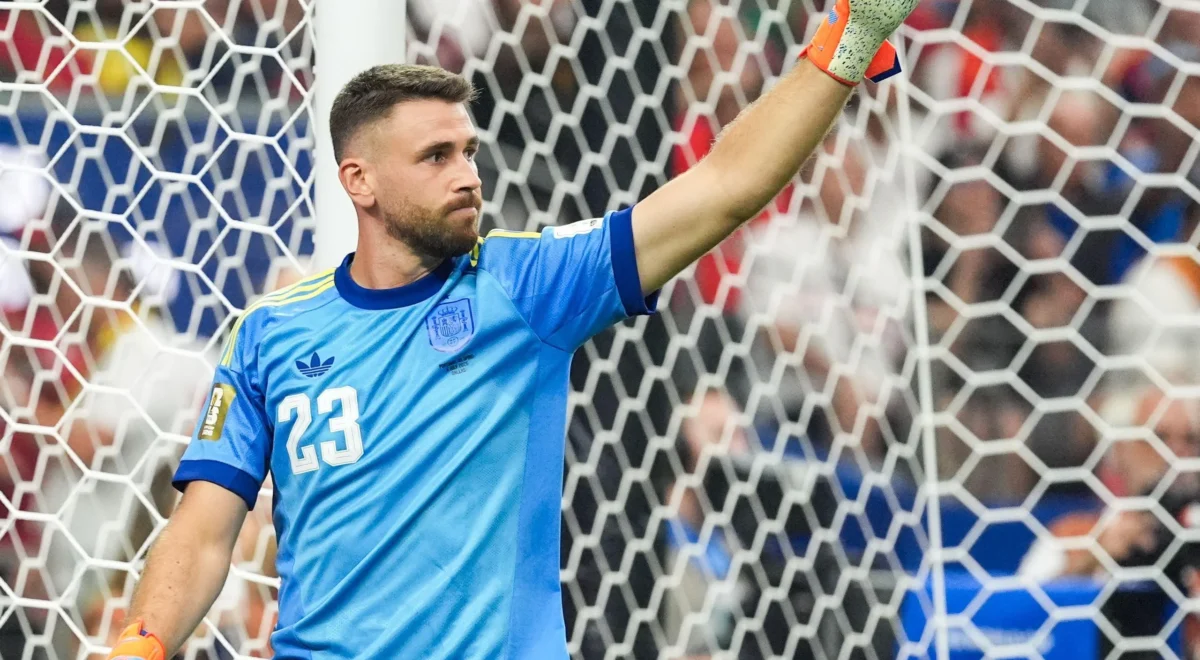
“W e’re the villains, there to stop the goals that football lives off,” Unai Simón states. If that’s the case, then Simón is the most formidable antagonist in the tournament. Amid a World Cup dominated by attacking players, he stands alone as a resolute keeper. With five minutes left until halftime in Spain’s round of 16 match against Portugal, a significant milestone was about to be reached—if only something had actually transpired. Instead, the silence on the pitch was just how Simón preferred it.
As the clock ticked into the 40th minute, Spain’s goalkeeper reached an impressive 560 minutes of World Cup play without conceding a goal, a streak that spans seven matches and traces back to Ao Tanaka’s goal for Japan in Qatar. Previously, he had surpassed Walter Zenga’s record of 517 minutes, and now he and Spain had broken Switzerland’s longstanding record of 559 minutes set across three tournaments in 1994, 2006, and 2010. The next minute, Nuno Mendes struck the crossbar, but Simón remained unscathed, with Mikel Merino’s late winner being the only score of the match.
Not long ago, Simón expressed doubts about his role, admitting that being a goalkeeper can feel “Sod it, I’ll say it: we have the best goalkeepers at the World Cup,” The headlines often belong to others, particularly those who score goals, while he remains in the background. This year has been a pivotal one for him, especially as Athletic Club struggled and he faced competition from David Raya, regarded as the top goalkeeper in the Premier League, and Joan García, the standout in La Liga. “They’re very clearly favourites,” Simón declared recently.
For Luis de la Fuente, however, the choice of goalkeeper was never up for debate, despite the surrounding chatter. Having coached Simón through youth levels, including triumphs in the under-19 and under-21 Euros, an Olympic silver medal, the Nations League, and Euro 2024, their bond is strong. Now, Spain is rediscovering its identity, and Simón is making history as no other nation has ever advanced to the sixth match of a men’s World Cup without conceding.
On Friday in Los Angeles, Spain will face Belgium in the quarter-finals. “The first thing we have to do, is score.” Thibaut Courtois remarked, addressing the press with microphones thrust at him at the LA Galaxy’s training facility in Carson. “Against Portugal we’ll face more shots. Hopefully not, but I’m sure we will,” So far, no one has managed to find the net against Spain. They have registered only 15 shots during the group stages, with a mere three on target. Austria came away with zero shots on goal.
In their match against Cape Verde, Spain allowed just 0.3 expected goals (xG). Against Saudi Arabia, it was 0.14, against Uruguay 0.2, and against Austria 0.32. “The important thing for a goalkeeper, something I place a lot of importance upon and that Unai defines very well too, is the ability to prevent rather than save,” Simón predicted. His foresight was accurate, as Roberto Martínez noted his satisfaction in presenting challenges to Spain that others had not, yet the result was still minimal: 10 shots, only two on target, and an xG of 0.58. Simón made two saves, bringing his tournament total to six. Among the remaining goalkeepers, only Emiliano Martínez has registered fewer saves, having conceded four goals in his last two outings.
“Stop them getting to you: coming out for a high ball, covering defensively, intercepting low crosses. Those things might not get reflected in the stats but they’re vital for a goalkeeper. That’s key: prevent the chance coming in the first place. That’s been a key in this World Cup for us.” explained García, Simón’s backup. “The record says more about the team than it does about me,”
The success of Simón is reflective of a larger team effort. If he is the lone villain, he shares the spotlight with his teammates. “When I watch him, my heart rate doesn’t change,” Simón asserts. He is not the only one who has played every minute; Marc Cucurella and Pau Cubarsí have also been on the pitch for the entirety of the matches, while Aymeric Laporte has missed just one minute, and Rodri, despite a slow start, has been outstanding in recent games, missing only three.
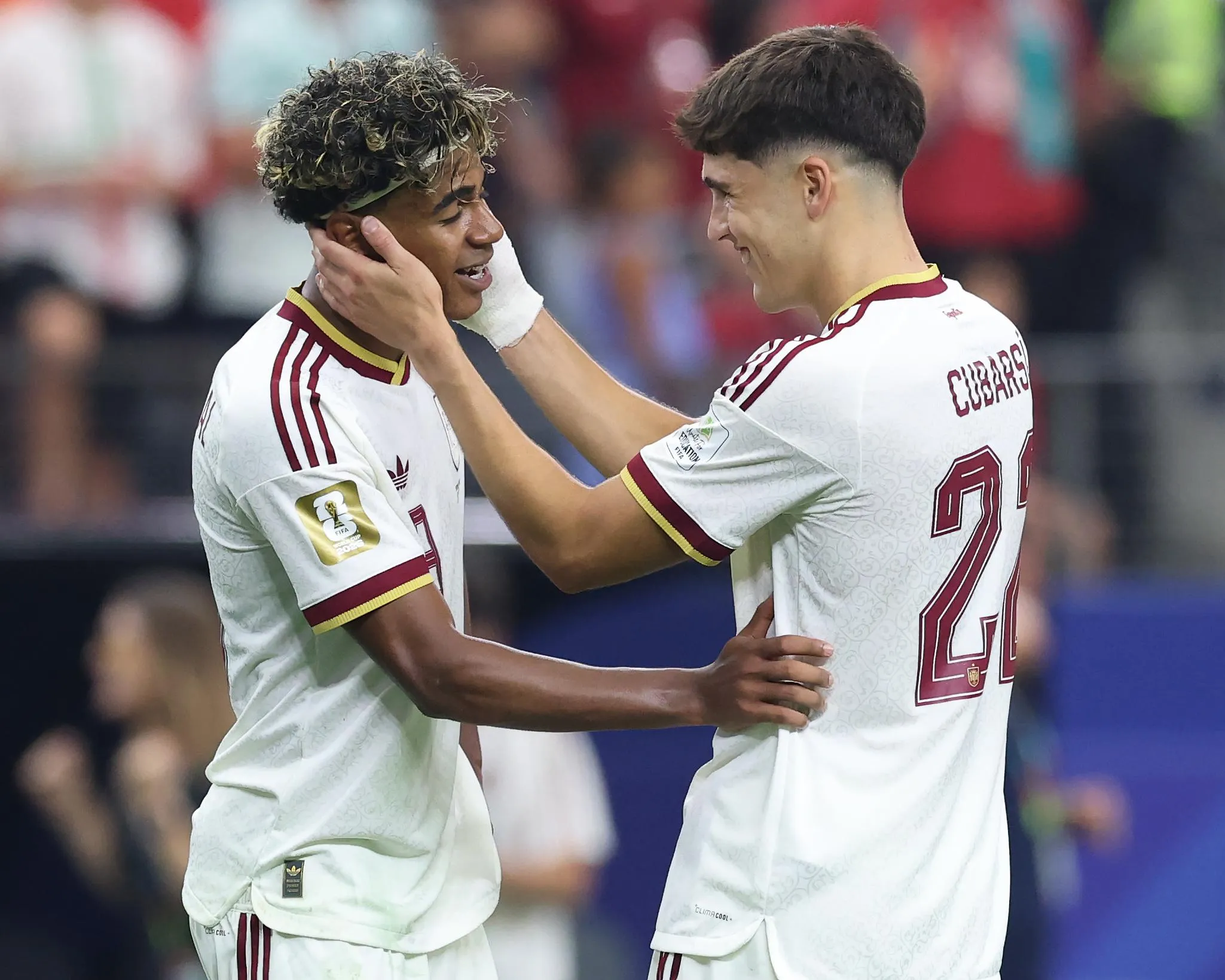
Cubarsí, in particular, has excelled. Amid the buzz surrounding Lamine Yamal, the standout young player, it is the other teenager at the opposite end who has made a lasting impression. Hailing from the small village of Estanyol with a population of around 200, he is the son of a carpenter whose family business has thrived for four generations. Cubarsí is the second youngest player ever to debut for Spain, while Lamine Yamal holds the record for the youngest. On the day of Cubarsí’s Barcelona debut, he and Lamine Yamal were younger than Robert Lewandowski combined.
His composure has been evident from the outset. “It doesn’t seem like he’s 19, the way he takes on responsibility is enviable,” remarked Barcelona’s former coach Xavi Hernández. De la Fuente awarded him his Spain debut, opting not to include him in the Euros as it felt premature, but his calm demeanor is evident on the field. “Pau and Aymeric are a luxury: they fit the idea we have, they bring the ball out, they filter passes, and they have presence: they’re very complete,” Simón noted. Cubarsí has completed an impressive 96% of his 449 passes, not merely opting for safe sideways passes: 34 out of 71 against Portugal were directed into the opponent’s half. He also recorded 19 recoveries and completed 23 defensive actions. Only Paolo Maldini reached as many clean sheets so rapidly.
“A footballer is not just a footballer because of his quality; there are 1,000 other elements too. Technically you can be very good but [young players] wouldn’t be as good if they didn’t have an emotional control of the situation; that’s what truly makes the difference, what means a 19-year-old plays like he’s spent a lifetime there. And we know the importance of having someone near to give you serenity in key moments when you could lose it. There’s a magnificent balance between them. Between all four [defenders].” De la Fuente commented. “We all attack and we all defend,”
Indeed, all eleven players contribute. “Spain are very aggressive in the press,” Dani Olmo remarked. While García concedes that Spain’s approach is less risky than Barcelona’s, this philosophy begins upfront, a notion widely shared. Their style is certainly not defensive in the conventional sense; against Austria, full-backs Cucurella and Pedro Porro combined for one goal and two assists.
Although tougher challenges lie ahead, it’s evident that Spain’s opponents have struggled to reach Simón’s goal; they seldom approach it. “It’s about denying their defenders time, not letting them think, making sure when they have to make decisions they do it under pressure,” Courtois warned.
“If you can keep a clean sheet, it’s a guarantee that a good result is coming.” insists striker Mikel Oyarzabal. Merino adds, “If you can keep a clean sheet, it’s a guarantee that a good result is forthcoming.”
In 2010, as Spain marched toward their World Cup victory, they did not concede a single goal in the knockout stages, with Iker Casillas achieving four consecutive clean sheets, setting a record that Simón, the villain of this narrative, has now surpassed.
- Spain
- World Cup 2026
- World Cup
- features