

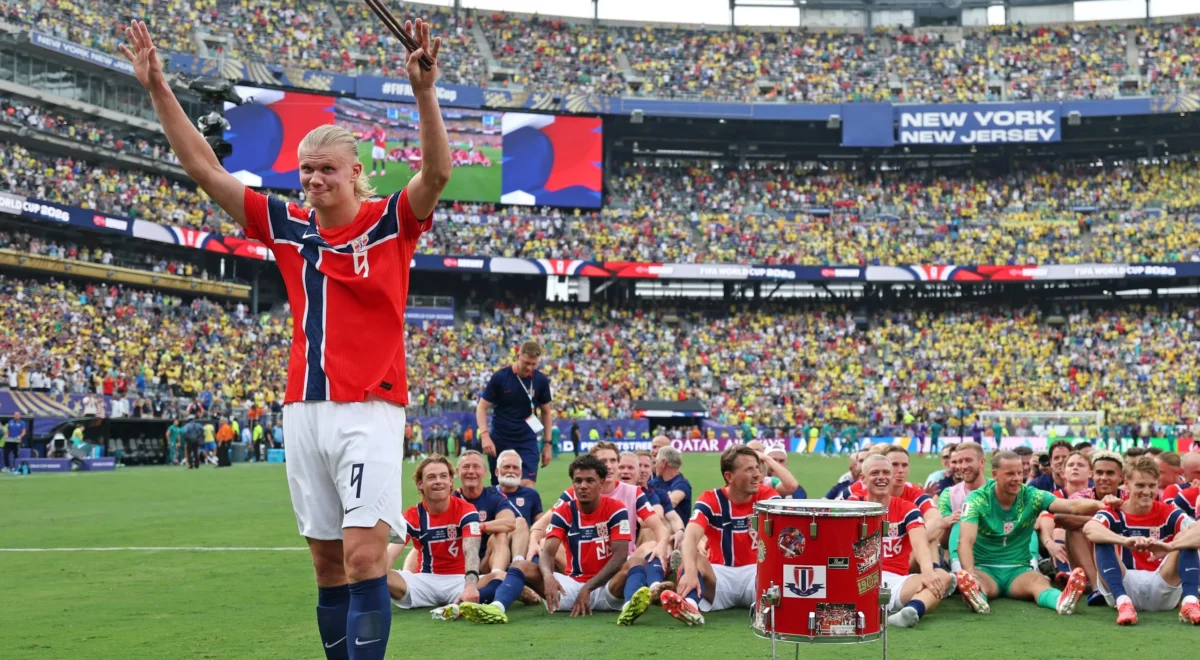
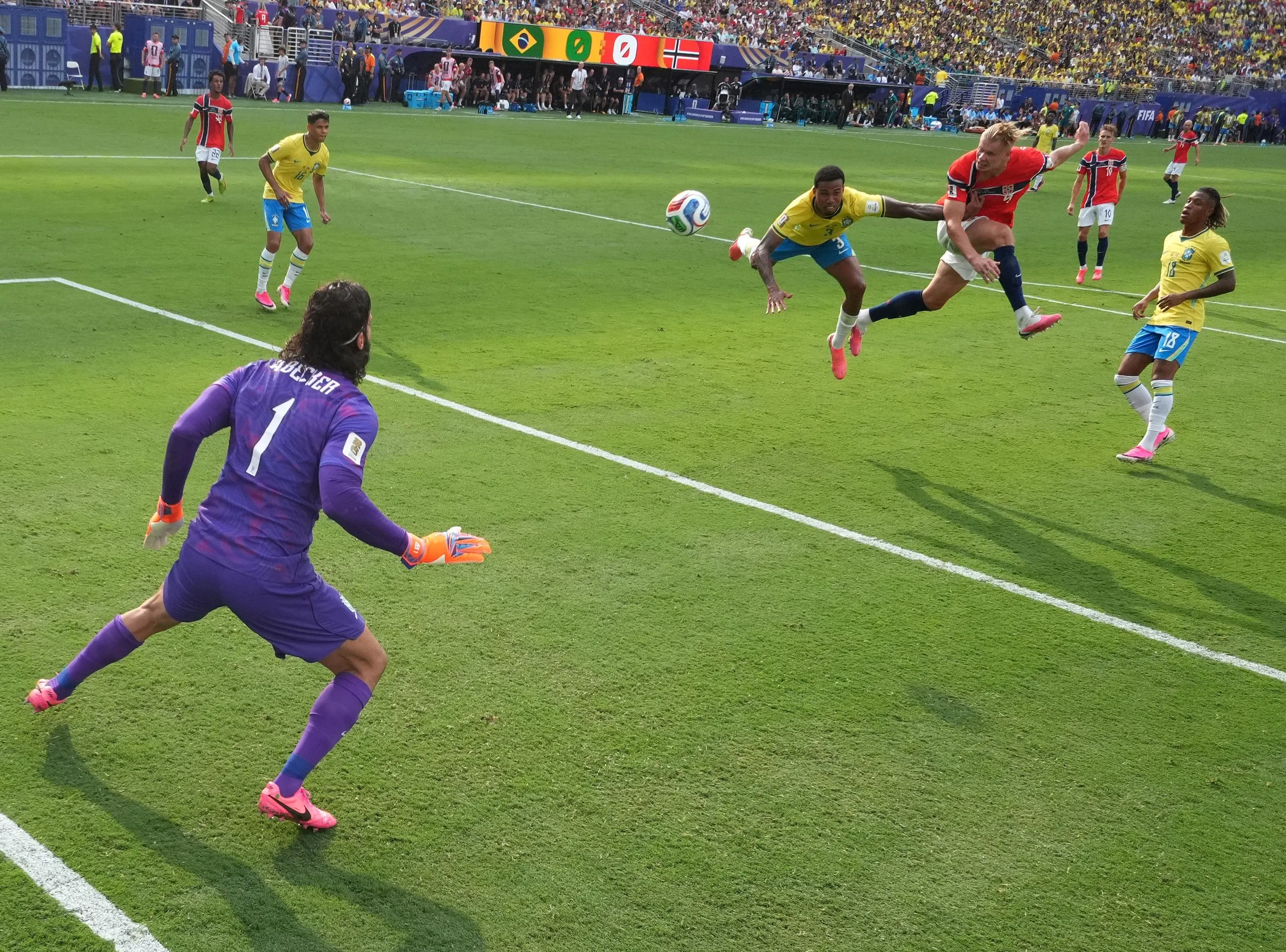
As the final whistle blew, it was hard to fathom the significance of the moment. A nation of just 5.5 million had triumphed over five-time champions Brazil, marking their return to the World Cup for the first time in 28 years and earning a spot in the quarter-finals.
During Norway’s stunning victory over Brazil, the contrast between the nimble footwork of Vinícius Júnior and the sheer strength of Erling Haaland was palpable. However, a deeper examination of their backgrounds reveals a divergent story. While Neymar, Matheus Cunha, and Vinícius were nurtured in a system that emphasizes early talent identification and specialized training, Haaland, Martin Ødegaard, and Antonio Nusa enjoyed a much broader sporting upbringing.
This difference stems from a pivotal change in 2007 when the Norges idrettsforbund (NIF), Norway’s sports governing body, revised its initial principles established in 1987. These principles prioritize children’s rights to participate in sports for enjoyment, safety, and personal growth. The mandates are obligatory for all coaches and clubs affiliated with the NIF, and they challenge the conventional talent-focused culture seen globally.
For children under nine, the focus remains strictly on local club matches, free from results, league tables, or trophies. Competitive play begins at age 11, but rankings and scores are still withheld. It isn’t until 13 that players can participate in events resembling national championships.
Among the eight rights outlined, two particularly deviate from the typical competitive mindset: mastery and the freedom to choose. These principles advocate for children to explore various sports rather than funneling them into a single discipline too early. This approach allows gifted young athletes to integrate skills from multiple sports into their primary pursuits.
Haaland stands as the most notable product of this framework. At six, when the rules shifted, he spent the subsequent eight years engaging in handball, athletics, and cross-country skiing in addition to football. According to his father, Alf-Inge, Norway’s handball community showed interest in him before he ultimately chose football at 14.
Observing his goals through this lens reveals much: his powerful header reflects a childhood spent jumping to score in handball, while his composed strikes emanate from a background that emphasizes efficient force generation, similar to the techniques learned in skiing. This foundational experience complements, rather than replaces, his football training.
Alexander Sørloth, who partners with Haaland on the field, also enjoyed a varied sporting childhood in Trondheim, balancing football, handball, and speed skating. Like Haaland, he comes from an athletic lineage: his father represented Norway at the 1994 World Cup, and his mother was a handball player. Both players entered football after years of developing diverse movement skills.
Ørjan Håskjold Nyland, Norway’s goalkeeper, was 17 when the new rules were implemented. Although he did not grow up under these regulations, his background in handball and alpine skiing illustrates that the natural instincts emphasized by the NIF were already present before formalization. His experiences were evident in a crucial moment against Brazil: a penalty save executed with the agility of a skier, followed by an impressive deflection off Kristoffer Ajer that showcased handball-like reflexes.
This success illustrates the advantages of instilling patience in childhood sports rather than rushing children towards competition. Norway’s track record supports this approach; in February, they dominated the Winter Olympics medal table for the fourth consecutive time, securing a record 18 gold medals and outshining countries with populations 60 times larger.
While many nations adopt Brazil’s model of identifying talent early and constructing pathways based on perceived suitability, Norway’s accomplishments raise questions about whether prioritizing a child’s right to choose could present a superior alternative. It is rare to legislate patience, and even rarer to achieve victory through it.
These eight rights were never intended as a blueprint for World Cup triumphs; they were designed to ensure that children could participate in sports without fear of embarrassment, allowing young talents to simply enjoy their age-appropriate activities. Though this squad is celebrated for their victories, the underlying principle of joy remains the cornerstone of this approach.
“To enjoy football and make it the thing you like to do most in life,” said Erik Thorstvedt, a former Norway and Tottenham goalkeeper. “The most important thing is, don’t put too much pressure on the kids.”
After the match against Brazil, Norwegian fans erupted into their Viking chant, a slow, rhythmic buildup that transforms into a powerful roar. While it may be perceived as a tribal expression, it resonates more deeply when considering the upbringing of this team—a sound reminiscent of supportive parents encouraging their children to pursue sports on their own terms, attending every game to cheer them on.
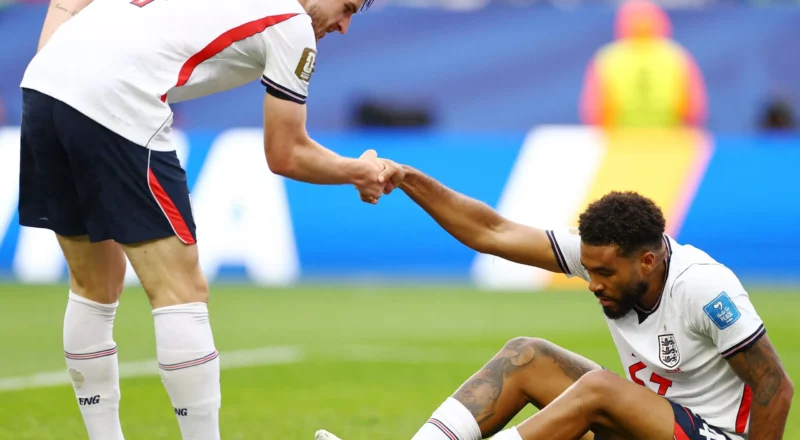
On Saturday, Norway will face England, known for their talent development, in hopes of reaching the semi-finals. Their narrative can be viewed purely through a football lens, as a team that defied expectations; however, a more profound story exists. One where a small nation opted to allow its youth to explore and enjoy sports freely. The remarkable feat of defeating Brazil is significant, but the essence lies in a nation that stood together, watching its children soar.
- Norway
- World Cup
- World Cup 2026
- Erling Haaland
- features