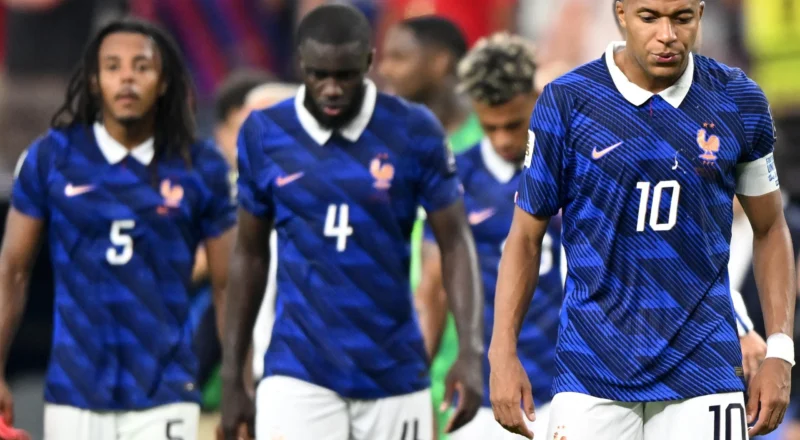


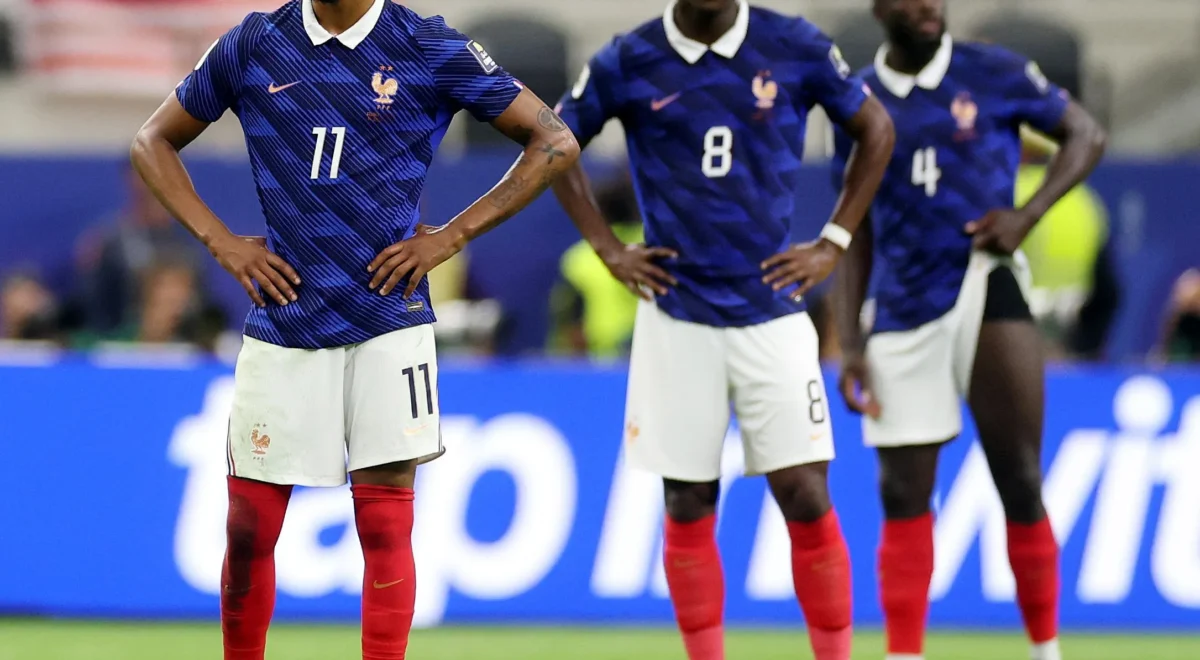
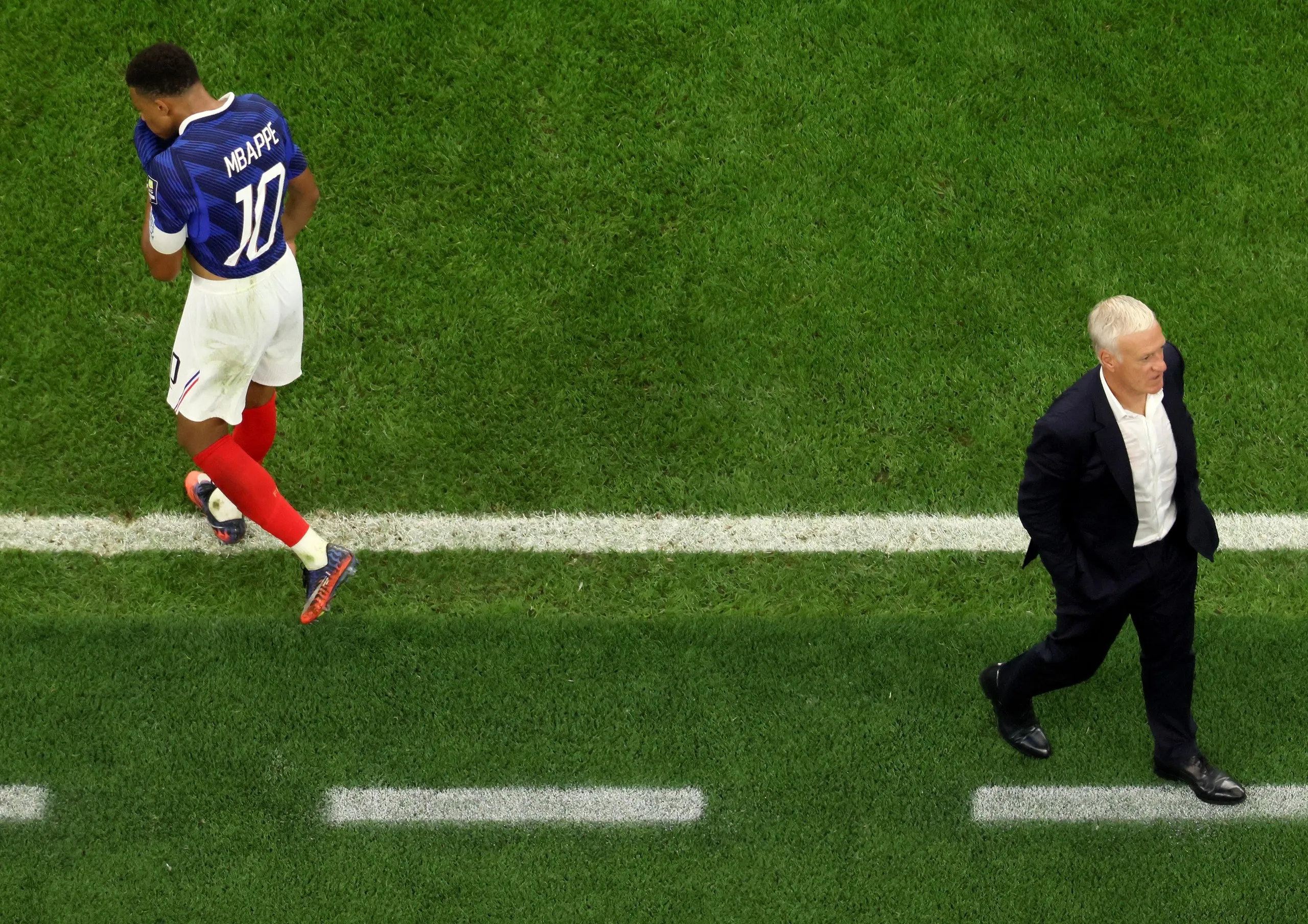
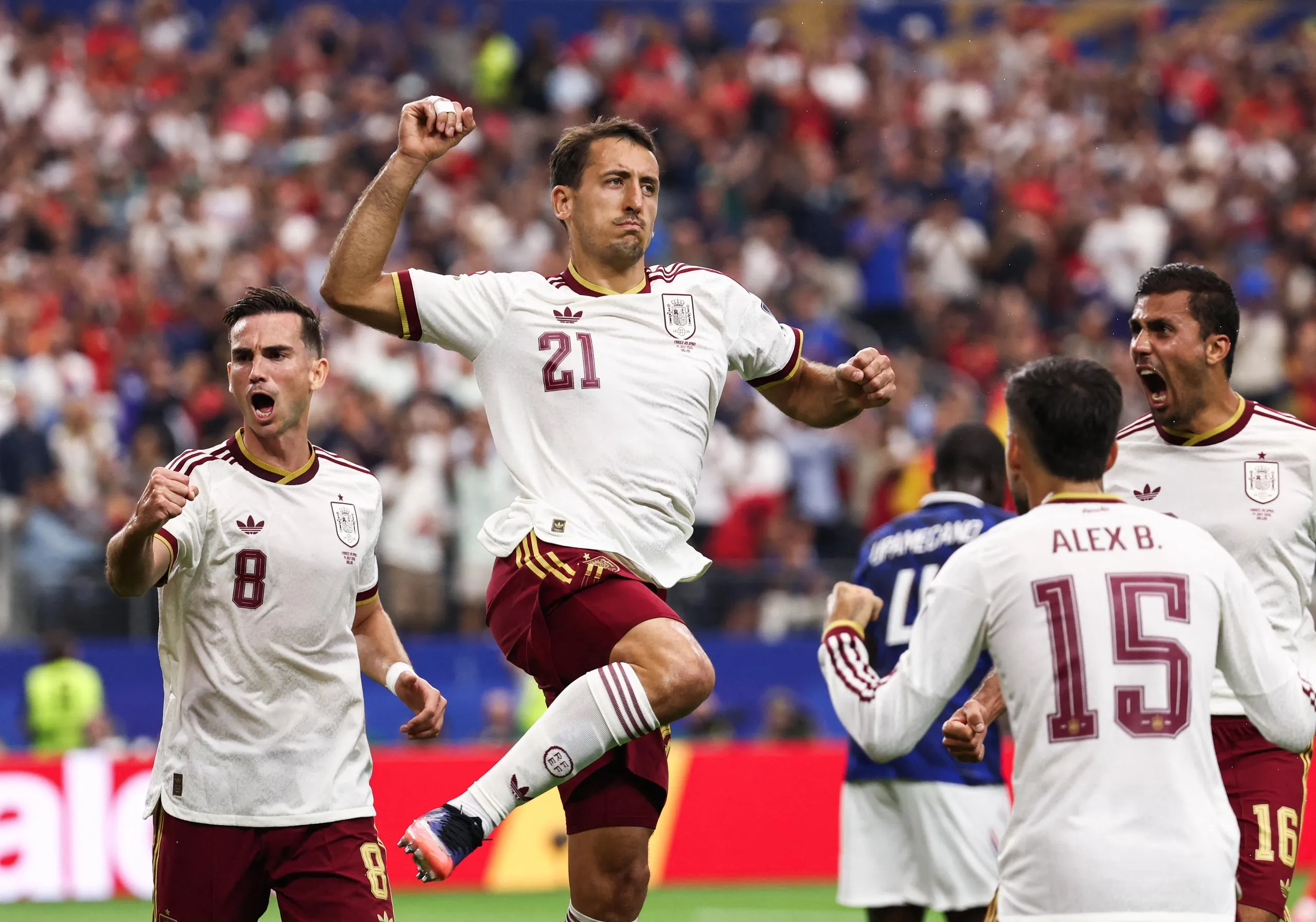
France seemed poised to make a historic run to their third consecutive World Cup final, yet they were ultimately outperformed by a tactically superior Spain in the semi-finals. After Mikel Oyarzabal’s penalty put Spain ahead in the 22nd minute—marking the first time France had trailed during the tournament—Didier Deschamps’ team struggled to respond. The anticipated brilliance from Kylian Mbappé never materialized, and the match trudged on to an inevitable conclusion. Where did it fall apart for France, and what lies ahead?
Challenges for France’s Attack
Initially celebrated for their explosive offensive capabilities, France’s star-studded attack was unable to find its rhythm against Spain. Despite netting 13 goals in their opening four matches, the French forwards failed to coordinate effectively, exposing their lack of precision in front of goal.
France found themselves down 2-0 before registering their first shot on target, with Mbappé—a player known for his scoring prowess—failing to make an impact until well into the second half. His performance was hindered by the need to drop deeper into midfield, resulting in a lack of offensive opportunities.
Michael Olise, once likened to Michel Platini for his creativity during the group stages, struggled significantly, losing possession 20 times. Meanwhile, Ousmane Dembélé did not test goalkeeper Unai Simón until the dying moments of the match. Among the forwards, only Bradley Barcola made notable defensive contributions, while Lucas Digne struggled to contain the threats posed by Lamine Yamal.
The French attack, which had thrived on fluid movement and positional interchange early in the tournament, became increasingly disconnected as the knockout rounds progressed. Spain’s effective control of the middle third ensured that the French forwards were isolated from each other and cut off from the rest of their team.
Adrien Rabiot emerged as the sole player consistently breaking through Spanish lines, but a yellow card received in the 10th minute restricted his influence. Deschamps’ decision to substitute him at half-time severely impacted France’s ability to dominate midfield. Alongside the recently injured Aurélien Tchouaméni, who found himself too far back to make an impact, Manu Koné could not replicate his impressive performance against Morocco.
Spain’s Midfield Dominance
It is unlikely that France underestimated their opponents; Deschamps had consistently labeled Spain the team to beat. Whether this was a candid evaluation or a tactic to alleviate pressure from his squad, his insights were validated by recent history.
With the defeat in this match, France has now lost four consecutive encounters to Spain, all in crucial semi-finals or finals. The superiority of Spain’s midfield has been a decisive factor in those contests. For the second time in three years, France found themselves outmatched by a midfield trio of Rodri, Fabián Ruiz, and Dani Olmo.
This dominance is not limited to senior matches; Spain’s well-defined style resonates through all levels of their teams, reflecting a comprehensive strategic approach. In contrast, France’s squads often seem to be constructed reactively based on available talent, leading to challenges against Spain’s entrenched tactics.
Looking Forward: The Zidane Era
Deschamps will conclude his 14-year tenure after the upcoming third-place playoff in Miami. Securing a podium finish at three World Cups would solidify his status as France’s most successful coach, yet many will feel he could have achieved even greater success with the talent at his disposal.
The freedom Deschamps granted his forwards throughout this tournament might be seen as a prelude to Zinedine Zidane’s impending leadership. Zidane was known for allowing his attacking players considerable freedom during his tenure at Real Madrid, and France’s depth of talent could lend itself to a similar philosophy.
Zidane’s appointment is expected to bring continuity to the national squad. Like Deschamps, he is a pragmatic strategist who commands respect in the locker room—possibly even more so than his predecessor. Optimism abounds, given that he will inherit a relatively youthful team and has the goodwill of fans, players, and decision-makers.
The campaigns of 2018 and 2022 represented the culmination of Deschamps’ tactics, which took time to refine into a successful formula. However, by Euro 2024, that approach appeared to have reached its limit, and a shift was warranted. While France advanced comfortably to the later stages, they faltered against Spain.
This revamped French squad might unlock its true potential in four years under Zidane’s guidance. Should this occur, Deschamps’ legacy will not only include a World Cup victory but also the groundwork for a promising new era.
This is an article by Get French Football News