


In her book,Hope in the Dark, Rebecca Solnit explores the concept of hope in the face of human suffering. She cites Bulgarian writer Maria Popova, who states, “Critical thinking without hope is cynicism, but hope without critical thinking is naivety.” This perspective underscores hope’s power as a force for social change.
Graham Burrell, reflecting on a painful defeat, once noted, “It is the hope that kills you” after Lincoln City lost 2-1 to Wigan in 2024. He lamented, “I feel perhaps our playoff push was finally killed off yesterday.”
It’s challenging to assess where that loss at Sincil Bank ranks among life’s hardships, much like England’s defeat to Argentina on Wednesday.
The origin of the phrase “It is the hope that kills you.” remains elusive, attributed to figures as varied as William Shakespeare and Peter Ustinov. Many have echoed this sentiment, including Ted Lasso, who remarked, “So, I’ve been hearing this phrase y’all got over here that I ain’t too crazy about. ‘It’s the hope that kills you’. Y’all know that? I disagree, you know? I think it’s the lack of hope that comes and gets you. See, I believe in hope. I believe in belief.”
Jackson Lamb from Slow Horses offers a different take.
“It’s not the hope that kills you. It’s knowing it’s the hope that kills you – that kills you.”
One wonders if England might have performed better in the last 30 minutes with Lasso or Lamb managing. Their strategies would have varied; Lasso likely wouldn’t have adopted a back six, while Lamb might have berated the players and urged them to take action. The full range of motivational tactics is available.
Any fan of England or sports, in general, understands that hope can be an overwhelming feeling. At the beginning of the match, hope is absent, overshadowed by fear. Anxiety builds during the lead-up, the absurd 10-second countdown, and as the ball returns to Jordan Pickford. My heart raced, almost audibly.
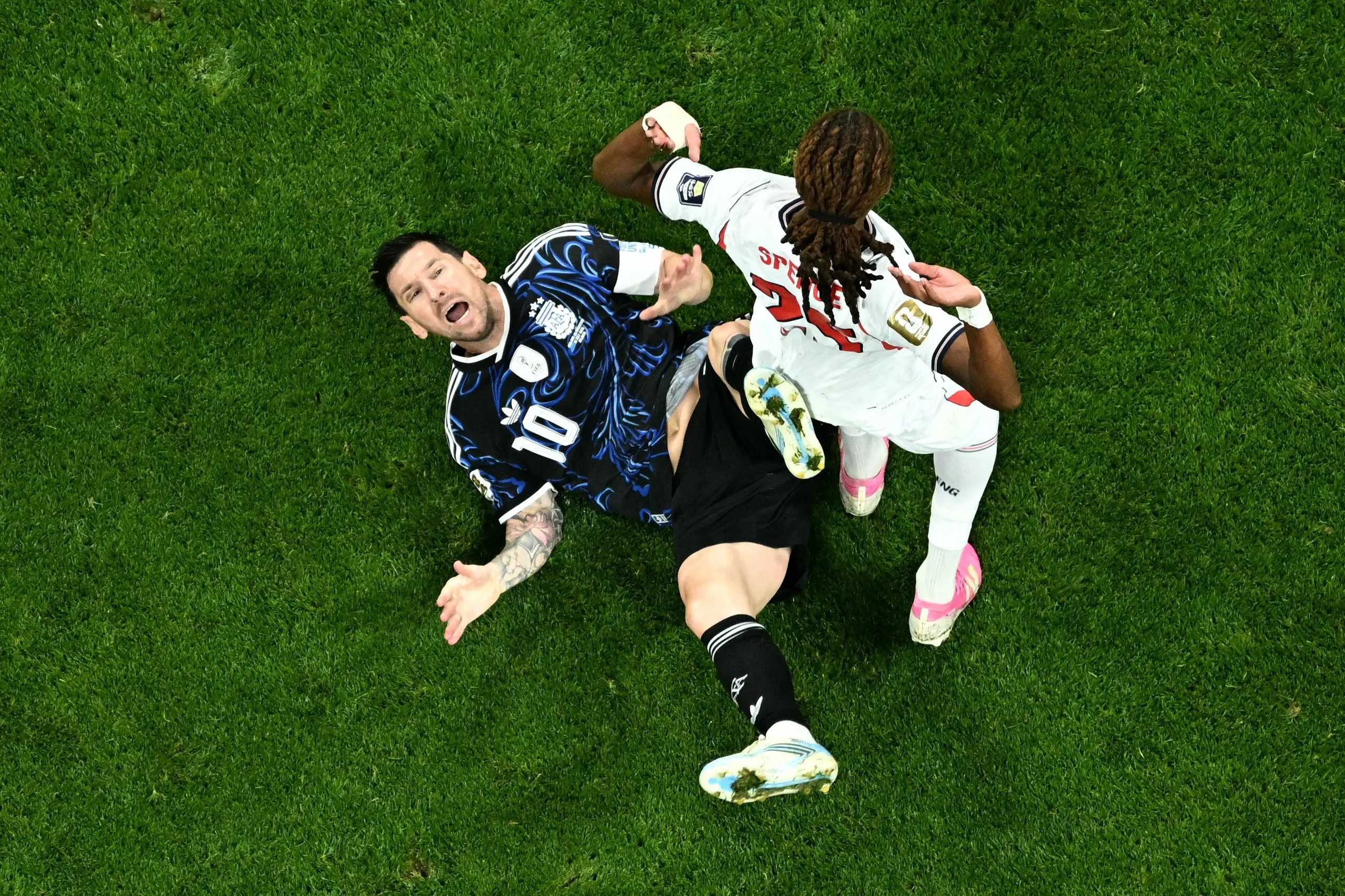
As the match progressed, my heart rate began to stabilize—though “Well, at least they need two now” may not be the right term. It was more like a baseline level of anxiety punctuated by occasional frustration as Giuliano Simeone relentlessly pursued the ball, often resorting to aggressive tactics. Where’s the yellow card? Are the conspiracy theorists onto something? Simeone nearly collides with Marc Guéhi, then lunges with his head like a shark missing its target. Even well-timed tackles by the Argentines seem malevolent, while fouls committed by the English feel justified. Just one more pint of shortsightedness, please.
The first inklings of pessimism surfaced during half-time. The longer Argentina held out, the more likely they were to seize victory. They are seasoned competitors. I found myself uttering phrases like “It’s too soon to defend this.” and “That’s saved eight seconds.”
Then came the goal: a flawless cross followed by an impeccable finish. It ignited a moment of joy and relief, a flicker of hope amid the realization that “Eighty-four minutes on the clock now,” After all, we’ve seen England stumble before.
Another highlight was Djed Spence’s remarkable tackle. He appeared so at ease that it seemed he was indifferent to the pressure of the match. His celebration was reminiscent of Giorgio Chiellini and Leonardo Bonucci, and I couldn’t help but shout, “I keep looking at that clock and thinking it’s going ever so slow,” That tackle was the best since Eric Dier’s on Sergio Ramos—infinitely more critical. Had circumstances been different, it would have been a centerpiece in highlight reels.
It’s possible someone has already mentioned England’s tendency to drop back during the match. Was it Thomas Tuchel? Was it the players themselves? Is it merely an English affliction? Truthfully, another tactical analysis might not be necessary—I certainly don’t feel the need for one.
This moment captures the essence of genuine hope. For a fleeting time, I contemplated the prospect of England competing in a World Cup final. The true joy of the tournament lies not in the matches themselves, but in the thrill of still being in contention. Watching other games while knowing you still have a stake in the outcome can be exhilarating; the game itself, however, is often an ordeal to endure.
The retreat began even before the hydration break. Yet, how many of us thought, “It’s too soon to defend this”? With 10 men at the Azteca, such a tactic made sense. Even if England could hold out, could I withstand the psychological torture? Time ticks on, and with each missed opportunity and every save, hope began to seep back in.
In the 82nd minute, Nico O’Reilly intercepted a pass and pursued it, making another block. We found ourselves in their half—a foreign territory. I shouted to my colleague John Brewin from Football Weekly, “That’s saved eight seconds.” Moments later, Lionel Messi lofted a cross that drifted harmlessly out for a goal-kick. That was the moment I thought, perhaps, just perhaps.
Suddenly, thoughts of England in a World Cup final danced in my mind—selfishly envisioning the dream of spending days in New York, with preview podcasts and TalkSport shows practically writing themselves. I could craft a piece about hope—another angle of hope. What a privilege.
A goal-kick to England. Scoring is difficult, even with someone like Messi on the field. John Stones performs keepy-ups. Pickford sends the goal-kick soaring, and O’Reilly collects it. A throw-in goes to Argentina deep in their territory. “Eighty-four minutes on the clock now,” Guy Mowbray announces. “I keep looking at that clock and thinking it’s going ever so slow,” Alan Shearer adds.
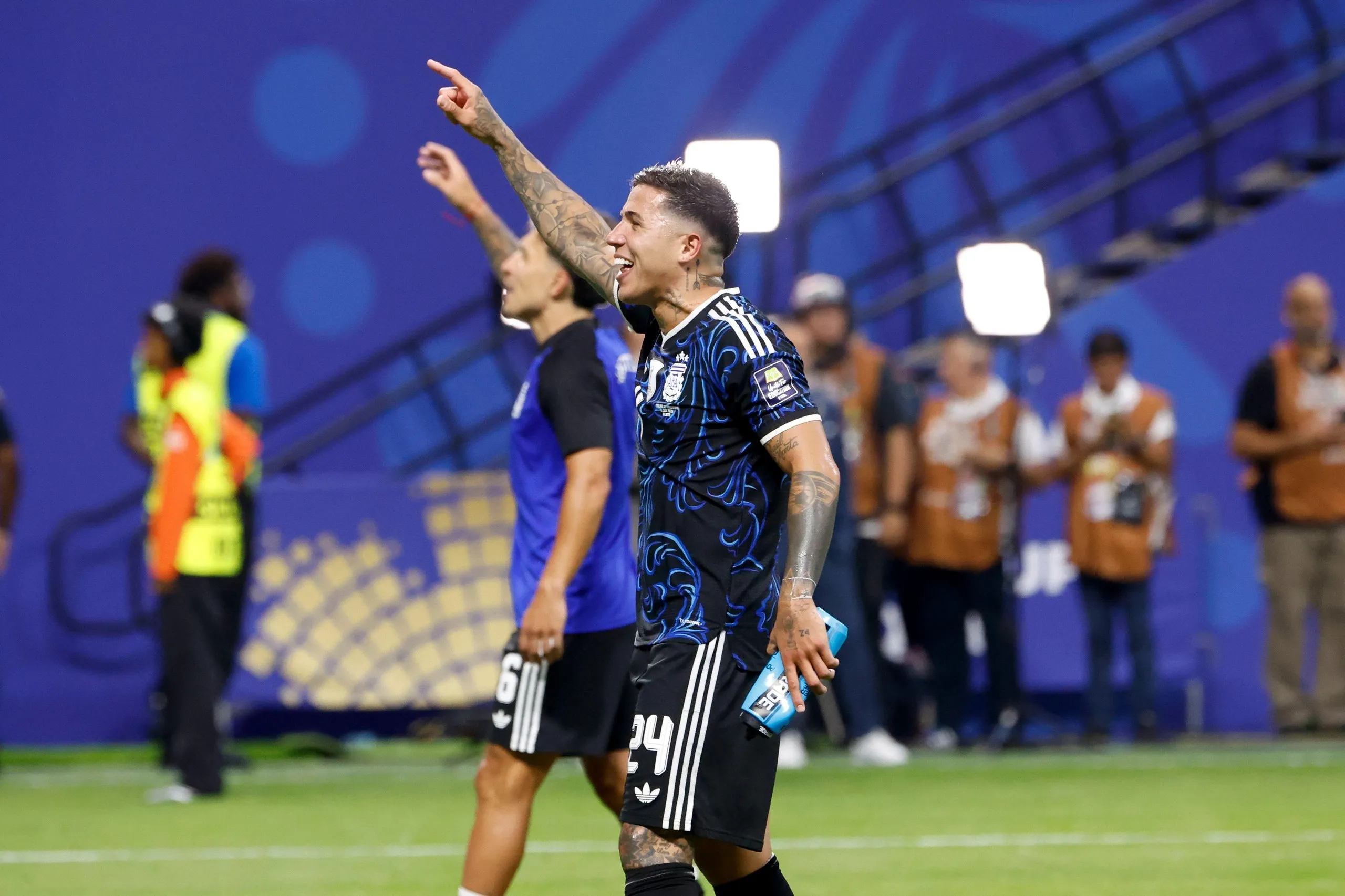
84’24. Enzo Fernández takes a shot from distance. Pickford tips it over. It’s going over. But it’s fine. Just maintain your shape. 84’55. Enzo has too much space at the edge of the box. He shoots. He scores—and we all recognize it’s over.
Two minutes and 55 seconds—that’s how long my genuine hope lasted. It didn’t destroy me. It was exhilarating, frightening, and life-affirming. I’ve previously pondered whether I’d ever be ready to witness England’s men win anything, and perhaps I won’t have to confront that emotion. For now, however, hope is sufficient for me. Just a taste of it. If hope can catalyze social change, it can also inspire dreams of Adam Wharton lifting the European Championship trophy in 2028, even if just for a brief moment.
- England
- World Cup 2026
- World Cup
- comment