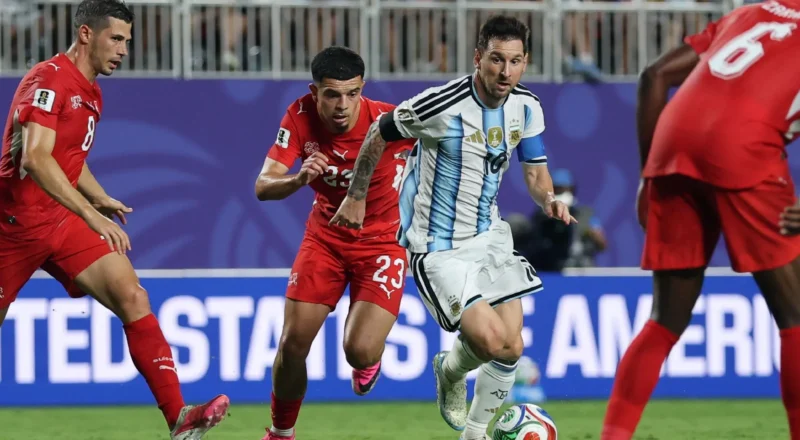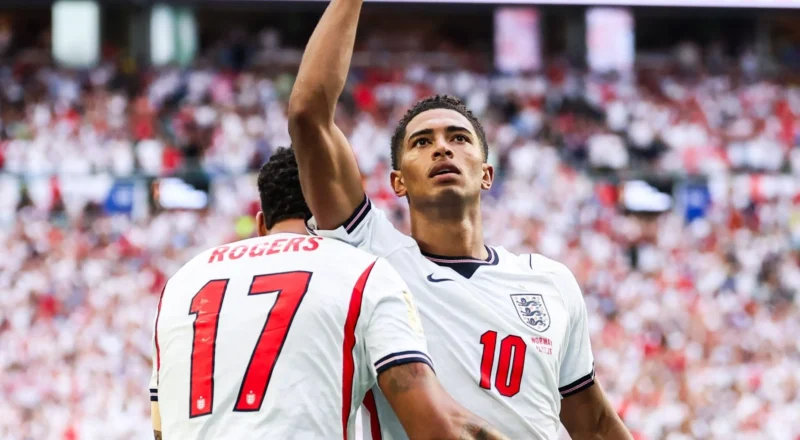


The whimsical nature of the comic strip Calvin and Hobbes echoes in the chaotic world of football officiating during the World Cup, likening it to the unpredictable game of Calvinball. In this fictional sport, rules are fluid, and the end goal appears secondary to the absurdity of play.
Initially, Calvinball described the early challenges faced by Major League Soccer, where the league’s player acquisition and allocation rules often seemed arbitrary. Salary caps were strictly enforced, except in cases where star players like Jorge Campos seemed to warrant special treatment. Similarly, the drafting of Freddy Adu was manipulated to ensure he ended up with DC United, illustrating the inconsistency in rule application.
World Cups, even those devoid of unexpected regulatory interventions, often carry a sense of unpredictability akin to Calvinball. The convergence of numerous teams and referees leads to discrepancies in the interpretation of fouls; what one referee views as an obvious infraction may be dismissed elsewhere.
Fifa complicates the situation further by mandating that annual changes to the laws of the game be enforced at the World Cup, rather than after the tournament concludes. While Fifa shares voting power with the International Football Association Board, it retains discretion over the timing of law enforcement. This year, the rules officially updated on July 1; however, competitions starting before this date could choose to delay implementation. As the World Cup is the culmination of a tournament beginning prior to this deadline, there was no necessity for Fifa to impose untested regulations on referees.
Some modifications are straightforward. The introduction of five substitutions instead of three during the 2022 World Cup was easily comprehensible, as was the use of goalline technology, which had been trialed prior to the 2014 tournament.
However, for many viewers, World Cups serve as the first exposure to groundbreaking changes like the introduction of VAR in 2018, which preceded its adoption in major European leagues. While some changes may initially appear trivial, their repercussions can be significant.
Take, for instance, Paraguay’s Miguel Almirón. In his team’s opening match against the USA, he fell dramatically while contesting a ball with defender Tim Ream, leading to Ream receiving a yellow card. The new rules regarding ‘mistaken identity’ now allow for the review of ordinary fouls and yellow cards. Consequently, after replays revealed Almirón’s deceitful fall, Ream’s yellow card was rescinded, and Almirón was penalized for simulation. This incident was mirrored in the quarter-finals when Switzerland’s Breel Embolo faced a similar reversal, receiving a second yellow card that left his team compromised in a critical match.
The ‘mistaken identity’ amendment was outlined in an Ifab circular following their annual meeting on February 28. A subsequent special meeting in April approved additional regulatory changes, including a new offense concerning players provocatively covering their mouths while communicating with opponents. Almirón was not fully aware of this adjustment, leading to his dismissal in Paraguay’s subsequent match and sparking outrage among commentators.
Many recent rule changes have left room for varying interpretations. A player must exit the field within ten seconds of being shown a substitution signal, yet this can be bypassed if a player claims a minor injury. This gives players the leeway to feign injury to delay their exit, which often results in confusion during matches.
Current laws dictate that referees must allow play to continue for minor injuries while stopping the game for serious ones. This World Cup has witnessed numerous instances of play continuing with players on the ground, leaving both teams and officials bewildered. Although the traditional practice of putting the ball out of play for injured players persists, it has become increasingly rare.
Furthermore, some laws appear forgotten. For instance, removing a shirt during a goal celebration warrants a yellow card, regardless of whether the goal is disallowed. Egypt’s Mostafa Ziko escaped punishment for his celebration after scoring against Argentina, which would have put his team ahead 2-0.
Additionally, the enforcement of rules regarding homophobic chants has been inconsistent. Despite past sanctions against Mexico for similar incidents, matches have continued without penalties, even as chants were clearly audible.
While officials overlook evident violations, they have been overly meticulous in others. Croatia’s equalizer against Portugal was disallowed due to a minuscule touch by Igor Matanovic on the ball, which was deemed enough to invalidate the goal. Had Matanovic sported a different hairstyle, the outcome might have been different.
Such contentious decisions have prompted widespread criticism of VAR. However, the technology is not the issue; the human element of officiating remains crucial. For example, the contentious decision against the USA’s Folarin Balogun continues to spark debate about the physics of the situation and whether he could have safely landed his foot amidst the defender’s challenge.
Ultimately, Ifab and Fifa’s ability to communicate effectively has faltered. The handball rules have undergone so many revisions that the law resembles a game of broken whispers, losing clarity in the process. Fifa ought to reconsider the implementation of numerous changes when the global audience is left confused and frustrated.
- World Cup 2026
- World Cup
- Video assistant referees (VARs)
- comment