

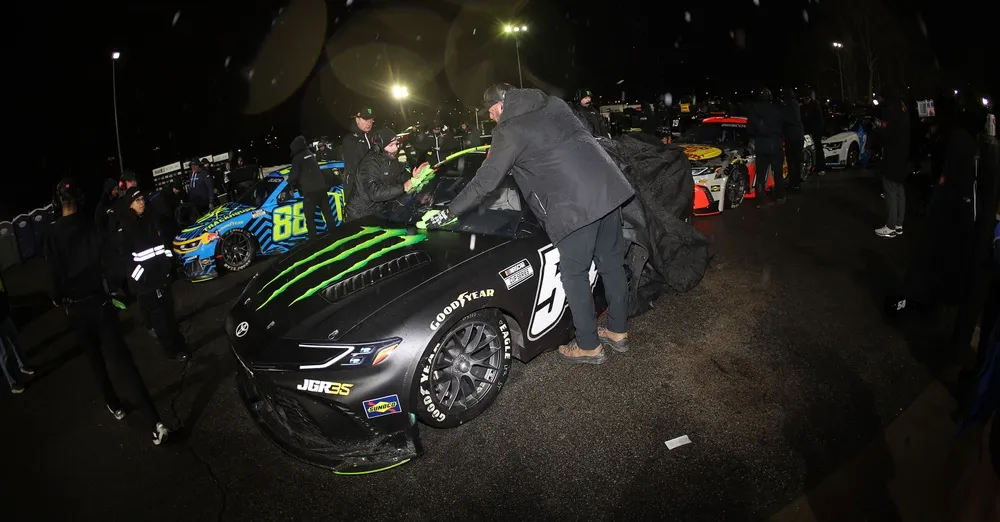
The Cookout Clash, though merely an exhibition event, highlighted significant issues within NASCAR’s officiating, leaving many in the Cup Series garage feeling discontented. From race control to the communication with teams, the execution of the race did not meet expectations.
As one strolls through the garage area, numerous crew chiefs and seasoned team members voiced their concerns regarding the need for the sanctioning organization to address the rifts that have emerged.
A veteran crew member from a championship-caliber team expressed that NASCAR seems disconnected from the garage, reflecting sentiments from the off-season, and remarked that the chaos during this event underscored the growing divide.
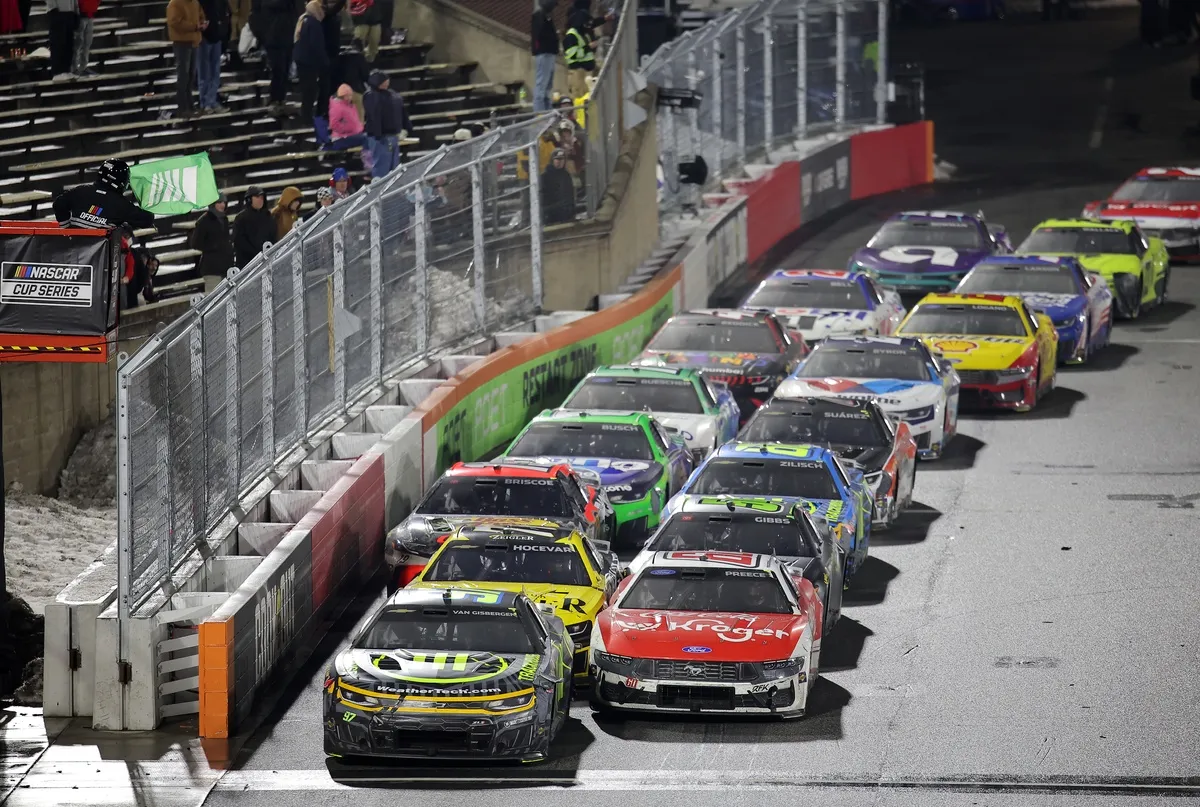
During Wednesday night’s race at Bowman Gray Stadium, the confusion became evident when officials failed to provide clear guidance on rules. Teams were left puzzled by decisions that contradicted their understanding of the regulations in place.
This confusion was epitomized by the experience of Carson Hocevar and the Spire Motorsports No. 77 team. After NASCAR permitted teams to return to the pit area for refueling, Hocevar was unexpectedly required to revert to wet weather tires that had just been removed during a previous caution.
According to NASCAR regulations, race control must declare the track as dry before teams can switch to slick tires. However, this announcement had not been made, and the officials only addressed Hocevar’s tire change after it had occurred.
“I managed to run about six laps on the slicks, but I’m still unsure about the decision-making process,” Hocevar commented. “Some officials said we were not allowed to switch to slicks, while others indicated we could. It was chaotic, with one person saying ‘stop’ and then another in the tower granting permission to proceed.”
Hocevar acknowledged, “At least they didn’t penalize us for running on slicks for those laps. It seems like there was a significant miscommunication amidst an already hectic situation.”
Many crew chiefs were initially frustrated by the decision to allow teams to refuel, particularly after drivers like Chase Elliott and Kyle Larson ran out of gas. James Small, who was visibly upset at the time, had just informed his driver, Chase Briscoe, that they had sufficient fuel to finish the race despite the cautions.
“I simply don’t get it,” Small expressed. “Everyone is aware of the rules. If you started the race with a full tank, you had enough fuel to reach the finish line. It’s just baffling.”
He candidly referred to the situation as “fucking ridiculous” while speaking to Briscoe over the radio. “It raises the question of why we even have rules in place,” he continued. “Even after the Last Chance Qualifier, they provided another car with tires that were previously not allowed. It felt like the rules were constantly shifting, which was frustrating given our strategy for fuel management.”
Race victor Ryan Preece ultimately benefited from the refueling decision, with his crew chief, Derrick Finley, having advocated for it. “We were pushing the officials hard to allow us to refuel, given the unusual circumstances of racing in rain and snow,” Finley explained. “Thankfully, they eventually agreed, and we were able to pit.”
Finley admitted they were close to running out of fuel and expressed relief at NASCAR’s decision to allow them to refuel. “I do feel for those who filled up just before the caution,” he added. “Had we not been leading, we likely would have opted to pit for fuel as well.”
Jim Pohlman, the new crew chief for Kyle Busch and the Richard Childress Racing No. 8 team, shared similar grievances. “My only issue was that we were likely short on fuel, and I decided to pit for safety,” Pohlman recounted. “If I had known they would allow everyone to refuel during the next caution, I wouldn’t have pitted and would have maintained our track position.”
When discussing the situation with Chris Gayle, crew chief for the JGR No. 11, he echoed Small’s frustrations. “We were just discussing how chaotic it was on the track, and it was just as chaotic on pit road,” Gayle noted. “Many of us were unclear on the rules and what was permissible, which was unfortunate.”
Gayle emphasized that teams and NASCAR have avenues to address these concerns. “Absolutely,” he confirmed. “All these issues will be addressed through the proper channels with the right stakeholders at an appropriate time.”
Cliff Daniels, crew chief for Larson, faced challenges from the fueling decisions, but he maintained a more measured perspective due to the numerous problems his team encountered throughout the race. “To be honest, our race was such a disaster that I’m not in a position to comment on officiating,” Daniels remarked. “However, I must commend the track crew and everyone involved with NASCAR for their hard work in making this event happen under difficult conditions.”
In conclusion, the Cookout Clash served as a reminder of the complexities and challenges in race officiating, highlighting the need for improved communication and clarity within the NASCAR framework.