


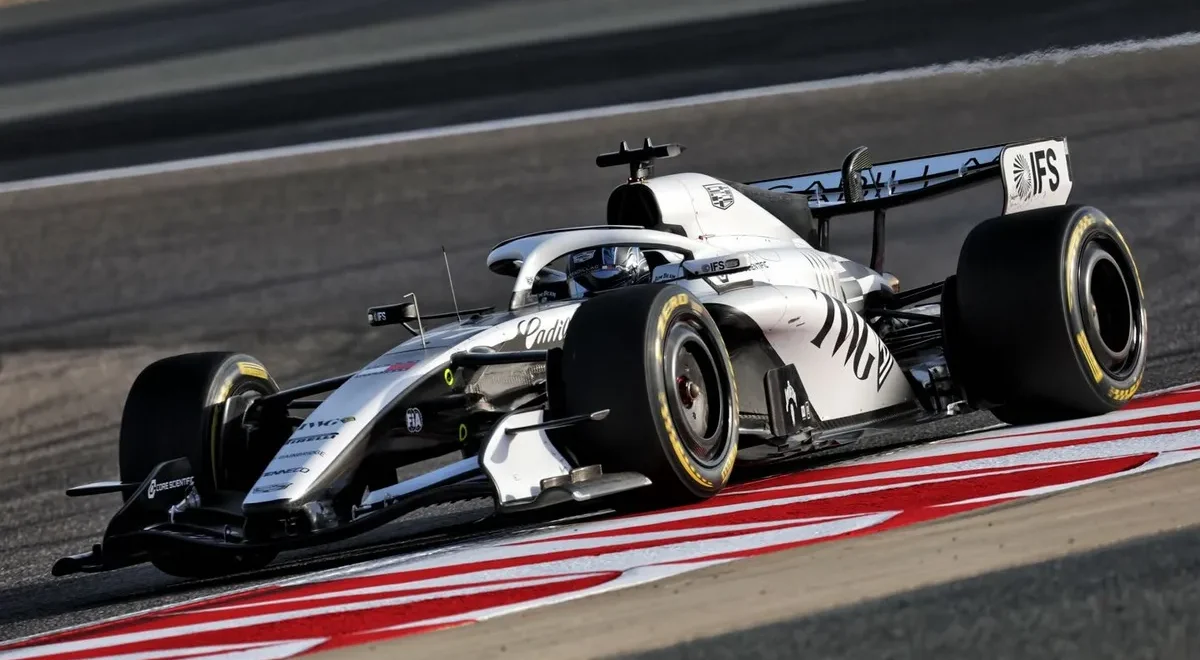
The newly established Cadillac Formula 1 team is tempering its ambitions as it prepares for its inaugural grand prix appearance.
This initiative by the General Motors brand has garnered attention through its carefully crafted strategy, which includes multiple facilities located in both the United States and the United Kingdom, alongside experienced grand prix veterans Sergio Perez and Valtteri Bottas. Initially, the team will utilize Ferrari engines while it develops its own powertrains.
However, Cadillac recognizes the heightened competitiveness in Formula 1 and acknowledges the substantial challenges ahead. Despite the introduction of new technical regulations that could potentially rearrange the current hierarchy, the team remains grounded in its expectations.
When asked about the target for scoring points, CEO Dan Towriss downplayed that objective, stating, “To me, aiming for points feels somewhat arbitrary. My focus is on outperforming other teams on the track and determining how many competitors we can surpass in our first year. That is our primary consideration.”
He further emphasized the importance of the car’s development, asserting, “We have a long-term vision for our team, and our focus will reflect that. Concentrating solely on points from the outset would not only be arbitrary but also indicative of short-sighted thinking. We are committed to achieving sustained success in this sport over time.”
Cadillac made significant strides by conducting its first shakedown of the F1 car on January 16, followed by an impressive 164 laps during the Barcelona test. The team also executed its second and final filming day in Bahrain on February 9, showcasing their early preparation.
In contrast, some established teams were slower to hit the track. For instance, Aston Martin unveiled their car in Barcelona on January 29, while Williams did not participate in the Catalan test and only began testing their new car on February 4.
“Our time in Barcelona was largely focused on shakedown and system testing,” Towriss explained. “Since we are building everything for the first time, including components like the steering column and fuel system, reliability was our main focus. We will begin to assess performance as we gather more data.”
He acknowledged, “I anticipate that we may initially lag in terms of aerodynamics when we reach Melbourne. However, as we accumulate data, we expect rapid development for our car. We are confident in our ability to compete with other teams, but we must see how everything unfolds. There are numerous changes—tyres, chassis, and power units—that will require drivers to adapt their approaches as well.”
Towriss also noted that Cadillac’s potential aerodynamic challenges are compounded by the competitive edge anticipated from Mercedes-powered cars. The German manufacturer is believed to have cleverly navigated the new power unit regulations concerning the internal combustion engine’s compression ratio.
Currently, four teams are utilizing Mercedes powertrains, including the Mercedes works team, reigning champions McLaren, Williams, and Alpine.
“There is considerable discussion among power unit manufacturers,” Towriss remarked. “A consensus exists outside of Mercedes regarding necessary changes, and this dialogue with the FIA will continue. We will have to see how this evolves going into the season.”
He concluded with a note of optimism, stating, “It is generally agreed that we may not witness some of these advantages in 2027, and how the situation will be regulated in 2026 remains to be seen.”