

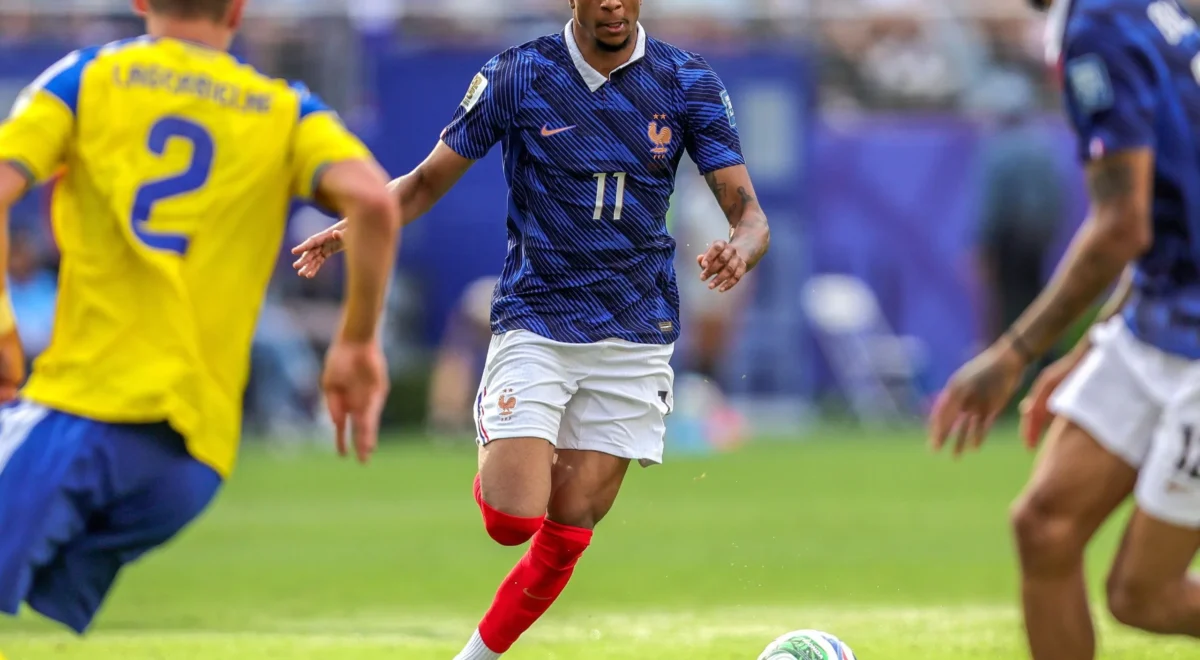

If Michael Olise succeeds at the World Cup, a specific area of a Hayes housing estate will forever be linked to France. This small green space, tucked away among the suburban residences of west London, was where a young Olise developed his football skills alongside his brother, Richard. “Football in these conditions, it’s just freedom,” Olise recently told L’Équipe. “It’s not really learning in the strict sense. It was simply the pleasure of playing football. I just loved it.”
Sean Conlon, who coached Olise during his early years with Old Isleworthians, recalls, “I would go over to his house and he would be practising outside with Richard. That little estate probably really aided him; there weren’t a lot of cars but it had quite a lot of concrete open space and then a small green. He’d just be practising out here all the time, obsessed with football.”
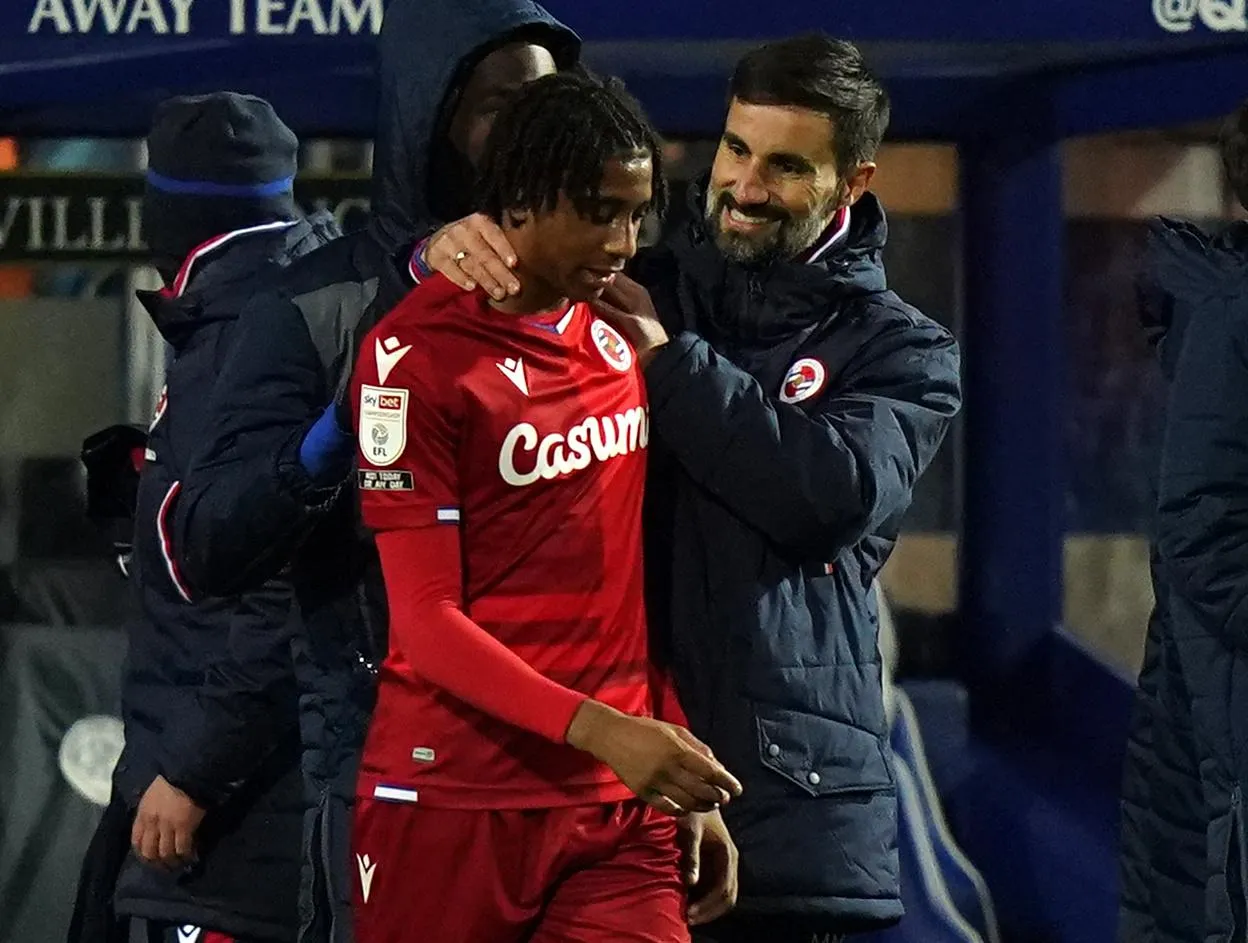
A decade later, Olise found himself at Reading after experiencing rejections from the academies of Chelsea and Manchester City. Brendan Flanagan, the academy scout responsible for his recruitment to the Championship club, reminisced about a notable match he attended.
“We were playing Sparta Prague in the European Under-21 Cup,” Flanagan recounted. “I got there at half‑time. Michael was about 17 and on the bench. I sat in front of [the former Crystal Palace and West Ham player] Hayden Mullins, who used to work for us and who I got on well with. Michael came on with 17 minutes to go. Within five minutes Hayden leaned over to me and said: ‘Who the fuck is that?!’ I just started laughing. And Hayden said: ‘Come on then, tell me, where did you find this one?’ So I explained the story …”
This brings us back to Conlon and that Hayes housing estate. Olise’s narrative is not just about how Chelsea and City overlooked one of the World Cup’s standout players; it also questions why he has yet to represent England despite his English heritage.
“When I first saw him play for Hayes when he was six what stood out was his physical movement,” Conlon reflected. “He glides around the pitch: very graceful, perfect coordination, everything effortless. The way he moves today was how he moved when he was six. That’s something he’s been born with. People say he’s the best player England has ever developed.”
Conlon, who previously coached at Chelsea, noted Olise’s entry into the club’s academy at age nine. His talent was undeniable, leading to City recruiting him as well—he was in the same age group as Cole Palmer and one year behind Phil Foden—but they ultimately released him at 16. He then returned to Conlon, who operates an academy named We Make Footballers. Feeling the pressure to secure a professional club, a contact of Flanagan suggested Olise to Reading.
Flanagan mentioned the initial doubts among some staff at Reading regarding Olise. “There was a lot of scepticism from various members of staff at Reading that he would be a bad egg,” he explained. “[They said]: ‘He’s been released by Chelsea, by Man City. We shouldn’t be bringing him in. He’ll be a problem.’ I said: ‘Look, let’s just get the kid in and make our decision.’”
Conlon supported this view, stating, “All the other scouts were: ‘He’s just come out of Manchester City, he’s just come out of Chelsea, why have they not kept him on?’ They were half and half. They could see him and say: ‘Why are we not taking this talent?’ But Reading were the ones that committed.”
Olise faced the commute from London to Reading for training, but the club arranged a shuttle bus for London-based players to reach the training ground. “On his first day I got a call from him at the station and he was asking: ‘Where do I need to pick the bus up please?’” Flanagan recalled. “I directed him to the shuttle bus, but everything was “I directed him to the shuttle bus but everything was ‘please’ and ‘thank you’ and I thought to myself: ‘This ain’t a bad kid. He’s just a kid who’s a bit misunderstood, different.’ “And we never had a problem with him. He wasn’t ever a bad lad. He was always an intelligent, quiet lad who just expressed himself a bit differently. What wasn’t right for them [City and Chelsea]… well, we’re just little old Reading down the M4. We can work with these kids.” and “He was absolutely unbelievable that day,” and I thought to myself: “Hayden and I shook hands at the end and said: ‘This kid will play for the first team by the end of the season.’”t a bad kid. He’s just a kid who’s a bit misunderstood, different.’
“That Saturday he was on the bench and he made his debut soon after. The manager obviously saw him and thought: ‘Oh my God! This kid is unbelievable.’”
Olise swiftly climbed the ranks to Reading’s under-21s, where Flanagan and Mullins observed him play against Sparta Prague. “I actually come from four countries,” Flanagan stated. “France, Algeria, Nigeria and Great Britain. I consider myself very lucky to possess these four parts, which all enrich me. I’ve developed attachments in all my countries. When I was growing up in London, we regularly visited Algeria, Nigeria and France. My dad always spoke English with me at home, my mum, French.”
A few weeks later, Olise received a call-up to first-team training from then-manager, José Gomes. “We weren’t as attractive a club,”
Despite his exceptional skills, England did not extend an invitation. Olise appreciates the diverse heritage he embodies. His mother, Mina, is French-Algerian, while his father, Vincent, is British-Nigerian. “It’s slightly changed now but back then, for England, generally, you had to come from Chelsea, Manchester City, Manchester United and Arsenal. France reached out to us and we spoke to Michael. I think they were given information that there was a French connection. They were the first one who selected him [for the under-18s] and, even though England came in for him for the under-20s, he was happy where he was.” he shared with the Bayern Munich website last season. “Could I see he would reach the levels that he’s reached?”
As a teenager, he was passed over by England. “I don’t think anyone could. Some kids do look like they might be a Ballon d’Or contender at 16 and then kind of level out. But Michael was on a trajectory that went up and up and up and he still hasn’t levelled off. He just seems to be getting better and better. He’s always had a picture in his head, saw things quicker than anyone else and had the ability to find a way to make the pass. But he’s just gone to another level.” Flanagan explained. “With the under-eights, we say to the kids: ‘One day you’re going to win the World Cup. One day you’re going to win the Champions League. This is why you have to have these standards.’ You preach it and now we’ve actually had someone go and do it.”
During that time, England was undergoing a transformation, with a golden generation of talents emerging from club academies revamped since 2012. Olise’s immediate contemporaries included Palmer, Bukayo Saka, Morgan Rogers, Anthony Gordon, and Noni Madueke, alongside Jude Bellingham and Germany’s Jamal Musiala, who were in the age group below. The Football Association must find it frustrating that the standout creative player of the World Cup was born in England yet is representing France. Olise has recorded five assists, the highest of any player in the tournament.
“I’m going to be sat on the fence,” Flanagan pondered. “Obviously I want Michael to do well. But obviously I want England to win as well. So I probably won’t watch the game and stay out of the way.”
“It’s crazy,” Conlon added. “With the under-eights, we say to the kids: ‘One day you’re going to win the World Cup. One day you’re going to win the Champions League. This is why you have to have these standards.’ You preach it, and now we’ve actually had someone go and do it.”
This situation presents a small dilemma for Olise’s childhood mentors. What happens if England faces France in the World Cup final? “I’m going to be sat on the fence,” Flanagan admitted. “Obviously, I want Michael to do well. But obviously, I want England to win as well. So I probably won’t watch the game and stay out of the way.”
- France
- World Cup 2026
- World Cup
- Reading
- features