


FIFA’s refereeing chief Pierluigi Collina has defended the officiating during Argentina’s dramatic 3-2 win over Egypt in the World Cup round of 16, rejecting claims of bias and asserting that match officials acted independently.
In an interview released on inside.fifa.com on Thursday, Collina acknowledged that criticism of referees is inherent in football, but he condemned the questioning of the officials’ integrity following Egypt’s complaints post-defeat.
“Constructive discussion about decisions will always be part of football, but unfounded allegations have no place in our sport,” Collina stated. “Nobody can question the integrity of the Fifa World Cup match officials… Nobody can claim that Fifa refereeing can be influenced by anyone, not even by the Fifa president (Gianni Infantino).”
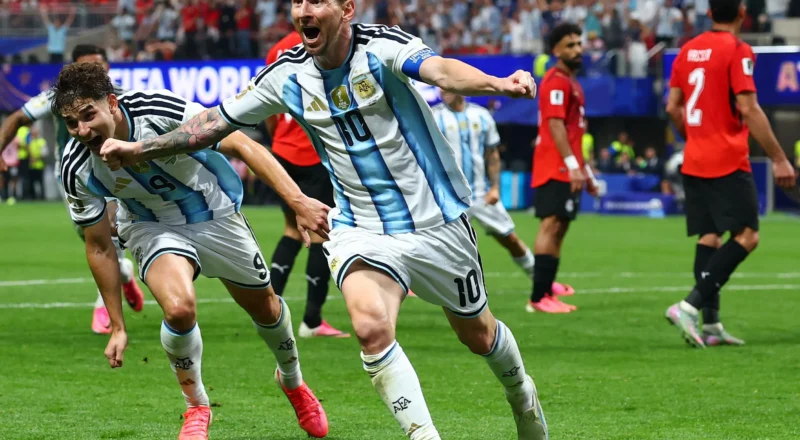
After being eliminated from the tournament, Egypt asserted that they had been unfairly treated as Argentina made a comeback from a 2-0 deficit to secure victory with a last-minute goal from Enzo Fernandez.
Coach Hossam Hassan suggested after the match that there might have been pressure on the referees to favor Argentina in the tournament. The Egyptian Football Association expressed that “several key incidents raised serious concerns and left profound questions about the consistency and fairness of decisions that directly influenced the course of the game.”
Egypt’s contention was that Mostafa Zico’s second-half goal was wrongly disallowed for what they deemed a non-existent foul in the build-up. They were also outraged that a challenge on Mohamed Salah went unpunished just before Argentina initiated the play that led to the winning goal.
Collina defended the VAR’s decision to overturn Zico’s goal, clarifying that a foul by Marwan Attia on Argentina’s Lisandro Martinez was correctly identified during the attacking phase. “We believe that a foul is a foul,” he remarked. “Regardless of whether the foul appears’obvious’, if the referee did not see it on the field of play, the VAR can intervene.”
Additionally, Collina supported the decision not to award Egypt a penalty prior to Argentina’s winning goal, indicating that both the referee and VAR assessed the contact between Salah and Julian Alvarez as “Stepping on an opponent’s foot is a foul, whereas a defender who touches the ball first and then makes normal football contact has not committed a foul,” He elaborated, “Stepping on an opponent’s foot is a foul, whereas a defender who touches the ball first and then makes normal football contact has not committed a foul.”
As the Flight of the Conchords once noted: “It’s business time.”
The extended tournament has felt unnecessarily prolonged, yet it finally seems that the competition is gaining momentum. Some major teams have been eliminated, others have faced close calls, and now only eight elite teams remain.
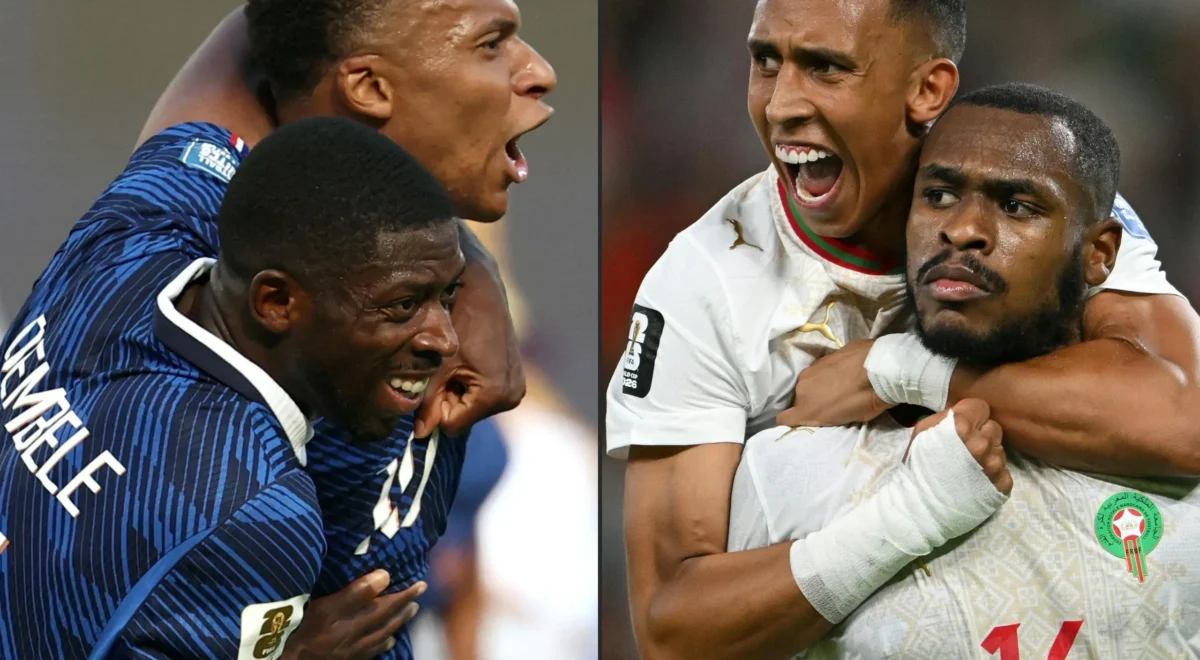
The quarter-final match between France and Morocco is poised to be an exciting kickoff. Didier Deschamps’s team has consistently demonstrated superiority throughout the tournament, even though they faced challenges defeating a struggling Paraguay squad.
Morocco, having secured a comfortable victory against Canada, now faces a significant step up in competition. This comes after they eliminated the Netherlands, and they will be keen to make a statement against the French, who previously defeated them in the semi-finals four years ago. During their journey to the final four, Morocco took out both Spain and Portugal, indicating they will not be intimidated this time around.
Much more will unfold in the USA, and we will keep you updated.
- World Cup 2026
- World Cup
- US sports