

UEFA is poised to obstruct the re-entry of Russian teams into international football following the International Olympic Committee’s (IOC) recent decision to provisionally lift Russia’s suspension from global events.
FIFA has signaled that it will reassess its ban on Russian teams, which was imposed after the onset of the full-scale invasion of Ukraine four years ago. On Tuesday, FIFA stated that it would “analyse the decision before deciding on next steps” creating the potential for another contentious interaction with UEFA.
While UEFA has not issued an official statement, sources from various national associations indicate that the chances of Russian teams being reinstated in European competitions, and consequently in the World Cup, are slim. Although the World Cup is organized by FIFA, the qualification process in Europe falls under UEFA’s jurisdiction. Major western European football associations, particularly those from England, Germany, and France, remain firmly opposed to allowing Russia back.
In the past, UEFA had to abandon efforts to reintroduce Russian teams to youth competitions due to backlash from at least a dozen member associations, and it is keen to avoid a repeat of that situation. UEFA President Aleksander Ceferin, who is up for re-election next year, is unlikely to take actions that could alienate significant segments of his voter base.
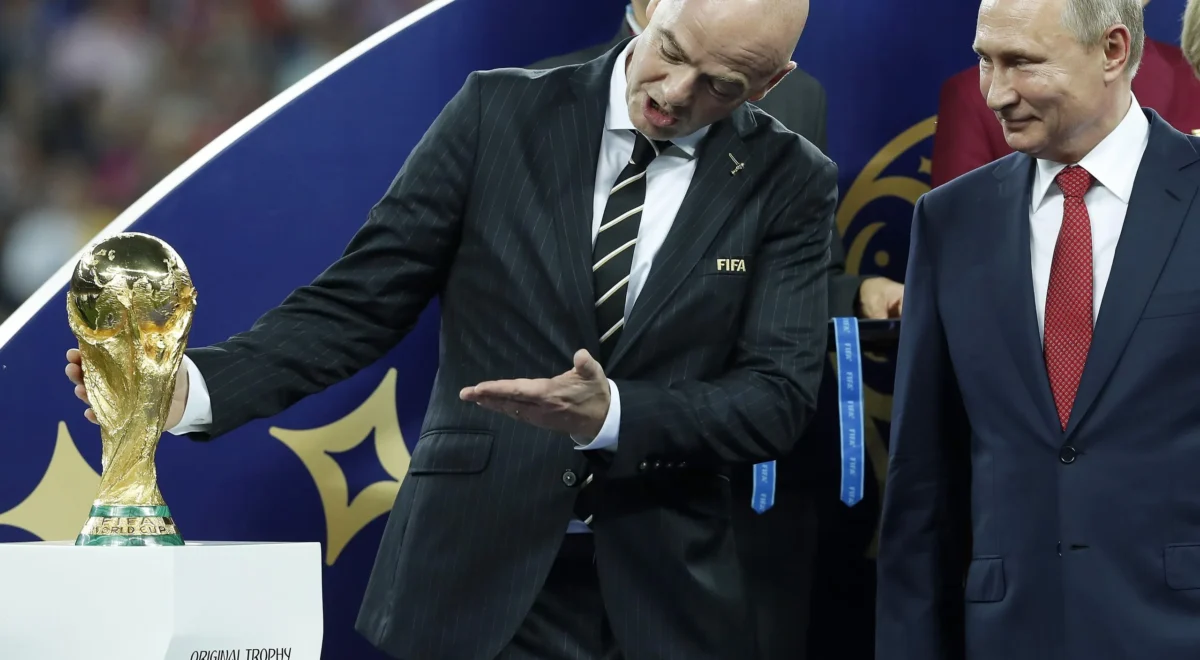
In contrast, FIFA appears more amenable to Russia’s return. FIFA President Gianni Infantino has expressed a willingness to welcome Russian teams back into international competition. Infantino’s strong ties with Vladimir Putin, formed during the organization of the 2018 World Cup in Russia, have influenced this stance, as has his facilitation of a Russian under-15 boys’ team participating in a youth World Cup in Azerbaijan this October.
Infantino remarked to Sky News in February that FIFA would explore ways to reintegrate Russian teams, stating, “This ban has not achieved anything, it has just created more frustration and hatred,”
Even if FIFA were to make the bold move of allowing Russia to qualify for the World Cup through a different confederation—similar to Israel’s situation in Europe—this might not resolve the issue. European teams could potentially boycott the World Cup if Russia qualified.
The ongoing Russia situation threatens to create significant tension between UEFA and FIFA, two of the most influential organizations in football. Tensions flared this week when FIFA’s disciplinary committee took the extraordinary step of lifting Folarin Balogun’s suspension before the USA’s last-16 World Cup match against Belgium. UEFA accused FIFA of crossing “a red line” that jeopardized the integrity of the World Cup, prompting FIFA to counter with claims of hypocrisy.
The IOC’s recent decision to lift the suspension of the Russian Olympic Committee, in effect since October 2023, could enable Russian athletes to participate in the 2028 Los Angeles Games. Only 27 Russian athletes are set to compete in the upcoming 2024 Summer Games in Paris and the 2026 Milano Cortina Winter Games due to a vetting process aimed at excluding those who have publicly supported the war in Ukraine. With the lifting of the suspension, however, several hundred more Russian athletes could potentially participate in the LA Games.
The IOC has indicated that individual sports federations have the authority to make their own determinations regarding Russian participation. However, there is no chance for Russian teams to compete in football at the 2028 Games since qualification tournaments have already commenced. UEFA has declined to comment on the evolving situation.