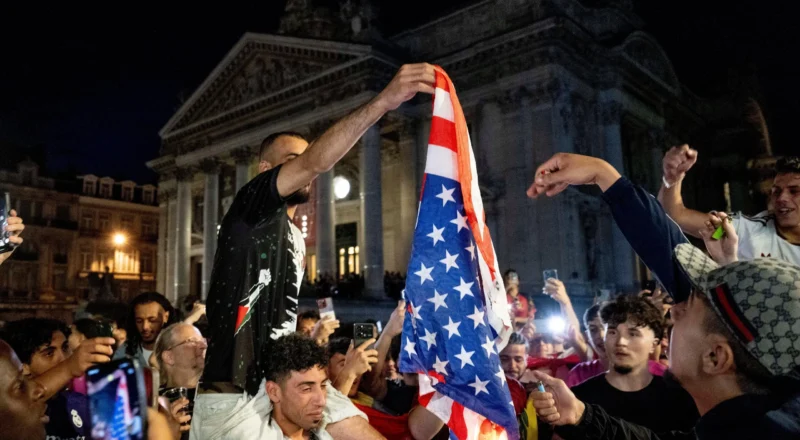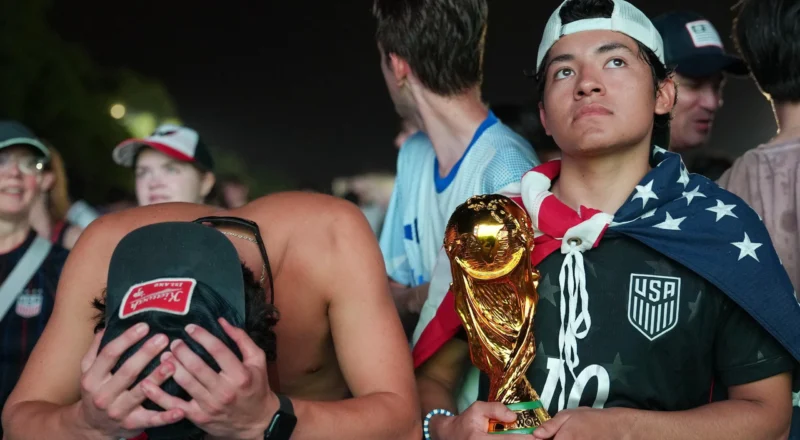


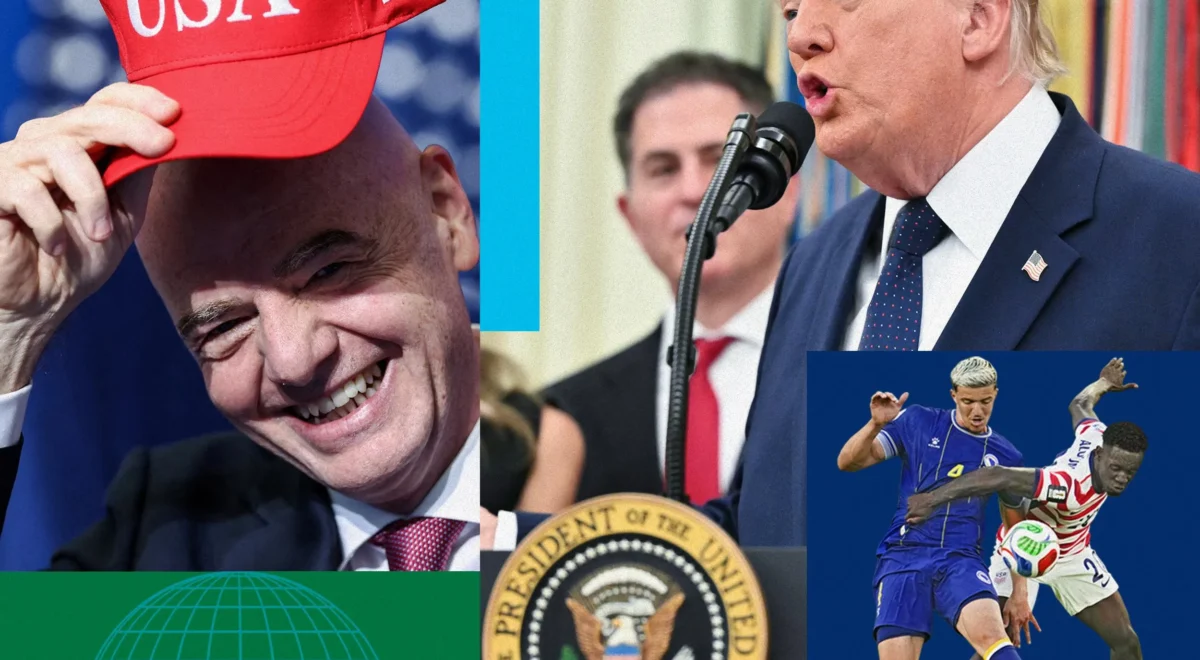
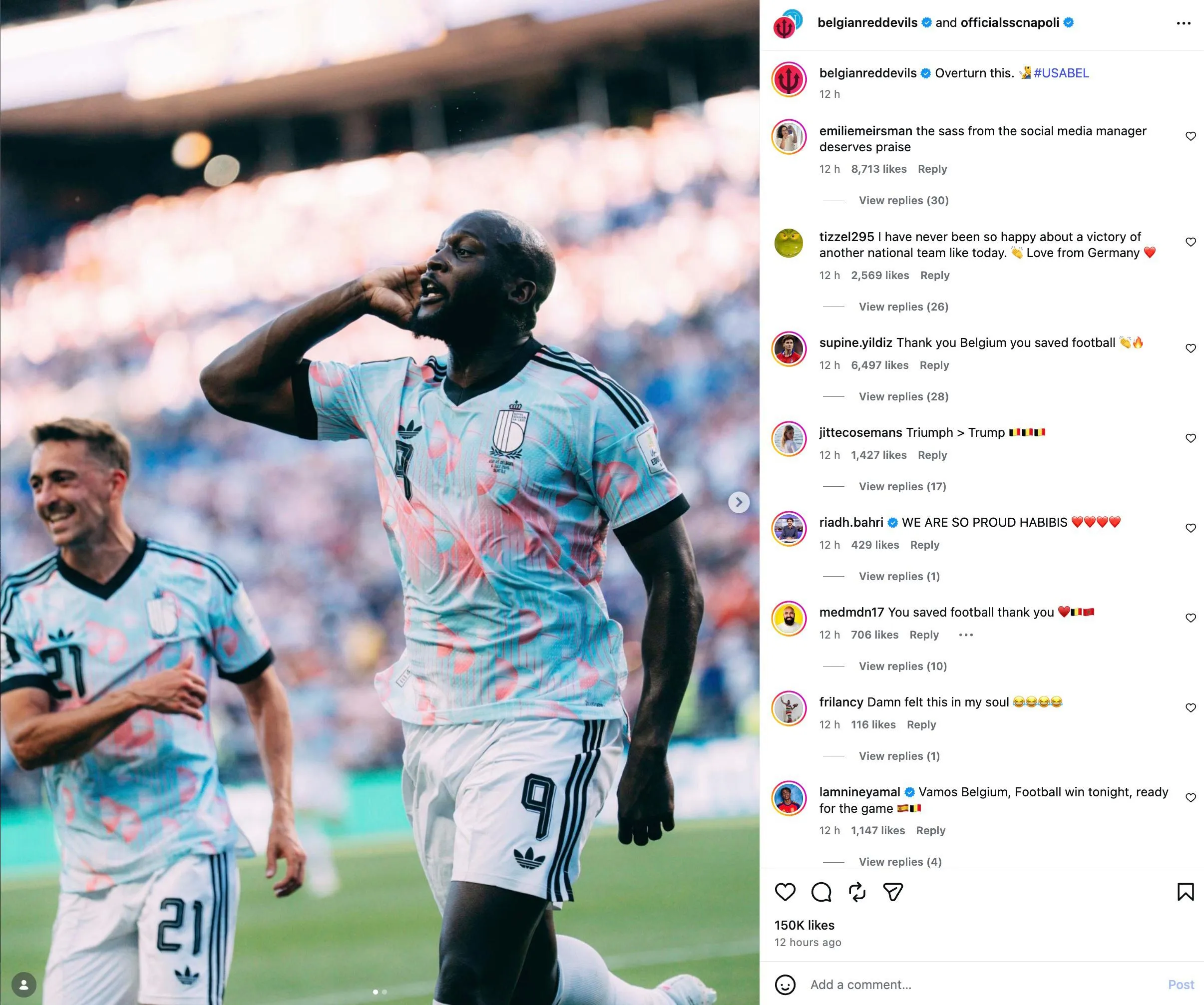
The recent World Cup match saw the USA suffer a crushing defeat, with a score of 4-1 against Belgium, prompting widespread reactions. Gianni Infantino’s assertion that football unites the world seems to hold true, particularly as many observers found satisfaction in the USA’s swift exit from the tournament, which coincided with Donald Trump’s controversial intervention.
This sentiment resonated globally after the USA’s lackluster performance in Seattle, overshadowed by Belgium’s assertive play. The local humor surrounding the defeat was evident, with clever jabs at the USA’s shortcomings compared to Belgium’s storied football culture, including comments on the respective merits of mayonnaise and sporting ethics.
Much of the domestic discourse has centered on Trump’s involvement, specifically the questionable implications of his alleged influence on Folarin Balogun’s red card suspension. The question arises: did Trump’s meddling inadvertently hinder the USA’s chances on the field?
One could liken this situation to a phenomenon I term the Trump Exposed Reactor Core Phenomenon, illustrating how his influence tends to destabilize everything he touches while he remains a steadfast presence. The realities of the match were straightforward; the USA team, inferior in skill and strategy, faltered against a more capable Belgian side. Even a diminished Romelu Lukaku managed to outshine the American defense.
While Trump’s presence is undeniable, it is vital to shift focus back to the core issue: the actions of FIFA and Infantino, particularly in light of an unfolding scandal that calls their governance into question.
Dictators may appear untouchable as they wield power, but this situation could mark a pivotal moment in Infantino’s leadership, revealing cracks in his facade as he oversteps boundaries.
Trump’s inability to resist intervening is noteworthy; during the World Cup’s initial weeks, he remained surprisingly quiet, attending no games and making no significant statements. However, he soon re-emerged, reminiscent of an overly eager real estate agent, hovering around the tournament and seeking a role in the spotlight.
Despite his initial restraint, Trump soon treated the World Cup as his personal stage, leading to potential repercussions. The USA’s commendable achievement in reaching the knockout stage has been muddied by these controversies, while Infantino’s leadership is increasingly scrutinized as it appears to facilitate such interference.
Trump’s actions brought a level of audacity to the forefront, as he inadvertently exposed his attempts to manipulate the situation through social media. His first appearance at the tournament only added to the chaos, as he grappled with the nuances of the red card while remaining comically unaware of the rules.
This chaotic environment underscores Trump’s tendency to create disorder, a stark contrast to the more serious implications for FIFA and its governance. Infantino must be held accountable for normalizing such interventions, which jeopardize the integrity of the sport.
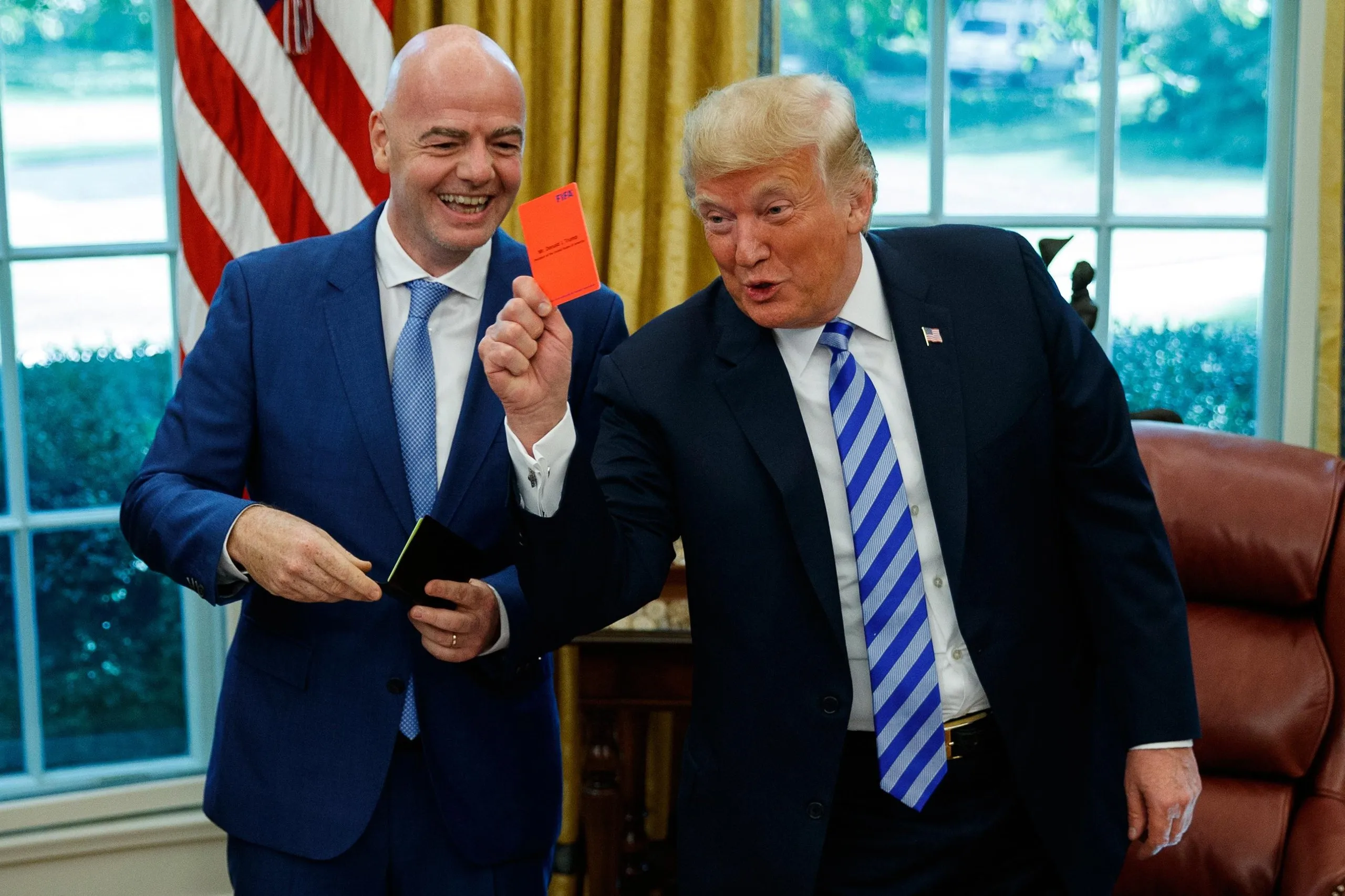
Reports indicate that Trump contacted Infantino after a match involving Bosnia and Herzegovina, during which Balogun received his red card. Shortly thereafter, FIFA’s rules regarding suspensions were bypassed, marking a significant deviation from standard procedure.
It has been suggested that the Trump administration sought to challenge these decisions legally, with advisors combing through regulations for potential loopholes. This approach reflects Trump’s playbook: when faced with unfavorable circumstances, undermine the legitimacy of the facts.
Additionally, detractors have questioned the referee’s credibility based on flimsy arguments. What are the implications of this behavior? Are we witnessing a scenario where Trump supporters storm FIFA headquarters in Zurich, demanding changes?
In response to the outcry, Infantino has assured the public of the independence of FIFA’s disciplinary panels, emphasizing the importance of due process and legal integrity.
However, the facts remain troubling. Balogun’s red card stands, and for the first time, a player receiving a direct red during the tournament will not miss the following match.
For those outside the football culture, the detrimental impact of this scenario on the game’s integrity is hard to convey. It appears to manipulate outcomes, eroding the trust in a spectacle that has long captivated audiences worldwide.
Within this context, lives, careers, and substantial financial investments rely on the credibility of these results. Yet, what we witness now feels more like scripted entertainment rather than the authentic game that once inspired joy and unity.
The audacity and lack of accountability required to reach this stage are astonishing. The dynamics between Trump and Infantino raise questions about who will emerge unscathed from this situation.
For Trump, football is a trivial matter. Yet, if there were any sanity within FIFA, Infantino would face significant repercussions for allowing the sport to be entangled in such controversies. Was he naive enough to believe that handing power to someone like Trump would yield positive outcomes?
The broader implications for Infantino’s future remain uncertain as he prepares for re-election next year. While FIFA’s voting procedures are typically transactional, concerns are growing within the organization regarding Infantino’s self-aggrandizing behavior and the ethical ramifications of his actions.
The Norwegian federation has already voiced its discontent regarding Trump’s dubious peace prize, and others within FIFA are beginning to question Infantino’s approach to leadership.
As Infantino’s administration becomes increasingly defined by the tension between regulatory responsibilities and its role as an entertainment entity, he continues to project an image of a benevolent custodian of the game.
Perhaps most disappointing is the realization of lost opportunities — envisioning how this influence could have been wielded for greater good in more capable hands. Yet there is also a sense of resilience among referees, who have maintained impartiality in their decision-making.
Ultimately, the World Cup, though touched by Trump’s presence, has managed to maintain its essence, showcasing the shared joy and identity that transcends individual control. The current outrage signals a crucial moment, reminding us that the world still values the sport and that FIFA can embody something greater than this tumultuous chapter.