

The tale of Garrincha’s red card during the 1962 World Cup is well-known among soccer enthusiasts. The legendary Brazilian player was dismissed in the semifinals for striking an opponent, but at that time, FIFA did not enforce an automatic one-match suspension. Consequently, a disciplinary committee met the following day to determine Garrincha’s fate for the final.
According to the story, the assistant referee who witnessed the incident was bribed and vanished, while the president of Chile, the tournament’s host, contacted FIFA to advocate against any further suspension, aiming to keep one of the tournament’s star players in the game. Ultimately, Garrincha faced no consequences, and days later, Brazil celebrated their second World Cup title.
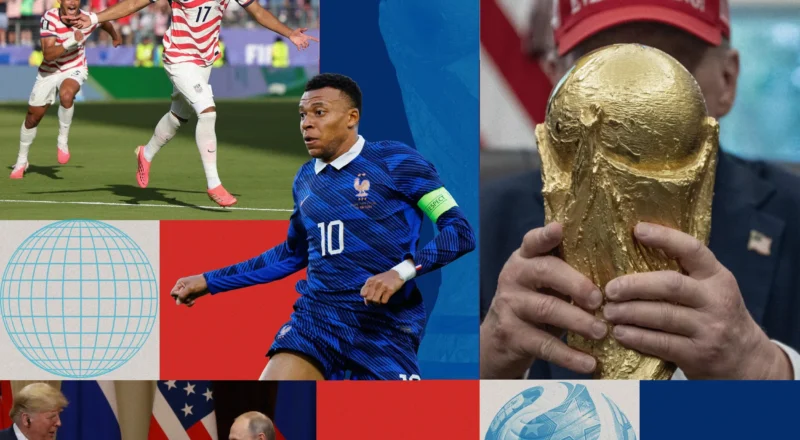
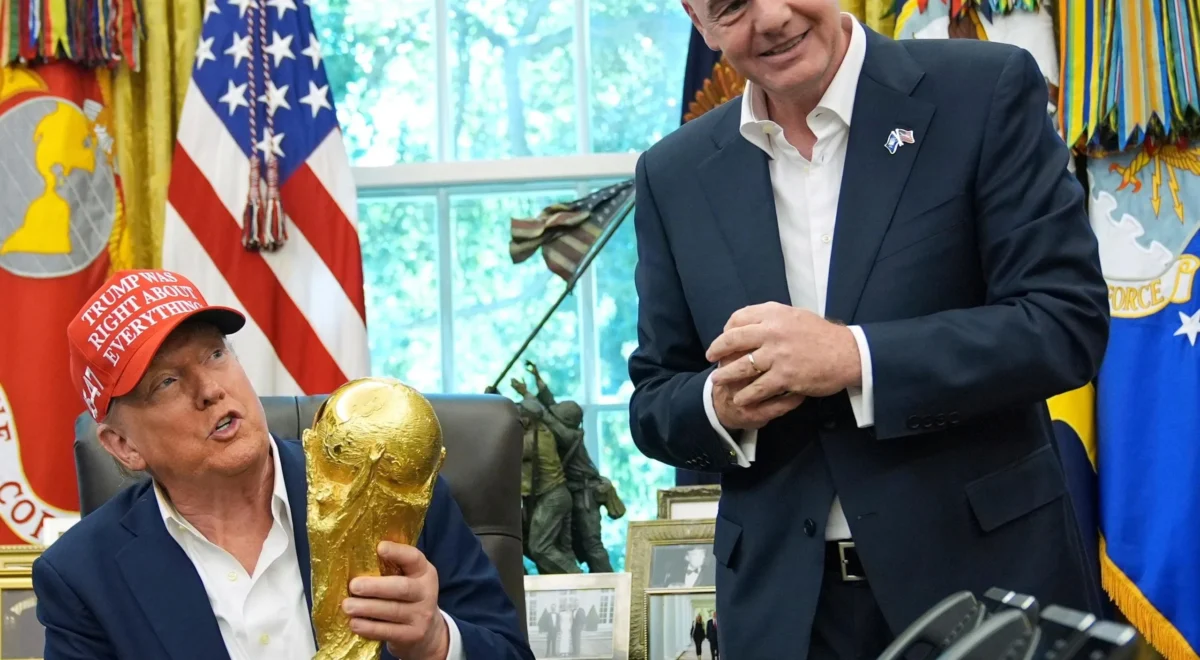
This seemingly ancient narrative echoes in recent events. Ahead of the US men’s national team’s knockout match against Belgium, Donald Trump intervened by making several calls to Gianni Infantino, seeking to overturn the one-match suspension imposed on US striker Folarin Balogun.
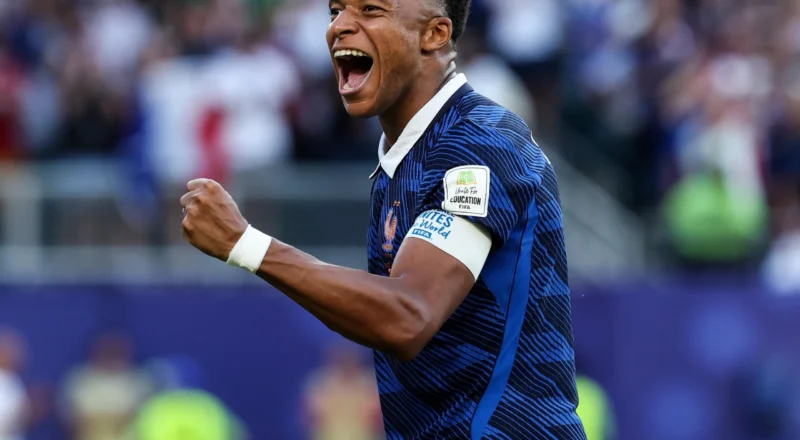
Balogun received a red card during the USMNT’s 2-0 win over Bosnia and Herzegovina, having accidentally stepped on an opponent’s ankle while competing for possession. The decision was controversial and has been heavily debated, with many believing the US was unfairly penalized by the video review. Both Balogun and head coach Mauricio Pochettino expressed their frustration over the ejection but had begun to accept the suspension. While US fans were upset, many had come to terms with facing Belgium on Monday without their key striker.
It was then that Trump stepped in. The US Soccer Federation was already lobbying for Balogun’s suspension to be lifted, and soon after, FIFA announced that his ban would be postponed until after the tournament. While FIFA had previously done the same for a select few players, including Cristiano Ronaldo, such a move during the World Cup itself is unprecedented.
This development has sparked a blend of joy and outrage. Many US supporters are understandably thrilled, as is Pochettino, who expressed his gratitude on Sunday. Conversely, Belgium’s head coach Rudi Garcia reacted with incredulity, remarking that he was unaware April Fools’ Day was in July. The Belgian federation has indicated it is exploring legal options.
FIFA has provided a vague explanation, citing a specific article in its bylaws that permits this decision. When questioned about Trump’s involvement, FIFA officials maintained that the integrity of their disciplinary processes ensures that external influences cannot sway outcomes.
Asking the public to believe that FIFA remains unaffected by Trump’s actions is unrealistic. It is akin to claiming that Trump earned his “I think that’s a big mistake by Fifa,” purely on merit. Infantino and Trump have cultivated a mutually beneficial relationship, where Trump receives the adulation he desires, while Infantino gains access to one of FIFA’s most lucrative markets.
What Trump fails to grasp, or perhaps disregards, is that his interference has not benefitted American soccer; instead, it has raised questions about fairness.
The USMNT has reached the knockout stage based on their own performance, showcasing three stellar games and one mediocre outing. Balogun has arguably been the team’s standout player during this journey.
Nonetheless, even without the striker, analysts and bookmakers viewed the US as capable of defeating Belgium. The perception of having been granted an unfair advantage—an accurate assessment—casts a shadow over their potential success. This sentiment resonates not only in the United States but also globally, where Trump embodies a long-standing stereotype of Americans expecting special treatment.
This situation is regrettable for the American audience, many of whom have vehemently opposed the notion that the US is a second-rate soccer nation lacking talent and prestige. The team has fought hard at this World Cup to challenge that stereotype, but a victory on Monday may be seen as a result of FIFA’s manipulations.
Norway’s head coach Ståle Solbakken shares a similar viewpoint, suggesting that a win would carry an asterisk.
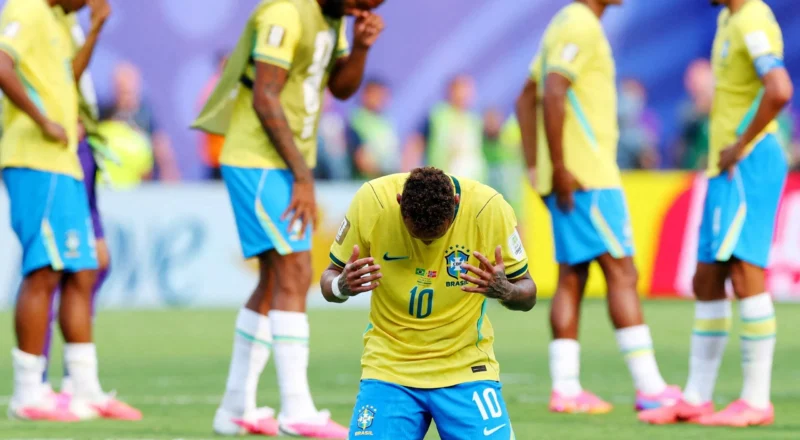
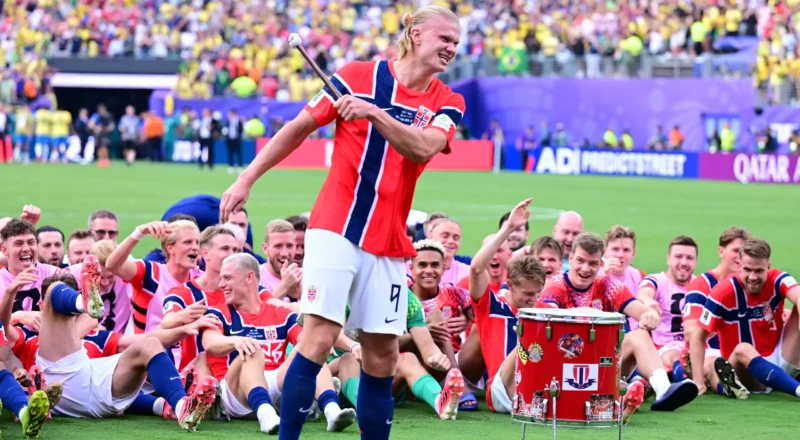
“Bad, bad, bad, bad, bad decision. I feel sorry for the United States, because even if they win, the game will always have this bad thing about it. Not good for the sport. Bad decision by Fifa.” he stated after his team’s surprising 2-0 win against Brazil. “Bad, bad, bad, bad, bad decision. I feel sorry for the United States because even if they win, the game will always have this bad thing about it. Not good for the sport. Bad decision by FIFA.”
Trump’s involvement also tarnishes what has largely been a successful World Cup thus far. Various issues arose prior to the tournament, including ticket pricing, visa challenges, logistical and infrastructure concerns, and the potential presence of immigration enforcement at matches. Some advocated for relocating the tournament, and while certain issues were indeed problematic—illustrated by the treatment of the Iranian national team—the overall perception of the event has been largely positive.
Now, Trump has engaged in a quintessentially American act: exerting undue and unwelcome influence to achieve his objectives. On Sunday, he took to social media to celebrate Balogun’s reinstatement, thanking FIFA for rectifying what he termed a “grave injustice.”
However, he may not realize that he has inflicted a different injustice—one that could prove far more challenging to amend.