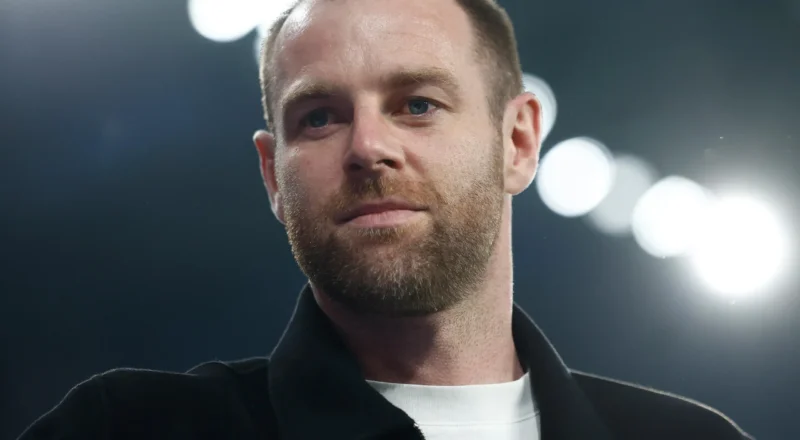


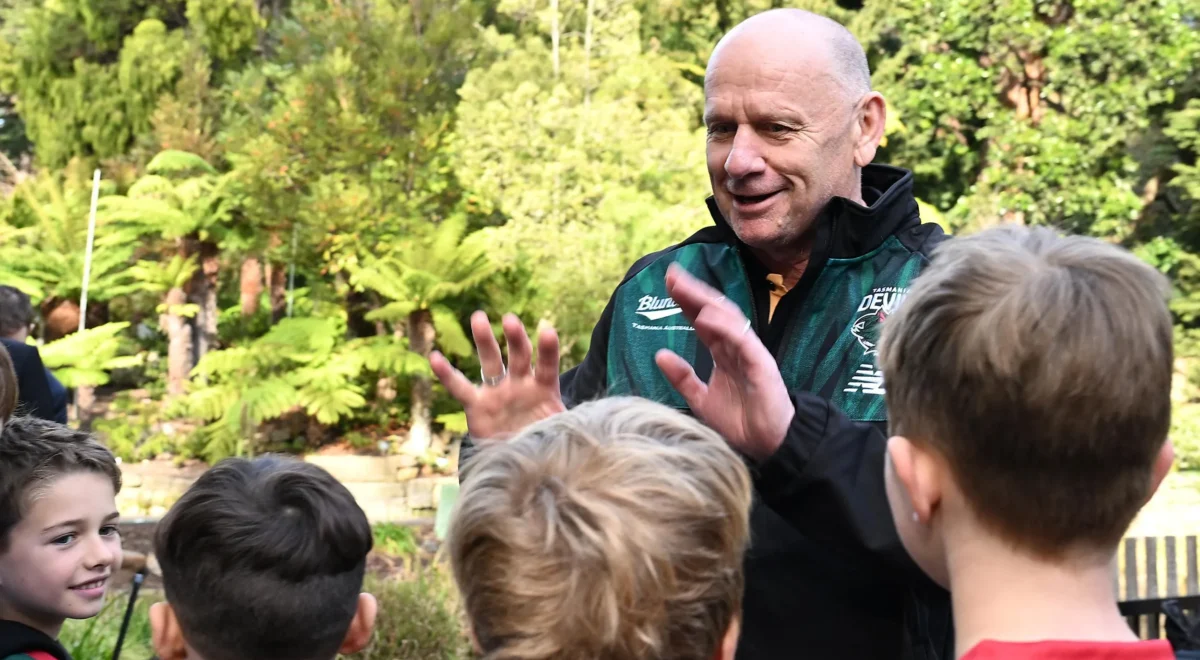
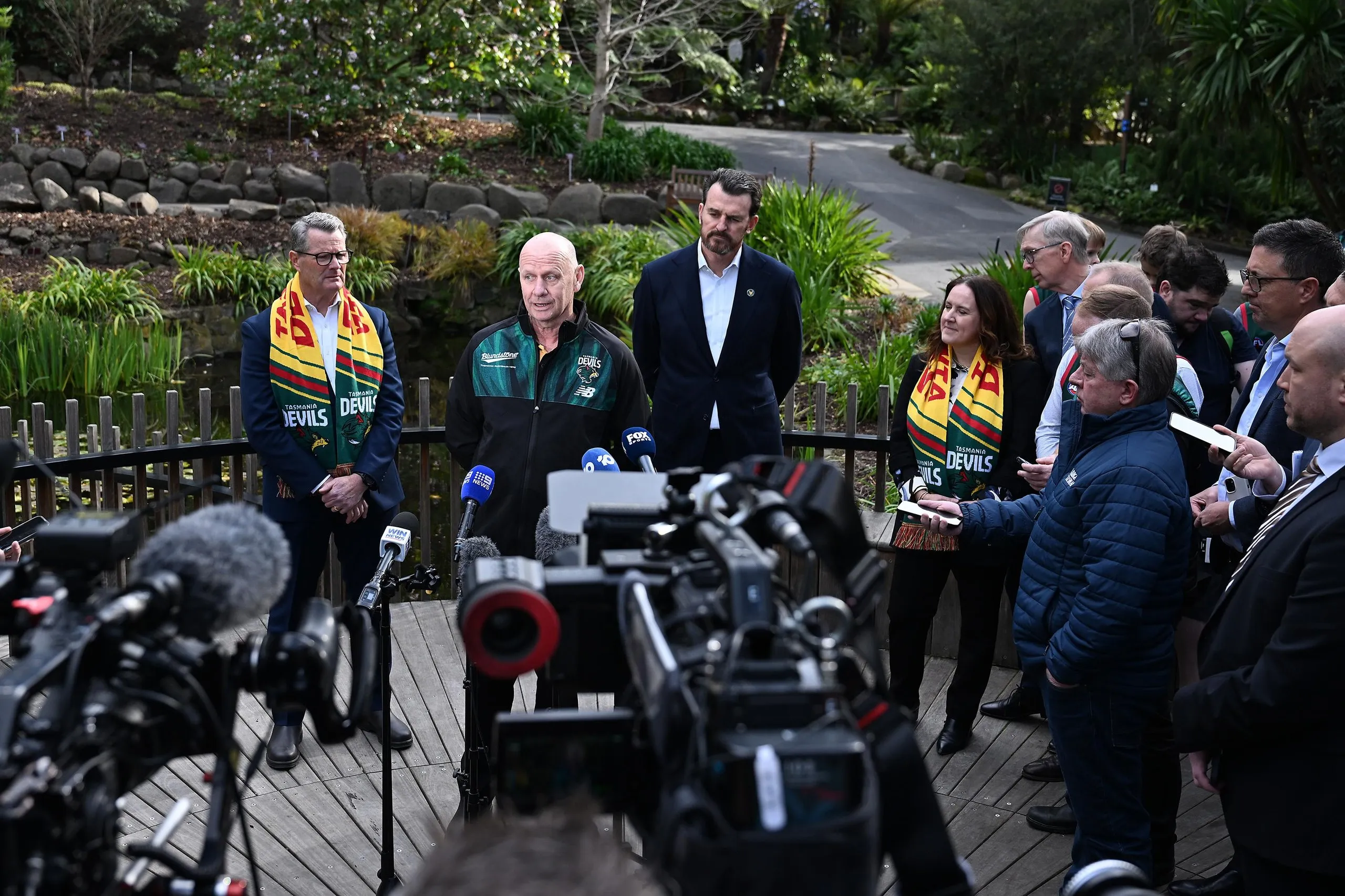
Ken Hinkley was clearly in his element as he engaged with the media at the Royal Tasmanian Botanical Gardens. Displaying a confident demeanor, he quickly adopted the local vernacular, emphasizing community spirit and unity with phrases like “I don’t know too much else.” and “us against the mainland.” Following a meticulously scripted transition from Port Adelaide, he impressed many during his brief media appearances. Yet, he was eager to dive back into the coaching world.
Evaluating Hinkley’s Selection as Tasmania’s Coach
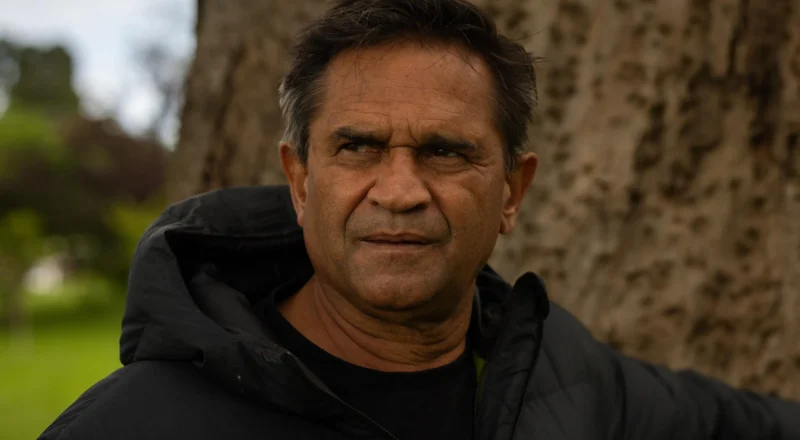
Examining Hinkley’s selection as Tasmania’s inaugural coach requires considering those who were overlooked. Nathan Buckley seemed the early frontrunner, yet he perhaps lacked the persuasive flair to charm stakeholders, as noted by Devils CEO Brendon Gale, who mentioned the need to “spruik the gospel.” Meanwhile, John Longmire, who has led his team to five grand finals, enjoys a comfortable position at the Sydney Swans and appears unhurried compared to his past. Both Buckley and Hinkley seemed more inclined to uproot their lives and embark on the journey of building a new team.
Hinkley’s Coaching Record and Community Connection
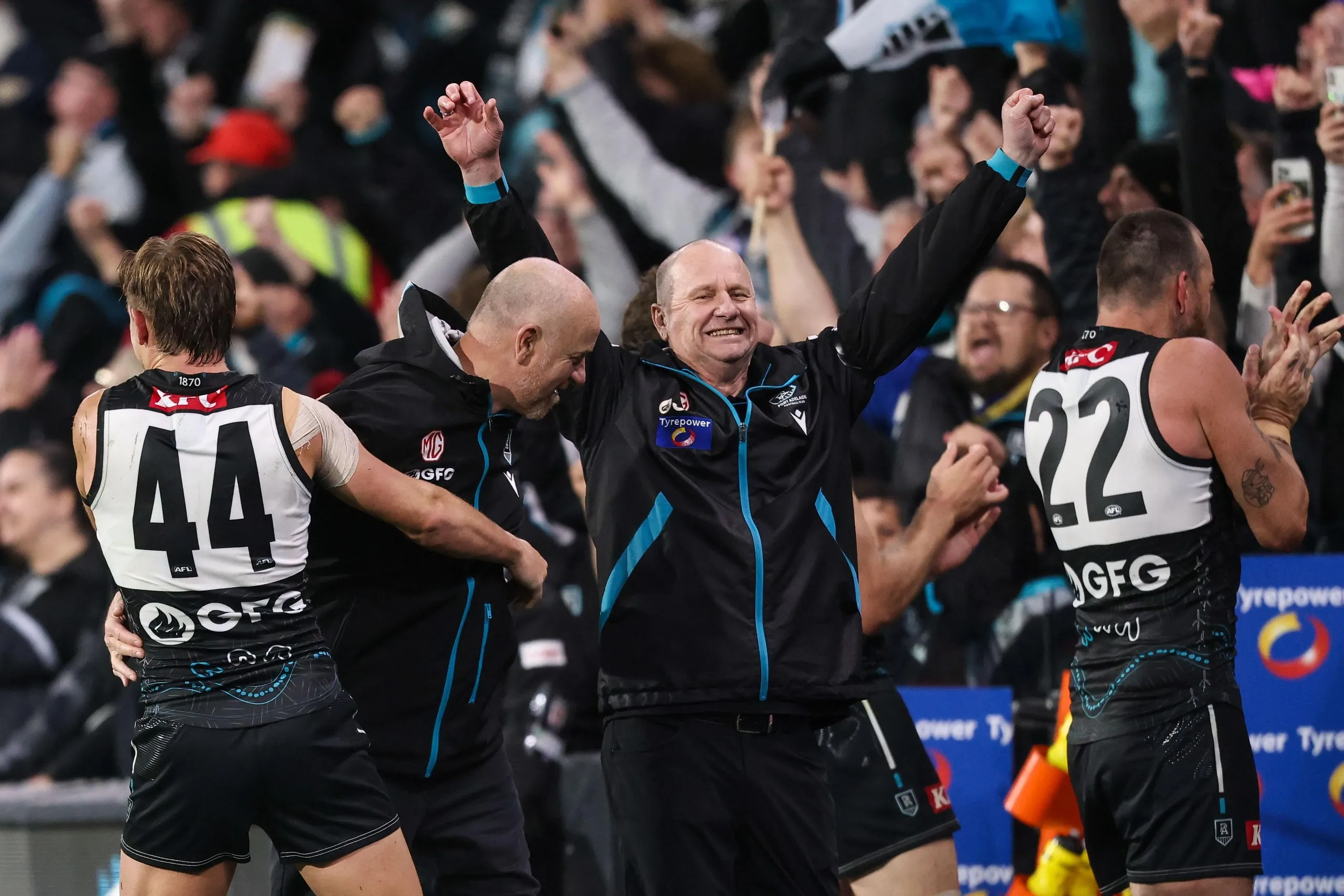
The announcement of Hinkley’s appointment felt like a celebration, with numerous references to his role as a father figure and master connector. These points are undoubtedly valid. However, his coaching record has faced scrutiny over the years, particularly from Port supporters. When he joined Port, the team was struggling, with only eight wins in their previous 44 matches. Hinkley revitalized the club, achieving nearly a 60% win rate. He inspired many players to exceed their perceived capabilities. Yet, he never quite reached the pinnacle of success, hindered partly by his own inflexibility and partly by external circumstances. His teams often fell short due to a lack of crucial elements—a stroke of luck, an additional key player, or a more adaptable strategy. In critical matches, formidable opponents like Clarkson, Hardwick, or Beveridge always seemed to exploit their weaknesses.
Known for his attacking style, Hinkley epitomized the philosophy of his former coach Malcolm Blight, who encouraged players to trust their instincts and skills. This approach, while exhilarating, sometimes worked against him in high-stakes games. His teams were known for their aggressive play and emotional intensity, making them relatively easy to scout. The closest they came to success was a harrowing, weather-soaked preliminary final loss to Richmond in 2020. The following year, as favorites against the Western Bulldogs, they faltered within the first ten minutes.
Despite these challenges, Hinkley’s past experiences do not disqualify him from the Tasmania position. The role calls for someone capable of winning over the local community, a feat he accomplished in a matter of minutes. It requires fostering a siege mentality, an aspect the Gold Coast Suns have struggled to cultivate. Moreover, it demands a strong relationship with young players, identifying, nurturing, and retaining talent. The coach must sell a compelling narrative and purpose, not only to the players but also to managers, parents, partners, and the entire island community. Hinkley has proven to be a persuasive figure in that respect.
Challenges Ahead for Hinkley in Tasmania
When Hinkley expressed his desire to coach, Blight advised him to start with the least successful country team to gauge his commitment. This new role is a significant leap from that initial challenge. With generous draft concessions and the chance to coach in a state where football holds great significance, he faces a daunting task ahead. The training and administration facility will not be ready by the start of the 2028 preseason. Additionally, Tasmania’s political landscape is often unpredictable, and uncertainty looms over the stadium project, its financing, and the state’s ability to support it.
Currently, the coaching market is favorable for prospective teams, with three former premiership coaches available. Buckley, who led his team to a grand final and a preliminary final, is also a candidate. A strong pool of assistants is vying for various roles, including James Hird, who stands apart from the rest. Each club has distinct needs—Essendon seeks a familiar face, Carlton aims to avoid past mistakes, while Richmond and North Melbourne may eventually seek someone to build on their rebuilding efforts.
Tasmania, however, has its own unique requirements. “I’m a football coach,” Hinkley told Gale during their initial meeting. “I don’t know too much else.” He may have underestimated his own capabilities, and both understood that this position demands much more than just coaching.
- This is an extract from the free weekly AFL email, From the Pocket. For the full version, visit this page and follow the instructions.