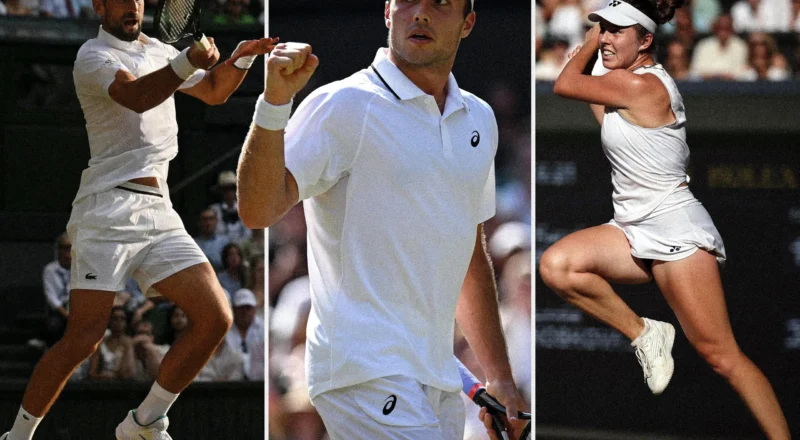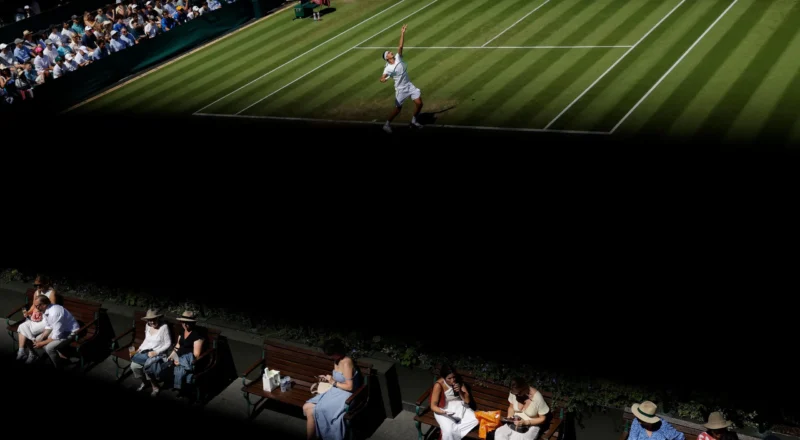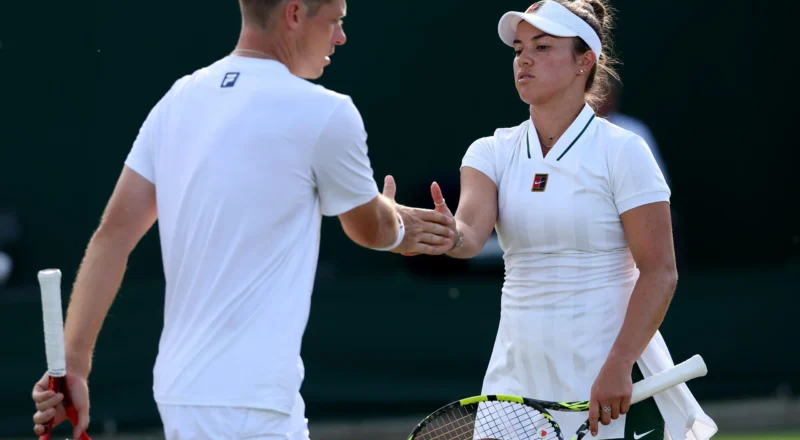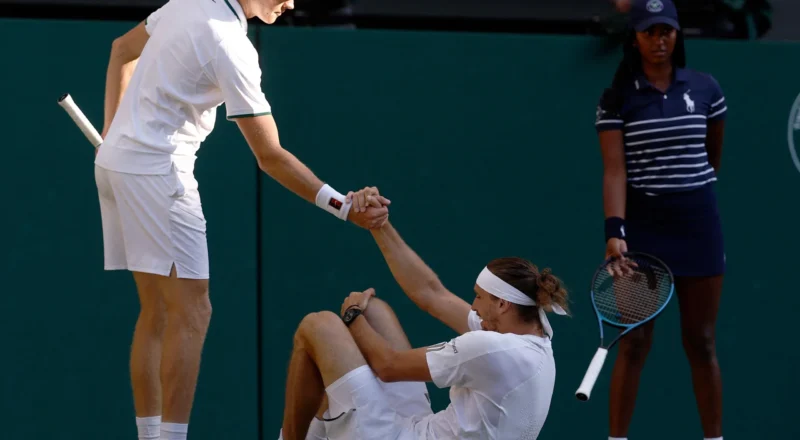


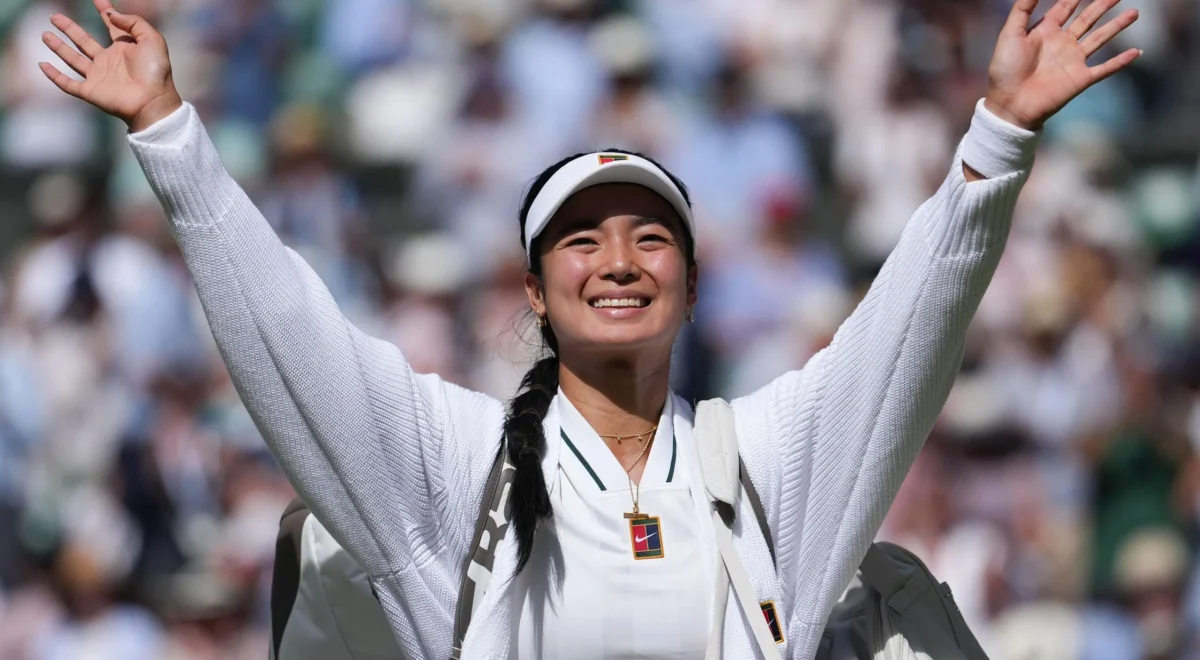
During the initial week of Wimbledon, long lines formed as fans eagerly awaited to witness one of the 32 second-round matches. Afterward, spectators crowded the exit of Court 3 so tightly that two men in suits and panama hats struggled to create a path. Many might have expected to see a former grand slam champion or a prominent British player like Katie Boulter, but the figure that emerged, signing autographs and balls for adoring fans, was 21-year-old Filipino sensation Alexandra Eala.
Eala’s remarkable journey at Wimbledon captured attention. She has already made history as the highest-ranked Filipino player ever, and after her victory on Court 3, she stunned defending champion Iga Swiatek in straight sets on Centre Court. This marked her deepest run in a grand slam before being eliminated by Jasmine Paolini in the fourth round. Eala is now highlighted as a key player for September’s WTA 500 Singapore Open and appears on promotional materials for the upcoming Mubadala Citi DC Open, sharing the spotlight with four-time grand slam champion Naomi Osaka and former world No. 1 Venus Williams, along with current world No. 10 Elina Svitolina and other distinguished athletes.
It can be argued that Eala’s star power currently overshadows her achievements on the tour. To date, she has secured just two WTA 125 titles, comparable to Challenger-level tournaments, and has only one additional finals appearance. Of her two titles, one was the 2025 Guadalajara 125 Open, a tournament that rising star Iva Jovic, who is two years younger than Eala, won the following week at the WTA 500 level.
Nevertheless, Eala has been the one to draw crowds that one might have expected more established players like Jovic or Canada’s Victoria Mboko—prior to her injury—to attract. Watch parties for Eala’s matches frequently fill stadiums back home in the Philippines. Following her victory on Centre Court, President Ferdinand Marcos Jr. offered generous praise, while senator and former president pro tempore Panfilo Lacson referred to her as “an influential unifier of a deeply divided nation”
Since the great Manny Pacquiao, the Philippines has lacked a prominent sports icon to rally behind. Eala, who feels the support of her homeland wherever she competes, resonates with a diaspora of roughly 10 million people.
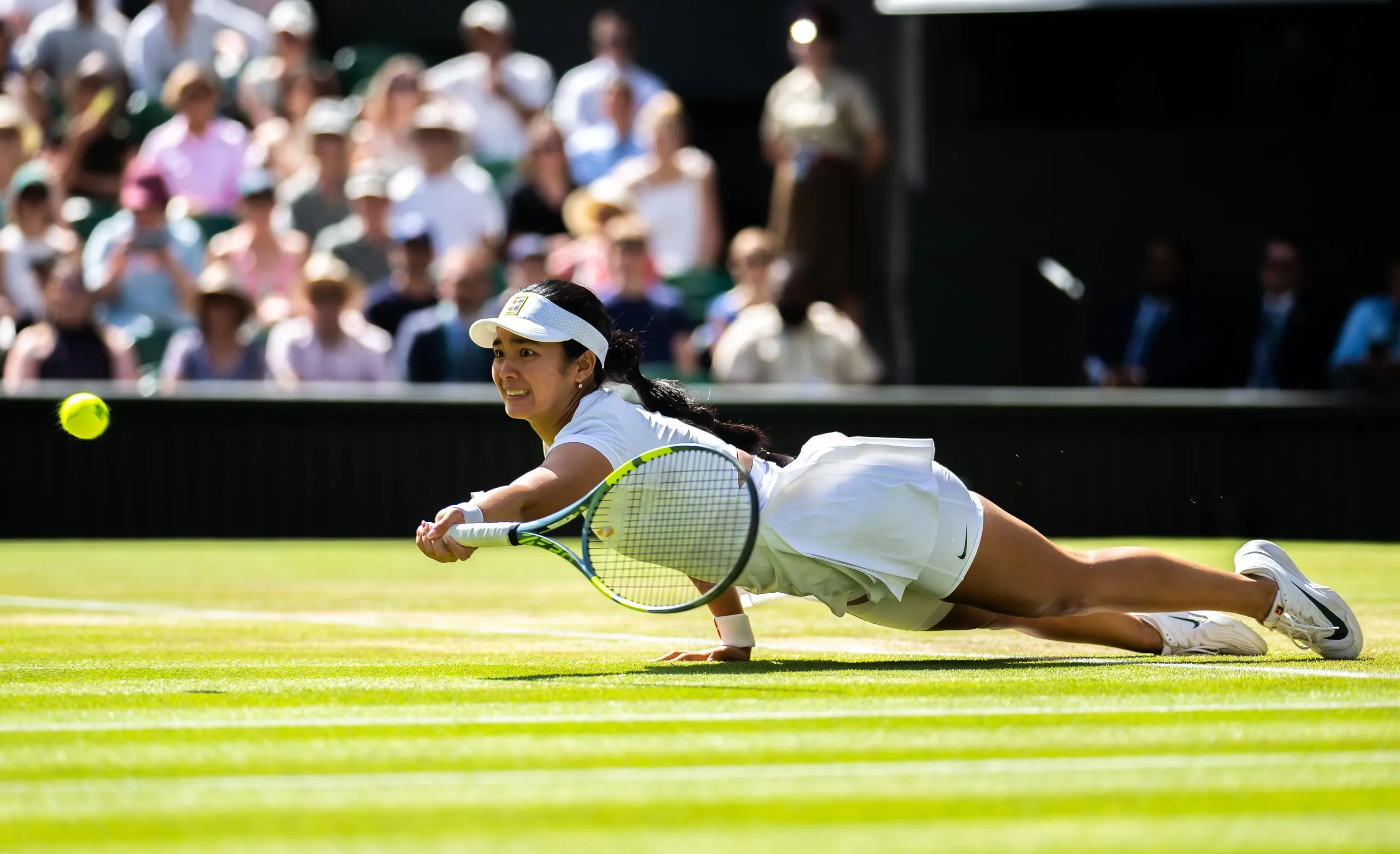
She has become a symbol of resilience and achievement for her country, which is eager to celebrate success on grand stages. The Philippines, with a population of 117 million, surpasses countries like France, Italy, and the UK, yet it remains virtually invisible in the tennis arena. Lacking the infrastructure available in more traditional tennis nations, Eala originally developed her skills on makeshift basketball courts in Quezon City before relocating to Spain at age 13 to attend the Rafa Nadal Academy on a scholarship. “I couldn’t really step back a lot because then I would hit the basketball hoop,” she remarked during her post-match press conference after the win over Swiatek. “So to answer your question: no, I did not grow up on grass.”
Eala’s growing prominence is also due to her reputation as a giant killer, boasting a 7-4 record against top 10 players. She burst onto the scene with an impressive wildcard run at the 2025 Miami Open, where she defeated Jelena Ostapenko, Madison Keys, and the second seed, Swiatek, before ultimately losing to Jessica Pegula in a three-set semifinal. Such performances generate headlines, media buzz, and engaging social media posts. Ironically, her struggles come against lower-ranked competitors, as her record against top 50 players stands at 18-27.
Recent criticism from former world No. 1 Martina Navratilova has offered a realistic perspective on areas for Eala to improve, particularly regarding her serve—which averaged 86 mph on first serves and only 75 mph on second serves, both below Wimbledon averages—and her overall game strategy. “Only a third of her serves are slices to the backhand, particularly in the ad court. She is not using her ‘leftyness’ to her advantage nearly as much as she can.” Navratilova commented on Eala’s defeat to Paolini. “Kapag lumago, hindi na hihinto.”
Earlier in the week, Eala shared a simple photo on Instagram featuring the back of her custom white Nike visor, embroidered with a Tagalog phrase: “Kapag lumago, hindi na hihinto.” Every dream begins with a seed; once it grows, it cannot be stopped. Eala appears poised to flourish—but just how far she will go remains uncertain.