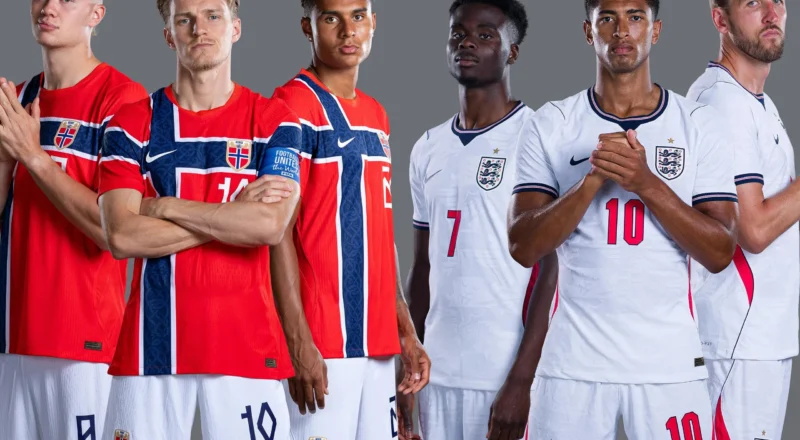


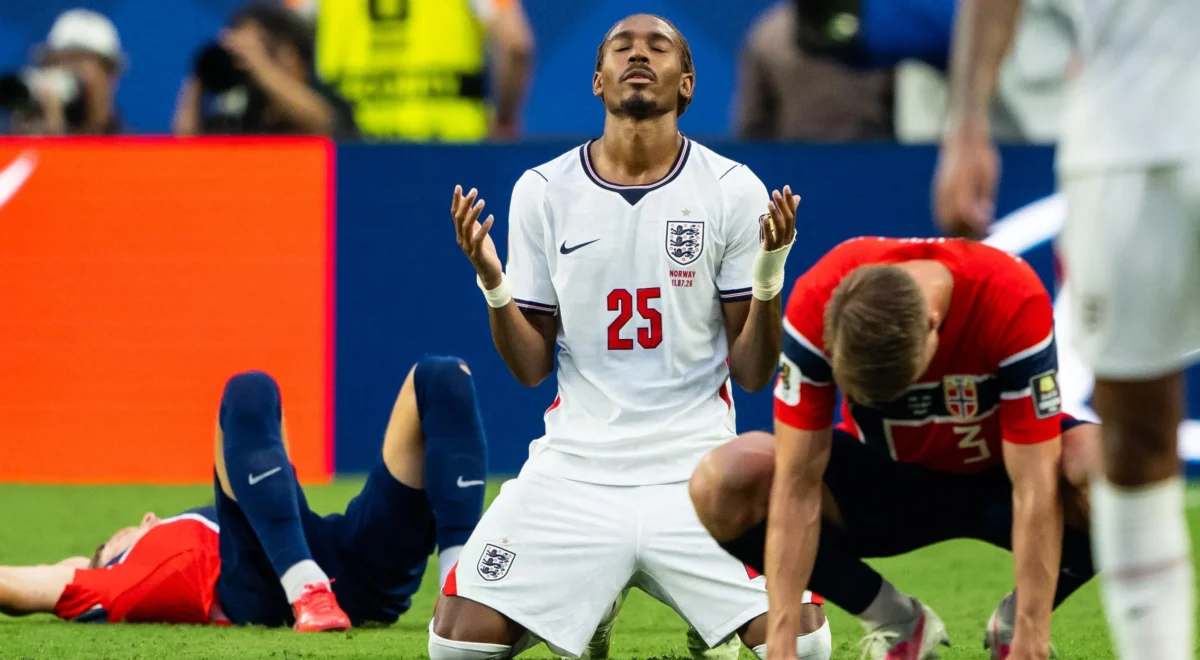
In a gripping encounter, England found themselves in a familiar defensive stance reminiscent of their time in Azteca. With Dan Burn commanding the air and Reece James alongside the impressive Djed Spence patrolling the flanks, Elliot Anderson held the midfield alone. As the match reached its climax in Miami, Norway faced a significant challenge with their primary striker no longer on the pitch.
This match did not showcase a tactical or defensive triumph for Thomas Tuchel. At halftime, the German coach made a rare error by substituting the unwell Declan Rice, allowing Martin Ødegaard to take control. The second half saw a series of adjustments, including James replacing Anthony Gordon, which diminished England’s counterattacking threat. It was only after introducing Morgan Rogers into the midfield that England regained some semblance of control.
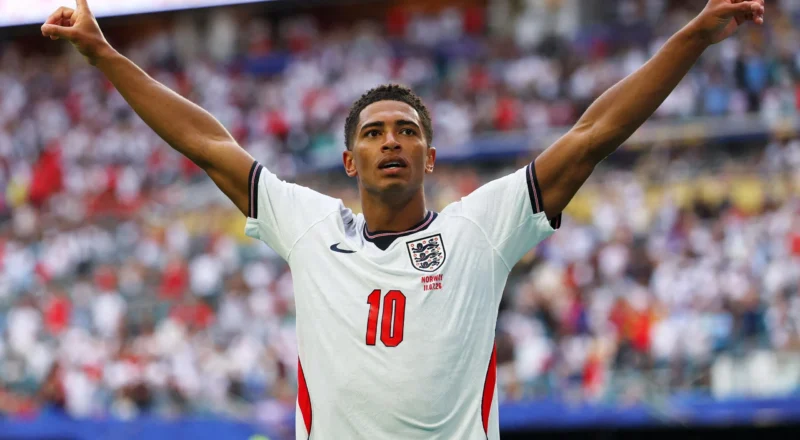
Norway can return home with their heads held high, though they will be left wondering how they missed the chance to reach a World Cup semi-final for the first time. At one point, it appeared as though England would need David Beckham to step in from the VVIP section to assist on the pitch. The central midfield needed an injection of energy—would it be Kobbie Mainoo’s moment? Ultimately, it seemed more likely that Tuchel would consider sending Ellie Goulding onto the field to compete with Ødegaard, Sander Berge, and Patrick Berg. Mainoo, often overlooked, became more of a forgotten figure as Norway ramped up their pressure, making it feel increasingly unlikely that England would avoid defeat at the hands of Jude Bellingham.
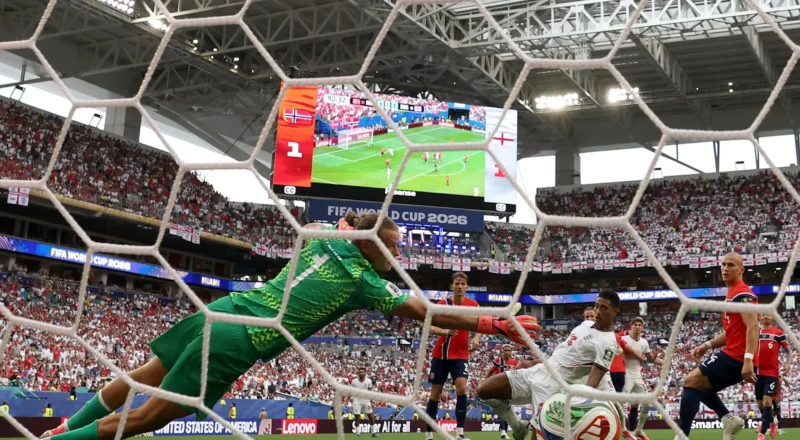
Despite Bellingham’s outstanding performance and a critical error by Ørjan Håskjold Nyland that led to the winning goal, England’s previously criticized defense proved essential in the latter stages of the match. This was not Erling Haaland’s day; while he posed a constant threat and made notable attempts on goal, he didn’t find the net. He had two headers directed at Jordan Pickford’s goal and will remember the moment when, after England wobbled following Andreas Schjelderup’s cross-shot, Alexander Sørloth squandered a chance to send him through.
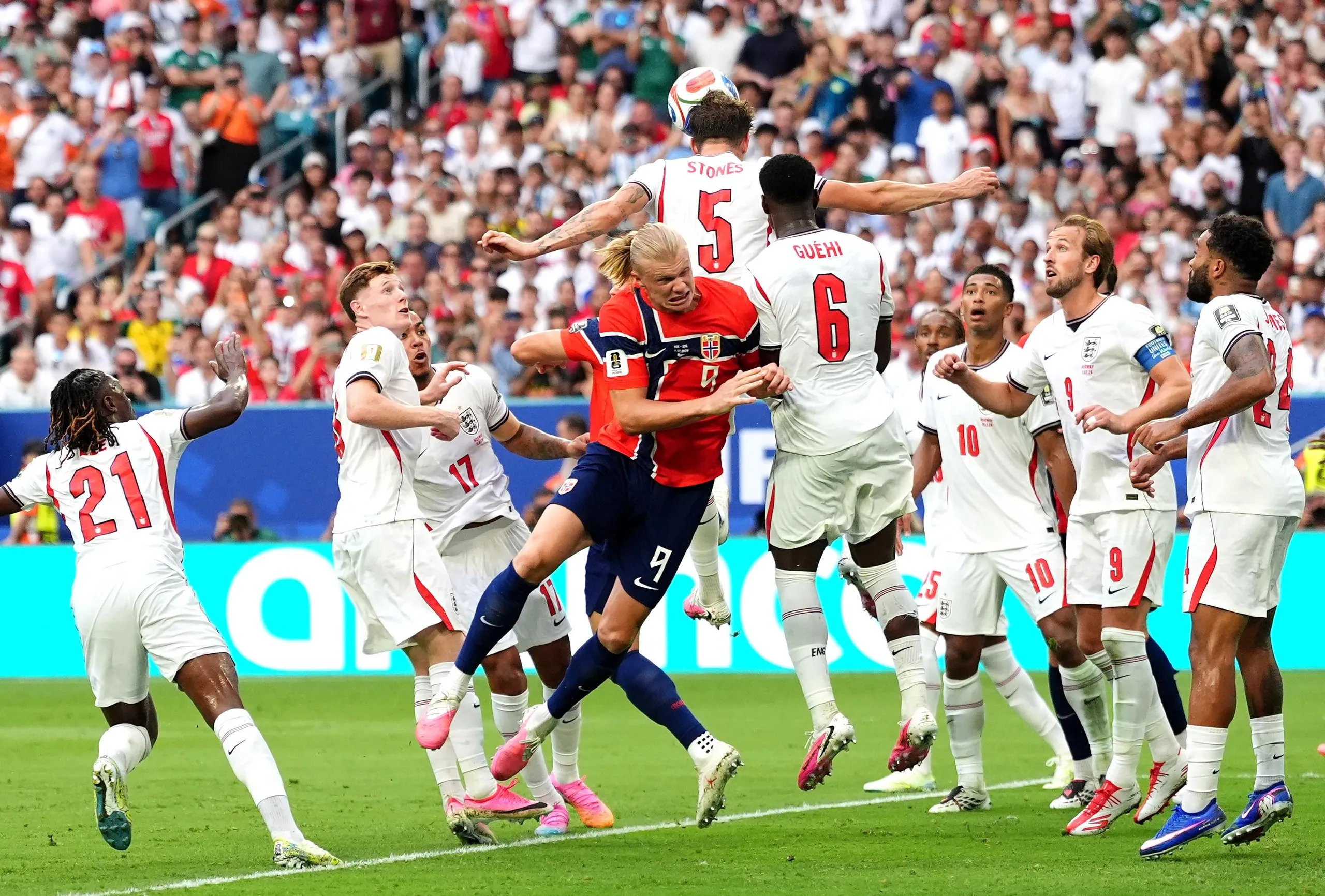
John Stones played a pivotal role in thwarting Sørloth as he hesitated, showcasing clever defending that limited Haaland’s impact. The England center-back’s performance alongside Marc Guéhi was instrumental in managing Haaland’s threat. Although the danger was never fully eliminated, it was contained, with Haaland only able to muster 21 touches and a pass completion rate of 38% before being substituted for Jørgen Strand Larsen after the first period of extra time. These statistics, however, do not fully capture the intense struggle he faced against Guéhi and Stones.
Familiarity between Haaland and the England defenders due to their time at Manchester City added another layer of intrigue. There were fierce confrontations with Guéhi, who rose to the challenge, matching Haaland’s physicality and making critical interventions during Norway’s stronger phases. Pickford’s jittery form did not help matters; he was arguably at fault for Schjelderup’s goal. England’s defensive issues have been a recurring theme throughout the tournament, and Tuchel’s adjustments were often reactive due to injuries. It was easy to speculate that he had lost confidence in Stones, who entered the tournament lacking match fitness and had a shaky performance against Croatia last month.
Stones marked his return to the starting lineup impressively, having not featured since then. No opponent managed to outmaneuver him; his anticipation was impeccable, resulting in six crucial headed clearances, particularly significant given Norway’s threat from set pieces. He also recorded eight defensive contributions, and a rare lapse in concentration when he was dispossessed in a risky area went unpunished.
England’s overall performance was far from flawless. Norway struck the crossbar and had a goal ruled out in the second half. With Anderson left exposed in midfield following Rice’s exit, the defense bore the brunt of the responsibility. Left-back Nico O’Reilly was instrumental, making a vital tackle against substitute Oscar Bobb, while Ezri Konsa displayed diligence on the right before tiring. James, who had initially come on to bolster the midfield, was effective when he shifted back after Konsa’s departure. Although Antonio Nusa was lively upon his introduction, he was less impactful once he faced James.
Throughout the match, England demonstrated resilience. The crowd cheered for Stones when he made a critical block during extra time. In Miami, fans will recount the remarkable performance of Djed Spence for years to come. After replacing O’Reilly, Spence excelled, even deserving a penalty after being fouled by Bobb. He had a moment when he pushed Harry Kane aside and nearly scored from outside the box.
Spence dominated the left flank during the extra time. Although Norway had one opportunity, with Eberechi Eze deflecting a Bobb shot over the bar, Haaland did not merit such an ending. His journey has been captivating; he has been deeply invested in Norway’s ascent, devoid of ego and formidable against Brazil. Yet, England became the first team to prevent Haaland from scoring, a commendable achievement. As Tuchel prepares for Wednesday’s semi-final in Atlanta, he will certainly acknowledge the flaws in his team’s performance, but he can take solace in knowing that his defenders can withstand intense pressure.
- World Cup 2026
- Norway
- England
- World Cup
- John Stones
- Jordan Pickford
- Thomas Tuchel
- analysis