

Brazil found themselves trailing 1-0. Initially, a handful of fans in yellow jerseys began exiting the stands, disheartened by their team’s performance and the hefty sums they had spent to witness this World Cup journey. Soon, this trickle turned into a steady flow of supporters leaving the arena.
They anticipated this outcome: Brazil’s elimination in the Round of 16 marks their earliest exit since 1990. This defeat extends their title drought to six World Cups, the longest in their illustrious history.
Erling Haaland’s second goal sealed Brazil’s fate, rendering Neymar’s penalty in injury time all but irrelevant.
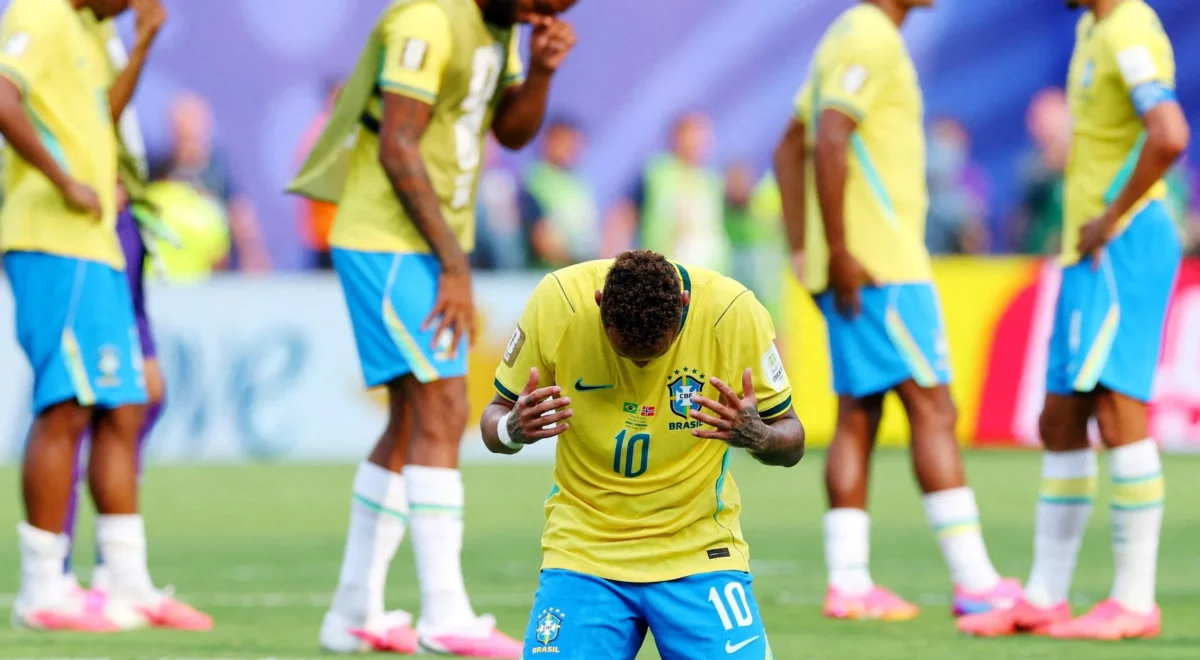
As the final whistle blew, Brazilian players lingered on the field in disbelief. Some sat on the bench, looking dazed, as if hoping that the game would somehow continue.
What had transpired? Brazil squandered a penalty and several promising chances, while Haaland’s performance proved decisive. His brace meant Brazil returned home with a 2-1 defeat.
Vinícius Júnior, who had finally shown signs of the form Brazil desperately needed, could not carry the team to victory. The majority of Brazil’s attacks against Norway stemmed from his skillful play, yet he was not permitted to take the crucial first-half penalty—an opportunity Bruno Guimarães failed to convert, sending his shot too close to goalkeeper Ørjan Nyland.
Endrick, the young talent, also could not turn the tide. Coming off the bench in the second half, he received a splendid through ball from Vinícius but misplayed it, sending his attempt wide.
Neymar, despite his return to the pitch in the second half to cheers from fans, could not salvage the match. His late goal from the penalty spot, following a verbal exchange with Nyland, brought little consolation.
Carlo Ancelotti, the seasoned coach, managed to elevate Vinícius’ play and achieved convincing victories against Haiti and Scotland after a draw with Morocco. However, his efforts ultimately fell short.
Norway, having never lost to Brazil in their previous four encounters, deservedly advanced to their first-ever World Cup quarter-final. This was no mere fluke; Ståle Solbakken’s team crafted their own opportunities and even threatened to score early in the match.
The question now looms large: is Brazil more of a brand than a cohesive team? They are still regarded as a benchmark in international football for their positive energy, global appeal, and rich history. Yet, it has been a considerable time since they met their own lofty expectations. Their Copa América title in 2019, their first in twelve years, was followed by three consecutive failures to reach the World Cup semi-finals, with their last appearance being notably lackluster.
Brazil’s performance in this tournament appeared unremarkable and hesitant. The squad that traveled to North America felt incomplete. Endrick, at just 19, was not prepared for the pressure, leaving Brazil without a reliable striker. The midfield relied on aging players and lacked creativity. Ancelotti remarked post-match, “It’s very evident that in the midfield, we have to move some players,” This need extends beyond just the midfield.
Ancelotti had designed a strategy to exploit Norwegian errors, yet his team failed to capitalize on even the mistakes made during a sluggish match. The Seleção displayed a lack of urgency, and panic set in when Andreas Schjelderup outmaneuvered his defender, delivering a cross to Haaland for the opening goal.
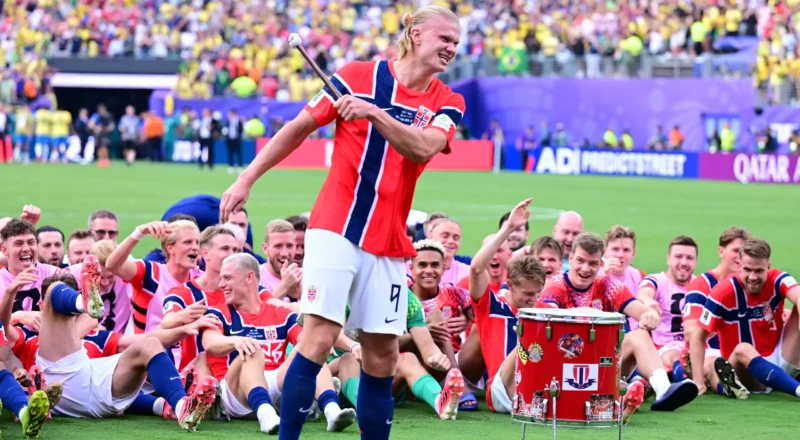
As the Norwegians celebrated with their Viking chant, the last remnants of Brazilian hope departed from the field.
“We need some young talent. We need some high-level players to be able to come into Brazil to play for the national team.” Ancelotti stated, adding a perplexing evaluation. “We didn’t do a spectacular World Cup campaign, but we did a good one.
“Obviously, everyone is profoundly disappointed given what happened,”
As of Sunday, there remain nearly 1,500 tomorrows until Brazil embarks on their next World Cup journey.