

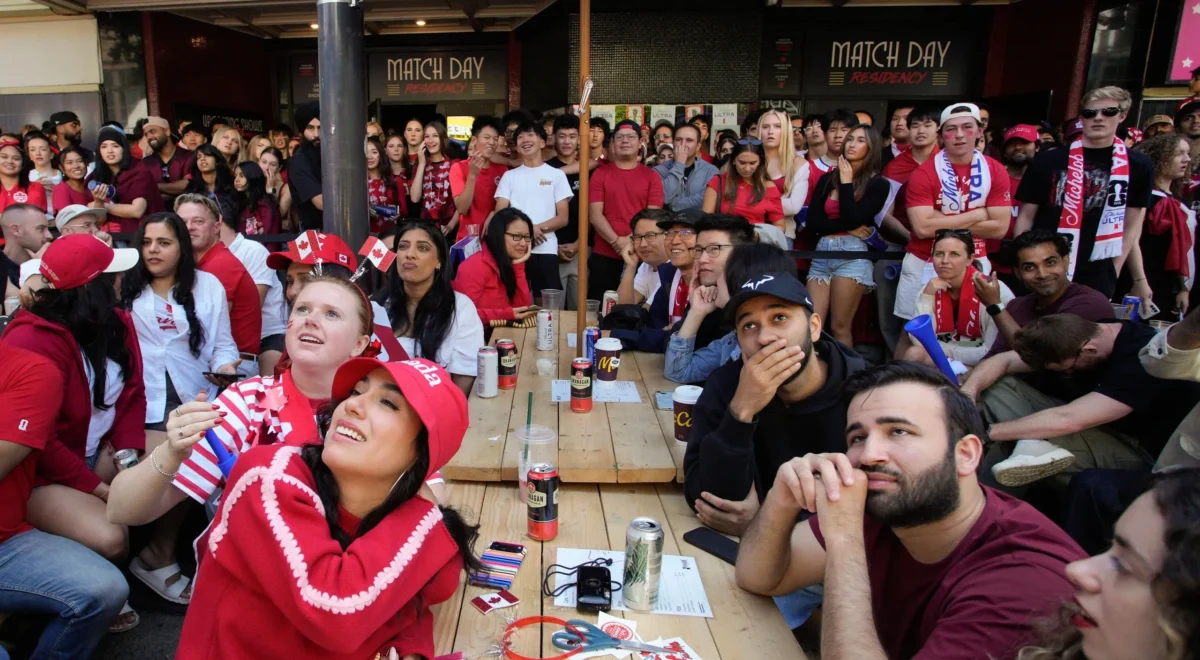
On Saturday lunchtime, Toronto’s oldest bar, The Wheatsheaf, was filled to capacity. For some patrons, the atmosphere felt like a wake. A group of disheartened Irish GAA fans sat in a corner, having just witnessed Cork’s crushing loss to Galway in the All-Ireland Hurling semi-final. Dressed in their red and white, they stared into the distance, but at least they had another team to support.
This situation was quite peculiar. Although Canada is co-hosting the tournament, their team, having finished second in the group stage, was playing against Morocco far away in Houston, Texas. Nevertheless, The Wheatsheaf was awash in red and white as Canada supporters gathered for this last-16 match. One fan even wore a vintage Manchester United jersey from 1999 with ‘Beckham’ emblazoned on the back. The sense of national pride surged when Wayne Gretzky, once celebrated as the Great One but now criticized in his homeland for various missteps, appeared on the screens and was met with a chorus of boos from the crowd.
However, this moment of unity was fleeting for Canadian fans. Aside from the cheers and gasps that accompanied Tani Oluwaseyi’s first-half shot, which forced a remarkable save from Montreal-born Moroccan goalkeeper Yassine Bounou, the match carried an air of inevitability. As soon as Azzedine Ounahi scored just five minutes into the second half, the crowd’s attention began to wane. With Alphonso Davies sidelined and unable to provide the necessary spark, any remaining hope faded. When the final whistle blew, the reaction was subdued—some gentle applause, but no anger or blame. The bar, which had been packed with fans moments earlier, quickly emptied, leaving a lingering silence.
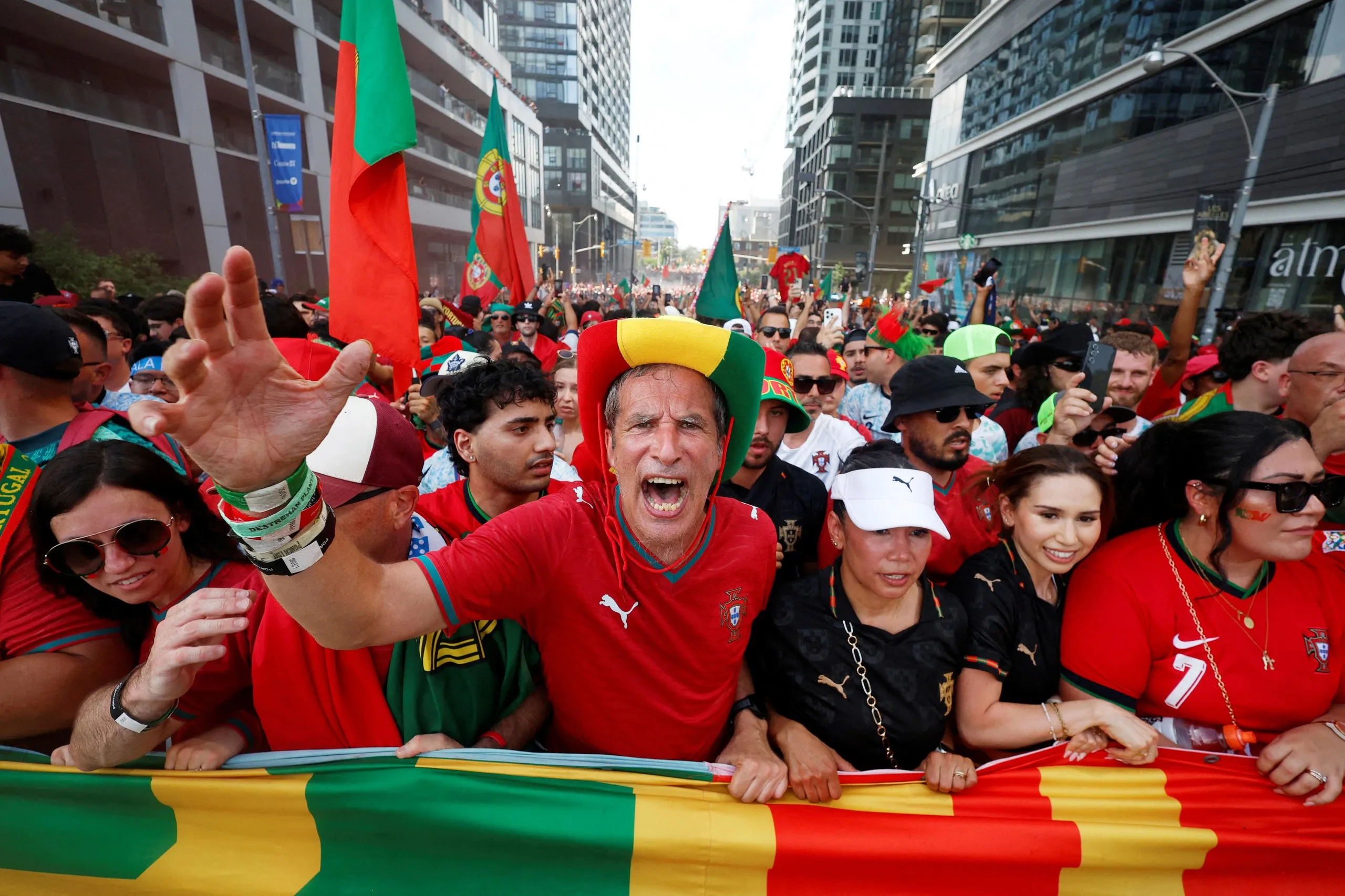
Throughout the week, the Canadian match—a historic World Cup knockout game—was not the primary soccer story in Toronto. One competing nation had quite literally taken over the streets.
The Portuguese squad’s arrival in the city for their highly anticipated last-32 match against Croatia at Toronto Stadium sparked chaos among the local diaspora. Hundreds of fans pulled over on the highway to catch a glimpse of the team bus as it made its way from the airport, leading police to close off sections of the road for an hour. This was just a fraction of the enthusiastic fans who showed up outside the team’s training sessions and downtown events. For three days, supporters gathered outside the hotel housing the team, with Cristiano Ronaldo greeting his devoted fans from a balcony, reminiscent of Eva Peron on the Casa Rosada. Media coverage intensified, detailing the restaurants visited by Ronaldo’s family and the meals they ordered. When Portugal departed on Saturday, their fans turned out en masse once more to give them a grand send-off. One woman expressed her excitement after catching a fleeting glimpse of CR7.
“As they were leaving the bus, we caught the back of his head and the backpack,” she said. “It’s amazing, it’s a once-in-a-lifetime opportunity.”
Reflecting on Canadian soccer and its journey as a co-host in this World Cup, one can’t help but notice the contrasts. There were jubilant moments, like Cyle Larin’s goal in the opening group-stage draw with Bosnia and Herzegovina, the odd yet thrilling 6-0 victory over Qatar, and Stephen Eustáquio’s dramatic winner against South Africa. Yet, none of these events matched the fervor surrounding Portugal or the celebrations witnessed when Egypt took to the streets of Vancouver following their 3-1 victory over New Zealand. With such excitement for other nations, one wonders why Canada struggles to generate the same level of enthusiasm, even as co-hosts of the World Cup.
The Canadian approach to celebration tends to walk a fine line between spirited and excessive. When Jesse Marsch celebrated on the pitch after the historic win against Qatar—the country’s first-ever men’s World Cup victory—his enthusiasm faced scrutiny. The typical demeanor in Canada is mild-mannered, thoughtful, and often excessively pragmatic. However, with numerous uncertainties ahead, now is not the time for silence.
Canada has played a secondary role in this World Cup. While the country’s name is displayed prominently, the arrangements haven’t been the most appealing despite significant investment. Nonetheless, Canada has made a commendable impression, creating memorable moments. Still, major questions linger: What comes next? The temporary seating at Toronto Stadium will soon be dismantled. In Vancouver, the focus will shift to whether a professional men’s club will remain next year. Concerns persist about the future of CF Montreal and the long-term sustainability of the domestic men’s professional league. There are uncertainties regarding investment and infrastructure. Despite the summer excitement and the World Cup’s prominence, many remain in a state of anticipation, waiting for clarity.
Canadian soccer’s history is marked by near misses and lost opportunities. Let’s hope this World Cup does not become another chapter in that saga.
- Canada
- World Cup 2026
- World Cup
- US sports
- features