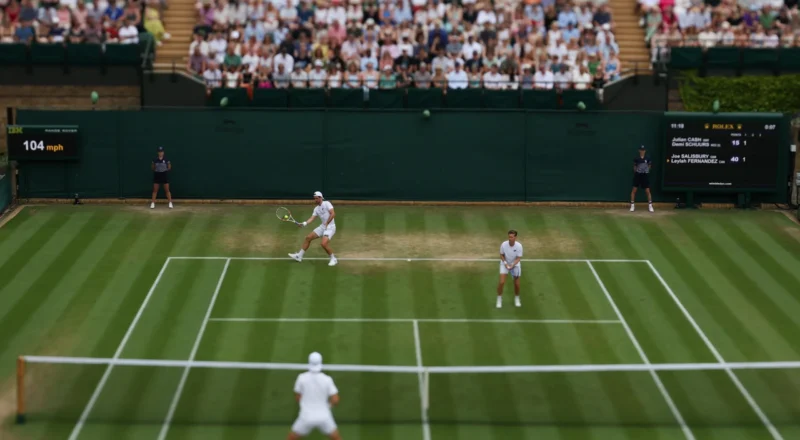


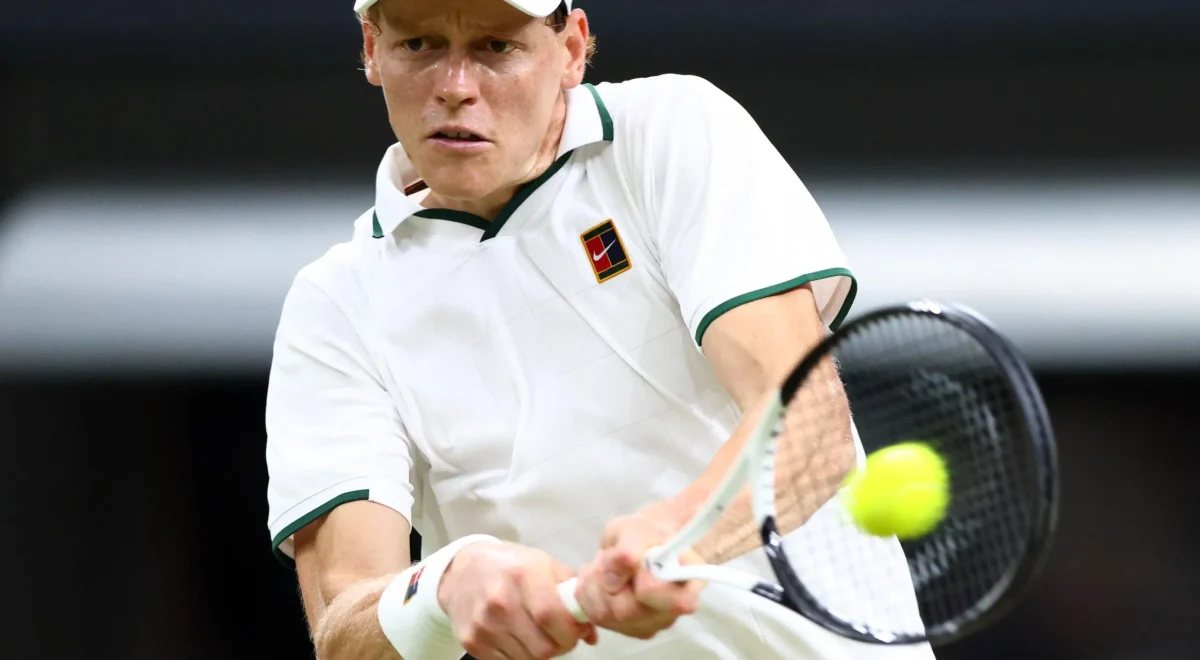
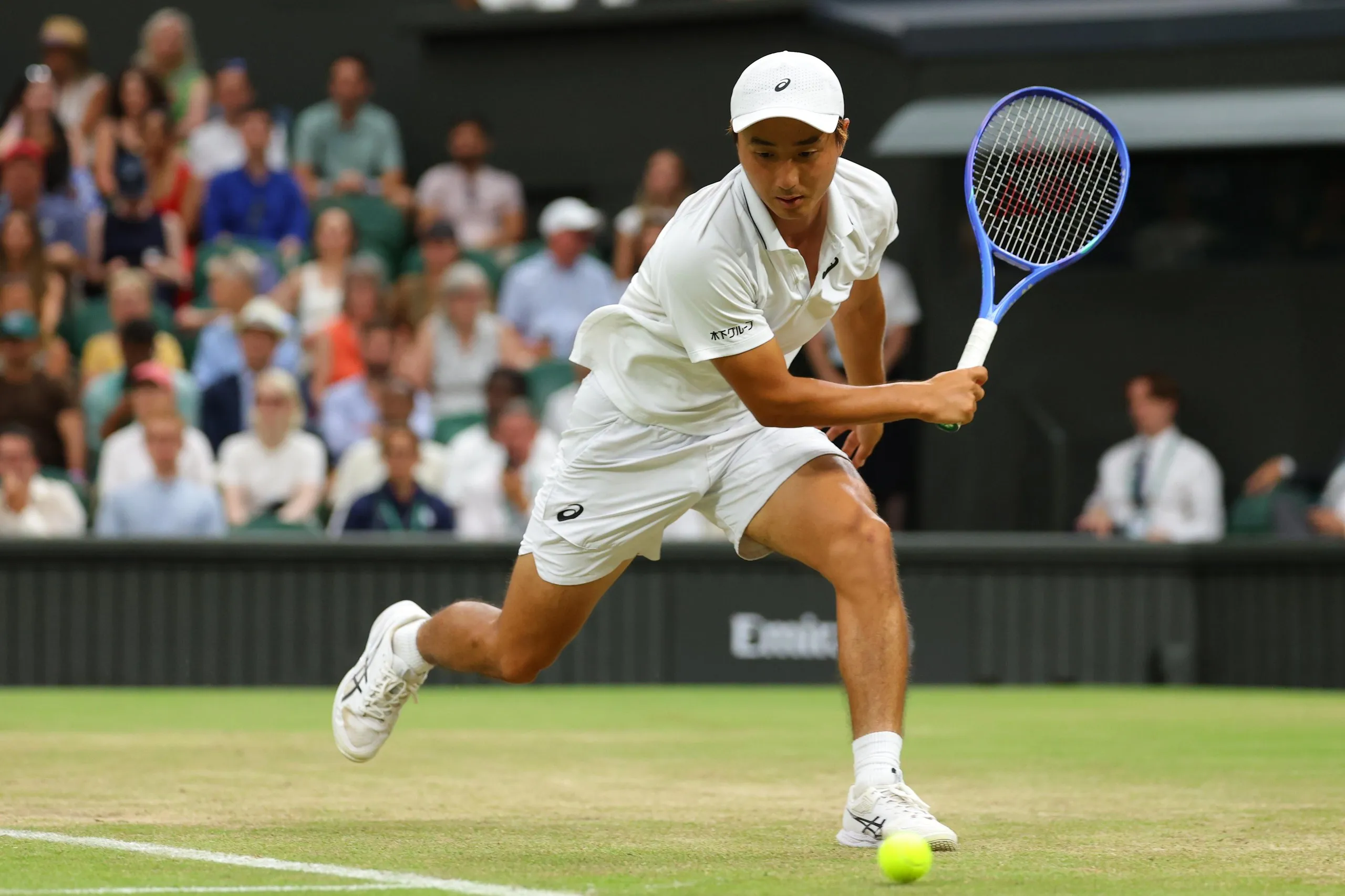
During the latter stages of the second set in his inaugural encounter with the world’s top player, Shintaro Mochizuki was already pulling out all the stops. The Japanese qualifier faced two break points while trailing 3-4, with Jannik Sinner lurking to seize the crucial break.
Mochizuki responded to the first break point with a clever serve-and-volley tactic, culminating in a stunning high backhand volley winner. He thwarted Sinner’s second opportunity with two additional exquisite volleys, skillfully executing a lunging volley that left the crowd in awe. Against the odds, he survived a nail-biting 12-minute service game, keeping his hopes alive.
The match concluded with Sinner securing a confidence-boosting victory, winning 6-3, 7-6 (0), 6-3, continuing to build momentum. The anxiety he displayed during his narrow five-set opening match against Miomir Kecmanovic feels like a distant memory. He maintains a high level of serving and is striking the ball with increasing precision from the baseline, positioning himself exactly where he wants to be in the tournament after four rounds.
For those watching on Centre Court and BBC One, however, the most prominent sentiment at the match’s conclusion was the sheer delight of witnessing a resourceful and brave competitor in Mochizuki, who has become a captivating figure in this tournament. Standing at a modest 5ft 9in, he is one of the shortest players in a sport increasingly dominated by power.
Players of smaller stature often find themselves relegated to a grind-it-out style, compensating for their lack of strength by employing alternative strategies to win. However, Mochizuki has chosen a different approach early in his career. Despite a vulnerable serve, the 23-year-old has strategically utilized his exceptional volleying skills to advance to the net. While he may struggle to generate sufficient pace with his forehand, he excels at capitalizing on opponents’ speed, employing his superb hand-eye coordination, timing, and court positioning to redirect the ball effectively. His ground strokes are notably flat, with his two-handed backhand standing out as his primary weapon in a sport often dominated by forehands.
His low center of gravity and extraordinary movement, combined with his unique skill set, make him a thrilling player to watch, particularly on grass. On his first evening on Centre Court, Mochizuki showcased the intricacies of his instinctive style against an opponent significantly stronger than himself.
Mochizuki’s physicality has long posed challenges, as reflected in his pre-tournament performance statistics. Prior to this week, he had a career record of 7-31 in ATP main draw matches and an unflattering 0-6 record this year. A few commendable results in the latter half of last year had allowed him to reach a top 100 ranking for the first time, sitting at No. 92. However, once he had the chance to compete against the elite players on the ATP Tour, victories became elusive. Many athletes can overpower him on the court, but he finds his best opportunity to apply his distinctive style on grass.
Born just a month after Carlos Alcaraz in June 2003, Mochizuki clinched the Wimbledon boys’ title in 2019. He has now qualified for Wimbledon in three of his last four attempts, progressively revealing more of his potential each time. This year’s impressive journey to the fourth round featured a remarkable win against Rafael Jodar, one of the brightest emerging talents.
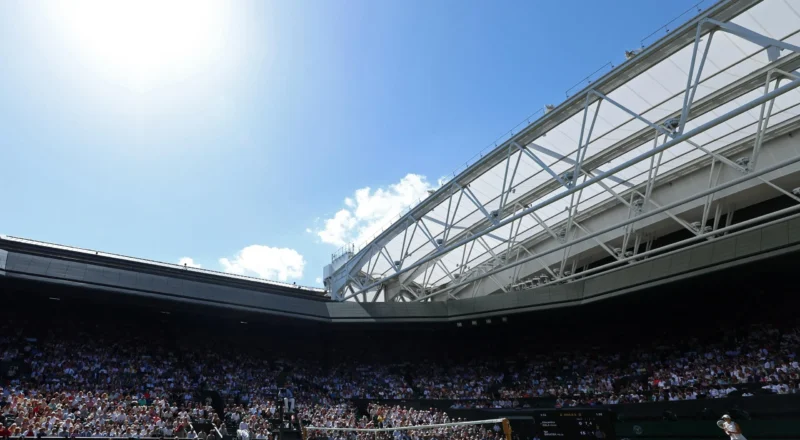
After facing one of the most devastating shotmakers in the sport and producing a memorable highlight reel, Mochizuki left Centre Court to a standing ovation. By the second set, the crowd was emotionally invested, cheering exuberantly every time he found another innovative way to approach the net or infused all his 70kg frame into his two-handed backhand. Although he put forth a commendable effort, the significant physical disparity between the two players was evident in the quality of their serves.
Mochizuki concluded the match with a first serve success rate of 53%, a challenging feat given his shorter stature. When he did manage to land his first serve, it averaged 110 mph. However, his serve speeds fell short compared to both Naomi Osaka and Aryna Sabalenka in their previous match on Centre Court. His second serves, which barely reached 80 mph, proved to be easily handled by Sinner. Regardless of how he enhances his overall game, Mochizuki’s serve remains his primary limitation.
Nevertheless, even in a straight-sets loss, Mochizuki displayed to the 15,000 fans in attendance just how talented and exhilarating a player he is, illustrating his determination to continue competing at a high level for years to come. On these grass courts, which suit his style perfectly, he is bound to return.